Like
Share
멍실장
켄넬·크레이트 훈련 기초 - 강아지에게 안전한 쉼터 만들어주기

Crate/Kennel Training Basics: Creating a Safe Haven for Your Puppy

Brain & CognitionQ&AMeongsiljang Veterinary Advisory Board

Crate training is a form of behavioral education that helps puppies recognize a safe space. We’ve outlined a step-by-step approach, important precautions, and common reasons for failure.

What is Crate Training?
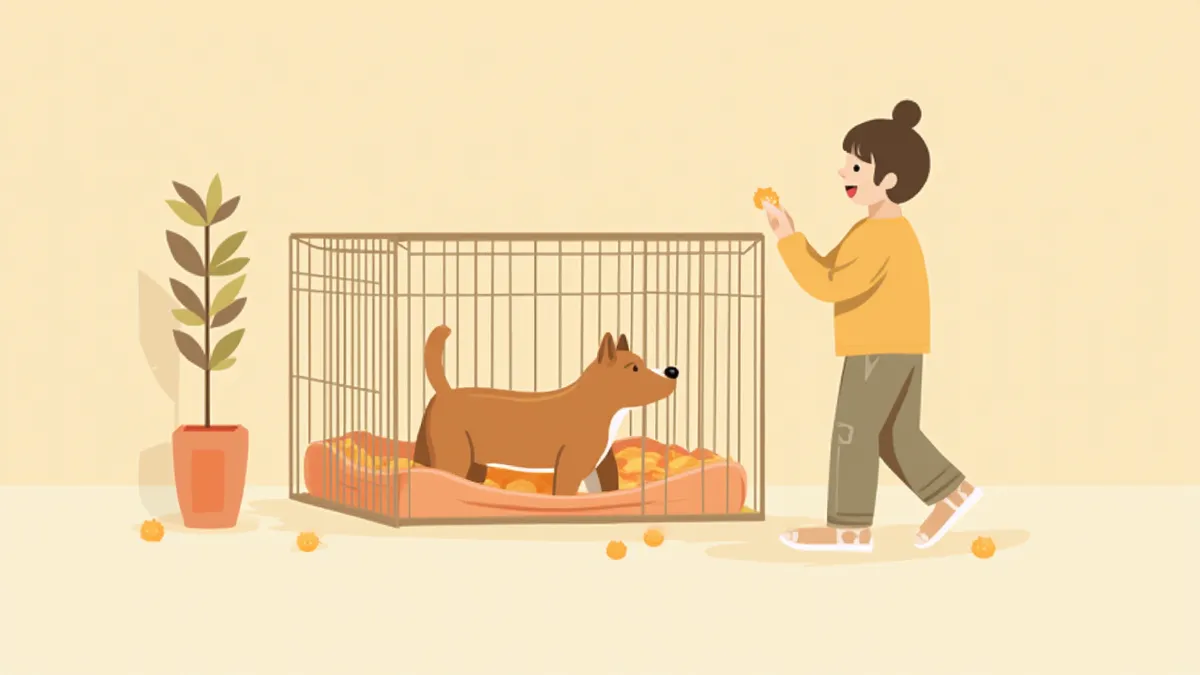
A dog that willingly enters its crate
Crate training is a form of behavioral education that helps your dog view the crate (also known as a kennel or carrier) not as a stressful place of confinement, but as a safe haven where they can voluntarily retreat to rest. The key lies in a gradual, positive-reward-based approach. Never use punishment or force your dog into the crate, as this undermines the training process. When properly trained, a crate becomes a valuable tool that reduces stress during travel and veterinary visits, while also supporting housebreaking efforts. However, for dogs already exhibiting signs of separation anxiety or confinement distress, crate use may worsen their symptoms. In such cases, consult a veterinarian or a certified behavior specialist before deciding on a training plan.

Why is Crate Training Necessary?

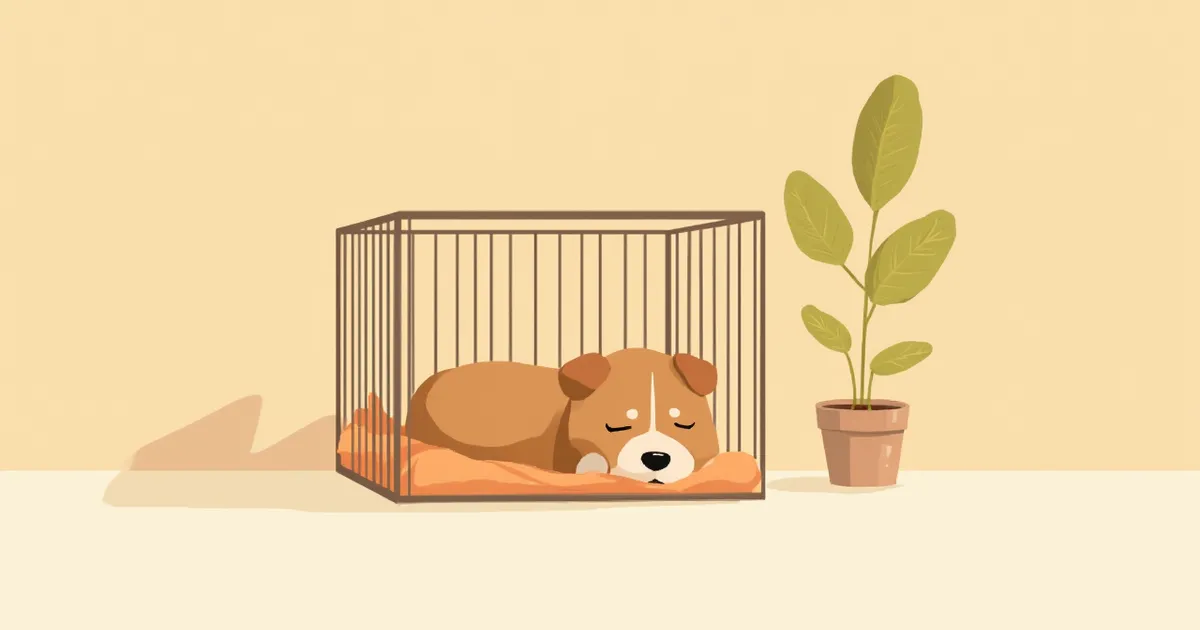
Dogs can learn to see a crate as their own cozy sanctuary through positive training. Crate training is based on this principle, giving your dog a private "personal space."
Accelerates housebreaking: Dogs naturally avoid soiling their sleeping area.
Prevents separation anxiety: Building positive crate experiences from a young age can help prevent anxiety when left alone. However, for dogs already showing signs of separation or confinement anxiety, it may worsen symptoms, so consult a professional first.
Travel safety: Essential for car and air travel.
Disaster evacuation: Enables quick relocation in emergencies.
Guest visits: Provides a calming safe haven during exciting situations.

Comparison of Crate Types

ItemWire typePlastic (airline-compliant)Soft/fabric type
VentilationVery goodModerateGood
PortabilityHeavyModerateLight
Chew-resistantTrueTrueFalse
Suitable for car travelModerateVery suitableUnsuitable
Recommended forHome stationary useTravel/long distanceAdult dogs/gentle temperament

For puppies with a chewing habit, a wire type or plastic type is recommended

How to Choose the Right Crate Size
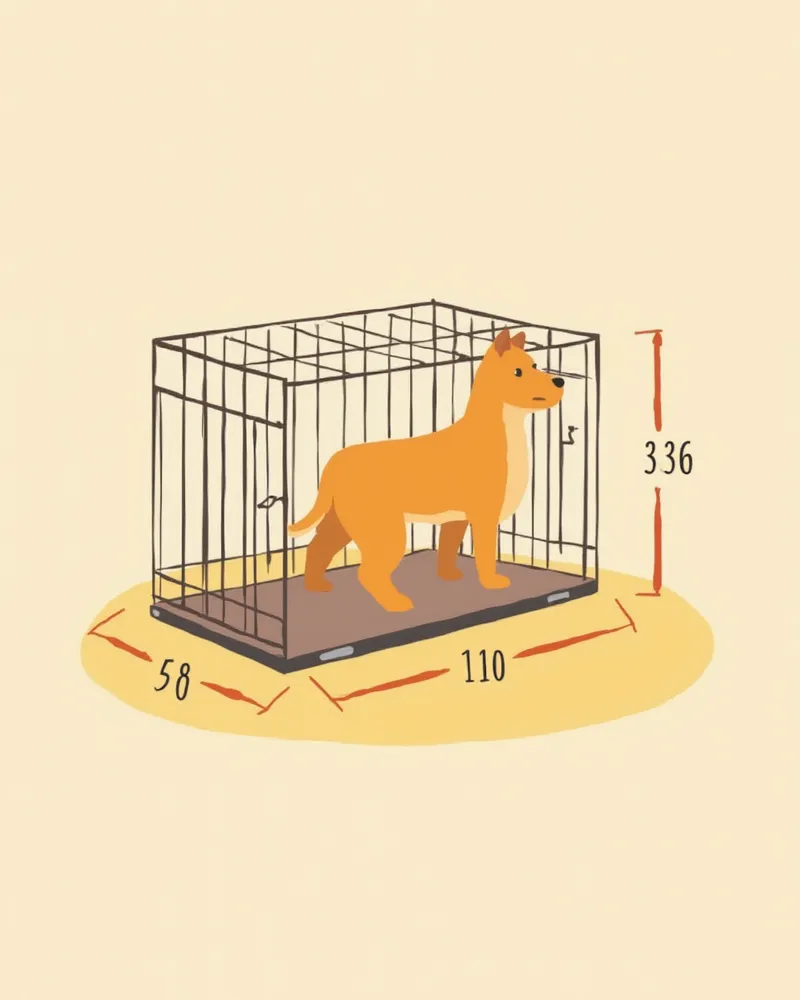
Size is the first button that determines whether training succeeds or fails. If the crate is too large, your puppy may eliminate in one corner and sleep in another, undermining housebreaking efforts. If it’s too small, your puppy will feel cramped and develop an aversion to it.
Length: Measure from the tip of your puppy’s ears to the floor while standing upright, then add about 5 cm.
Width: Measure from the nose to the tip of the tail while lying comfortably, then add about 10 cm.
Height: Ensure there’s enough clearance so your puppy’s head doesn’t touch the top when sitting.
For puppies, it’s more cost-effective to buy a crate sized for their adult dimensions and use a divider to adjust the space as they grow.
A dog standing comfortably inside a crate

Step-by-Step Crate Training Method

The key is to take things slowly. Depending on your dog’s temperament, this process can take anywhere from a few days to several weeks. Step 1 (Days 1–3): Place the crate in the living room with the door left wide open, and add a blanket and treats inside. Step 2 (Days 3–5): Put the food bowl inside the crate to encourage your dog to enter and eat on their own. Step 3 (Days 5–7): Close the door for just a few seconds while your dog is inside, then open it again. Step 4 (Days 7–14): Leave the room for short periods (5–30 minutes) to see how your dog responds. Step 5: Use the crate when you go out or at bedtime.

What to Absolutely Avoid in Crate Training

Using a crate as a punishment tool will cause training to fail. The crate should be a space where only good things happen. - Taking your dog out when they bark or whine → reinforces the barking behavior - Confining your dog in the crate as punishment → can cause lifelong trauma - Confining your dog for excessively long periods relative to their age → increases the risk of accidents and stress-related behavioral issues - Confining your dog without water or toys → can lead to dehydration and stress - Leaving a leash or harness on your dog inside the crate → poses a risk of strangulation

How to Handle Barking and Whining

Barking or whining at first is a natural reaction. If you handle it incorrectly, the entire training process can fall apart.
Distinguishing genuine elimination signals from attention-seeking behavior: If your dog signals at regular intervals, they likely need to eliminate. If the barking is irregular and sudden, they are likely seeking attention.
If it is attention-seeking: Completely ignore the behavior, avoid eye contact, and only let them out 10–20 seconds after they have become quiet.
If it is an elimination signal: Quietly let them out and take them directly to their designated elimination spot. Do not play with them, and return them to the crate immediately afterward.
Consistency is the most important factor. If you let your dog out even once while they are barking, they will learn that "barking gets me out."
A calm owner waiting patiently beside the crate

Maximum Recommended Time in the Crate

A dog’s ability to control its bladder varies with age, so the recommended time between bathroom breaks also changes. The guidelines below are practical standards used in clinical practice, though individual differences exist. Exceeding these limits significantly can lead to accidents and stress-related behavioral issues.
9–10 weeks old: Maximum 30–60 minutes
11–14 weeks old: Maximum 1–3 hours
15–16 weeks old: Maximum 3–4 hours
17 weeks and older to adult dogs: Maximum 4–6 hours
Adult dogs (house-trained): Even during nighttime sleep, bathroom breaks should be appropriately scheduled according to the individual dog’s bladder control capacity.
If you need to be away from home for an extended period, be sure to include time for walks, bathroom breaks, and water replenishment in the middle of your absence.

Crate Training for Puppies with Separation Anxiety

For dogs already showing signs of separation anxiety—such as excessive barking, destructive behaviors like chewing furniture or scratching doors, and inappropriate elimination—forcing them into a crate can actually increase their fear, anxiety, and stress. In their attempt to escape, they may even injure their teeth or claws. In such cases, it is essential to consult a veterinarian or a behavior specialist before starting crate training. If the symptoms have appeared suddenly or if the dog is senior, it is important to first rule out underlying medical causes, such as pain. Once the root cause is identified, treatment may include anti-anxiety medication alongside positive reinforcement-based independence training. For dogs with confinement anxiety, providing a larger open space using a playpen (exercise pen) instead of a crate can be more helpful.

Reviewed by a veterinarian

Dr. Tony — Punnawat Phongkittirak

Dr. Tony — Punnawat Phongkittirak

Veterinarian

A veterinarian who majored in veterinary medicine at Khon Kaen University, Thailand, and completed the IVSA program at North Carolina State University in the United States. Drawing on clinical experience at animal hospitals, he works in the pet healthcare field and is dedicated to building a digital care environment that connects pet parents with veterinarians.

Frequently Asked Questions

Is crate training possible for adult dogs?
Yes, it is possible. However, it typically takes longer than with puppies, and individual differences can be significant. Adult dogs with negative past experiences require a more delicate, step-by-step approach. Building positive associations by offering meals and treats exclusively inside the crate is an effective strategy.
My dog is pooping and peeing in its crate. What should I do?
There are three main causes: the litter box is too small (leaving space on one side for elimination), it’s been confined for too long, or there’s an underlying medical issue such as a urinary tract infection. Start by checking the size of the litter box and reducing the time your pet spends confined. If the problem persists, have your pet tested for cystitis or a urinary tract infection.
Can I place a blanket or cushion in the crate?
Overall, it’s a good choice. However, puppies with chewing habits or dogs with a history of swallowing fabric should be monitored closely due to the risk of ingesting foreign objects. In such cases, it’s safer to use a waterproof mat that can’t be torn apart even if chewed.
If my dog only sleeps in the crate at night, do I still need to train them during the day?
Yes, daytime training is actually more important. By repeatedly allowing your dog to rest in the crate for short periods (5–30 minutes) during the day, they will learn to associate the crate with relaxation rather than confinement. If you only use the crate at night, your dog may mistakenly interpret it as a signal of separation from you.
How long should I continue crate training?
Once house training is complete and destructive behaviors have stabilized, you can leave the door open and use the crate as an open resting area. Many adult dogs continue to seek out their crate as a comfortable place to relax, even after training is finished.

Share

Related Guides

References

[1] Rooney, N.J. and Cowan, S., Training methods and owner-dog interactions: Links with dog behaviour and learning ability, Appl. Anim. Behav. Sci. 132: 169-177, 2011

[2] Introduction to Animal Behavior and Veterinary Behavioral Medicine, Chapter 5

[3] 미국수의행동학회(AVSAB), Position Statement on Humane Dog Training, 2021

This information is based on veterinary literature and does not replace diagnosis or treatment. Please consult a veterinarian for specific health concerns.

Metapet Co., Ltd. | CEO: Park Sung-yong | Business Reg. No. 417-88-02562 | Seoul, South Korea | Customer Center

Crate & Kennel Training Basics: A Safe Haven for Puppies | Meongsiljang