Like
Share
멍실장
강아지가 자기 몸 핥고 짖는 이유

Why Your Dog Licks Its Body and Barks

ImmunityQ&AMeongsiljang Veterinary Advisory Board

When your dog licks its body or barks, it may be signaling a mix of issues such as skin or joint problems, or anxiety. Here’s how to identify the underlying cause and some home care tips you can try.

Why Is My Dog Licking Its Body and Barking?

A puppy sitting and gazing at its own legs
When a dog repeatedly licks and barks at its own body, it may be signaling skin itching, joint pain, or anxiety, leading to persistent stimulation of the same area accompanied by vocalization. The most crucial step is to quickly identify the underlying cause. While it could simply be boredom, it might also indicate conditions requiring treatment, such as allergies, arthritis, or compulsive behavior. If your dog continues to lick and bark at the same spot for more than a day, it is safest to have them examined by a veterinarian.

Why Does It Exhibit This Behavior?

Licking and barking behaviors generally stem from either physical or psychological causes. Physical triggers include skin itching, wounds, joint pain, or digestive discomfort, which arise when something in the body feels wrong. Psychological triggers involve emotional distress such as separation anxiety, boredom, or stress, which manifest as behavioral changes. According to veterinary behavior textbooks, self-licking in anxious situations is interpreted as a form of self-soothing response. If the licking is focused on a specific area or gradually worsens, it is essential to identify the underlying cause.

Comparison of Characteristics by Cause

ItemSkin ProblemsJoint / PainBehavioral / Psychological
Area lickedBelly, armpits, pawsKnees, hips, anklesFixed on front paws, flank
Accompanying symptomsRedness, hair loss, dandruffAbnormal gait, limpingBarking, pacing
Time of dayAll day longWhen getting up after restingWhen left alone
How to improveDermatology visitOrthopedic visitBehavioral correction, environmental improvement

The three often appear in combination.

Signs When Skin Problems Are the Cause
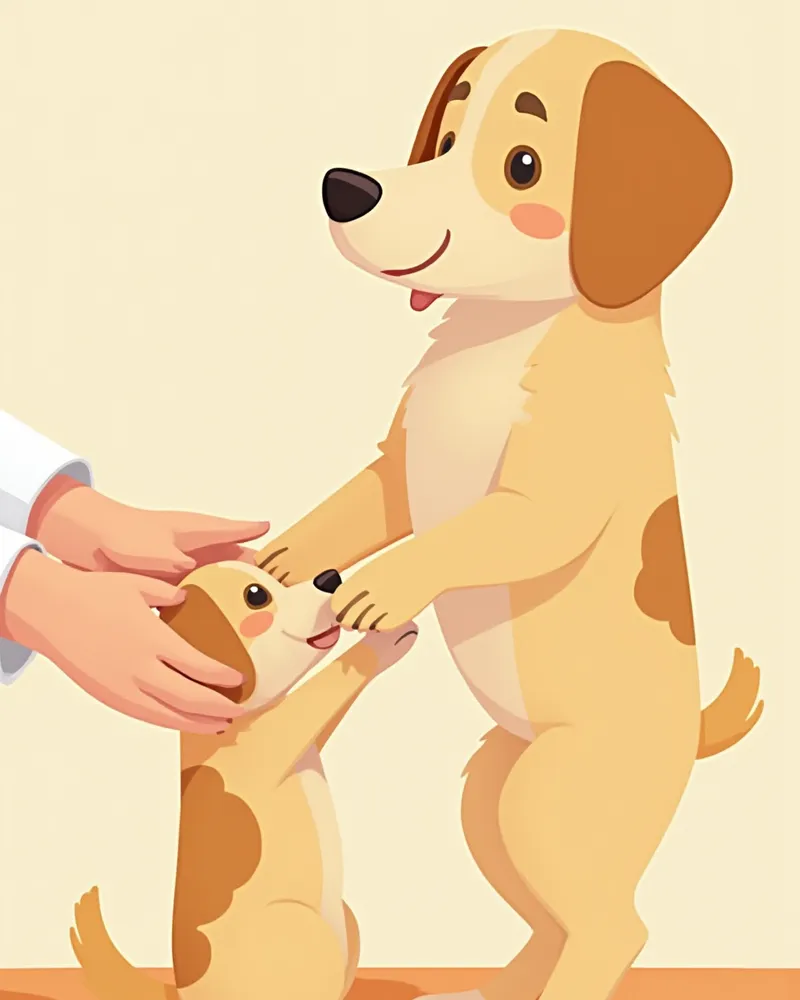
If the itching is the cause, the licked areas may become red, lose hair, and turn brown from saliva. Common causes include:
Atopy: An allergic predisposition leading to repeated licking of the paws, armpits, and belly.
Food allergies: Severe itching that worsens after consuming specific proteins.
Parasites or fungal infections: Intense scratching accompanied by patchy hair loss.
Bacterial infections: Secondary infections developing in saliva-dampened areas.
Applying ointments at home without identifying the underlying cause can worsen the condition.
Gently examining your dog's paws

When to Seek Immediate Veterinary Care

If your pet licks the same spot for more than 24 hours, causing the skin to become red and raw, or shows signs of pain while licking (such as whining or growling), emergency veterinary care is necessary. Additionally, if licking is accompanied by excessive barking, loss of appetite, or dragging of a leg, it may indicate orthopedic or neurological issues, requiring immediate veterinary attention. Severe compulsive behaviors, such as biting their own body, also require consultation with a veterinarian.

Home Care Tips

Until we identify the underlying cause, our top priority is to minimize irritation and provide a sense of security.
Environmental Check: Remove potential allergens from the home, such as dust, new carpets, or laundry detergents.
Skin Protection: Use an Elizabethan collar on the affected area to prevent secondary infections from licking.
Exercise and Play: Walk your pet twice a day for 15 minutes each to help burn off energy.
Managing Alone Time: Use snuffle mats or toys to reduce boredom when your pet is alone.
Skin Hygiene: Bathe regularly with a hypoallergenic shampoo to protect the skin barrier (consult your veterinarian to determine the appropriate bathing frequency based on your pet’s skin condition).
If symptoms do not improve, it is essential to visit the clinic to identify the root cause.
A dog wearing a neck collar resting comfortably.

Key Points to Prevent Relapse

Even after treatment, if the underlying cause remains, the same behavior is likely to recur. To prevent relapse, it’s essential to address three key areas: skin health, joint condition, and emotional well-being. If your pet has an allergic predisposition, carefully review the ingredient list on their food and periodically assess the sources of carbohydrates and protein. For joint issues, maintaining a healthy weight and using non-slip floor mats can be very helpful. If the behavior stems from psychological factors, it’s best to keep greetings calm and low-key when you leave or return home, which helps reduce sensitivity associated with separation anxiety.

Breed- and Situation-Specific Precautions

Large breeds such as Doberman Pinschers and Labrador Retrievers are known to be prone to acral lick dermatitis, a condition characterized by repetitive licking of the front paws. However, this behavior is not always compulsive; it can also stem from physical causes such as itching (due to atopy or bacterial infections) or pain from joint or neurological issues, making accurate diagnosis of the underlying cause essential. In breeds with abundant skin folds, such as Shih Tzus and French Bulldogs, licking may increase due to intertrigo (inflammation in the skin folds) or Malassezia infections. Additionally, if a young puppy suddenly exhibits both licking and barking, it could indicate an internal medical issue such as gastrointestinal discomfort, so do not dismiss these signs lightly.

Reviewed by a veterinarian

Dr. Tony — Punnawat Phongkittirak

Dr. Tony — Punnawat Phongkittirak

Veterinarian

A veterinarian who majored in veterinary medicine at Khon Kaen University, Thailand, and completed the IVSA program at North Carolina State University in the United States. Drawing on clinical experience at animal hospitals, he works in the pet healthcare field and is dedicated to building a digital care environment that connects pet parents with veterinarians.

Frequently Asked Questions

Is licking their body and barking a sign of compulsive behavior?
Not necessarily. Physical causes like itching or pain may come first, so we start with skin and joint exams. If the behavior persists afterward, we consider compulsive behavior as a possibility.
Will putting on a neck collar make the behavior disappear?
The E-collar prevents licking, which helps reduce secondary infections, but it doesn’t address the underlying cause. It’s used as a supportive measure alongside treatment for the root issue.
My pet only does this when left alone. Could it be separation anxiety?
There is a high likelihood of separation anxiety. If your pet repeatedly barks and licks when you leave the house, behavioral treatment and environmental training are necessary.
Will changing the diet help?
It can help with food allergies. However, rather than switching diets on your own, it’s safest to consult your veterinarian about the protein source and then trial an elimination diet for about eight weeks to confirm the diagnosis.
Will supplements alone be enough to improve the condition?
It’s difficult to address the root cause with supplements alone without a proper diagnosis. While supportive skin care can help, it’s important to get an accurate diagnosis first if the licking and itching persist.

Share

Related Guides

References

[1] Horwitz D., Mills D., BSAVA Manual of Canine and Feline Behavioural Medicine, 2nd Edition, 2009

[2] Landsberg G., Hunthausen W., Ackerman L., Behavior Problems of the Dog and Cat, 4th Edition, 2023

[3] Miller W.H., Griffin C.E., Campbell K.L., Muller and Kirk's Small Animal Dermatology, 8th Edition, 2022

This information is based on veterinary literature and does not replace diagnosis or treatment. Please consult a veterinarian for specific health concerns.

Metapet Co., Ltd. | CEO: Park Sung-yong | Business Reg. No. 417-88-02562 | Seoul, South Korea | Customer Center

Why Your Dog Licks Its Body and Barks: Causes & Care | Meongsiljang