
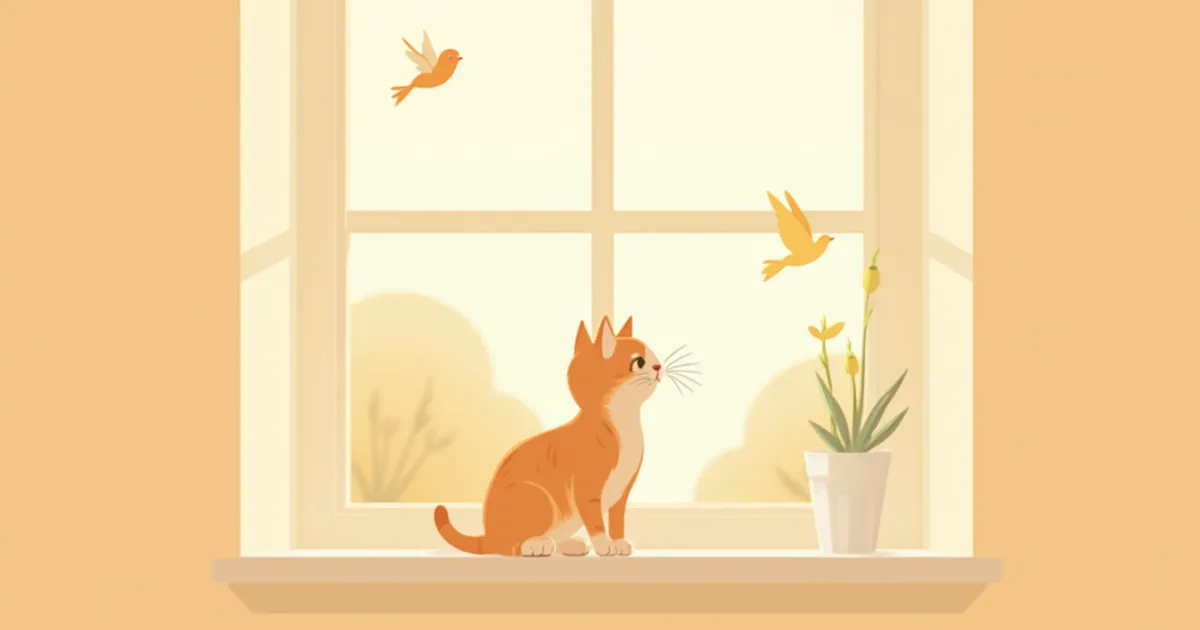
Why Your Cat Chatters at Birds
Chattering, where your cat rapidly clicks its jaw while watching birds outside the window, is a normal behavior driven by a mix of hunting instinct and frustration. Here’s what it means and how to manage it.
What Is Cat Chattering?

Why Do Cats Chatter? 3 Leading Hypotheses
Chattering vs. Similar Behaviors: How to Tell the Difference
| Item | Chattering (Normal) | Trembling / Convulsions (Abnormal) | Flehmen Response (Normal) |
|---|---|---|---|
| Situation | When seeing a bird or insect outside the window | Suddenly, without any stimulus | When smelling another cat's urine or pheromones |
| Jaw movement | Rapid clicking/chattering | Irregular trembling | Mouth slightly open and held still |
| State of consciousness | Alert, focused | Dazed or unresponsive | Alert |
| Need for a vet visit | Not needed | Needed immediately | Not needed |
If trembling occurs even without a stimulus, it is likely not chattering.
Behaviors That Accompany Chattering
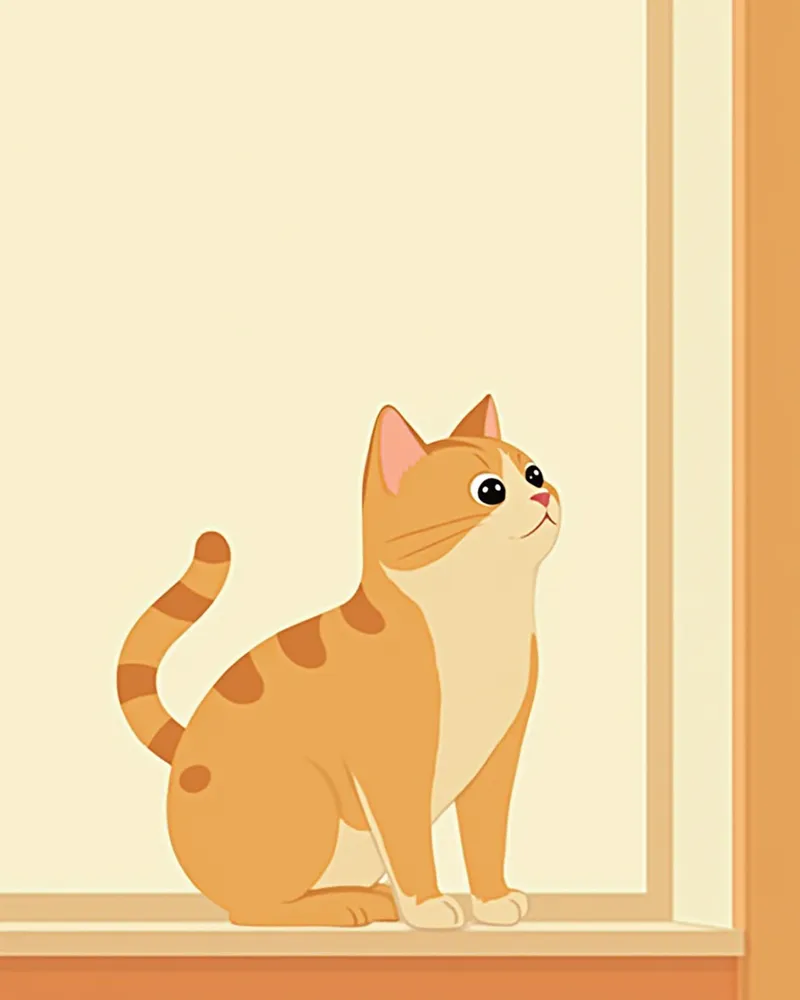
When It Might Not Be Chattering
If your pet’s jaw trembles repeatedly, they drool excessively, or their eyes appear unfocused in the absence of any obvious trigger, it may not be chattering but rather a sign of an underlying issue. Oral problems such as tooth or gum pain and stomatitis, systemic conditions that cause excessive drooling, or neurological abnormalities presenting as seizure-like activity can all mimic chattering. Because the underlying causes differ, the most accurate and efficient way to determine what’s going on is to record a video of the episode and show it to your veterinarian, rather than trying to diagnose it yourself.
If Chattering Is Frequent, Check for Play Needs

Signs That Outdoor Stimuli Are Becoming Stressful
When to Visit the Vet
If your pet exhibits repetitive jaw trembling without any apparent trigger, seizures lasting more than a few minutes, collapse or loss of consciousness, foaming at the mouth, or a sudden loss of appetite, these may be signs of neurological or metabolic issues rather than simple chattering. In such cases, please visit an animal hospital within 24 hours, and if possible, bring a video recording of the episode to show the veterinarian.
Reviewed by a veterinarian

Dr. Tony — Punnawat Phongkittirak
VeterinarianA veterinarian who majored in veterinary medicine at Khon Kaen University, Thailand, and completed the IVSA program at North Carolina State University in the United States. Drawing on clinical experience at animal hospitals, he works in the pet healthcare field and is dedicated to building a digital care environment that connects pet parents with veterinarians.
Reviewed 2026-04-28
Frequently Asked Questions
Do all cats chatter?
Can I stop my dog from chattering?
Do dogs chatter too?
Chattering has suddenly decreased recently. Is that okay?
My dog pants with its tongue out when chattering. Is this normal?
Share
Related Guides

Primary vs. Secondary Veterinary Hospitals: A Comparison

5 Easy-to-Raise Cat Breeds for First-Time Owners — Grooming Difficulty Comparison

Top 7 Short-Legged Dog Breeds
Frequently Asked Questions About Feline Dental Radiography — Key Information for Pet Owners

Frequently Asked Questions About Preventive Dental Treats and Chews for Cats — Key Points Every Owner Should Know

Frequently Asked Questions on Preventing Feline Tartar and Plaque — Key Information Every Pet Owner Should Know
Feline Oral Abscess & Root Abscess FAQ — Key Information Every Pet Owner Should Know

Frequently Asked Questions About Cleft Palate in Cats — Key Information for Pet Owners

Cat Teeth Grinding (Bruxism) FAQ — Key Information Every Pet Owner Should Know
Is Feline Anesthetic Dentistry Really Safe? — Key Safety Q&A Answered by a Veterinarian
References
[1] Bradshaw, J., Cat Sense: The Feline Enigma Revealed, Penguin Books, 2014
[2] Bowen, J. and Heath, S., Behaviour Problems in Small Animals: Practical Advice for the Veterinary Team, Elsevier Saunders, 2005
[3] A Professional's Guide to Feline Behaviour: Understanding, Improving and Resolving Problems