Like
Share
멍실장
강아지 벼룩 예방·치료 — 환경 소독과 약물 선택 가이드

Dog Flea Prevention and Treatment — A Guide to Environmental Disinfection and Medication Selection

Infection/ParasitesPreventionMeongsiljang Veterinary Advisory Board

Fleas on dogs can cause more than just itching; they may lead to anemia, allergies, and even transmit other parasites. We’ve outlined a step-by-step guide, from choosing the right medication to disinfecting your home environment.

What Are Dog Fleas? Why Is Prevention Important?

An illustration of a concerned pet owner watching their dog scratch its neck on the living room sofa.
Dog fleas are primarily cat fleas (Ctenocephalides felis) that infest a dog’s skin, feeding on blood and causing itching, allergies, anemia, and even parasite-borne infections. The key point is that finding one adult flea doesn’t mean the problem is solved. Over 95% of the flea population—eggs, larvae, and pupae—lurk in your home, so you must combine flea medication with environmental disinfection to break the cycle of reinfestation. Since fleas can spread through walks or contact with other animals, year-round prevention is recommended.

What to Check Before Starting Prevention and Treatment

The type of flea medication suitable for your dog depends on factors such as age, weight, pregnancy status, and underlying conditions like liver or kidney disease or heartworm infection. Since deworming ingredients can affect the nervous system and cause side effects, and sensitivity varies from dog to dog, it is safest to consult your veterinarian to confirm your dog’s weight, age, and any underlying health issues before using over-the-counter or online products. Especially for very young or small dogs, many products have specific minimum age and weight requirements, so veterinary guidance is essential before administering any treatment.

Checklist for Signs of Dog Flea Infestation

If your pet shows two or more of the following signs, strongly suspect a flea infestation: - Excessive scratching: Especially focused on the lower back, base of the tail, and inner thighs - Black, sand-like specks: These are flea feces. When placed on a white tissue and moistened with water, they will smear into a reddish-brown color - Red rash or scabs: Early signs of flea allergy dermatitis (FAD) - Pale gums: A sign of anemia caused by significant blood loss; this is an emergency - Hair loss near the tail: The area of hair loss expands due to persistent licking and scratching
Parting the fur on a dog's lower back to check for flea feces.

Overview of Flea Medication Types

Dog flea medications are broadly categorized into “immediate-kill” and “long-term preventive” types. - Immediate-kill (oral, effective within 4–24 hours): Capstar (nitenpyram) series. These quickly eliminate adult fleas already present on the dog but lack residual efficacy, making them unsuitable for standalone use. - Long-term preventive (oral, 1–3 months): Bravecto (fluralaner), NexGard (afoxolaner), Simparica (sarolaner). These also protect against ticks simultaneously. - Long-term preventive (spot-on, 1 month): Frontline (fipronil), Advantage (imidacloprid). - Collar type (8 months): Seresto (imidacloprid + flumethrin).

Comparison of Major Dog Flea Medications (Based on Veterinary Prescriptions)

ItemBravecto (oral)NexGard (oral)Frontline (spot-on)Capstar (oral)
Active ingredientFluralanerAfoxolanerFipronilNitenpyram
Duration of effect12 weeks4 weeks4 weeks24 hours
Concurrent tick preventionTrueTrueTrueFalse
Minimum age for use6 months8 weeks8 weeks4 weeks
Main useLong-term preventionMonthly preventionMonthly preventionAcute eradication

Drug selection depends on the puppy's body weight, age, and presence of cohabiting animals, so a veterinarian's prescription is essential

Home Environmental Disinfection — You Must Eliminate 95% to Finish the Job
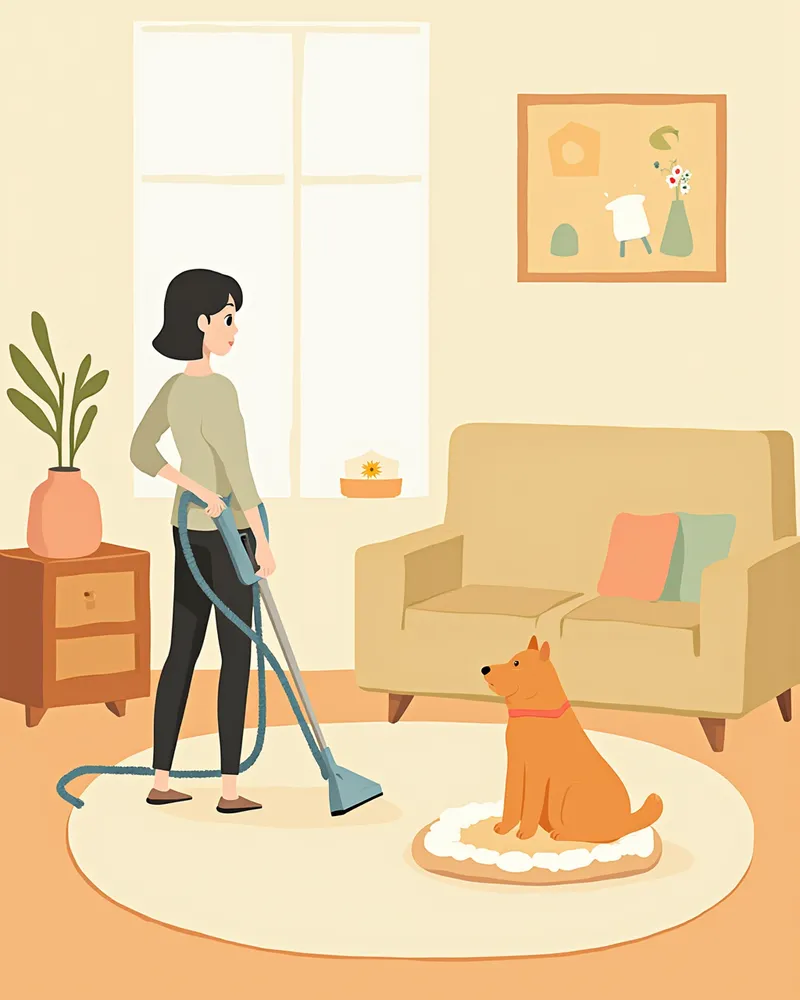
Over 95% of immature flea stages—eggs, larvae, and pupae—hide not on your dog’s body, but in the environment, such as carpets, sofa crevices, and dog beds. If you only treat your dog without addressing the environment, the remaining eggs and pupae will hatch, leading to reinfection within 2–3 weeks. - Hot water washing: Wash your dog’s bed, blankets, and cushion covers in water at least 60°C, then dry on high heat. - Vacuuming (daily for 2 weeks): Thoroughly vacuum carpets, sofa crevices, and baseboards. Immediately seal and dispose of the vacuum bag or canister contents after cleaning. - Environmental insecticides: Use products containing an Insect Growth Regulator (IGR) to block eggs and larvae. - Cars and carriers: Fleas can hitch a ride during walks or vet visits, so clean these areas as well.
A scene where the owner meticulously cleans the living room with a vacuum cleaner while the dog watches.

Proper Medication Use and Common Mistakes

For the medication to work effectively, it’s important to use it correctly. Please keep the following points in mind: - Accurately measure your pet’s weight: Using a dose that’s too low may result in insufficient effectiveness, while a dose that’s too high can increase the risk of side effects. - Wait at least 48 hours after application before bathing: Spot-on treatments are absorbed into the skin’s natural oils and spread across the body. Bathing too soon after application can reduce the product’s effectiveness. - In households with multiple pets: Treating only one pet can lead to reinfection from untreated animals. It’s essential to treat all cohabiting pets at the same time. - Don’t limit use to summer only: Indoor environments in Korea remain warm year-round, allowing parasites to stay active throughout the year. We recommend continuous prevention for all 12 months.
A guardian’s hand applying spot-on medication between a puppy’s shoulder blades

Dogs That Require Special Caution in Medication Selection

Deworming medications can affect the nervous system and cause side effects, and some dogs may be particularly sensitive to certain ingredients. Breeds such as Collies, Shetland Sheepdogs, and Australian Shepherds are commonly known to be more sensitive, so extra caution is advised. Additionally, dogs with kidney or liver disease, epilepsy, or those that are pregnant or nursing have limited treatment options. For safety, avoid purchasing dewormers on your own from stores or online; always have a veterinarian determine the appropriate medication after an initial consultation.

Reviewed by a veterinarian

Dr. Tony — Punnawat Phongkittirak

Dr. Tony — Punnawat Phongkittirak

Veterinarian

A veterinarian who majored in veterinary medicine at Khon Kaen University, Thailand, and completed the IVSA program at North Carolina State University in the United States. Drawing on clinical experience at animal hospitals, he works in the pet healthcare field and is dedicated to building a digital care environment that connects pet parents with veterinarians.

Frequently Asked Questions

Can I use human flea medication on my dog?
Absolutely not. Some ingredients in human-use insecticides, particularly high concentrations of permethrin, can cause neurotoxicity by affecting the nervous system, and the risk is even greater if you have cats in the home. You must use only prescription medications specifically formulated for dogs.
Can fleas also infest humans?
Yes, they can. The cat flea (Ctenocephalides felis) bites and feeds on the blood of not only dogs and cats but also humans, typically targeting the ankles and calves. More importantly, fleas can transmit parasites such as the tapeworm (Dipylidium caninum) and various pathogens, which may cause serious systemic infections beyond simple itching.
Should I still prevent fleas in winter?
Yes, in Korean apartments, indoor temperatures stay above 20°C even in winter, allowing flea eggs, larvae, and pupae to survive year-round. Therefore, continuous 12-month prevention is the standard recommendation.
How long does it take to completely eliminate fleas?
Adult fleas will be nearly eliminated within 24 hours of treatment, but to completely break the infestation cycle caused by eggs and pupae hidden in the environment, you must combine medication with thorough environmental disinfection for at least three months.
Can brushing after walks alone help prevent issues?
Flea combing is a tool for detection and confirmation, not a substitute for preventive medication. While combing after walks can help with early detection, prescription preventives are necessary to actually stop fleas from feeding on blood.

Share

Related Guides

References

[1] Jackson H, Marsella R (eds). BSAVA Manual of Canine and Feline Dermatology, 4th Edition. Chapter 7 — Ectoparasites (Ctenocephalides felis biology and control). 2021

[2] Shaw SE, Kenny MJ, Tasker S et al. Pathogen carriage by the cat flea Ctenocephalides felis (Bouché) in the United Kingdom. Veterinary Microbiology 102, 183-186, 2004

[3] Franc M, Bouhsira E, Beugnet F. Direct transmission of the cat flea (Ctenocephalides felis) between cats exhibiting social behaviour. Parasite 20, 49, 2013

This information is based on veterinary literature and does not replace diagnosis or treatment. Please consult a veterinarian for specific health concerns.

Metapet Co., Ltd. | CEO: Park Sung-yong | Business Reg. No. 417-88-02562 | Seoul, South Korea | Customer Center

Dog Flea Prevention & Treatment: Meds & Home Disinfection | Meongsiljang