
Complete Guide to Cat Vaccination Schedules and Types
Vaccinations are essential for all cats, even those that live exclusively indoors. We’ve compiled a clear, evidence-based guide from veterinary textbooks covering core and non-core vaccines, as well as the recommended vaccination schedule and important precautions for kittens through adult cats.
Why Are Cat Vaccinations Essential?

Important Checks Before Vaccination
Your cat should be in good health on the day of vaccination. If you notice any unusual symptoms such as fever, diarrhea, or loss of appetite, it is safer to postpone the vaccination. If your cat has not been dewormed, please complete parasite treatment before vaccination. For kittens, maternal antibodies received from their mother can reduce vaccine effectiveness, so vaccinations are not administered before 6 weeks of age.
Core Vaccines: Essential for All Cats
Non-Core Vaccines: Consider Based on Lifestyle

Kitten Vaccination Schedule
Vaccination Schedule at a Glance
| Vaccine Type | First Dose for Kittens | Booster Doses | Initial Series for Adult Cats | Booster Interval |
|---|---|---|---|---|
| FVRCP (Feline Panleukopenia, Herpesvirus, Calicivirus) | 6–8 weeks of age | Every 3–4 weeks, with the final dose at 16–20 weeks | 2 doses (3–4 weeks apart) | 1 year later, then every 1–3 years |
| Rabies | 8 weeks of age (Canarypox vector vaccine) or 12 weeks of age (inactivated vaccine) | — | 2 doses (1 year apart) | Every 1–3 years |
| Feline Leukemia Virus (FeLV) | 8 weeks of age | 1 dose 3–4 weeks later | 2 doses (3–4 weeks apart) | Every 1–2 years |
Vaccination and Boosters for Adult Cats
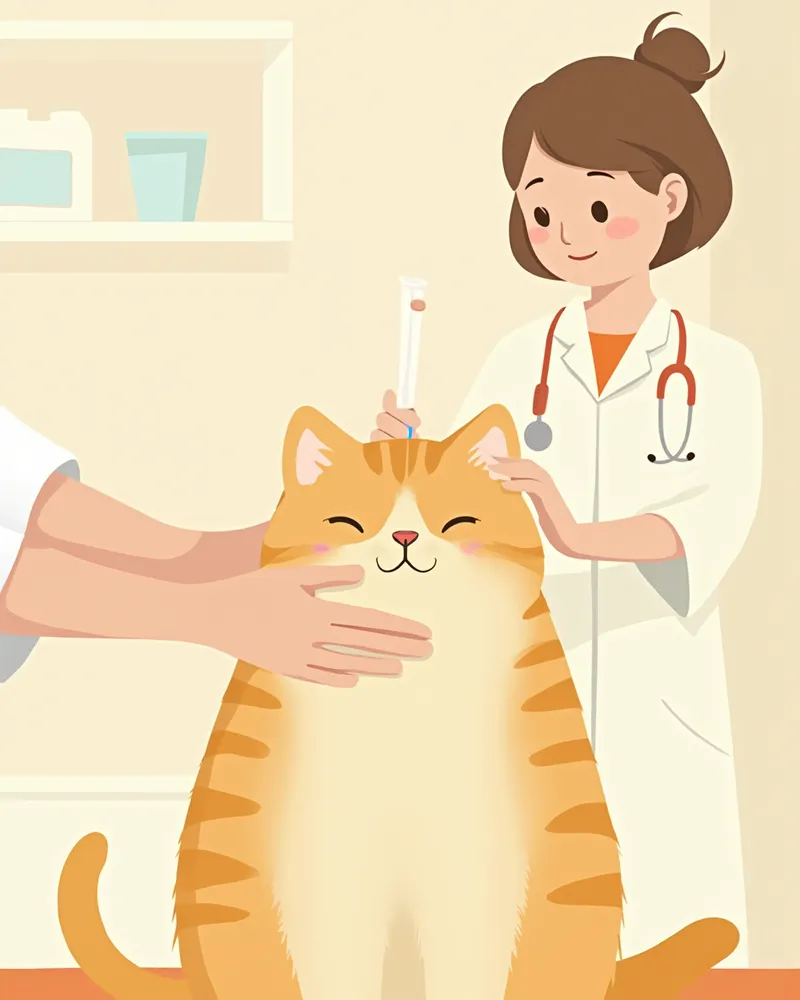
Watch for These Post-Vaccination Reactions
It’s common for the injection site to swell slightly or for your pet to show reduced appetite and lower energy for about a day after vaccination. Most pets recover naturally within 1–2 days. However, if you notice facial swelling, severe vomiting, or difficulty breathing, seek veterinary care immediately. Although rare, allergic reactions can occur. It’s safest to keep your pet at the clinic for 30–60 minutes after vaccination to monitor their condition. Also, if the injection site remains firm or gradually enlarges over several weeks, be sure to have your veterinarian examine it.
Tips to Maximize Vaccination Effectiveness

Reviewed by a veterinarian

Dr. Tony — Punnawat Phongkittirak
VeterinarianA veterinarian who majored in veterinary medicine at Khon Kaen University, Thailand, and completed the IVSA program at North Carolina State University in the United States. Drawing on clinical experience at animal hospitals, he works in the pet healthcare field and is dedicated to building a digital care environment that connects pet parents with veterinarians.
Reviewed 2026-04-13
Frequently Asked Questions
Do indoor cats really need vaccinations?
What should I do if I missed the vaccination schedule?
Can pregnant cats receive vaccinations?
Is it safe for my cat to interact with other cats after vaccination?
Can a single comprehensive vaccine prevent all diseases?
Share
Related Guides

Primary vs. Secondary Veterinary Hospitals: A Comparison
5 Easy-to-Raise Cat Breeds for First-Time Owners — Grooming Difficulty Comparison

Top 7 Short-Legged Dog Breeds

Pet Tartar Prevention Methods and Brushing Habits

Flea and Tick Prevention Guide — Seasonal Care and How to Choose Preventive Medications
Senior Dog Health Care Guide (Age 7 and Older)

Complete Guide to Puppy Vaccination Timing and Types
The Ultimate Guide to First Health Care for a Newly Adopted Kitten — Owner Checklist

The Ultimate Guide to First-Time Puppy Health Care — Owner Checklist

The Ultimate Seasonal Health Care Guide for Cats — Owner Checklist
References
[1] The Cat, Clinical Medicine and Management, 2nd Edition — Chapter 8: Vaccination Recommendations (Table 8.4)
[2] Clinical Medicine of the Dog and Cat, 4th Ed — Chapter 21: Infectious Diseases, Vaccination Protocols
[3] Scherk MA, Ford RB, Gaskell RM, et al. 2013 AAFP Feline Vaccination Advisory Panel Report. J Feline Med Surg. 2013;15(9):785-808.
[4] Day MJ, Horzinek MC, Schultz RD, et al. WSAVA Guidelines for the Vaccination of Dogs and Cats. J Small Anim Pract. 2016;57(1):E1-E45.
[5] The Veterinary Workbook of Small Animal Clinical Cases — The New Kitten Wellness Examination