Like
Share
멍실장
고양이 신장 보호 — 음수량 자연스럽게 늘리는 7가지 방법과 노령묘 관리 가이드

Protecting Your Cat’s Kidneys: 7 Ways to Naturally Increase Water Intake and a Senior Cat Care Guide

KidneyPreventionMeongsiljang Veterinary Advisory Board

A cat’s daily water intake is the most important indicator for preventing chronic kidney disease. We’ve compiled seven practical, evidence-based strategies to naturally increase water consumption, covering everything from weight-based recommended amounts to bowl placement and material, water filters, wet food, and salt-free broths.

Why Is Water Intake Key to Protecting Your Cat’s Kidneys?
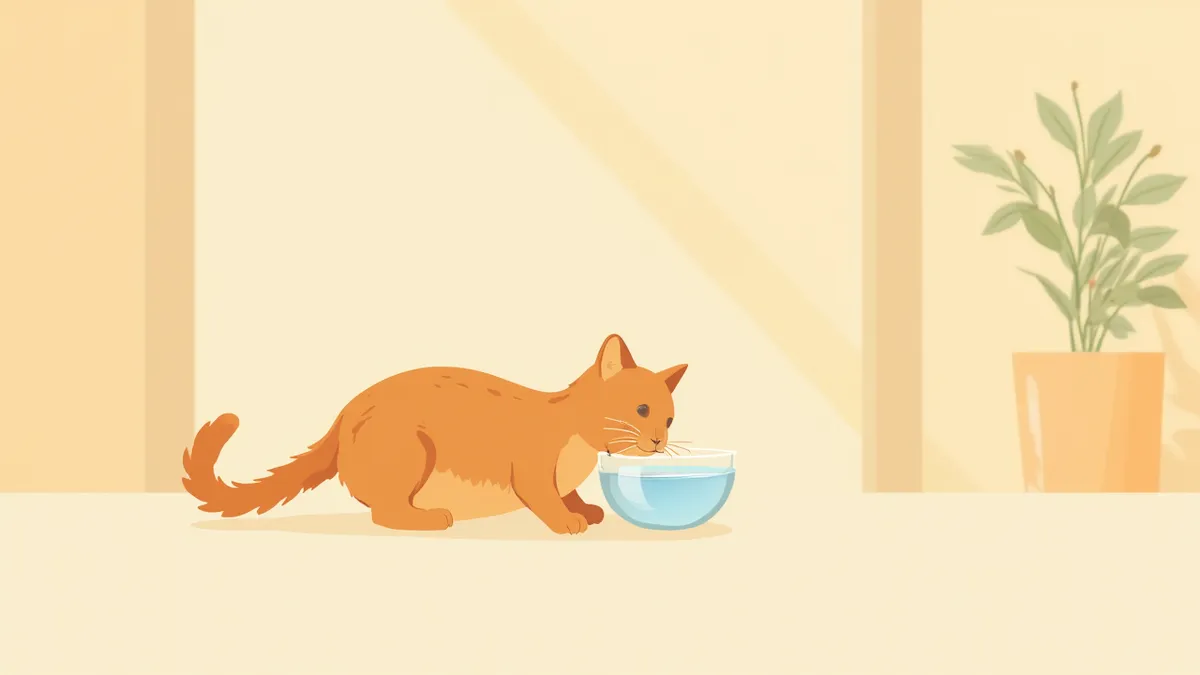
A cat drinking water from a glass bowl
Providing adequate hydration is a crucial part of managing chronic kidney disease (CKD) in cats. Fundamentally, fresh water should always be available, with the key goal being to prevent dehydration and reduce the burden on the kidneys. However, it is a misconception that more water intake is always better. According to veterinary standards, if a cat consistently drinks more than 45 ml of water per kilogram of body weight per day, it may indicate polydipsia (excessive thirst), which can be a sign of underlying conditions such as kidney disease or diabetes, warranting a veterinary examination. Therefore, the objective is not to force excessive water consumption, but to create an environment that prevents dehydration by accounting for moisture from both water and food.

Check Water Intake If You See These Signs

If your cat hesitates by the water bowl, takes only a sip or two, and then walks away, or if their urine clumps suddenly become smaller, these are signs of insufficient water intake. If this pattern persists for more than six months, there is a high likelihood of cumulative strain on the kidneys. For senior cats aged seven years and older, please include annual kidney function tests (BUN, creatinine, and SDMA) in their routine check-ups.

Recommended Water Intake for Cats — Weight-Based Guidelines
Veterinary textbooks classify excessive water intake, or polydipsia, in cats as a consistent daily consumption of more than 45 milliliters per kilogram of body weight. Therefore, there is no specific "target" amount that is better the higher it is; instead, the key is ensuring your cat stays well-hydrated without becoming dehydrated. Cats eating wet food often appear to drink less water directly because their food already contains significant moisture, which is completely normal. Conversely, cats on a dry-food-only diet are prone to insufficient hydration, so it’s important to always provide fresh water and consciously monitor their drinking habits. Please refer to the table below for weight-based guidelines to help identify potential excessive water intake.
A cat sitting next to a stainless steel water bowl

Daily Recommended Water Intake Chart by Weight

ItemPolydipsia (excessive drinking) suspicion criteria — water intake over 45 ml/kg/dayPolyuria suspicion criteria — urine over 40 ml/kg/dayNotes
3 kg (small adult cat)Over 135 ml per dayOver 120 ml per dayIf the excess persists, get a kidney checkup
4 kg (average adult cat)Over 180 ml per dayOver 160 ml per dayIf the excess persists, get a kidney checkup
5 kg (medium adult cat)Over 225 ml per dayOver 200 ml per dayIf the excess persists, get a kidney checkup
6 kg (large/Maine Coon class)Over 270 ml per dayOver 240 ml per dayIf the excess persists, get a kidney checkup

These figures are not a 'target water intake,' but rather the textbook criteria for suspecting polydipsia/polyuria when directly consumed water persistently exceeds these amounts (cats are classified as PU/PD when water intake exceeds 45 ml/kg/day or urine exceeds 40 ml/kg/day). If eating wet food, the amount directly drunk may appear smaller thanks to the moisture in the food.

Methods 1–2: Start by Changing the Water Bowl Location and Material

- Method 1 — Separate food and water bowls: In the wild, cats instinctively avoid drinking water near their prey. If the water bowl is placed next to the food bowl, it can trigger aversion. Keep them at least 1 meter apart. - Method 2 — Use ceramic, glass, or stainless steel bowls: Plastic bowls develop microscopic scratches that harbor bacteria and retain odors, which sensitive-nosed cats often reject. Shallow bowls with wide rims that prevent whisker contact are ideal.

Methods 3–4: Utilize Flowing Water and Wet Food

- Method 3 — Pet water fountain (flowing water dispenser): Many cats prefer running water, so having fresh water constantly flowing can naturally encourage them to drink more. However, using a water fountain doesn’t guarantee a specific increase in water intake, as individual responses vary. Fundamentally, it’s important to always provide access to fresh water. - Method 4 — Increase the proportion of wet food: Wet foods, such as canned or pouch varieties, are high in moisture content. Switching just one meal a day to wet food can help boost overall water intake. In fact, a wet (canned) diet is known to benefit cats with kidney disease, making it a worthwhile option for cats that don’t drink enough water.
A cat drinking water from a pet water dispenser

Methods 5–7: Unsalted Broth, Diverse Bowls, and Daily Cleaning

- Method 5: Add a small amount of unsalted chicken broth to your pet’s water. Boiling chicken breast in water to make unsalted broth and mixing 1–2 teaspoons into their water can enhance the flavor and encourage them to drink more. If using store-bought broth, be sure to check that it is labeled as 0% salt. - Method 6: Place water bowls in various locations around the house. Set up 2–3 water bowls in areas like the living room, bedroom, and hallway to provide opportunities for your pet to drink along their daily movement paths. - Method 7: Change the water daily. Even lukewarm tap water can develop increased bacterial growth after 12 hours. It’s essential to replace the water 1–2 times a day and clean the bowl regularly.

Cats with Already High Kidney Values Require Different Management

If BUN, creatinine, or SDMA levels fall outside the normal range, simply increasing water intake is not enough. Veterinary-prescribed treatments such as renal prescription diets, phosphate binders, and subcutaneous fluids are necessary. Forcing water into your pet’s mouth with a syringe is dangerous due to the risk of aspiration pneumonia. The safest approach is to improve the environment to encourage voluntary water consumption. If you suspect abnormal values, start with IRIS staging tests.

Practical Application Tips: Which Method Should You Start With?

Changing all seven factors at once can overwhelm your cat with environmental stress. Introduce one to two changes per week and monitor their response. For the best cost-to-benefit ratio, prioritize: ① adjusting the water bowl’s location and material, ② adding a pet water fountain, and ③ incorporating one wet food meal daily. You can objectively track daily water intake by weighing the water bowl. Recording intake monthly helps you detect age-related changes early.

Reviewed by a veterinarian

Dr. Tony — Punnawat Phongkittirak

Dr. Tony — Punnawat Phongkittirak

Veterinarian

A veterinarian who majored in veterinary medicine at Khon Kaen University, Thailand, and completed the IVSA program at North Carolina State University in the United States. Drawing on clinical experience at animal hospitals, he works in the pet healthcare field and is dedicated to building a digital care environment that connects pet parents with veterinarians.

Frequently Asked Questions

Can milk count toward a cat’s daily water intake?
No, that’s not recommended. Adult cats lack sufficient lactase, so drinking regular cow’s milk can cause diarrhea. Commercial pet milks are also high in calories, posing a risk of obesity, and aren’t advised for daily feeding. Fresh, clean water is the best choice.
Will increasing water intake bring kidney values back to normal?
Once kidney cells are damaged, they cannot be repaired. However, adequate hydration helps reduce the workload on the remaining functional kidney tissue, thereby slowing disease progression. Early intervention is key, so it’s important to monitor and manage your pet’s water intake from a young age.
What should I do if my pet doesn’t drink from the water dispenser even after I buy one?
It takes about 1–2 weeks for your cat to adjust. Start by turning off the water fountain and letting your cat get used to it as a stationary water bowl, then gradually turn it on to help them become comfortable with it. If your cat is sensitive to motor noise, consider switching to a quieter model or a different type of water dispenser.
Which is better, tap water or purified water?
Korean tap water is safe for drinking. However, cats that are sensitive to the smell of chlorine may prefer boiled and cooled water or filtered water. Mineral water is not recommended because its high calcium and magnesium content can increase the risk of urinary stones.
Can I mix catnip or pet milk with water?
Catnip is fine in small amounts, but daily use is not recommended. The safest additive is 1–2 teaspoons of unsalted chicken or tuna broth. Pet milk can be high in calories. The safest and most effective approach is to increase the proportion of wet food in your cat’s diet.

Share

Related Guides

References

[1] Langston CE, Eatroff AE. Chronic Kidney Disease. In: Small Animal Critical Care Medicine, 3rd Edition. Elsevier, 2022.

[2] Little SE. The Cat: Clinical Medicine and Management, 2nd Edition. Elsevier, 2024. Chapter 35: Urinary Tract Disease — Chronic Kidney Disease in Cats.

[3] International Renal Interest Society (IRIS). IRIS Staging of CKD (modified 2023).

This information is based on veterinary literature and does not replace diagnosis or treatment. Please consult a veterinarian for specific health concerns.

Metapet Co., Ltd. | CEO: Park Sung-yong | Business Reg. No. 417-88-02562 | Seoul, South Korea | Customer Center

Protect Your Cat's Kidneys — 7 Ways to Boost Water Intake | Meongsiljang