Like
Share
멍실장
고양이 주사 부위 육종(FISS) 원인·증상·치료 총정리

Feline Injection-Site Sarcoma (FISS): Causes, Symptoms, and Treatment Overview

ImmunityDiseasesMeongsiljang Veterinary Advisory Board

We’ve compiled everything pet owners need to know about feline injection-site sarcoma (FISS), from its definition and causes to symptoms, early diagnosis criteria, treatment options, and prevention of recurrence.

What is Feline Injection-Site Sarcoma (FISS)?

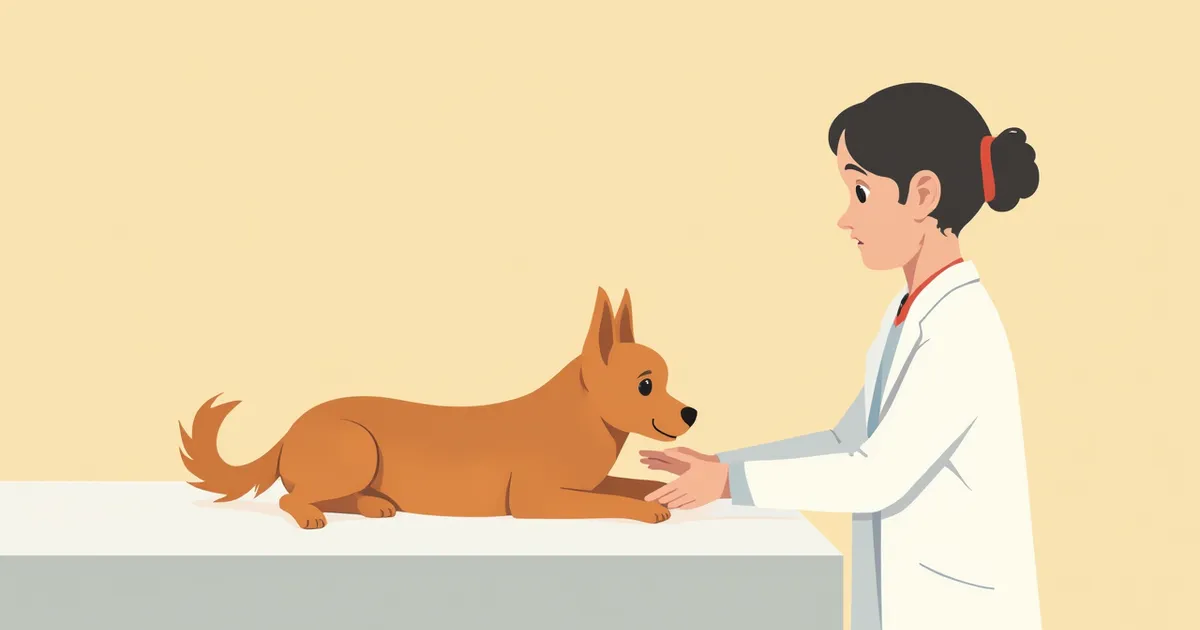
A veterinarian examining a cat’s vaccination site by palpation.
Feline injection-site sarcoma (FISS) is a highly aggressive soft-tissue malignant tumor that develops at the site of vaccinations or injections. Early detection is critical for survival. If a lump at an injection site meets any of the "1-2-3 rule" criteria—persisting for more than three months, measuring larger than 2 cm, or growing within three months of vaccination—immediate biopsy at a veterinary clinic is essential. Even if the lump appears benign, it could be FISS, so avoid the temptation to simply monitor it without further action.

Why Do Tumors Develop at Injection Sites?

Feline injection-site sarcomas (FISS) develop when chronic inflammation at the injection site triggers abnormal proliferation and transformation of fibroblasts. According to veterinary immunology and oncology textbooks, inactivated vaccines containing aluminum-based adjuvants, such as rabies and feline leukemia virus (FeLV) vaccines, are more strongly associated with the development of soft tissue sarcomas than other vaccines. It is believed that inflammatory and immune responses to residual foreign material at the injection site disrupt connective tissue healing, leading to tumor formation in some cases. Although rarely reported at other injection or implantation sites, such as those for microchips, the incidence rate is low: approximately 1 to 4 cases per 10,000 vaccinated cats in the United States, and about 1 case per 10,000 to 20,000 consultations in the United Kingdom. However, the major concern is that once these tumors develop, they are highly aggressive.

Suspect FISS If You Notice These Signs
If the lump that forms in your cat after vaccination shows any of the following signs, you should suspect FISS (Feline Injection-Site Sarcoma):
Persistence: The lump does not disappear even after 3 months post-vaccination.
Size: The lump is 2 cm or larger in diameter, or it continues to grow.
Growth rate: The lump noticeably increases in size within 3 months after vaccination.
Location: It appears in areas where previous injections were given, such as between the shoulder blades, on the side of the body, or on the thigh.
Texture: The lump feels firm and fixed under the skin, with little mobility.
Pain: Your cat shows discomfort when touched or frequently licks the area.
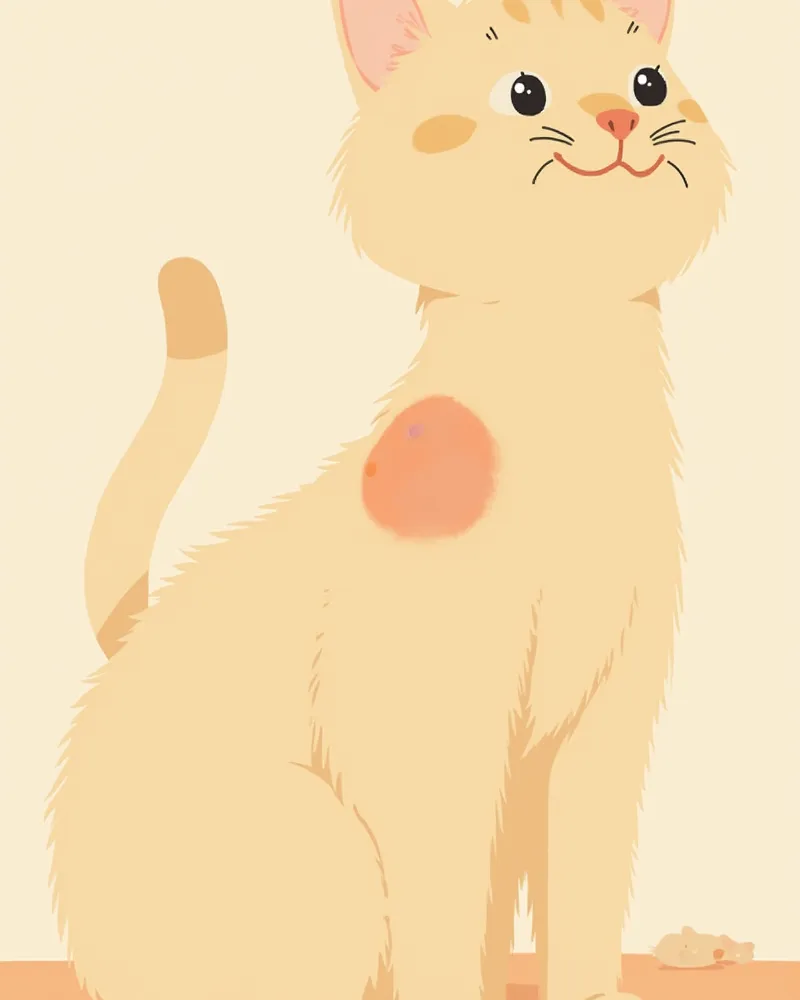
An illustration showing a lump at the injection site between a cat’s shoulder blades.

The 1-2-3 Rule: Criteria for Immediate Veterinary Visit

If your pet meets any of the internationally recognized “1-2-3 Rule” criteria, please visit a veterinary clinic immediately: 1) a lump persists for more than three months after vaccination, 2) the lump is larger than 2 cm, or 3) the lump grows rapidly within three months of vaccination. When these criteria are met, a tissue biopsy (needle biopsy or incisional biopsy) is essential, rather than simply monitoring the lump. Choosing to “wait and see” can significantly reduce survival rates.

How Is FISS Diagnosed?

Diagnosing FISS relies on a combination of precise tests rather than simple palpation. First, a histopathological examination (via punch or incisional biopsy) is performed to identify the specific type of cancer cells. Fine-needle aspiration cytology (FNAC) is not recommended due to its low diagnostic accuracy. To determine the extent of the lesion and check for distant metastasis, advanced imaging studies such as chest X-rays, CT scans, or MRIs are conducted concurrently. Veterinary surgical oncology textbooks emphasize that confirming tumor margins in three dimensions using CT or MRI prior to surgery is essential to improve the success rate of wide excision.

How Is Treatment Conducted?

The cornerstone of FISS treatment is wide surgical excision. To minimize the risk of recurrence, the tumor must be removed with a generous margin—approximately 5 cm laterally from the tumor border and extending deep enough to include the two underlying fascial layers.
Primary Treatment: Wide surgical excision performed by an experienced surgeon, planned with precise imaging (CT/MRI).
Adjuvant Therapy: Radiation therapy before or after surgery (evidence suggests it can help suppress recurrence in some cats).
Chemotherapy: Drugs such as doxorubicin may be used in cases of metastasis or when surgery is not feasible, but responses are often short-lived.
Targeted Therapy: Toceranib (Palladia) showed no measurable clinical response in a study of 18 cats with inoperable FISS.
Narrow (incomplete) excision is not recommended due to the high rate of local recurrence; therefore, achieving a sufficiently wide margin during the initial surgery is the most critical factor.
A veterinarian planning a wide excision surgery while reviewing CT images.

How to Manage Care at Home?

Post-operative home care should focus on early detection of recurrence. Prevent your pet from licking the surgical site by using an Elizabethan collar (e-collar), and contact your veterinarian immediately if you notice the incision opening or any discharge. Regular check-ups and chest imaging are mandatory at 3, 6, and 12 months after surgery. Establish a "body check" habit by gently palpating your pet’s entire body once a month to monitor for new lumps. Even if your pet is eating and moving well, do not become complacent; strictly adhere to the schedule for regular veterinary examinations.

Preventing Recurrence and Future Vaccinations

Cats with a history of FISS require lifelong monitoring. Going forward, consult your veterinarian to minimize vaccinations to only those that are essential, and whenever possible, choose adjuvant-free recombinant vaccines (e.g., PureVax). Guidelines from organizations such as the American Association of Feline Practitioners (AAFP) recommend administering vaccines in areas where tumors, if they develop, can be surgically removed—such as the distal hind legs, below the knees or elbows of the front legs, or the tail—rather than in areas like between the shoulder blades where wide excision is difficult. This approach aims to improve cure rates through wide surgical excision (or amputation, if necessary). Always keep detailed records of the vaccination site, date, and vaccine type.

Reviewed by a veterinarian

Dr. Tony — Punnawat Phongkittirak

Dr. Tony — Punnawat Phongkittirak

Veterinarian

A veterinarian who majored in veterinary medicine at Khon Kaen University, Thailand, and completed the IVSA program at North Carolina State University in the United States. Drawing on clinical experience at animal hospitals, he works in the pet healthcare field and is dedicated to building a digital care environment that connects pet parents with veterinarians.

Frequently Asked Questions

A lump appeared after vaccination—should I go to the vet right away?
A small lump that appears right after vaccination may be a temporary inflammatory response. However, if it doesn’t go away after three months, is larger than 2 cm, or continues to grow, you should have a biopsy performed at a veterinary clinic right away.
If diagnosed with FISS, is there a chance of survival?
If detected early and treated with a wide, extensive surgical excision by an experienced surgeon, long-term local control is often achievable, with radiation therapy added if necessary. Conversely, a narrow or incomplete excision increases the risk of local recurrence and worsens the prognosis. The quality of the initial surgery is paramount.
So, should we skip vaccinations altogether?
Not at all. The risk of fatal infectious diseases like rabies and panleukopenia is far greater than the risk of FISS. It's wise to administer essential vaccines while consulting with your veterinarian to determine the appropriate vaccination schedule, injection sites, and vaccine types (such as recombinant vaccines).
Which cats are more prone to it?
There is no clear difference based on breed or sex. However, vaccine-associated sarcomas tend to occur in relatively young cats, and the risk is known to increase slightly when multiple vaccines are administered at the same site or when repeated injections (such as long-acting insulin or repeated antibiotic injections) are given.
Is radiation therapy after surgery absolutely necessary?
Many studies show that combining surgery with radiation therapy significantly lowers the recurrence rate compared to surgery alone. You can make the best decision by consulting with a veterinary oncologist who will take into account the size of the lesion, the status of the surgical margins, and your cat's overall health.

Share

Related Guides

References

[1] Little, S. E., The Cat: Clinical Medicine and Management, 2nd Edition, Chapter on Feline Injection-Site Sarcoma

[2] Kudnig, S. T. & Séguin, B., Veterinary Surgical Oncology, 2nd Edition, Chapter on Feline Injection-Site Associated Sarcoma

[3] Hartmann, K. et al., Vaccination of Immunocompromised Cats, Journal of Feline Medicine and Surgery, 2015

This information is based on veterinary literature and does not replace diagnosis or treatment. Please consult a veterinarian for specific health concerns.

Metapet Co., Ltd. | CEO: Park Sung-yong | Business Reg. No. 417-88-02562 | Seoul, South Korea | Customer Center

Feline Injection-Site Sarcoma (FISS): Causes & Treatment | Meongsiljang