Like
Share
멍실장
강아지 치아골절 증상과 원인, 진단·치료와 관리 포인트 총정리

A Complete Guide to Canine Tooth Fractures: Symptoms, Causes, Diagnosis, Treatment, and Care

Oral HealthDiseasesMeongsiljang Veterinary Advisory Board

Dental fractures in dogs are oral conditions where the tooth structure is damaged due to chewing on hard objects or trauma. The treatment approach varies depending on whether the pulp is exposed, making prompt veterinary examination essential.

What Are Canine Tooth Fractures?
A veterinarian examining a puppy's teeth.
Canine tooth fractures are oral conditions in which the tooth structure breaks or cracks due to excessive force, such as trauma or chewing on hard objects. The most critical factor is whether the pulp (the bundle of nerves and blood vessels) is exposed. A “complicated fracture” with pulp exposure almost invariably leads to endodontic diseases like pulpitis and pulp necrosis, accompanied by pain. If left untreated, it can progress to periapical abscesses or pathological jaw fractures. If you notice a broken tooth or discoloration, it’s best to have your dog examined by a veterinarian as soon as possible.

Main Causes of Tooth Fractures

Chewing on hard objects: Chewing on items such as stones, raw bones, antlers, hard hide chews, or rigid toys can exert excessive force on teeth in abnormal directions, leading to fractures. Complex fractures involving exposed dental pulp are particularly common in the maxillary fourth premolar (tooth 108), which is the largest molar.
Trauma: Impacts from traffic accidents, collisions with walls, falls, or fights with other dogs are also major causes.
Weakening due to periodontal disease: When periodontal disease weakens the alveolar bone, fractures can occur even with stimuli weaker than usual. The mandibular canine region is especially vulnerable, as it bears 60–70% of the jaw’s structural strength.

Checklist of Easily Overlooked Symptoms

Scratching or rubbing around the mouth: Your pet may scratch at their mouth with their front paws or rub their snout on the floor due to pain.
Chewing on one side only: They may avoid the painful side and chew exclusively on the opposite side.
Dropping food and decreased appetite: Pain while chewing can cause them to drop kibble during meals and eat less.
Sudden worsening of bad breath: As a pulp infection progresses, the odor becomes significantly stronger than usual.
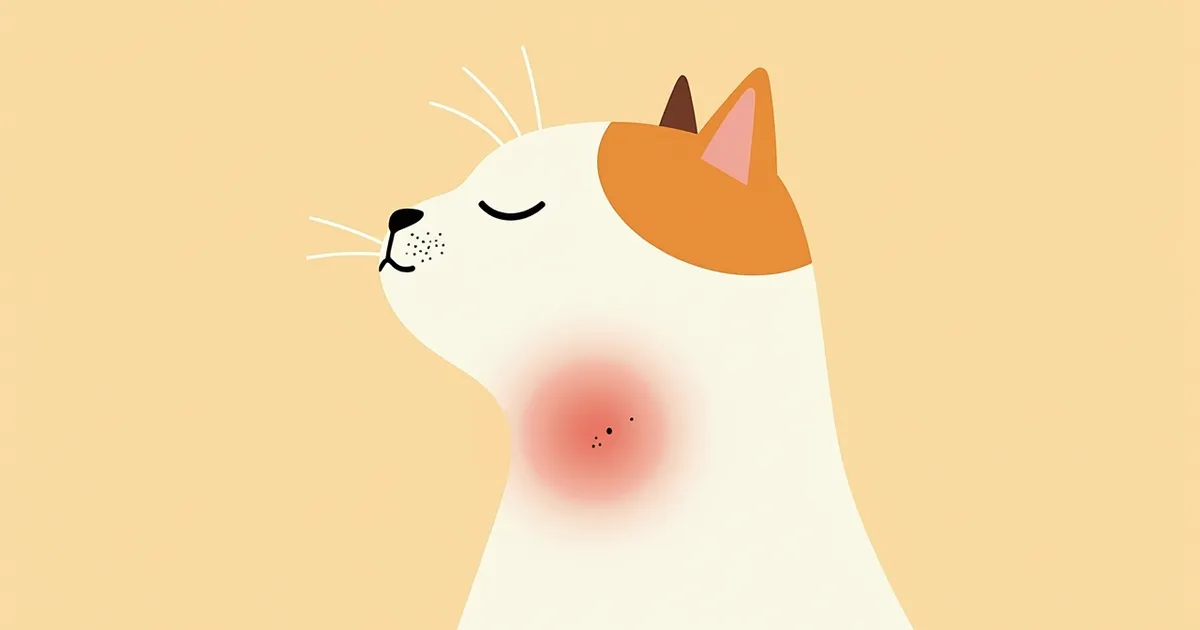
Facial swelling or skin fistulas: An abscess at the root tip can cause swelling under the eye or along the lower jaw, or result in a small opening in the skin.
Puppy Scratching Around Its Mouth — A Sign of Tooth Pain

Signs Requiring Immediate Veterinary Care

If your pet shows any of the following symptoms, seek veterinary care within 24 hours. Pulp infections can rapidly spread to the jawbone and throughout the body. • Swelling under the eyes or in the lower jaw • Pink or red spots, or holes, visible on the teeth (suspected pulp exposure) • Refusal to eat for more than 48 hours • A pus-like odor from the mouth • Small holes (fistulas) appearing on the facial skin

Diagnostic Methods — Checking What Isn’t Visible to the Eye

A visual check alone isn’t enough for a thorough oral exam. To reach an accurate diagnosis, we follow these steps:
Visual and dental explorer examination: We first assess the location and depth of any fractures, as well as whether the pulp is exposed.
Intraoral radiographs: X-rays allow us to detect periapical abscesses, periodontal ligament damage, and root fractures. Without radiographs, the condition of the tooth roots remains unknown.
General anesthesia required: Both detailed diagnostics and treatment are typically performed under general anesthesia.

Treatment Methods by Fracture Type

Treatment depends on the depth of the fracture.
Enamel fracture (most minor): We finish by polishing the surface and applying resin bonding. There is little to no pain.
Complicated fracture (pulp exposure): ① Root canal therapy — We remove the pulp and fill the tooth with specialized materials to preserve it. ② Extraction — This is chosen when preservation is difficult or infection is severe.
Root fracture: Extraction is usually necessary.
Your veterinarian will examine the X-rays to determine whether the tooth can be saved.
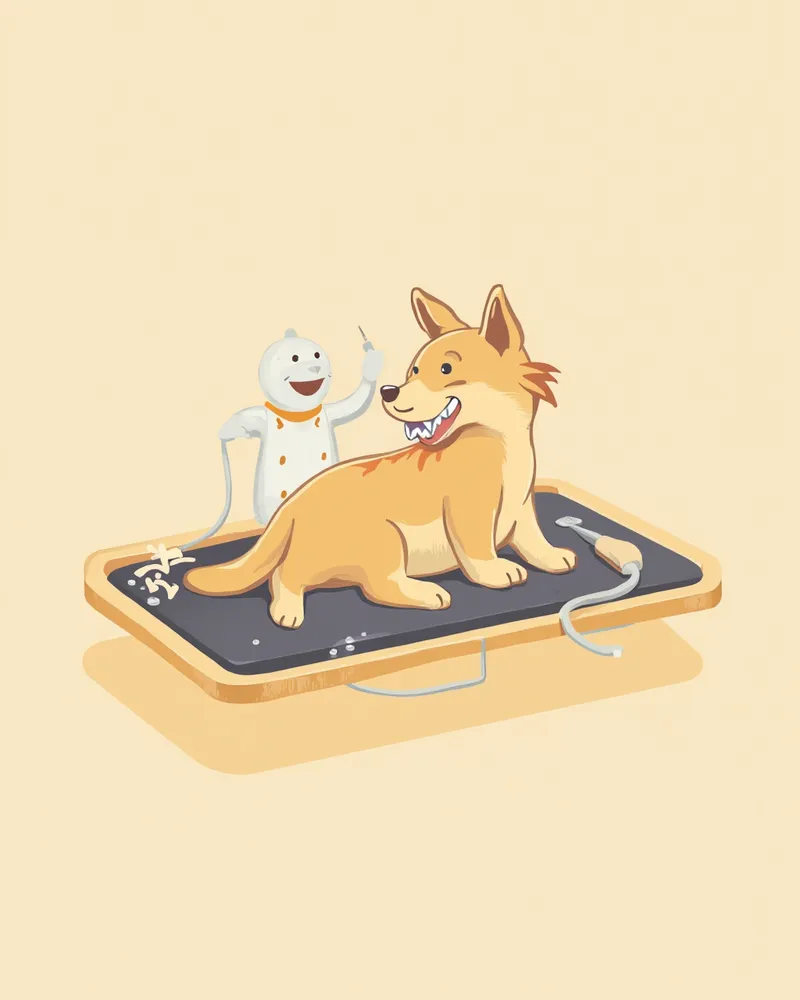
Puppy dental care — root canal treatment procedure scene

Home Care Points

Post-treatment home care plays a key role in how quickly your pet recovers.
Switch to soft food: For a while after treatment, offer wet food or dry food soaked in water to reduce stress on the teeth.
Remove hard treats and toys completely: Eliminate common causes of fractures such as rocks, raw bones, antlers, and hard nylon toys.
Use an oral rinse: A veterinarian-prescribed oral rinse (e.g., chlorhexidine) helps prevent plaque buildup and infection.
Regular dental X-rays: After root canal therapy, regular X-rays are necessary to monitor the periapical area and detect reinfection early.
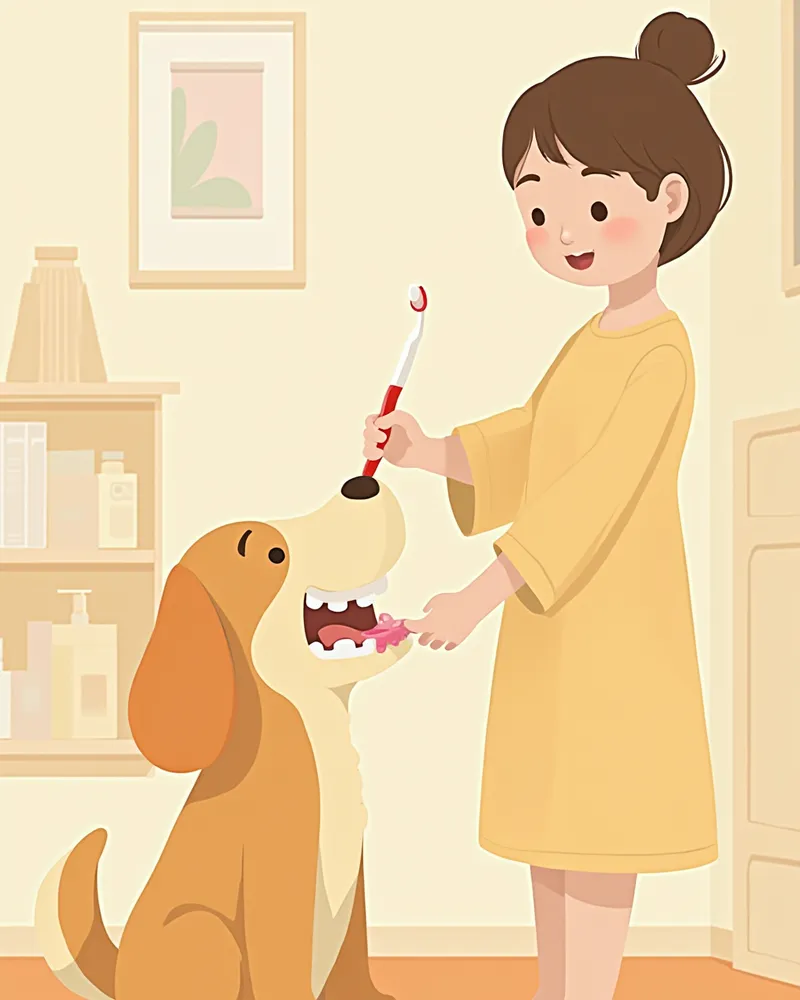
A pet owner caring for their dog’s teeth

Breed-Specific Precautions & Prevention of Recurrence

Small breeds (Chihuahuas, Pomeranians, and Maltese) are prone to periodontal disease, so weakened jawbone can lead to fractures or pathological mandibular fractures even from minor trauma, requiring careful attention. The mandibular canine region, which bears a significant portion (60–70%) of the strength of the anterior mandible, is particularly susceptible to weakening. For large breeds, whose bite force is strong, extra caution is advised when providing hard toys. Toy selection guidelines: Materials that are so hard they do not show indentations when pressed with a fingernail may place undue stress on the teeth. Softer rubber toys that do indent or rope toys are relatively safer options.

Reviewed by a veterinarian

Dr. Tony — Punnawat Phongkittirak

Dr. Tony — Punnawat Phongkittirak

Veterinarian

A veterinarian who majored in veterinary medicine at Khon Kaen University, Thailand, and completed the IVSA program at North Carolina State University in the United States. Drawing on clinical experience at animal hospitals, he works in the pet healthcare field and is dedicated to building a digital care environment that connects pet parents with veterinarians.

Frequently Asked Questions

It looks like my tooth is slightly chipped. Is it okay to leave it as is?
A minor chip in the enamel alone is not immediately life-threatening. However, over time, bacteria can enter through the crack, potentially leading to infection of the pulp and tooth root. If you notice this, it’s safest to have it checked by a veterinarian at least once.
Can root canal therapy (endodontic treatment) completely save a tooth?
Root canal therapy involves removing the tooth’s pulp to prevent infection and preserve the tooth structure. When successful, it allows the tooth to maintain its function. However, X-rays should be taken every 6 to 12 months after treatment to monitor the root area and check for any signs of reinfection.
Will my pet still be able to eat well after having teeth extracted?
Dogs generally adapt well after tooth extractions. Even if a large tooth, such as the maxillary fourth premolar, is removed, you can transition back to regular dry food after feeding a soft diet for about four weeks. Most dogs resume their daily lives without significant difficulty chewing.
What kind of toys are good for preventing tooth fractures?
Soft toys that leave a slight indentation when pressed with a fingernail are safe. Avoid deer antlers, raw bones, hard nylon toys, and stones. Rubber toys and rope toys are relatively safer choices for your pet's teeth.
Do dogs sometimes hide their pain?
Yes, dogs often instinctively hide their pain. Even if they appear to be eating normally, you might notice changes such as chewing on only one side or showing less interest in hard treats than before. Regular dental check-ups every six months can help catch issues early.

Share

Related Guides

References

[1] Holmstrom SE, Frost Fitch P, Eisner ER, Veterinary Dental Techniques for the Small Animal Practitioner, 3rd ed., Saunders, 2004

[2] Wiggs RB, Lobprise HB, Veterinary Dentistry: Principles and Practice, Lippincott-Raven, 1997

[3] Niemiec BA, Veterinary Periodontology, Wiley-Blackwell, 2012

[4] Gracis M, Chapter: Dental Fractures, in: Veterinary Dentistry: A Team Approach, 2nd ed., Elsevier, 2019

This information is based on veterinary literature and does not replace diagnosis or treatment. Please consult a veterinarian for specific health concerns.

Metapet Co., Ltd. | CEO: Park Sung-yong | Business Reg. No. 417-88-02562 | Seoul, South Korea | Customer Center

Canine Tooth Fractures: Symptoms, Causes & Treatment | Meongsiljang