
Like
Share
멍실장
강아지 간성 뇌증 증상과 원인, 진단·치료와 관리 포인트 총정리

If Your Dog Suddenly Becomes Lethargic and Stumbles — Warning Signs of Hepatic Encephalopathy and Emergency Response

Liver HealthDiseasesMeongsiljang Veterinary Advisory Board

Hepatic encephalopathy in dogs is a neurological condition caused by the accumulation of toxic substances in the brain due to impaired liver function. Early detection and proper management are essential.

Hepatic Encephalopathy in Dogs Is a Neurological Disorder Caused by Impaired Liver Function

An image of a puppy looking confused at the vet clinic.
Hepatic encephalopathy in dogs is a neurological disorder that occurs when the liver fails to properly process toxic substances, allowing ammonia and other toxins to accumulate in the bloodstream and impair brain function. The most common cause in dogs is a portosystemic shunt, a condition where blood bypasses the liver, but it can also arise from acquired liver diseases such as chronic liver disease or cirrhosis. Because symptoms are often subtle and intermittent, careful observation by pet owners is crucial for early detection. - Impaired liver function: The liver cannot adequately remove ammonia, leading to elevated blood ammonia levels (hyperammonemia). - Effects of multiple toxic substances: In addition to ammonia, other substances such as aromatic amino acids and GABA contribute to neurological dysfunction. - Ammonia production by gut bacteria: Ammonia produced by intestinal bacteria is not filtered by the liver and enters systemic circulation, triggering symptoms. Since early signs are mild, vigilant monitoring by owners is essential.

The Main Causes Are Impaired Liver Function and Intestinal Bacterial Imbalance

Hepatic encephalopathy in dogs can stem from both congenital and acquired liver diseases. The most common cause in dogs is a congenital portosystemic shunt, but diffuse hepatocellular diseases such as cirrhosis, hepatic necrosis, and hepatic lipidosis can also be responsible. In these conditions, the liver fails to adequately remove ammonia, leading to an accumulation of toxic substances in the bloodstream. - Portosystemic shunt: Blood bypasses the liver, allowing toxins such as ammonia from the intestines to flow directly into the systemic circulation. - Impaired hepatocyte function: Conditions like cirrhosis and necrosis reduce the amount of functional liver tissue, diminishing the liver’s ability to clear ammonia. - Ammonia production by gut bacteria: Intestinal bacteria produce large amounts of ammonia, which is not properly filtered out. - Aromatic amino acids and other factors: Along with ammonia, aromatic amino acids and other factors contribute to the development of encephalopathy. These factors interact in a complex manner to trigger the condition.
An anatomical diagram illustrating the flow of toxic substances between a dog's liver and brain

The Main Symptoms Are Neurological Abnormalities and Behavioral Changes

The main symptoms of hepatic encephalopathy in dogs are neurological changes stemming from impaired brain function, including mental confusion, disorientation, circling behavior, altered sleep patterns, lethargy, and seizures. These signs can be subtle and intermittent, making them difficult to detect in the early stages, so owners should monitor their pets closely.
Mental confusion: Disorientation and circling behavior.
Sleep disturbances: Changes in sleep patterns, such as daytime drowsiness and nighttime wakefulness.
Behavioral changes: Sudden aggression or fearfulness.
Seizures: Sudden trembling or convulsions, which may progress to coma in severe cases.
Lethargy: Remaining motionless in one spot all day.
An image of a puppy lying on the floor with dull eyes.

Emergency Signs Requiring Immediate Veterinary Visit

If your dog suddenly loses consciousness, experiences severe seizures, or shows signs of coma, you should visit the vet immediately. This could indicate a severe case of hepatic encephalopathy, which is an emergency situation. Delaying treatment may result in long-term neurological damage, so prompt action is crucial.

Diagnosis Involves a Comprehensive Approach Including Blood Tests, Brain Imaging, and Liver Function Evaluation

Hepatic encephalopathy in dogs is diagnosed by combining neurological symptoms with test results. For a reliable diagnosis, it is ideal to confirm three key factors: ① neurological symptoms consistent with brain dysfunction, ② elevated blood ammonia levels (hyperammonemia), and ③ evidence of impaired liver function. - Blood tests: Check for elevated ammonia levels and abnormal liver enzymes (ALT, AST). - Liver function assessment: Analyze bile acids, albumin, and blood clotting factors to evaluate liver function. - Imaging studies: Use abdominal ultrasound to assess liver structure and check for portosystemic shunts; brain imaging may be performed if needed to rule out other neurological conditions. - Liver biopsy: A tissue biopsy may be performed to clearly identify the underlying cause. - Clinical symptom analysis: Comprehensively evaluate behavioral changes and neurological abnormalities. The veterinary clinic will synthesize all this information to reach an accurate diagnosis.
An image of a veterinarian drawing blood from a puppy's vein.

Treatment Is Progressively Conducted Through Medication, Dietary Management, and Removal of the Underlying Cause

Treatment for hepatic encephalopathy in dogs focuses on lowering blood ammonia levels and managing the underlying disease. - Medication: Lactulose reduces ammonia absorption in the intestines, while antibiotics such as neomycin, metronidazole, and ampicillin help control the gut bacteria that produce ammonia. - Protein-controlled diet: Rather than severely restricting protein, we aim for an appropriate amount and use easily digestible sources like soy and dairy to minimize ammonia production. - Gut environment regulation: Lactulose acidifies the colon contents, preventing ammonia absorption and facilitating its excretion in feces. - Treating the underlying cause: Concurrent treatment is provided for the specific underlying condition, such as hepatitis, cirrhosis, or portosystemic shunts. - Regular monitoring: We consistently check the dog’s condition through blood tests and liver function assessments. Hospitalization may be necessary in emergencies such as seizures. Consistent, long-term management is essential for treatment.
An image of a puppy eating special low-protein dog food.

Home Management Centers on Dietary Control and Regular Check-ups
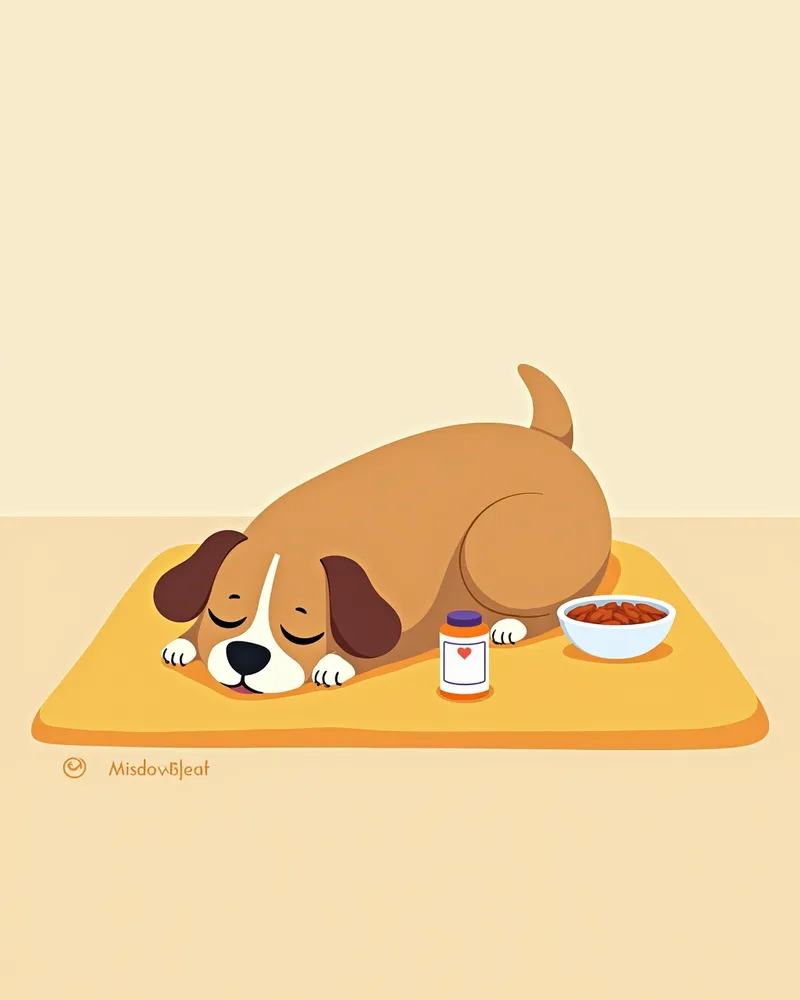
Managing hepatic encephalopathy in dogs requires consistent care at home. It is essential to strictly follow the prescribed diet and medication regimen, and to monitor your dog’s condition through blood tests and liver function evaluations at the intervals recommended by your veterinarian. Immediate veterinary attention is necessary if symptoms worsen suddenly.
Protein-controlled diet: Rather than excessively restricting protein, maintain an appropriate level using special food formulated for liver disease. Protein sources such as soy and dairy products are often better tolerated.
Medication administration: Administer prescribed medications, such as lactulose and antibiotics, at the designated times.
Regular check-ups: Conduct blood tests and liver function evaluations periodically.
Minimizing stress: Avoid environmental changes and excessive exercise.
Hydration management: Provide ample water to prevent dehydration.
An image of a puppy lying quietly on a bed, eating special food and taking medicine.

Preventing Recurrence and Breed-Specific Precautions Are Important

Portosystemic shunts are common in young small-breed dogs and certain breeds (Shih Tzu, Lhasa Apso, Miniature Schnauzer, Pug, Terrier breeds, etc.), making them more susceptible to hepatic encephalopathy. Additionally, discontinuing dietary management or medication without veterinary guidance during treatment significantly increases the risk of recurrence. Consistent management is key to extending life expectancy.

Reviewed by a veterinarian

Dr. Tony — Punnawat Phongkittirak

Dr. Tony — Punnawat Phongkittirak

Veterinarian

A veterinarian who majored in veterinary medicine at Khon Kaen University, Thailand, and completed the IVSA program at North Carolina State University in the United States. Drawing on clinical experience at animal hospitals, he works in the pet healthcare field and is dedicated to building a digital care environment that connects pet parents with veterinarians.

Frequently Asked Questions

Is hepatic encephalopathy in dogs curable?
Symptoms may improve once the underlying disease is eliminated or controlled, but in most cases, ongoing management is necessary. A complete cure is often difficult to achieve.
What tests should be performed if hepatic encephalopathy is suspected?
Diagnosis requires blood tests to check for elevated ammonia levels and impaired liver function (including ammonia, liver enzymes, and bile acids), along with abdominal ultrasound and liver biopsy. These results are evaluated in conjunction with neurological symptoms. Please consult your veterinarian for an accurate assessment.
How important is dietary management?
This is very important. Excessive protein can increase ammonia levels and worsen symptoms. However, rather than imposing an overly strict low-protein diet, it is better to provide the appropriate amount of protein through a specialized diet formulated for liver disease, and to utilize easily digestible protein sources such as soy and dairy products.
Can I stop giving my pet the medication?
Absolutely not. Stopping the medication can cause symptoms to worsen rapidly. It’s important to continue giving it consistently as directed by your veterinarian.
My dog suddenly collapsed. Could it be hepatic encephalopathy?
Loss of consciousness or seizures can be emergency signs of hepatic encephalopathy. You should visit a veterinary clinic immediately for emergency treatment.

Share

Related Guides

References

[1] Plumb's Veterinary Drug Handbook, 9th Edition, 2022

[2] Feldman BF, Nelson RW. Textbook of Veterinary Internal Medicine, 8th Edition, 2015

[3] American College of Veterinary Internal Medicine (ACVIM) Consensus Statement on Hepatic Encephalopathy in Dogs, 2020

This information is based on veterinary literature and does not replace diagnosis or treatment. Please consult a veterinarian for specific health concerns.

Metapet Co., Ltd. | CEO: Park Sung-yong | Business Reg. No. 417-88-02562 | Seoul, South Korea | Customer Center

Dog Suddenly Dazed & Stumbling? Hepatic Encephalopathy Signs | Meongsiljang