Like
Share
멍실장
고양이 동물병원 공포 증상과 원인, 진단·치료와 관리 포인트 총정리

Why Your Cat Trembles at the Vet — Causes of Feline Veterinary Hospital Fear and Desensitization Training

Brain & CognitionDiseasesMeongsiljang Veterinary Advisory Board

Feline hospital anxiety is a behavioral issue in which cats experience severe stress and fear due to the unfamiliar environment, strange smells, and medical procedures at the clinic. We’ve compiled a comprehensive guide covering causes, symptoms, home management strategies, and criteria for medication.

What Is Feline Veterinary Hospital Fear?

A cat curled up in the corner of the animal hospital waiting room
Feline veterinary hospital fear is a behavioral issue in which cats experience severe stress and anxiety due to the clinical environment, unfamiliar odors, and apprehension about medical procedures. This fear commonly arises from unfamiliar settings, people, or experiences, but veterinary clinics are particularly prone to being learned as dangerous places because of the combined presence of other animals’ scents, mechanical noises, and forced handling. Veterinary behavior textbooks explain that various stimuli—such as carriers, owners’ anxious behavior, and the transport process itself—can trigger emotional responses like fear, anxiety, frustration, and pain in the clinic setting. Since fear and anxiety belong to the same emotional system, leaving them unaddressed can create a vicious cycle in which reactions worsen with each visit. Therefore, it is essential to understand the underlying causes and appropriate coping strategies in advance.

Causes and Mechanisms of Fear Development

Fear of the veterinary clinic in cats stems from a combination of factors.
Travel stress: The journey begins with fear as soon as the cat is placed in a carrier and put into the car.
Unfamiliar sensory stimuli: Smells from other animals, mechanical noises, and disinfectants can cause sensory overload.
Past negative experiences: Memories of painful treatments strongly condition the cat to associate the clinic with pain.
Transfer of owner anxiety: The owner’s tense voice and body language are directly transmitted to the cat.
In states of fear and anxiety, physiological changes occur that are beyond conscious control. This can lead to acute stress responses, such as rapid and shallow breathing. It is important to distinguish these stress-induced changes from physical changes caused by disease.

Key Symptoms Owners Should Check For

Fear responses can range from mild to severe. If you notice any of the following signs, it’s important to closely assess your pet’s level of fear.
Cowering in corners of the carrier: Your pet may curl up tightly inside the carrier during transport or while waiting in the examination room.
Growling or snapping: These vocalizations and defensive postures, such as raised hackles or bared teeth, are signs of fear and anxiety.
Dilated pupils: The eyes may appear wide open with pupils fully dilated, and your pet may constantly look around nervously.
Rapid breathing or trembling: A sudden increase in heart rate and respiration can indicate acute stress.
Vomiting or loss of bowel/bladder control: Extreme stress can trigger gastrointestinal upset or involuntary elimination.
A cat with dilated pupils and flattened ears due to fear

When to Consult Your Veterinarian Immediately

If a cat’s fear response is so severe that it exhibits strong aggression or makes veterinary care impossible, gradual fear-desensitization training alone is unlikely to suffice. In such cases, consult your veterinarian about administering an anti-anxiety or sedative medication before proceeding with the examination to ensure the safety of both the cat and the medical team. Forcing restraint and pushing through the visit can deepen the cat’s traumatic memories, making future visits even more difficult. Referring the case to a veterinary behavior specialist is also a wise option in these situations.

Diagnosis — How Is Fear Level Assessed?

Veterinarians comprehensively assess a cat’s Fear, Anxiety, and Stress (FAS) levels by observing behavior inside the carrier, in the waiting room, and on the examination table, while also checking for stress signals such as crouching, dilated pupils, flattened ears, and rapid, shallow breathing, along with muscle tension. Behavioral changes at home—such as avoiding the carrier, excessive hiding, or decreased appetite—are also crucial diagnostic information, so keeping a log of your cat’s usual behavior to share with the veterinary team greatly aids diagnosis. The earlier fear and anxiety are detected, the easier it is to intervene before they worsen; higher FAS levels may require medication as an adjunct to management.

Treatment — Step-by-Step Approach Based on Fear Severity

Treatment for feline veterinary fear is approached in stages, depending on the severity of the fear.
Mild fear: Before the examination, spray a synthetic feline calming pheromone into the carrier and begin carrier acclimation training.
Moderate fear: Administer an oral anti-anxiety medication as prescribed by the veterinarian on the day before or the day of the visit.
Severe fear: Begin medication the day before the visit and consider a referral to a veterinary behaviorist.
At any stage, encouraging voluntary cooperation without restraining the cat is far more effective in the long run.
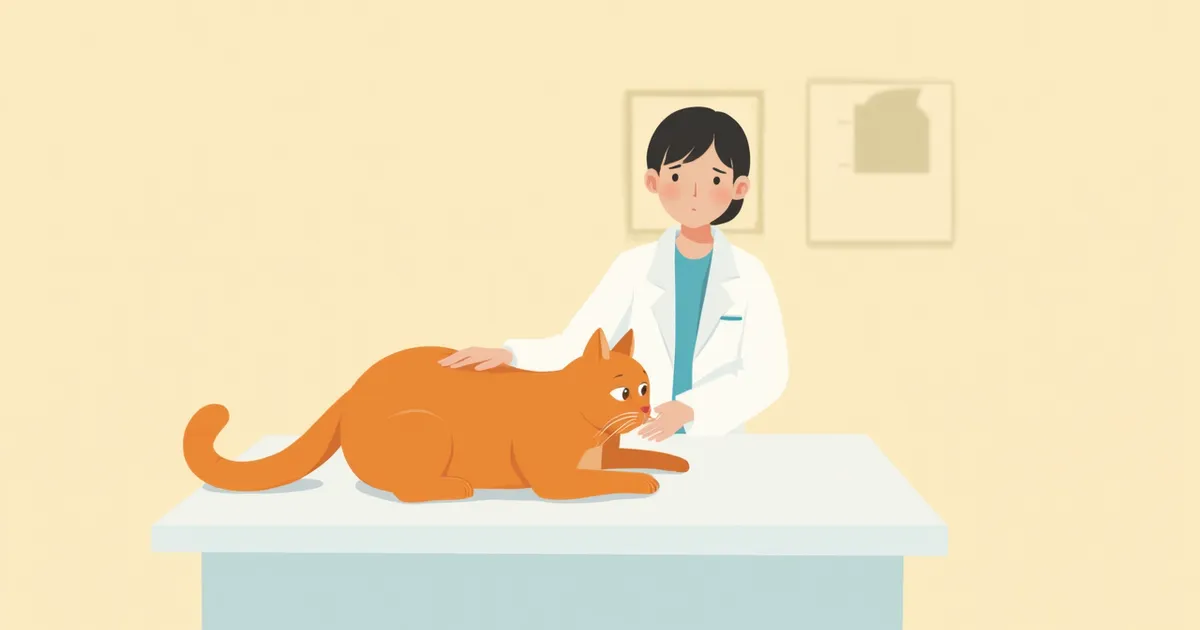
A veterinarian gently examining a cat while offering it a treat

Management Tips You Can Practice at Home
Consistent training during non-visit periods can significantly reduce fear.
Acclimating to the carrier: Keep the carrier open in a living area and place treats inside so your pet can freely enter and exit.
Short drive practice: Repeat short car rides when your pet is healthy to make travel itself a neutral experience.
Utilizing preventive visits: Visit the veterinary clinic when your pet is not sick to build multiple positive experiences, such as receiving treats and leaving.
Using synthetic calming pheromones: These can help create a comfortable and familiar environment inside the carrier, assisting in reducing travel stress.
Cats that willingly enter their carrier

Also Keep in Mind — Tips to Prevent Worsening Fear

Even cats that appear calm on the surface may not readily show fear. When stressed, they often freeze, feign sleep, or hide, quietly enduring their discomfort. However, once they reach their limit, they may suddenly exhibit defensive aggression, so do not assume they are fine just because they are quiet. After returning home, other cats in the household may perceive the cat carrying the scent of the veterinary clinic as a stranger and attack it, or the stressed cat may redirect its aggression toward a familiar companion. In such cases, it is necessary to temporarily separate the cats and then gradually reintroduce them.

Reviewed by a veterinarian

Dr. Tony — Punnawat Phongkittirak

Dr. Tony — Punnawat Phongkittirak

Veterinarian

A veterinarian who majored in veterinary medicine at Khon Kaen University, Thailand, and completed the IVSA program at North Carolina State University in the United States. Drawing on clinical experience at animal hospitals, he works in the pet healthcare field and is dedicated to building a digital care environment that connects pet parents with veterinarians.

Frequently Asked Questions

My cat hisses aggressively at the vet clinic. Is it okay to force them to endure it?
Forcing your pet to endure the experience can actually reinforce their fear. It’s much more effective to ask your veterinarian for an anti-anxiety medication or to seek out a clinic that uses fear-free veterinary care practices.
My dog is afraid of getting into the carrier. How can I train them to overcome this fear?
Keep the carrier open in the living room at all times, and place treats and their favorite blanket inside. Rather than forcing your cat into it, gently encourage them to enter and exit on their own; with consistent positive reinforcement, most cats gradually become comfortable with it.
Are there any sedatives I can give my pet before going to the vet?
Under a veterinarian’s prescription, anti-anxiety or sedative medications may be administered before a hospital visit. It is essential to consult with your vet to ensure the dosage is appropriate for your cat’s condition and weight, and you should never give human sedatives to your cat without veterinary guidance.
Will my pet become more comfortable with vet visits if I take them in regularly?
Preventive visits without painful procedures are highly effective. Repeated positive experiences, such as receiving treats and then going straight home, help pets stop viewing the clinic as a scary place. Taking them only when they are sick can actually reinforce their fear.
My pet is acting strangely at home after the vet visit. Is this normal?
This is normal. For a few days after your visit, your cat may become more wary and hide. Provide a quiet environment, and if you have other cats at home, please keep the returning cat separated for a short time.

Share

Related Guides

References

[1] Mariti C et al. Assessment of fear responses of domestic cats (Felis silvestris catus) in the presence of a familiar human and in its absence. J Vet Behav 14:60–65, 2016.

[2] Lloyd JKF. Minimising stress for patients in the veterinary hospital: Why it is important and what can be done about it. Vet Sci 4(2):22, 2017.

[3] Yin S. Veterinary Guide to Preventing Behavior Problems in Dogs and Cats. Cattledog Publishing, 2023.

[4] Bain MJ, Stelow E. Feline aggression toward family members: a guide for practitioners. Vet Clin North Am Small Anim Pract 44(3):581–597, 2014.

This information is based on veterinary literature and does not replace diagnosis or treatment. Please consult a veterinarian for specific health concerns.

Metapet Co., Ltd. | CEO: Park Sung-yong | Business Reg. No. 417-88-02562 | Seoul, South Korea | Customer Center

Why Your Cat Trembles at the Vet — Fear & Desensitization | Meongsiljang