Like
Share
멍실장
고양이 반려동물 연령 환산 공식 증상과 원인, 진단·치료와 관리 포인트 총정리

Complete Guide to Cat Age Conversion: Symptoms, Causes, Diagnosis, Treatment, and Management

Lifestyle & Age CareDiseasesMeongsiljang Veterinary Advisory Board

To accurately determine a cat’s actual age, it’s important to understand how it converts to human years. This knowledge forms the foundation for proper health care and preventive measures.

The Cat Age Conversion Formula Is the Standard for Determining a Cat’s Actual Biological Age

A close-up shot of a cat's face showing signs of aging
To accurately determine a cat’s biological age, it helps to understand how it translates to human years. - Biological Age: Cats undergo rapid physical and physiological changes early in life. Although this pace gradually slows with age, the initial rate of maturation serves as a key indicator for estimating their maturity stage. - Age Conversion Standards: Biological age cannot be precisely converted using a single formula. Furthermore, the term “senior” reflects health status rather than a specific age, so it is important to comprehensively evaluate health condition, behavioral changes, and functional abilities. - Foundation of Health Care: Understanding biological age helps assess disease risk and develop early intervention strategies, supporting overall health maintenance. - Need for Regular Check-ups: Health care tailored to biological age greatly aids early diagnosis and prevention. At least one veterinary check-up per year is recommended, with more thorough examinations advised for cats aged 7 to 10 years and older.

A Cat’s Biological Age Changes Rapidly Across Life Stages
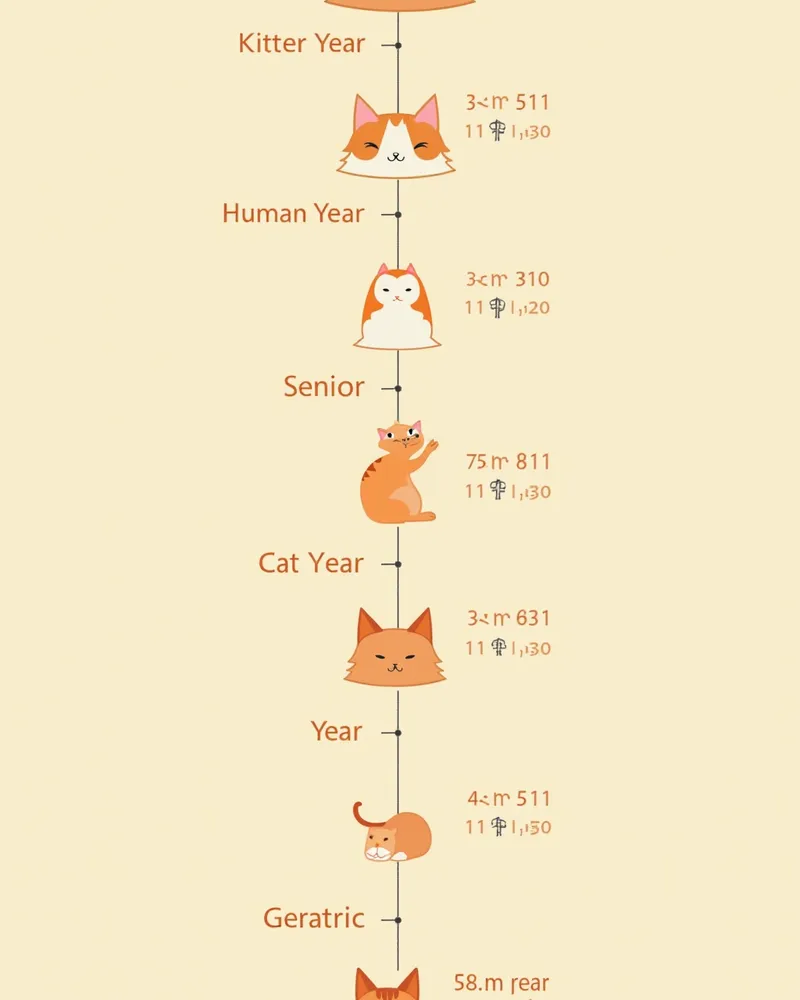
A cat’s first year is roughly equivalent to 15 human years, and by the end of its second year, it equals about 24 human years. After that, each additional year adds approximately four human years, so a 3-year-old cat is like a 28-year-old human, and a 10-year-old cat is around 56 in human years. - Characteristics of maturity: Cats mature very quickly in their early life, with noticeable changes in physical function and behavior. - Changes across life stages: In human-year equivalents, a cat’s age increases steadily by about four years each year after age two. Ages 7–10 are considered mature, 11–14 senior, and 15 and older geriatric. From this point onward, the physiological reserve of internal organs may decline, so careful attention is needed. - Importance of health care: Tailored care based on biological age directly impacts disease prevention and quality of life.
A timeline graphic comparing cat age to human age

Key Signs of the Cat Age Conversion Formula Are Related to Physiological Changes

As cats age, they may experience reduced activity levels, changes in appetite, weight fluctuations, a duller coat, and muscle loss. - Signs of aging: These changes tend to become more pronounced in cats over seven years old and may also serve as early indicators of chronic disease. - Examples of physiological changes: While decreased muscle strength, reduced mobility, thickened or brittle claws, and weight changes can be associated with biological aging, they are not necessarily the sole result of getting older. - The importance of early detection: Changes in activity, appetite, or litter box habits may signal an underlying condition rather than just “normal aging.” Regular health check-ups are essential to assess these changes and identify internal issues early. - Prevention-focused approach: Monitoring your cat’s health before symptoms become obvious is one of the most effective management strategies.
A cat sitting by the window, quietly gazing outside with a cloudy gaze.

Health Changes in Cats Aged Seven and Older Require an Immediate Veterinary Visit

If your cat is seven years or older and you notice decreased activity, reduced appetite, weight loss, or changes in litter box habits, consult your veterinarian right away. These signs may indicate the early stages of a chronic condition, and early diagnosis and treatment can significantly improve both survival rates and quality of life.

Diagnosis Using the Cat Age Conversion Formula Involves Regular Health Check-ups and Blood Tests
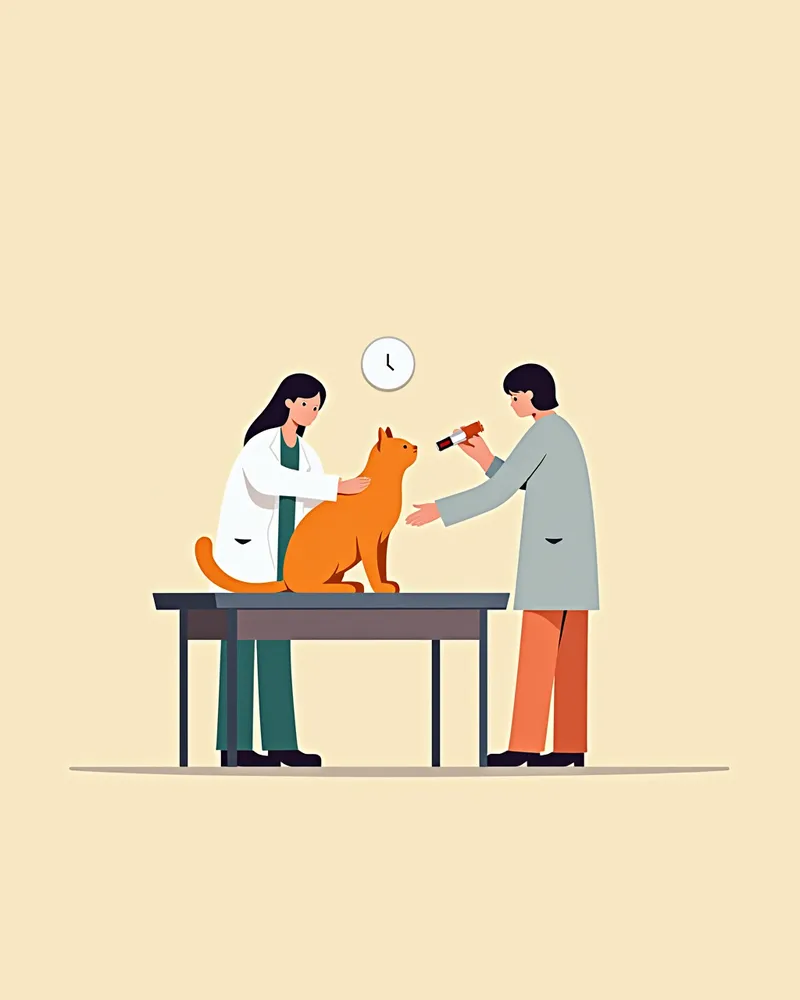
To accurately determine a cat’s true biological age, regular health check-ups should be combined with blood tests, urinalysis, and imaging studies. - Assessment of organ function: Comprehensive evaluation of kidney, liver, and heart function helps gauge the extent of aging and disease progression. - The role of blood tests: Checking hormone levels, inflammatory markers, and metabolic status in the blood enables early detection of diseases. - Use of imaging studies: X-rays and ultrasounds allow for the identification of structural changes in internal organs and the early discovery of abnormal signs. - Recommended check-up frequency: Cats aged 7 years and older require at least one comprehensive check-up per year, with the frequency adjusted according to age.
An image of a veterinarian examining a cat on the examination table while holding a blood sample.

Treatment Based on the Cat Age Conversion Formula Varies Depending on Symptoms and Causes

Treatment for cats is primarily focused on managing chronic conditions as they age. - Common conditions: Kidney disease, diabetes, heart disease, and arthritis are closely linked to feline aging. - Treatment approach: Medication, specialized dietary management, and environmental adjustments are often used together, with ongoing veterinary care essential. - Personalized care: Treatment plans vary based on symptom severity and biological age, so a one-size-fits-all approach should be avoided. - Treatment goals: The main objectives are to slow disease progression and maintain or improve quality of life.
An image of a cat taking prescription medication and standing next to a water spray bottle.

Home Care Based on the Cat Age Conversion Formula Centers on Adjusting Lifestyle Habits

Age-appropriate home care for cats includes maintaining activity levels, managing diet, stabilizing the environment, and scheduling regular check-ups. - Environmental adjustments: For cats aged seven and older, it’s helpful to place food and litter boxes in low, easily accessible areas and provide a resting spot with temperature control. - Dietary management: Choosing specialized food that maintains proper nutritional balance for their age is essential. - Encouraging physical activity: Light play and stretching help preserve muscle mass and prevent reduced mobility. - Oral and coat care: Regular teeth cleaning and brushing reduce the risk of infection and help maintain a healthy appearance.
An image of an elderly cat resting comfortably in a warm cat bed.

Cat Aging Varies by Breed, So Caution Is Needed

The rate of aging and the age at which cats are considered senior can vary depending on the individual and breed. Some cats may meet the criteria for being classified as seniors as early as 8 years old, while certain breeds or those with genetic predispositions might be considered seniors at an even younger age. Additionally, different breeds may have varying predispositions to congenital or genetic conditions, making it essential to develop a customized health management plan and schedule regular check-ups that take into account breed-specific health tendencies.

Reviewed by a veterinarian

Dr. Tony — Punnawat Phongkittirak

Dr. Tony — Punnawat Phongkittirak

Veterinarian

A veterinarian who majored in veterinary medicine at Khon Kaen University, Thailand, and completed the IVSA program at North Carolina State University in the United States. Drawing on clinical experience at animal hospitals, he works in the pet healthcare field and is dedicated to building a digital care environment that connects pet parents with veterinarians.

Frequently Asked Questions

How old is a 1-year-old cat in human years?
A one-year-old cat is roughly equivalent to a 15-year-old human, as their physical and mental development is extremely rapid during this early stage of life. However, assessing their overall health status is more important than relying on a conversion formula to determine their exact biological age.
How old is a 10-year-old cat in human years?
A 10-year-old cat is roughly equivalent to a 56-year-old human. The first two years of a cat’s life correspond to about 24 human years, and each additional year adds approximately four human years. However, rather than relying on a single numerical conversion, it’s more important to assess a cat’s biological age through a comprehensive evaluation of their overall health.
What are the signs of aging in cats?
You may notice decreased activity, changes in appetite, weight fluctuations, a duller coat, altered nails, or shifts in bathroom habits. While these can be signs of aging, don’t dismiss them as “just old age.” A veterinary checkup is essential to identify the underlying cause.
What health screenings are necessary for cats aged seven and older?
We recommend a complete blood count (CBC), blood chemistry and electrolyte panel, urinalysis, and blood pressure measurement. Depending on the individual case, additional tests such as cardiac evaluations or imaging studies like X-rays and ultrasounds may be added. Regular check-ups are advised at least once a year, but for pets aged seven and older, it is ideal to increase both the scope and frequency of these examinations.
How do I choose the right diet for my cat based on their age?
Your veterinarian will recommend the most suitable diet and nutritional plan based on your cat’s weight, overall health, and age. While older cats may have different maintenance energy requirements—making age-appropriate meals important—the key is tailoring food choices to each individual cat’s specific health needs.

Share

Related Guides

References

[1] The Cat, Clinical Medicine and Management, 2nd Edition, 2021

[2] Feline Emergency and Critical Care Medicine, 2nd Ed, 2020

[3] Applied Veterinary Clinical Nutrition, 2nd Ed, 2008

This information is based on veterinary literature and does not replace diagnosis or treatment. Please consult a veterinarian for specific health concerns.

Metapet Co., Ltd. | CEO: Park Sung-yong | Business Reg. No. 417-88-02562 | Seoul, South Korea | Customer Center

Cat Age in Human Years: Symptoms, Causes, Diagnosis & Care | Meongsiljang