
Like
Share
멍실장
고양이 구강종양 증상과 원인, 진단·치료와 관리 포인트 총정리

Feline Oral Tumors: Symptoms, Causes, Diagnosis, Treatment, and Care Tips

Oral HealthDiseasesMeongsiljang Veterinary Advisory Board

Feline oral tumors are malignant growths that develop in the mouth, commonly affecting the gums, tongue, and roof of the mouth, with squamous cell carcinoma being the most prevalent type. We’ve compiled key information on symptoms, causes, diagnosis, treatment options, and home care tips, all based on veterinary expertise.

What Are Feline Oral Tumors?

A veterinarian examining a cat's mouth.
Feline oral tumors are conditions in which abnormal cells proliferate within the tissues of the mouth—such as the gums, tongue, tonsils, and hard palate—forming masses. According to veterinary textbooks, most oral tumors in cats are malignant, with squamous cell carcinoma being the most common type. Early detection is crucial. Because early-stage symptoms are often subtle, diagnosis is frequently delayed. Squamous cell carcinoma is locally aggressive and tends to invade surrounding tissues and bones, such as the jaw (maxilla and mandible) and tongue, making early diagnosis and treatment critical for prognosis.

Main Causes and Risk Factors for Oral Tumors

The exact cause of oral tumors in cats has not yet been fully identified. However, veterinary textbooks report that geriatric cats are more prone to oral and oromaxillofacial tumors, making age a significant risk factor. In fact, the most common type, squamous cell carcinoma, typically occurs in older cats. Conversely, certain tumors, such as inductive fibroameloblastoma, primarily appear in the anterior maxilla of young cats under two years of age, indicating that the typical age of onset varies by tumor type. Since there is currently insufficient textbook evidence regarding other environmental or infectious causes, it is more important to focus on early detection through regular oral examinations rather than pinpointing a specific cause.

Checklist of Key Symptoms for Owners to Watch For

If any of the following symptoms persist for more than two weeks or worsen rapidly, please visit a veterinary clinic immediately.
Increased drooling or blood-tinged saliva: Your pet drools excessively without an apparent cause, or you notice blood mixed in the saliva.
Severe bad breath: A sudden, unusually strong foul odor develops from the mouth.
Decreased appetite and difficulty chewing: Your pet chews on only one side of the mouth or frequently drops food while eating.
Weight loss: Rapid weight loss occurs as food intake decreases.
Scratching or rubbing around the mouth: Due to oral pain, your pet repeatedly touches or rubs the area around the mouth with its front paws.
Lumps or discoloration in the mouth: Visible red or white lumps appear on the gums or tongue.
A cat showing signs of oral abnormalities.

Immediate Emergency Veterinary Care Is Required for These Symptoms

If bleeding in the mouth does not stop, if the face becomes noticeably swollen and asymmetrical, or if your pet is unable to eat anything for more than 24 hours, immediate emergency veterinary care is necessary. If the tumor invades surrounding bones or tissues, pain can worsen rapidly and the prognosis may deteriorate quickly.

Diagnostic Methods — What Tests Will Be Performed?

Veterinary clinics diagnose oral tumors through a multi-step process. First, the location and size of the mass are assessed via oral visual inspection and palpation, followed by fine-needle aspiration to obtain an initial cellular sample. A definitive diagnosis is made through a tissue biopsy, and imaging studies such as CT (computed tomography) or radiographs may be required to determine the extent of tumor invasion. Because squamous cell carcinoma tends to invade bone rapidly, imaging is crucial for guiding treatment decisions.

Treatment Options — Choices Based on Tumor Type and Stage
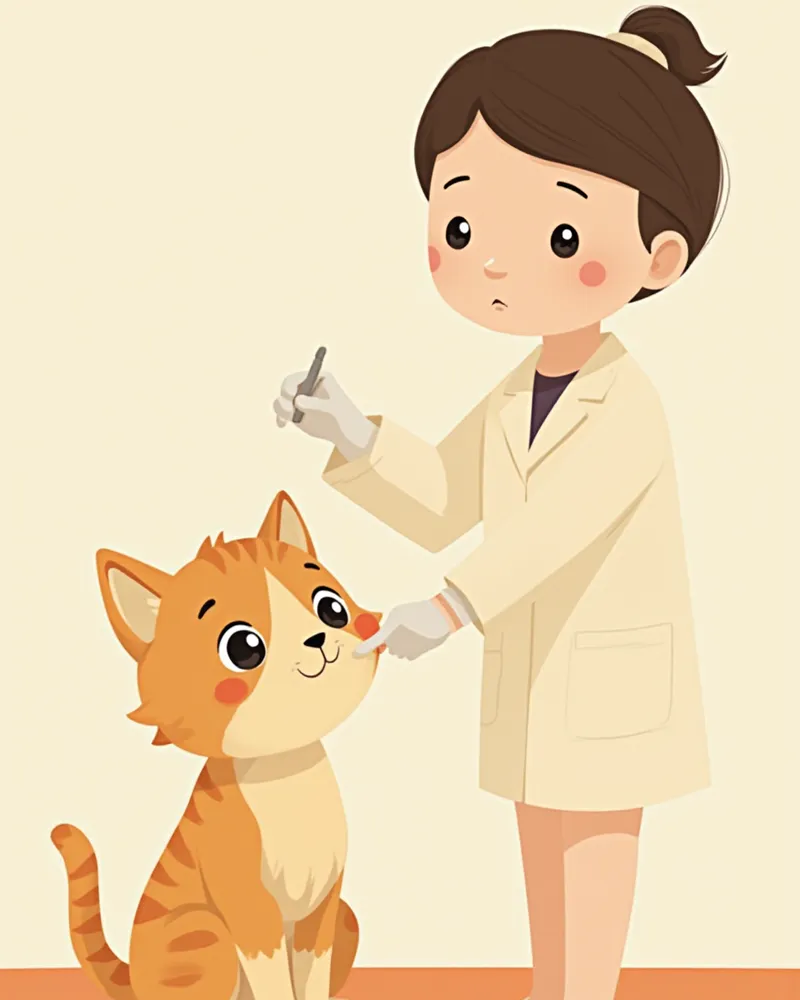
Treatment is determined by the type of tumor and the extent of its involvement.
Surgical excision: This is the primary treatment option. Early detection allows for adequate surgical margins, resulting in a favorable prognosis.
Radiation therapy: This is used in conjunction with surgery for squamous cell carcinoma or when surgery is not feasible.
Chemotherapy: This is more commonly used in combination with surgery and radiation therapy rather than as a standalone treatment.
Pain management and supportive care: Pain control is implemented at all stages to maintain the patient’s quality of life.
Treatment of oral tumors in cats at a veterinary clinic

Home Care Tips

Post-treatment home care plays a significant role in recovery and quality of life.
Dietary Management: Since chewing may be uncomfortable, offer soft wet food or ground-up meals.
Oral Hygiene: Use the prescribed oral rinse as directed by your veterinarian. Begin gentle brushing slowly only after the surgical site has healed.
Regular Follow-ups: During the first six months after treatment, it is essential to check for recurrence every 6 to 8 weeks.
Monitoring for Pain Signals: Scratching around the mouth or persistent refusal to eat may indicate pain. Please contact your veterinarian immediately if you notice these signs.
Cat owners who feed their cats soft food at home

Prognosis and Recurrence Prevention — Key Points for Owners

Feline oral squamous cell carcinoma has a high rate of local recurrence and generally carries a poor prognosis. However, according to veterinary textbooks, cats that achieve complete surgical excision with clean margins during the initial surgery may experience tumor-free and survival periods exceeding 16 months, whereas those treated with marginal excision alone tend to have significantly shorter outcomes. Studies combining surgery with postoperative radiation therapy have reported median survival times of approximately 469 to 600 days. In other words, prognosis varies greatly depending on the extent of resection and adjunctive treatments, so early detection and aggressive therapy can significantly improve outcomes. Please make it a habit to have your cat’s mouth examined every 3 to 6 months, and seek veterinary care promptly if you notice any abnormalities.

Reviewed by a veterinarian

Dr. Tony — Punnawat Phongkittirak

Dr. Tony — Punnawat Phongkittirak

Veterinarian

A veterinarian who majored in veterinary medicine at Khon Kaen University, Thailand, and completed the IVSA program at North Carolina State University in the United States. Drawing on clinical experience at animal hospitals, he works in the pet healthcare field and is dedicated to building a digital care environment that connects pet parents with veterinarians.

Frequently Asked Questions

Can feline oral tumors metastasize?
It depends on the type of tumor. Squamous cell carcinoma tends to invade the jawbone and surrounding tissues locally rather than spreading to distant sites, and metastasis to the lymph nodes or lungs typically occurs only in the later stages of the disease. It is important to confirm the tumor type through a biopsy and then discuss the risk of metastasis with your veterinarian.
How can you tell the difference between oral tumors and stomatitis?
Stomatitis presents as widespread red inflammation across the entire mucous membrane, whereas tumors appear as lumps or raised masses in specific areas. Because it can be difficult to distinguish between the two based on visual inspection alone, a biopsy is essential if any abnormalities are observed.
What makes early detection so difficult?
Cats are skilled at hiding pain, and their mouths are areas that owners often find difficult to check regularly. As a result, tumors are frequently discovered only after they have progressed significantly. Developing the habit of visually inspecting your cat’s mouth once every one to three months can greatly aid in early detection.
Can young cats also develop oral tumors?
While these tumors are most commonly seen in senior cats over the age of 10, there are also types, such as inductive fibroameloblastoma, that primarily affect young cats under two years old and typically develop in the front part of the upper jaw. Regardless of your cat's age, you should visit the clinic if you notice any abnormalities in their mouth.
What treatment options are available if surgery isn’t possible?
If the tumor is too large or has extensively invaded the bone, making surgery difficult, we focus on maintaining the best possible quality of life through radiation therapy, chemotherapy, and supportive care centered on pain management. Please discuss the treatment plan thoroughly with your veterinarian.

Share

Related Guides

References

[1] Cotter, S.M. 1981. Oral pharyngeal neoplasms in the cat. J Am Anim Hosp Assoc 17:917–920.

[2] Théon, A.P., Madewell, B.R., Shern, V.I., et al. 1995. Prognostic factors associated with radiotherapy of squamous cell carcinoma of the nasal plane in cats. J Am Vet Med Assoc 206(7):991–996.

[3] Dhaliwal, R.S., Kitchell, B.E., Marretta, S.M. 1998. Oral tumors in dogs and cats. Part I. Diagnosis and clinical signs. Compend Contin Educ Pract Vet 20(10):1148–1161.

[4] Withrow, S.J., Vail, D.M., Page, R.L. (eds). Withrow & MacEwen's Small Animal Clinical Oncology, 5th Ed. Elsevier Saunders, 2013. Chapter 23: Tumors of the Gastrointestinal System.

[5] Kudnig, S.T., Séguin, B. (eds). Veterinary Surgical Oncology, 2nd Ed. Wiley-Blackwell, 2021.

This information is based on veterinary literature and does not replace diagnosis or treatment. Please consult a veterinarian for specific health concerns.

Metapet Co., Ltd. | CEO: Park Sung-yong | Business Reg. No. 417-88-02562 | Seoul, South Korea | Customer Center

Feline Oral Tumors: Symptoms, Causes, Diagnosis & Care | Meongsiljang