Like
Share
멍실장
고양이 비강 폴립 고양이 증상과 원인, 진단·치료와 관리 포인트 총정리

Feline Nasal Polyps: A Comprehensive Guide to Symptoms, Causes, Diagnosis, Treatment, and Management

RespiratoryDiseasesMeongsiljang Veterinary Advisory Board

Feline nasal polyps are benign growths that develop in the nasal cavity or larynx, causing symptoms such as difficulty breathing and nasal discharge. Early diagnosis and appropriate treatment are essential.

What Are Feline Nasal Polyps?

Anatomical location of nasal polyps in cats
Feline nasal (nasopharyngeal) polyps are not cancerous; they are non-neoplastic, inflammatory growths. Rather than originating as tumors within the nasal mucosa, they are believed to start in the middle ear or Eustachian tube and grow into the nasopharynx or ear canal. While the exact cause remains unclear, inflammation associated with otitis media in young cats is thought to play a role in their development. As polyps grow, they can cause mucopurulent or bloody discharge, loud breathing sounds such as snoring, and difficulty breathing. Therefore, if symptoms persist, veterinary care is necessary.

What Are the Main Causes of Nasal Polyps?

The exact cause of nasal polyps remains unclear. However, these polyps are non-neoplastic, inflammatory tissues that originate in the middle ear or the eustachian tube, and they commonly occur in young cats. While some experts believe that inflammation associated with otitis media may play a role in their development, this relationship has not been definitively proven. There is no conclusive evidence to support claims that immune dysfunction, genetics, or environmental irritants such as air pollution or perfumes cause nasal polyps. Although cases have been reported in various breeds, including Domestic Shorthairs, Abyssinians, Persians, Himalayans, Siamese, and Maine Coons, the lack of comparative studies with control groups means it is not yet clear whether specific breeds are at higher risk. Early diagnosis and consistent management can aid in treatment.
Microscopic image of a cat's nasal polyp tissue

Check for Key Symptoms and Signs

If you suspect your cat has a nasal polyp, you may notice the following primary symptoms. It is important to consult a veterinarian if these symptoms persist.
Nasal discharge: Persistent mucopurulent or bloody discharge may occur from one or both nostrils.
Loud breathing sounds and difficulty breathing: If the polyp obstructs the nasopharynx, your cat may produce loud, snoring-like sounds (stertor) during inhalation or experience difficulty breathing.
Sneezing: Irritation of the nasal passages may cause repeated sneezing.
Difficulty swallowing and gagging: If the polyp grows toward the back of the throat, your cat may have trouble swallowing or exhibit gagging.
Ear-related symptoms: If the polyp extends into the middle or outer ear, signs of ear problems such as head shaking or ear scratching may appear.
Decreased appetite: Discomfort with breathing or swallowing may make it difficult for your cat to eat.
Symptoms of nasal polyps in cats: nasal discharge and difficulty breathing

When to Seek Immediate Veterinary Care

If your cat suddenly has difficulty breathing, is panting with its mouth open, or has severe nosebleeds, take it to the vet immediately. This could be because a polyp is blocking the nasopharynx, narrowing the airway during inhalation, or because there is severe bleeding or infection. In such cases, a veterinarian needs to provide urgent diagnosis and treatment.

Diagnostic Tests for Accurate Diagnosis
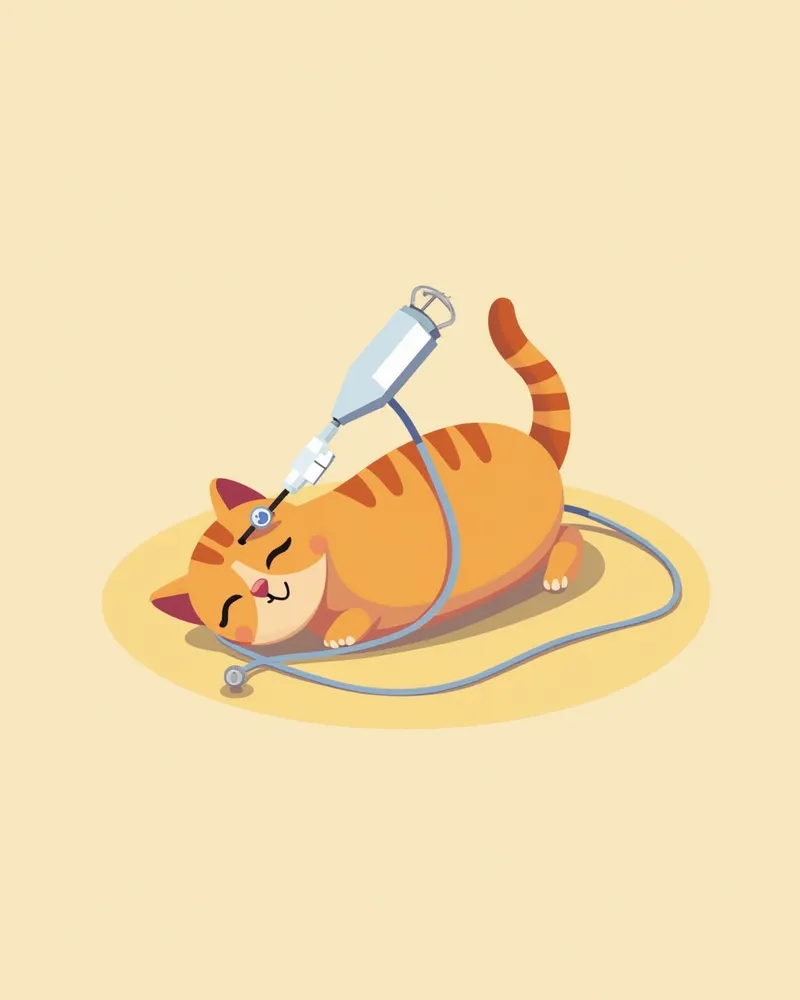
Accurate diagnosis of nasal polyps requires a combination of tests. First, the veterinarian performs a physical examination to check for respiratory abnormalities or discharge, followed by an oral and pharyngeal exam under sedation. At this stage, gently lifting the soft palate with a flexible hook (spay hook) may reveal pink, fleshy polyp tissue above it. The nasal cavity is directly visualized using nasopharyngeal endoscopy (rhinoscopy), while advanced imaging such as CT scans is utilized to assess the extent of the lesion and the degree of bone lysis. If the ear is involved, an otoscopic examination is helpful. Since histological diagnosis is difficult based on appearance alone, a tissue biopsy is essential for confirming the diagnosis and developing a treatment plan.
Endoscopy for diagnosing nasal polyps in cats

Treatment Methods and Step-by-Step Approach
Treatment for nasal polyps depends on the severity of symptoms and the location of the lesion, with traction avulsion—pulling the polyp out—considered the primary approach. Under general anesthesia, the soft palate is lifted, and the polyp’s stalk is firmly grasped with fine forceps, then gently pulled and, if necessary, slightly twisted to remove it. However, if the polyp has extended into the middle ear, a bulla osteotomy may be required to reduce the risk of recurrence. Studies report that approximately 30% of cases recur when removal is done by traction alone without a bulla osteotomy. Complications such as Horner’s syndrome or facial nerve paralysis can occur during removal, though Horner’s syndrome is usually temporary. Glucocorticoids may be administered and gradually tapered over 4 to 6 weeks post-surgery to help prevent recurrence, although their efficacy has not been fully proven. Regular follow-up examinations are essential to monitor for any recurrence.
Recovering after nasal polyp surgery in cats

Home Care and Recurrence Prevention

After surgery, it is important to monitor your pet’s recovery closely and follow your veterinarian’s care instructions. Nasal polyps have a recurrence rate of approximately 30% if removed by traction alone without a bulla osteotomy, so regular veterinary check-ups to monitor for recurrence are essential. To help reduce the risk of recurrence, veterinarians may prescribe a gradual tapering of steroids (glucocorticoids) over 4–6 weeks, although the effectiveness of this approach has not been definitively proven. Gently wipe away any discharge around the nose, and seek prompt veterinary care if you notice increased respiratory noise, discharge, or sneezing. Always consult your veterinarian before starting any medications or additional treatments. Early detection and consistent follow-up care can help lower the risk of recurrence.
Maintaining a Clean Environment for Managing Feline Nasal Polyps

Recurrence Risks and Breed-Specific Characteristics

Nasal polyps are most commonly reported in young cats and young adults. While cases have been documented in various breeds, including Domestic Shorthairs, Abyssinians, Persians, Himalayans, Siamese, and Maine Coons, the lack of comparative studies between affected and unaffected cats makes it difficult to definitively conclude that any specific breed is at higher risk. There is also insufficient evidence to assert that Persians are particularly susceptible, and no clear gender-based differences have been identified. Therefore, regardless of breed, it is important to have regular veterinary check-ups and to seek prompt care if symptoms such as snoring or nasal discharge appear.

Reviewed by a veterinarian

Dr. Tony — Punnawat Phongkittirak

Dr. Tony — Punnawat Phongkittirak

Veterinarian

A veterinarian who majored in veterinary medicine at Khon Kaen University, Thailand, and completed the IVSA program at North Carolina State University in the United States. Drawing on clinical experience at animal hospitals, he works in the pet healthcare field and is dedicated to building a digital care environment that connects pet parents with veterinarians.

Frequently Asked Questions

Are nasal polyps malignant?
Nasal polyps are not cancer (malignant tumors); they are known as non-neoplastic inflammatory masses. However, because they can be difficult to distinguish from other lesions based on appearance alone, an accurate diagnosis should be confirmed through a biopsy (histopathological examination). If a polyp grows large or becomes secondarily infected, it can lead to complications.
Is there a chance of the condition recurring after surgery?
There is a possibility of recurrence. In particular, if polyps that have invaded the middle ear are removed by traction alone without a bulla osteotomy, about 30% are reported to recur. The likelihood varies depending on whether the lesion was completely removed and whether there is middle ear involvement, and regular check-ups can help detect recurrence early.
Can it be treated with medication?
Polyps are difficult to eliminate with medication alone, so the cornerstone of definitive treatment is surgical removal. To reduce the risk of recurrence after surgery, glucocorticoids may be administered and gradually tapered over four to six weeks, although their efficacy has not been fully proven. Antibiotics can be used to manage any concurrent infections.
Do kittens get it too?
Nasal polyps are actually more common in young cats and young adults. However, because symptoms can persist for months to years before a diagnosis is made, the cat may appear older at the time of diagnosis. Since nasal polyps can occur at any age, a diagnostic evaluation is recommended if you suspect symptoms.
Can nasal polyps be fatal?
While polyps themselves rarely lead directly to death, they can worsen your pet's health by causing severe breathing difficulties, airway obstruction during inhalation, or chronic infections. Early diagnosis and appropriate treatment and management are key to maintaining your pet's health.

Share

Related Guides

References

[1] Ettinger SJ, Feldman EC, Côté E. Textbook of veterinary internal medicine: diseases of the dog and the cat. 8th ed. St. Louis, MO: Elsevier; 2017.

[2] Englar RE. Common clinical presentations in dogs and cats. Hoboken, NJ: Wiley-Blackwell; 2019.

[3] Fiani N, Verstraete FJ, Arzi B. Reconstruction of congenital nose, cleft primary palate, and lip disorders. Veterinary Clinics of North America. Small Animal Practice 2016;46:1057-1078.

This information is based on veterinary literature and does not replace diagnosis or treatment. Please consult a veterinarian for specific health concerns.

Metapet Co., Ltd. | CEO: Park Sung-yong | Business Reg. No. 417-88-02562 | Seoul, South Korea | Customer Center

Feline Nasal Polyps: Symptoms, Causes, and Treatments Explained | Meongsiljang