Like
Share
멍실장
고양이 벼룩알레르기피부염 증상과 감염 경로, 치료·예방법 총정리

If Your Cat Keeps Licking and Scratching — Causes and Treatment Timing for Flea Allergy Dermatitis

Infection/ParasitesDiseasesMeongsiljang Veterinary Advisory Board

Flea allergy dermatitis in cats is an allergic condition where even a single flea bite can cause severe itching and skin inflammation. We’ve summarized the causes, symptoms, diagnosis, treatment options, and environmental management tips to help prevent recurrence.

What Is Flea Allergy Dermatitis in Cats?

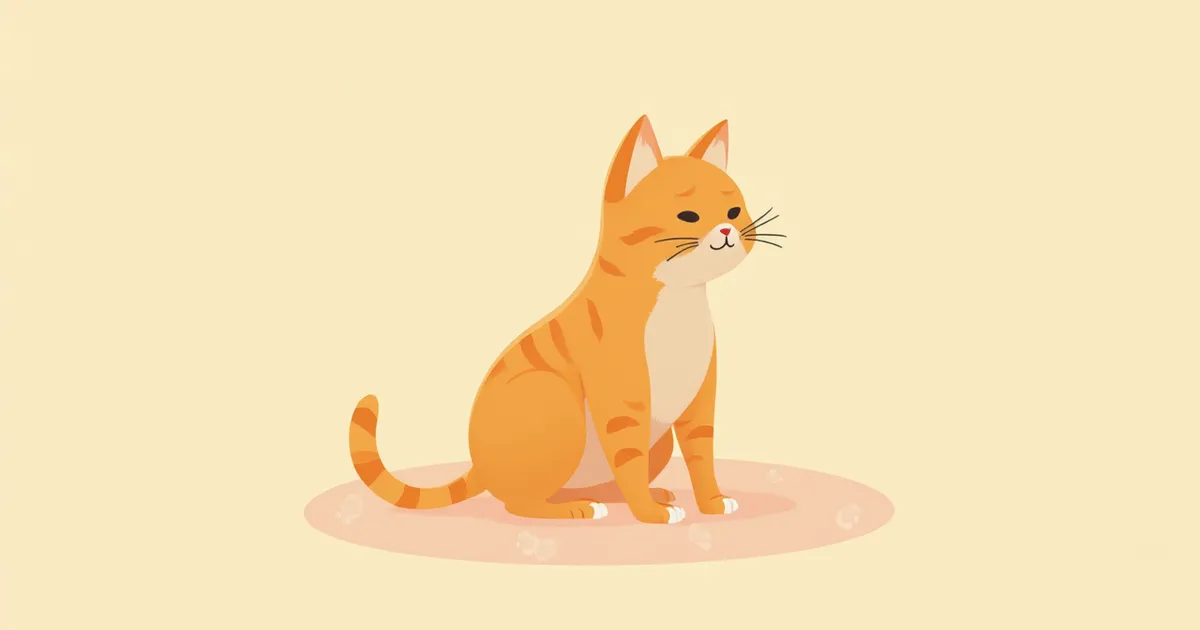
A cat scratching its lower back — a sign of flea allergy dermatitis
Flea allergy dermatitis in cats is an allergic condition in which the immune system overreacts to proteins in flea saliva, causing intense itching and skin inflammation. A single flea bite can trigger a reaction, so many owners mistakenly assume their home is flea-free and overlook the problem. The key to preventing recurrence is simultaneously eliminating fleas from your cat and managing the home environment.

How Fleas Trigger Allergic Reactions

The cat flea (Ctenocephalides felis) injects saliva into the dermis while feeding, and the proteins in this saliva trigger an allergic reaction. Repeated exposure to these proteins causes the immune system to become hypersensitive, leading to an immediate (Type I) hypersensitivity reaction. Once sensitized, a cat can experience immediate itching even after being bitten by only a few fleas. In cats that are already sensitized (have developed an allergic predisposition), itching can persist for a long time even if no visible fleas or flea feces (black specks) are present. Even indoor-only cats are not safe, as fleas can be introduced via their owners’ clothing, packages, or other animals.

Checklist of Key Symptoms That Are Easy to Miss
Severe itching: Your pet persistently licks or scratches their lower back, the base of the tail, or the back of the neck.
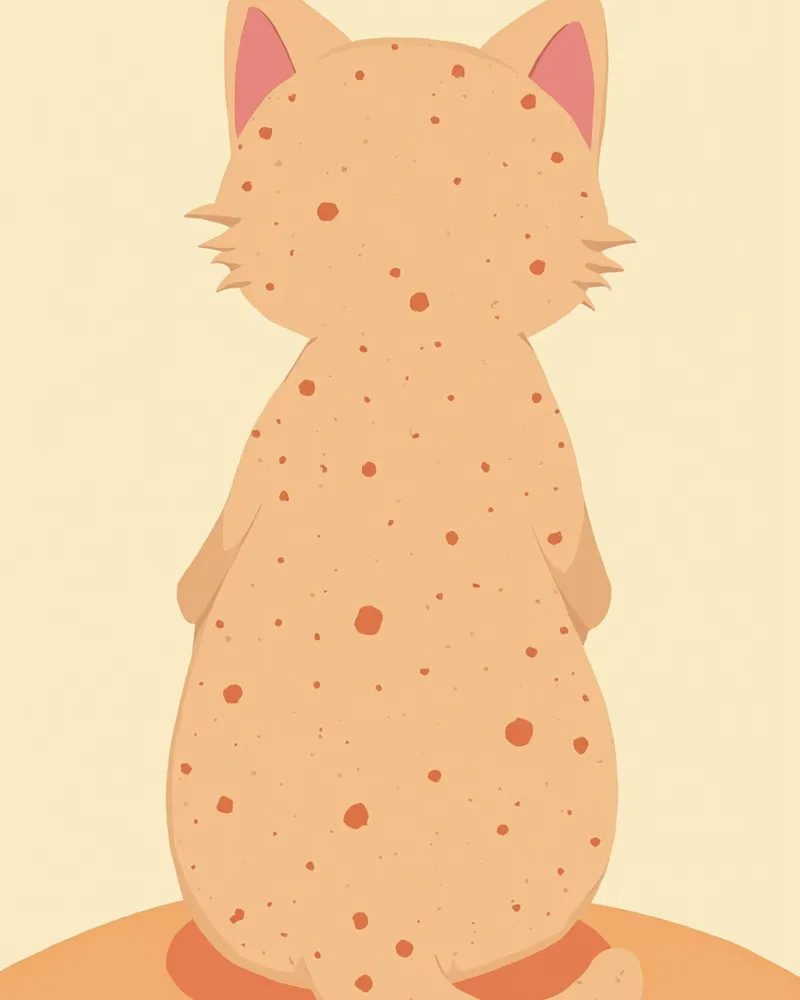
Miliary dermatitis (small nodules): Tiny, hard, millet-seed-sized bumps spread across the skin.
Hair loss: Repeated licking causes hair to fall out, exposing the skin.
Skin redness and discharge: Itchy areas become red and inflamed, sometimes oozing fluid.
Excessive grooming: You notice your pet licking their body much more frequently than usual.
Feline miliary dermatitis — characterized by small, millet-seed-like nodules on the skin

Go to the Vet Immediately If You See These Symptoms

If your pet’s skin wounds are oozing fluid or pus, or if widespread hair loss has led to thickened, hardened skin (lichenification), especially when accompanied by decreased appetite and lethargy, it may indicate a secondary bacterial infection or a severe allergic reaction. If itching persists for more than 48 hours or is severe enough to disrupt your cat’s sleep, please bring them to the clinic immediately.

Diagnosis of Flea Allergy Dermatitis

The veterinarian will first examine the skin lesions and their pattern. Finding flea feces (black specks) in your home or on your cat’s fur can provide an important clue. If necessary, a skin scraping (skin cytology) or an allergy test (intradermal skin test) may be performed. Since cats often overgroom to the point where fleas are no longer visible, providing your veterinarian with detailed information about the symptom pattern and your home environment will help ensure an accurate diagnosis.

Treatment — A Step-by-Step Approach

Treatment is generally carried out in three main stages. First, flea control: use a veterinarian-prescribed topical (spot-on) or oral flea medication. Second, itch relief: if symptoms are severe, steroids or immunomodulators may be administered short-term. Because long-term use carries the risk of side effects, it is essential to follow your veterinarian’s instructions. Third, treatment of secondary infections: if bacterial infection has developed in the skin lesions, antibiotics will be added. For effective results, all pets living in the same household must be treated simultaneously.
A veterinarian applying a spot-on flea treatment to a cat's neck.

Environmental Management at Home Is Also Essential
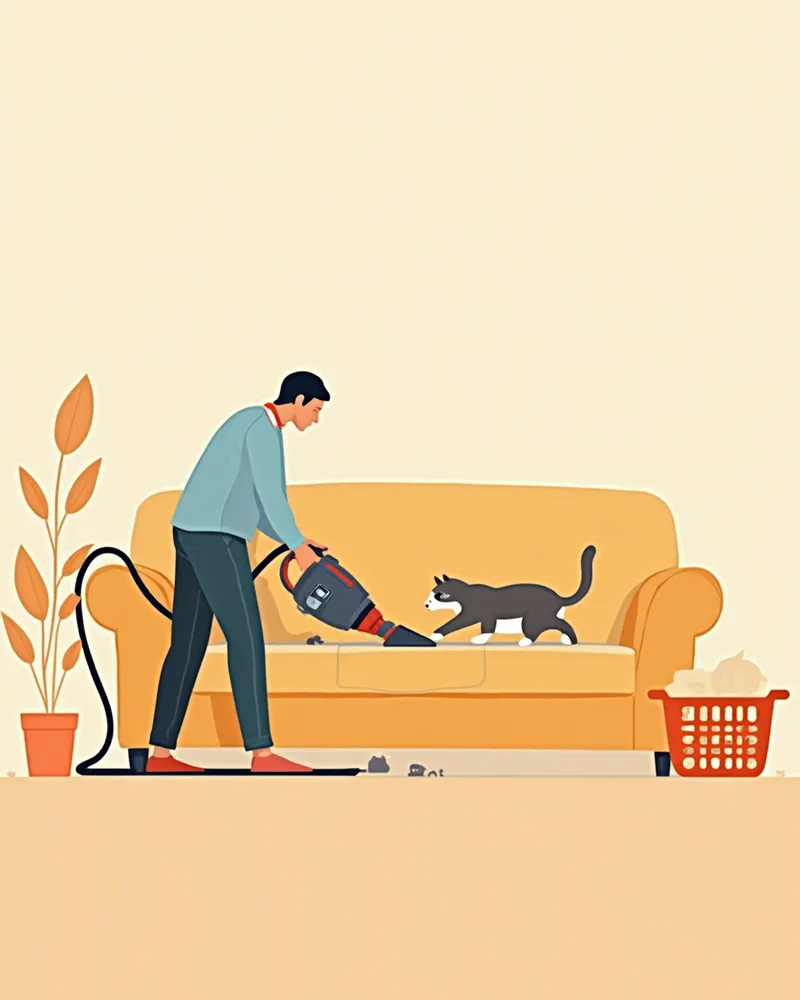
Many fleas in the home are hidden as eggs and larvae in carpets, sofas, and bedding, making them hard to spot. If you only treat the fleas on your cat and neglect the environment, reinfestation can occur shortly after. Regularly vacuum carpets and sofas, and wash your cat’s bedding in hot water. Using a flea spray designed for indoor use can enhance effectiveness. After cleaning, immediately seal and dispose of the vacuum bag to prevent eggs and larvae from spreading. Additionally, treat any other infected pets with appropriate medication and limit their contact with the source of infestation to help reduce the risk of reinfestation.
Sofa cleaning and cat bedding washing — flea environmental management

Key to Preventing Recurrence — Year-Round Prevention Is Necessary Regardless of Season

Fleas can reproduce indoors year-round. While they are especially active from summer through fall, you can’t let your guard down even in winter when indoor heating is on. Any other cats or dogs living in the same household must receive preventive treatment at the same time. Once a cat has developed a flea allergy, even a very small number of fleas can trigger an immediate reaction, making consistent, year-round prevention essential.

Reviewed by a veterinarian

Dr. Tony — Punnawat Phongkittirak

Dr. Tony — Punnawat Phongkittirak

Veterinarian

A veterinarian who majored in veterinary medicine at Khon Kaen University, Thailand, and completed the IVSA program at North Carolina State University in the United States. Drawing on clinical experience at animal hospitals, he works in the pet healthcare field and is dedicated to building a digital care environment that connects pet parents with veterinarians.

Frequently Asked Questions

Can my cat have flea allergy dermatitis even if I haven’t seen fleas on them?
Yes, it’s quite possible. Cats are excellent groomers and often swallow fleas quickly, so allergic reactions can occur even if no fleas are actually seen. The most reliable approach is to check bedding and carpets for flea dirt (small black specks) and have a veterinarian examine your cat’s skin.
What kind of flea preventive should I use for my cat?
Always verify that the ingredients are safe for cats. Dog products often contain permethrin, which is toxic to cats and should never be used. Consult your veterinarian to choose a cat-specific topical spot-on or oral medication appropriate for your cat’s condition.
Can flea allergy dermatitis be completely cured?
Flea allergy itself (the sensitized state) doesn’t go away. However, with consistent management to prevent flea exposure, your pet can live comfortably without symptoms. The key is ongoing prevention rather than a cure.
Can fleas from pets also infest humans?
Yes, cat fleas (Ctenocephalides felis) can bite people when there are no pets around. They typically cause itchy red spots on the ankles and calves. Proper home environment management is essential to keep both humans and cats safe.
How often should I use flea preventatives?
The frequency varies by product. Topical spot-on treatments are typically applied once a month, while some oral medications are administered once every one to three months. Consistent, year-round use as prescribed by your veterinarian is the most effective way to prevent recurrence.

Share

Related Guides

References

[1] Bensignor E, Forsythe P. BSAVA Manual of Canine and Feline Dermatology, 4th Ed. Chapter: Flea biology and flea allergy dermatitis. British Small Animal Veterinary Association, 2019.

[2] Franc M, Bouhsira E and Beugnet F. Direct transmission of the cat flea (Ctenocephalides felis) between cats exhibiting social behaviour. Parasite 20, 49, 2013.

[3] Shaw SE, Kenny MJ, Tasker S et al. Pathogen carriage by the cat flea Ctenocephalides felis (Bouche) in the United Kingdom. Veterinary Microbiology 102, 183-188, 2004.

[4] Noli C, Foster A, Rosenkrantz W. Veterinary Allergy. Wiley-Blackwell, 2014. Chapter: Flea Allergy Dermatitis.

This information is based on veterinary literature and does not replace diagnosis or treatment. Please consult a veterinarian for specific health concerns.

Metapet Co., Ltd. | CEO: Park Sung-yong | Business Reg. No. 417-88-02562 | Seoul, South Korea | Customer Center

Cat Keeps Licking & Scratching? Flea Allergy Dermatitis | Meongsiljang