Like
Share
멍실장
고양이 노령묘 인지기능 장애 증상과 원인, 진단·치료와 관리 포인트 총정리

If Your Senior Cat Cries Out Every Night — Causes and Management of Feline Cognitive Dysfunction

Brain & CognitionDiseasesMeongsiljang Veterinary Advisory Board

I’ve compiled a veterinary evidence-based overview of the causes, symptom checklist, diagnostic methods, treatment options, and home care strategies for cognitive dysfunction in senior cats.

What Is Feline Cognitive Dysfunction?

An elderly cat sitting by the window, gazing blankly into the distance.
Feline Cognitive Dysfunction Syndrome (CDS) is a neurodegenerative condition associated with aging, in which the gradual aging of the brain leads to declines in cognitive functions such as memory, spatial orientation, and sleep patterns in senior cats. It is commonly referred to as "feline dementia." Early detection is key to management. While it primarily affects older cats, symptoms can begin as early as around 10 years of age. However, because research on cognitive aging in cats remains limited, it is difficult to establish precise age-specific incidence rates. Although aging itself is not a disease, progressive cognitive decline impairs a cat’s ability to recognize familiar resources and locations, which can lead to anxiety and significantly impact daily life and quality of life—distinguishing pathological decline from the natural slowing associated with aging.

Why Does It Occur? Causes

Cognitive dysfunction arises from a combination of changes that occur as the brain ages. With advancing age, the brain gradually atrophies, and increased oxidative damage and inflammation impair neuronal function. Alterations in substances like glutamate and reductions in neurotransmitters such as dopamine, which regulate mood and activity, can also contribute to cognitive decline. When the brain’s antioxidant defenses weaken, this damage accumulates more easily. Additionally, common comorbidities in senior cats, such as hyperthyroidism, hypertension, and chronic kidney disease, can accelerate cognitive decline or produce similar symptoms. Therefore, it is important to evaluate for these concurrent conditions.

Suspect It If You Notice These Symptoms

Loss of spatial awareness: Your pet may wander aimlessly in familiar spaces or stare blankly at walls.
Nighttime vocalization: They may cry out loudly or wander around at night for no apparent reason.
Reversed sleep patterns: Their routine may shift to sleeping during the day and staying awake at night.
Reduced interaction: They may respond less when called by their owner or prefer to be alone.
Accidents outside the litter box: They may struggle to find the usual bathroom spot they’ve always used.
Changes in appetite and water intake: They might stand in front of their food bowl without eating or fail to locate their water source.
An elderly cat sitting on the sofa with a dazed expression

Seek Immediate Veterinary Care If These Symptoms Appear

If symptoms worsen suddenly within a few days, or are accompanied by seizures, sudden paralysis, or loss of eye focus, it may not be cognitive dysfunction but another neurological disorder. Immediate veterinary care is also necessary if your pet refuses food and water for more than 24 hours or is unable to stand. It is essential to rule out conditions requiring urgent treatment, such as brain tumors, meningitis, or hypertensive crises.

How Is It Diagnosed?

Cognitive dysfunction is diagnosed by exclusion, meaning we first rule out other conditions that cause similar symptoms. Senior cats often have age-related diseases or organ dysfunction, so a comprehensive veterinary clinical exam is especially important. Blood and urine tests check for hyperthyroidism (by measuring total T4 levels), kidney failure, and diabetes, while blood pressure measurements screen for hypertension. If needed, imaging studies may be used to rule out structural brain diseases such as tumors. After completing this process, we use veterinary behavioral medicine assessment tools like DISHA, which summarize key symptoms, to evaluate the degree of cognitive decline and make a final diagnosis.

Treatment and Medication Management

There is currently no treatment that can completely reverse cognitive dysfunction. The goal is to slow the progression of the condition and maintain quality of life.
Medication: Selegiline is used in some cats. It is known to enhance dopamine activity and provide antioxidant effects, and there are reports that it has improved symptoms such as disorientation, vocalization, and reduced interaction in cats with cognitive dysfunction syndrome. It may take several weeks for effects to become apparent, and a veterinarian will determine the appropriate dosage based on the cat’s health status.
Nutritional supplements: Senior diets or supplements containing antioxidants to reduce oxidative damage, omega-3 fatty acids, L-carnitine, and alpha-lipoic acid are used as supportive measures. However, since none of these can cure cognitive dysfunction syndrome, it is best to consult with a veterinarian before choosing a product.
Environmental enrichment: Activities that stimulate the brain, such as puzzle feeders and play, can help maintain cognitive function.
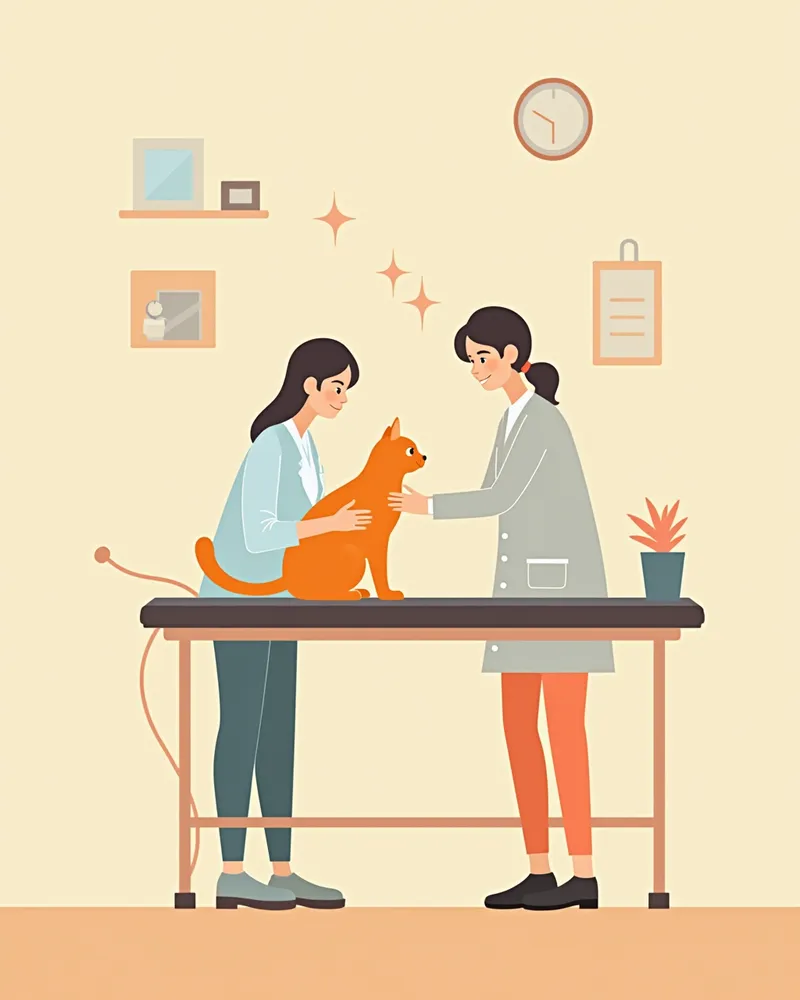
An elderly cat receiving a check-up at the veterinary clinic

Home Care Strategies

Maintain environmental consistency: Avoid rearranging furniture or moving the litter box, as unfamiliar surroundings can worsen confusion.
Night lighting: Keeping a dim light on at night can help reduce anxiety caused by disorientation.
Consistent routine: Maintaining fixed times for meals and play sessions helps lower anxiety levels.
Litter box accessibility: If arthritis is present, switch to a litter box with low sides and a wide entrance.
Weight monitoring: Since muscle loss can progress rapidly in senior cats, it’s advisable to weigh them every two weeks.
An elderly cat comfortably eating from a low bowl

Hyperthyroidism and High Blood Pressure Often Occur Together

Senior cats often develop hyperthyroidism and high blood pressure alongside cognitive dysfunction. Because these two conditions can worsen cognitive symptoms or mimic them, it’s easy to miss the true cause if you assume it’s “just dementia.” Please have your cat’s blood pressure and blood work checked every six months to rule out any underlying conditions.

Reviewed by a veterinarian

Dr. Tony — Punnawat Phongkittirak

Dr. Tony — Punnawat Phongkittirak

Veterinarian

A veterinarian who majored in veterinary medicine at Khon Kaen University, Thailand, and completed the IVSA program at North Carolina State University in the United States. Drawing on clinical experience at animal hospitals, he works in the pet healthcare field and is dedicated to building a digital care environment that connects pet parents with veterinarians.

Frequently Asked Questions

At what age do signs of cognitive dysfunction in cats typically begin to appear?
This condition primarily affects older cats, with onset sometimes as early as around 10 years of age. However, since research on cognitive aging in cats is still limited, it is difficult to provide precise incidence rates by age. It is advisable to begin regular blood tests and behavioral monitoring around the age of 10.
Could the loud nighttime vocalizations be a sign of dementia?
Nighttime vocalization is one of the hallmark signs of cognitive dysfunction. However, it can also stem from other conditions such as hypertension, hyperthyroidism, or pain, so it’s important to have your veterinarian make an accurate diagnosis.
Can cognitive dysfunction be cured?
There is currently no cure. However, combining medication, nutritional supplements, and environmental management can help slow the progression of the disease and maintain your pet’s quality of life. Early detection is key.
Has your pet started having more accidents in the bathroom? Could it be due to dementia?
Accidents in the litter box or outside the designated area can stem from cognitive dysfunction, but also from conditions like cystitis, kidney failure, or arthritis (where pain causes avoidance of the litter box). It’s important to check for other accompanying symptoms and have your veterinarian perform a comprehensive health checkup.
Are there any cognitive stimulation activities I can do at home?
Using puzzle feeders, rearranging toys, and introducing new scents (such as a small amount of catnip) can help stimulate your pet’s brain. However, sudden changes can cause stress, so it’s best to introduce these activities gradually and step by step.

Share

Related Guides

References

[1] Gunn-Moore D, Moffat K, Christie LA, Head E. Cognitive dysfunction and the neurobiology of ageing in cats. J Small Anim Prac. 2007;48(10):546–553.

[2] Cotman CW, Head E, Muggenburg BA, Zicker S, Milgram NW. Brain aging in the canine: A diet enriched in antioxidants reduces cognitive dysfunction. Neurobiol Aging. 2002;23(5):809–818.

[3] Dewey CW, Davies ES, Xie H, Wakshlag JJ. Canine cognitive dysfunction. Vet Clin North Am Small Anim Pract. 2019;49(2):477–499.

This information is based on veterinary literature and does not replace diagnosis or treatment. Please consult a veterinarian for specific health concerns.

Metapet Co., Ltd. | CEO: Park Sung-yong | Business Reg. No. 417-88-02562 | Seoul, South Korea | Customer Center

Senior Cat Crying at Night? Feline Cognitive Dysfunction Guide | Meongsiljang