
Sphynx HCM (Hypertrophic Cardiomyopathy) — Complete Guide to Symptoms, Diagnosis, and Age-Specific Lifelong Care
The Sphynx is a breed with a high incidence of hypertrophic cardiomyopathy (HCM), so regular cardiac ultrasound screenings are necessary starting from the asymptomatic stage. Here’s a summary of age-specific care points and emergency warning signs.
The Sphynx: A Breed Requiring Lifelong Heart Care
Why Sphynx Cats Have a High Incidence of Cardiomyopathy
Key Health Precautions for Sphynx Owners
Heart Screening Is Necessary If You Notice These Symptoms

Go to the Emergency Vet Immediately — These Are Emergency Symptoms
If you notice any of the following symptoms, seek emergency veterinary care within 30 minutes: open-mouth breathing or very rapid respiration; blue or pale gums and tongue; sudden inability to use the hind legs, which may also feel cold; or sudden collapse or loss of consciousness. These signs may indicate pulmonary edema or thromboembolic complications.
Age-Specific Sphynx Health Care Guide
Sphynx Heart Exams — How Are They Performed?
Do Not Neglect Skin and Temperature Management
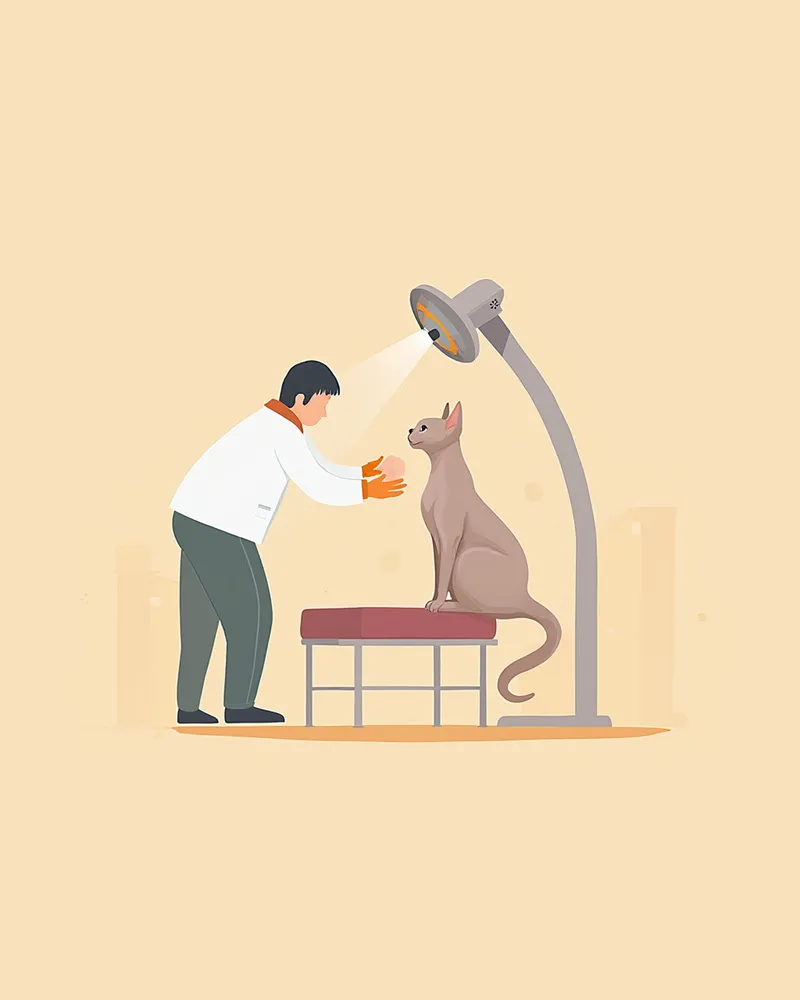
Sphynx cats lack fur, so sebum tends to accumulate on their skin. We recommend bathing them in lukewarm water once every one to two weeks, and gently wiping the inside of their ears and between their toes weekly. If the skin becomes excessively oily or develops a strong odor, it may indicate a bacterial or yeast infection, so please consult your veterinarian. As this breed has difficulty regulating body temperature, please maintain an indoor temperature of 22–26°C.
Reviewed by a veterinarian

Dr. Tony — Punnawat Phongkittirak
VeterinarianA veterinarian who majored in veterinary medicine at Khon Kaen University, Thailand, and completed the IVSA program at North Carolina State University in the United States. Drawing on clinical experience at animal hospitals, he works in the pet healthcare field and is dedicated to building a digital care environment that connects pet parents with veterinarians.
Reviewed 2026-05-28
Frequently Asked Questions
Can sphinx cardiomyopathy be cured?
How often should a pet have an echocardiogram?
Is there anything I can do at home when my Sphynx is breathing rapidly?
Is Sphynx cardiomyopathy hereditary?
How often should you bathe a Sphynx cat?
Share
Related Guides

Coenzyme Q10 Benefits and Administration Guide

Dog Pulmonary Edema Warning — 7 Best Diuretics (Furosemide) for Heart Management

7 Best Prescription Diets for Feline Heart Disease Recommended by Veterinarians — Criteria for Choosing Low-Sodium Food

Welsh Corgi Health Care — Guide to Preventing Disc Disease and Obesity

Mini Bichon Health Care — Guide to Preventing Patellar Luxation and Tear Staining

Munchkin Cat Health Care (Joints and Spine)

Bichon Frise Health Care — Skin, Joint, and Tear Stain Management

Golden Retriever Health Management (Joints, Skin, Cancer)

Maltipoo Health Care Guide — Tear, Joint, and Skin Care

Key Points on Zinc-Responsive Dermatosis in Siberian Huskies and a Lifelong Age-Specific Health Care Guide
References
[1] Little S (ed). The Cat: Clinical Medicine and Management, 2nd Edition. Elsevier Saunders, 2012.
[2] Vitale CB, Ihrke PJ, Olivry T et al. Feline urticaria pigmentosa in three related Sphinx cats. Veterinary Dermatology 7, 1996.
[3] Meurs KM et al. A cardiac myosin binding protein C mutation in the Maine Coon cat with familial hypertrophic cardiomyopathy. Hum Mol Genet. 2005.
[4] Paige CF et al. Prevalence of cardiomyopathy in apparently healthy cats. J Am Vet Med Assoc. 2009.
[5] Harvey A, Tasker S (eds). BSAVA Manual of Feline Practice. BSAVA, 2013.