Like
Share
멍실장
토이푸들 정기 검진·평생 케어 일정

Toy Poodle Regular Check-ups and Lifelong Care Schedule

ImmunityBreed HealthMeongsiljang Veterinary Advisory Board

We’ve put together a clear, at-a-glance guide to Toy Poodle health check-ups and lifelong care, organized by life stage. Learn which exams—especially for joints, teeth, heart, and eyes—are most important at each stage of your Toy Poodle’s life.

What Breed Are Toy Poodles and Why Are Regular Check-ups Important?

A toy poodle puppy and an adult dog sitting side by side
Toy Poodles are a small breed that requires lifelong, attentive care for their patellar joints, teeth, heart, and eyes. The most important aspect is establishing an age-appropriate screening schedule. In puppyhood, focus on patellar and dental health; in middle age, add cardiac and hormonal checks; and in senior years, expand screenings to include eye and cognitive function. Rather than assuming a genetic predisposition to specific diseases, it is safer to consult your veterinarian to create a screening plan tailored to your dog’s individual condition. This guide outlines recommended screening and care schedules for Toy Poodles from puppyhood through their senior years.

Top 5 Conditions Toy Poodles Need to Watch Out For

Because Toy Poodles are small dogs, it’s important to pay attention to their orthopedic, dental, cardiac, and eye health. Below are key areas for owners to monitor regularly. Please note that the frequency and ranking of these conditions can vary depending on the individual dog and its environment, so use this information as a general reference.
Patellar Luxation: A condition where the kneecap slips out of place, which can occur in small breeds.
Periodontal Disease: May present as bad breath, gum inflammation, or chewing on only one side of the mouth.
Mitral Valve Insufficiency: A condition common in middle-aged to senior dogs where the heart valves don’t close properly, causing blood to flow backward.
Progressive Retinal Atrophy (PRA): A gradual degeneration of the retina that can lead to night blindness and vision loss.
Hyperadrenocorticism (Cushing’s Disease): A hormonal imbalance that can cause excessive thirst and urination.
A veterinary examination is the most accurate way to assess the specific risk level for each of these conditions.

Puppy Stage (0–12 Months) Check-up and Care Schedule
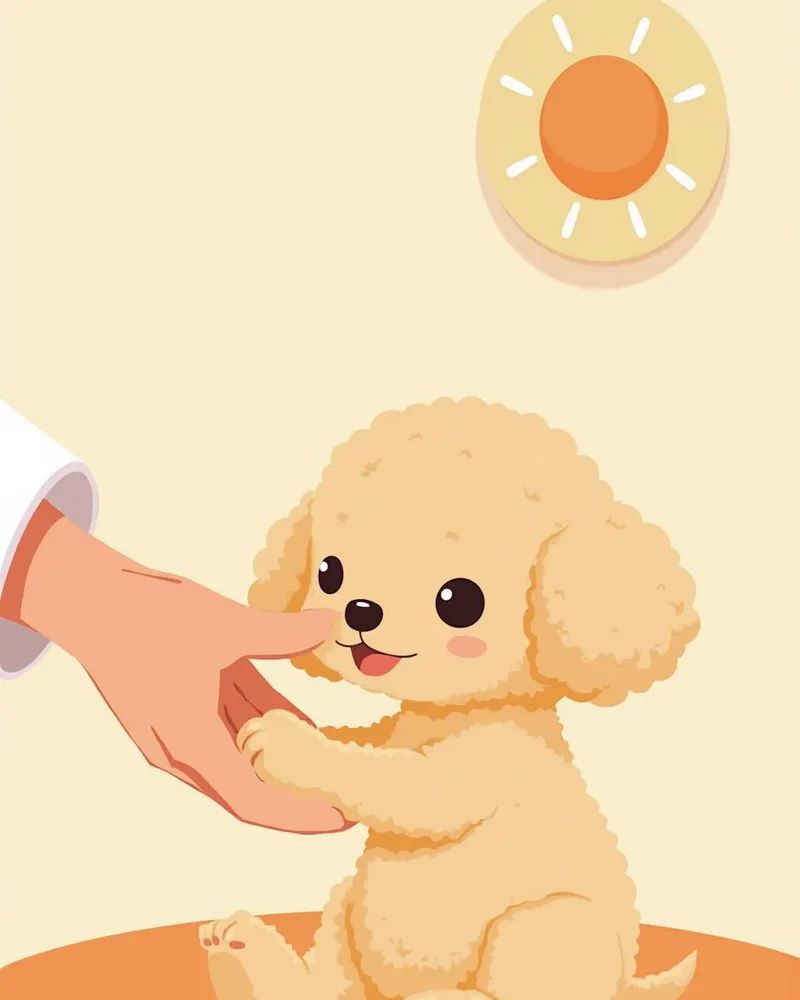
The first year of life is crucial for foundational check-ups covering vaccines, parasites, oral health, and the patella. Begin the initial round of core vaccines (including CDV, CAV-2, and parvovirus) at 6 to 8 weeks of age, with booster shots every 2 to 4 weeks until the puppy is 16 weeks old. Rabies vaccination is typically administered after 12 weeks of age. Checking the patella and teeth during these early visits establishes a baseline for lifelong comparison. As permanent teeth emerge, it’s important to check for retained baby teeth to prevent malocclusion and tartar buildup. Please also coordinate parasite management, such as fecal exams, with your veterinarian’s schedule.
A veterinarian gently examining the knee of a Toy Poodle puppy.

Recommended Check-up Items by Age at a Glance

ItemPuppy (0–1 yr)Adult dog (1–7 yrs)Senior (7+ yrs)
Health checkup intervalEvery 3–4 monthsOnce a yearOnce every 6 months
Basic blood testTrueTrueTrue
Patellar evaluationTrueTrueTrue
Dental scalingFalseTrueTrue
Cardiac auscultation & echocardiographyAuscultation onlyAuscultation + ultrasound if neededEchocardiography recommended
Ophthalmic exam (PRA & cataracts)Basic checkOnce every 2 yearsOnce a year
Hormone test (adrenal & thyroid)FalseIf neededTrue

Checkup items may vary depending on the individual's condition and the veterinarian's judgment

If You See These Signs, Go to the Vet Immediately Even Before Your Regular Check-up

The following symptoms are early warning signs of common conditions in Toy Poodles. If any one of these persists for more than 24 hours, do not wait for your next routine checkup—seek veterinary care immediately. • Frequently lifts hind legs and hops while walking (suspected patellar luxation) • Coughing that doesn’t stop after exercise, or bluish gums (suspected mitral valve disease) • Frequently bumps into furniture in dim lighting (suspected retinal disease) • Sudden increase in water consumption and urine output (suspected Cushing’s disease or diabetes) • Severe bad breath and chewing on only one side of the mouth (suspected periodontal disease)

Adult Dog Stage (1–7 Years) Check-up and Care Schedule

For adult dogs, preventive checkups are key. Schedule regular comprehensive health screenings—including blood, urine, and fecal tests, cardiac auscultation, and patellar evaluation—and stay consistent with your veterinarian’s schedule for core vaccines, rabies vaccination, and prevention of heartworm and external parasites. To prevent periodontal disease, regular dental cleanings and daily tooth brushing are recommended. If a heart murmur is detected during auscultation, an echocardiogram should be performed to assess valve condition, regardless of the dog’s age. Maintaining a healthy weight helps reduce stress on the joints and patella, so please monitor your dog’s weight consistently.
An adult Toy Poodle calmly standing on the scale at the veterinary clinic

Senior Stage (7+ Years) Check-up and Care Schedule

Toy Poodles also enter their senior years as they age. During this stage, it’s advisable to increase the frequency of health check-ups and expand the scope of examinations. We recommend adding kidney and liver function tests, as well as thyroid and adrenal hormone assessments, to routine blood work, and scheduling regular cardiac and abdominal ultrasounds along with ophthalmologic exams. Eye conditions such as cataracts and progressive retinal atrophy can develop in older dogs, so please ensure regular eye check-ups. Additionally, cognitive dysfunction syndrome (dementia) is common in senior and geriatric dogs; please monitor for behavioral changes such as nighttime barking or disorientation and share these observations with your veterinarian during visits.

5 Things Toy Poodle Owners Must Take Care of Every Year

In addition to regular check-ups, here are the care routines that pet owners should manage themselves on a yearly basis. • Comprehensive Vaccines & Rabies: One booster shot per year (schedule may vary depending on your veterinarian) • Heartworm Prevention: Administered once a month, consistently throughout the year • Dental Care: Daily brushing plus professional dental cleaning every 1–2 years • Weight Monitoring: Weigh your pet once a month using the same scale to check for any weight change of ±10% • Patellar Self-Check: Observe whether your pet lifts its leg after walks or if there are any changes in its gait

Reviewed by a veterinarian

Dr. Tony — Punnawat Phongkittirak

Dr. Tony — Punnawat Phongkittirak

Veterinarian

A veterinarian who majored in veterinary medicine at Khon Kaen University, Thailand, and completed the IVSA program at North Carolina State University in the United States. Drawing on clinical experience at animal hospitals, he works in the pet healthcare field and is dedicated to building a digital care environment that connects pet parents with veterinarians.

Frequently Asked Questions

At what age should I start health check-ups for my Toy Poodle?
Healthcare begins with the first round of vaccinations at 6 to 8 weeks of age. By the time vaccinations are completed around 16 weeks, it’s a good idea to have a basic checkup that includes assessments of the patella, teeth, and heart auscultation. This will serve as a lifelong baseline for comparison. During the early stages of life, it’s best to follow the veterinarian’s recommended schedule for regular checkups in line with the vaccination timeline.
When is echocardiography recommended for Toy Poodles?
Echocardiography is typically recommended on a regular basis for middle-aged and older dogs, but if a heart murmur is detected during auscultation, it should be performed immediately regardless of age. For small breeds like Toy Poodles, keep mitral valve insufficiency in mind, and consult your veterinarian to establish an appropriate schedule for cardiac screenings as your dog enters its senior years.
I'm worried about anesthesia for scaling. Is it really necessary?
Periodontal disease can cause everyday discomfort, such as bad breath, pain, and dropping food, and if left untreated, it may lead to difficulty eating. To enhance safety, it is advisable to assess anesthesia risks through preliminary blood and cardiac tests before proceeding. Non-anesthetic scaling primarily cleans the tooth surfaces and may have limitations in managing areas beneath the gumline.
What additional tests should be performed for senior Toy Poodles?
In addition to routine checkups, it’s helpful to regularly include thyroid and adrenal hormone tests, ophthalmic exams (for cataracts and progressive retinal atrophy), and abdominal ultrasounds. It’s also beneficial for owners to track common age-related cognitive changes and pain-related behaviors—such as groaning or reluctance to jump—and share these observations during veterinary visits.
Is there a way to reduce the cost of check-ups?
Taking advantage of local government subsidy programs (such as heartworm testing and spay/neuter services) and enrolling in pet insurance early in your pet’s life can help reduce financial burdens. Additionally, using regular check-up packages at veterinary clinics often results in lower overall costs compared to paying for individual services.

Share

Related Guides

References

[1] Ettinger SJ, Feldman EC, Cote E, Textbook of Veterinary Internal Medicine, 8th Ed

[2] Tilley LP, Smith FWK, Blackwell's Five-Minute Veterinary Consult: Canine and Feline, 7th Ed

[3] Gough A, Thomas A, O'Neill D, Breed Predispositions to Disease in Dogs and Cats, 3rd Ed

[4] AAHA Canine Life Stage Guidelines, 2019

This information is based on veterinary literature and does not replace diagnosis or treatment. Please consult a veterinarian for specific health concerns.

Metapet Co., Ltd. | CEO: Park Sung-yong | Business Reg. No. 417-88-02562 | Seoul, South Korea | Customer Center

Toy Poodle Health Check Guide: Complete Lifelong Care Schedule by Age | Meongsiljang