Like
Share
멍실장
래브라도 정기 검진 일정

Labrador Lifetime Screening Schedule: A Complete Guide to Age-Specific Common Diseases and Management

ImmunityBreed HealthMeongsiljang Veterinary Advisory Board

Labradors are particularly prone to hip and elbow dysplasia, as well as obesity. We’ve outlined age-specific screening schedules and the key items you should definitely check.

What Are Regular Check-Ups for Labradors?

A Labrador puppy and an adult dog waiting for a check-up at the animal hospital
Regular check-ups for Labrador Retrievers are structured according to life stages to monitor age-related concerns such as obesity, joint health, and eye conditions. Veterinary preventive medicine guidelines also recommend including breed-specific health predispositions in consultation discussions. The key is not missing the right timing. At a minimum, physical examinations should be conducted at least once a year, with the frequency and focus of screenings adjusted to match each life stage, from puppyhood through senior years.

Why Are Check-Ups More Important for Labradors?

Veterinary preventive care guidelines recommend identifying each breed’s inherent health predispositions and incorporating them into screening plans. However, it is difficult to definitively conclude the incidence of hip and elbow dysplasia in Labrador Retrievers based solely on textbook evidence; therefore, it is safer to approach screenings by consistently monitoring gait and joint condition. Meanwhile, obesity is a very common issue in dogs. According to UK data, an estimated 25–60% of adult dogs are overweight or obese, and more than half of owners of obese dogs are unaware that their pets are overweight. Because obesity can lead to various health problems, it is important to assess body condition score (BCS) along with gait and joint status during regular check-ups.

Key Screening Items by Age Group

Labradors require different health checks depending on their age. Puppies need monitoring of growth rate and joint development, adult dogs require weight management and orthopedic exams, and seniors need comprehensive assessments covering tumors, heart health, and kidney function. Refer to the table below for priority check-ups by age group.
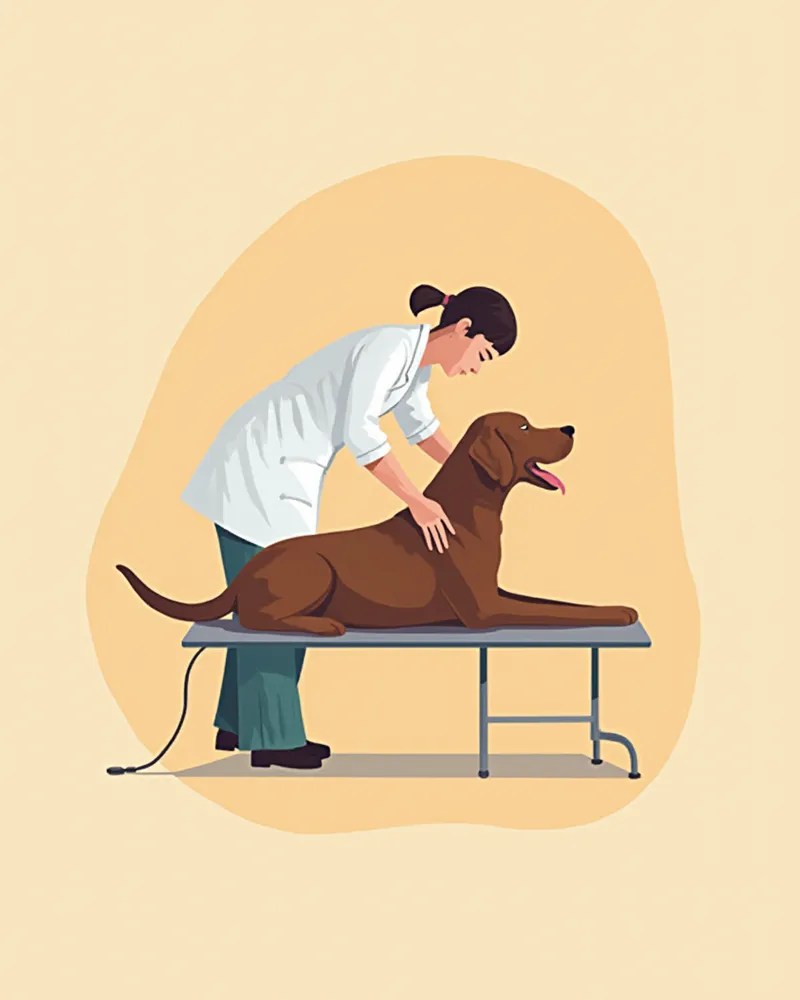
A veterinarian examining a Labrador’s hip joint during a checkup

Screening Frequency and Key Items by Age Group

ItemPuppy (0–12 months)Adult (1–7 yrs)Senior (8+ yrs)
Checkup intervalEvery 1–2 monthsOnce a yearOnce every 6 months
VaccinationCore 5-in-1 + rabiesAnnual booster once a yearDepending on health status
Orthopedic examGait observationHip/elbow X-ray onceJoints/muscles yearly
Weight/body condition evaluationCheck growth curveBCS yearlyBCS every 6 months
Blood testBaseline onceOnce a yearDetailed once every 6 months
Eye examOnce at 12 monthsAs neededYearly

Your vet can adjust this based on the individual dog's condition

Puppy Stage (0–12 Months) Checklist

This is a critical period of rapid growth. It’s important to control food portions to prevent obesity and monitor your pet’s weight monthly. - Growth curve monitoring: Monthly weigh-ins to prevent overweight - Core vaccinations: Administer core vaccines (distemper, adenovirus type 2, parvovirus, etc.) every 2–4 weeks between 6 and 16 weeks of age; rabies vaccine after 12 weeks of age - Deworming and heartworm prevention: Maintain monthly treatment after the initial prescription - Gait observation: Check for limping or reluctance to jump - Spay/neuter consultation: Discuss timing and pros/cons with your veterinarian

Adult Dog Stage (1–7 Years) Checklist

This is the period when activity levels are highest and weight can increase rapidly. It’s important to schedule an orthopedic checkup at least once a year. - Hip and elbow X-rays: Recommended as a baseline exam after age 1 - Body Condition Score (BCS) assessment: Maintain a score of 5/9, where ribs are lightly palpable - Blood and urine tests: Basic panel once a year - Dental examination: To determine the appropriate timing for scaling - Cardiac auscultation: Additional evaluation if there are changes in activity level or accompanying coughing
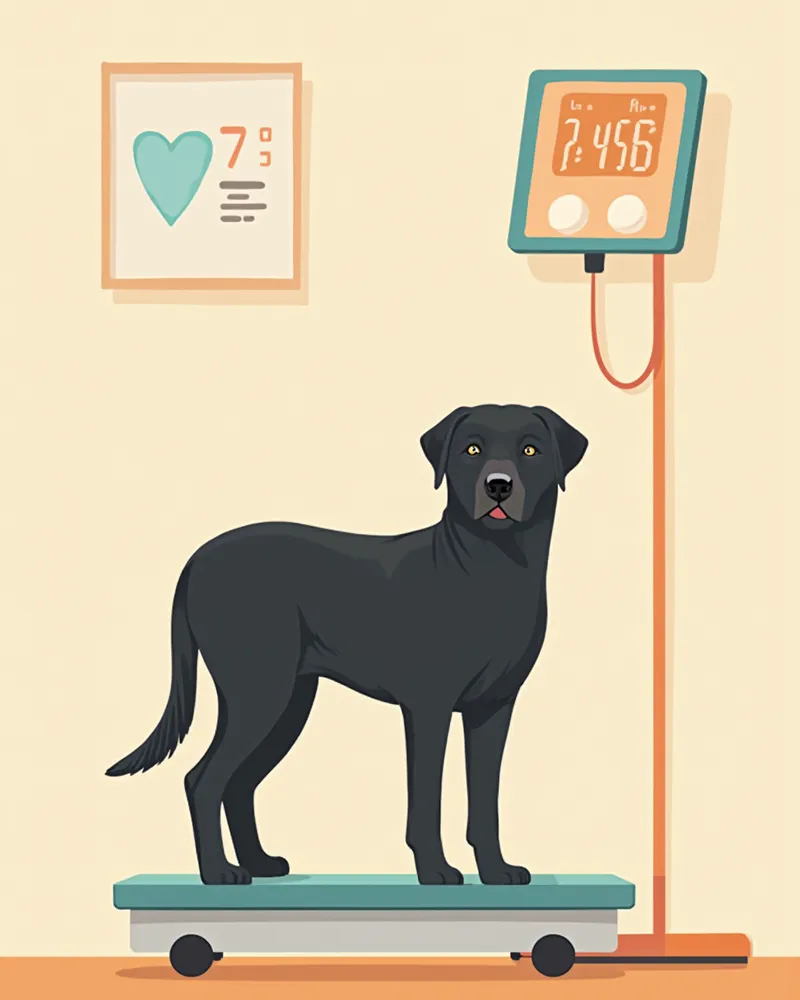
A black Labrador standing on a scale at the veterinary clinic

Advance Your Screening Schedule If You Notice These Signs

Even between scheduled checkups, please visit the clinic right away if you notice any of the following signs: limping that persists for more than a day after a walk, increased reluctance to climb stairs or get on the sofa, sudden weight gain or loss, or a new lump felt under the skin (suspected lipoma). In these cases, it’s best to bring your pet in for an earlier examination.

Senior Stage (8+ Years) Checklist

Senior Labradors face a simultaneous increase in the risk of tumors, arthritis, and heart disease. A comprehensive health checkup is recommended at least once every six months. - Detailed blood and urine tests: To monitor kidney and liver function - Chest X-rays: To check for changes in the heart and lungs - Abdominal ultrasound: For early detection of tumors - Joint assessment: Consultation on managing osteoarthritis pain - Body fat management: Dietary adjustments tailored to reduced activity levels

Weight Management Is as Important as Screening

Obesity is a common health issue in dogs, with UK data suggesting that approximately 25–60% of adult dogs are overweight or obese. Moreover, since more than half of owners of overweight dogs fail to recognize their pet’s condition, objective assessment is especially important. On the 9-point Body Condition Score (BCS) scale, a score of 4–5 is ideal, and each point above the ideal weight corresponds to an approximate 10–15% increase in body weight. Therefore, please check the BCS at every check-up and adjust food portions according to changes in activity level.

Reviewed by a veterinarian

Dr. Tony — Punnawat Phongkittirak

Dr. Tony — Punnawat Phongkittirak

Veterinarian

A veterinarian who majored in veterinary medicine at Khon Kaen University, Thailand, and completed the IVSA program at North Carolina State University in the United States. Drawing on clinical experience at animal hospitals, he works in the pet healthcare field and is dedicated to building a digital care environment that connects pet parents with veterinarians.

Frequently Asked Questions

When should you first get an X-ray of a Labrador’s hips?
We generally recommend the first X-ray at around 12 months of age, when the skeleton has grown to some extent. However, if your pet is limping, we can take the X-ray earlier.
Even if my pet looks healthy, is an annual blood test really necessary?
Yes, Labrador Retrievers are prone to conditions like obesity, joint issues, and heart disease, which often progress gradually. Having baseline measurements taken when your dog is asymptomatic allows for earlier detection of any changes.
I’m worried about the cost of puppy checkups. What should I prioritize?
Prioritize vaccinations, deworming and heartworm prevention, and monitoring weight and gait. Imaging studies can safely be postponed until after your pet reaches one year of age.
What does a comprehensive geriatric checkup for a Labrador Retriever include?
The standard package includes a physical exam, blood and urine tests, chest X-rays, abdominal ultrasound, and joint and dental evaluations. Packages may vary from clinic to clinic.
I missed my pet’s checkup. What should I do?
Even now, start with a physical exam at a nearby veterinary clinic. Bringing your pet’s previous medical records will allow the vet to focus only on any missing tests or evaluations.

Share

Related Guides

References

[1] 100 Top Consultations in Small Animal General Practice, Chapter 46 (Elbow Dysplasia in Labradors)

[2] Applied Veterinary Clinical Nutrition, 2nd Ed, Chapter 10 (Obesity and Osteoarthritis in Labradors)

[3] The Dog Care Handbook - Things I Wish My Vet Had Told Me, Chapter 7 (Hip Dysplasia in Predisposed Breeds)

[4] Clinical Atlas of Canine and Feline Ophthalmic Disease, 2nd Ed, Chapter on Retinal Dysplasia in Labrador Retrievers

This information is based on veterinary literature and does not replace diagnosis or treatment. Please consult a veterinarian for specific health concerns.

Metapet Co., Ltd. | CEO: Park Sung-yong | Business Reg. No. 417-88-02562 | Seoul, South Korea | Customer Center

Labrador Lifetime Screening: Age-Based Disease Care | Meongsiljang