
Like
Share
멍실장
말티즈 유전질환 체크리스트 — 슬개골·심장·간 평생 관리법

Maltese Genetic Condition Checklist — Lifetime Management for Patella, Heart, and Liver

ImmunityBreed HealthMeongsiljang Veterinary Advisory Board

We’ve compiled the top five genetic conditions Maltese dogs should be monitored for throughout their lives, along with age-specific recommended screenings and a home-check checklist. Early detection is key, from patellar luxation to heart valve disease.

What Genetic Conditions Are Maltese Prone To?

A white Maltese standing on a soft blanket in a bright living room
Maltese dogs, as a toy breed, can be prone to conditions such as patellar luxation, liver disease, and heart valve disease. Early detection is key. From a young age, it’s important to have regular orthopedic, cardiac, and liver screenings, and to watch for signs like limping or dry coughing in daily life. Since small toy breeds can develop both developmental joint issues and age-related heart conditions, a consistent, lifelong health care plan starting in puppyhood is essential. Rather than worrying, the best preparation is to stay committed to routine check-ups and careful daily observation.

Why Maltese Are Prone to Genetic Conditions

Maltese dogs are a toy breed that has been selectively bred in the Mediterranean region since the 17th century. Due to their limited gene pool, certain diseases tend to recur within families. Their small size (2–4 kg), short skull, and long, slender limbs can structurally predispose them to joint, organ, and dental issues. As a result, siblings from the same parents often exhibit similar health problems. Simply reviewing the health records of the parent dogs before adoption can significantly reduce the risk of disease.

Top 5 Genetic Conditions Every Maltese Owner Must Know

Patellar Luxation: An orthopedic condition in which the kneecap slips out of its normal position.
Portosystemic Shunt: A congenital vascular anomaly in which blood that should flow to the liver is diverted through an abnormal pathway.
Mitral Valve Insufficiency: A heart disease common in older dogs, in which the mitral valve fails to close properly, causing blood to leak backward.
Tracheal Collapse: A condition in which the trachea (windpipe) flattens and narrows, often producing a cough that sounds like a goose honk.
Tear Staining and Keratitis: Due to narrow nasolacrimal ducts and protruding eyes, these breeds are prone to irritation and inflammation of the eyes.

Patellar Luxation — The Most Common Orthopedic Condition

Patellar luxation is a condition that many Maltese owners will encounter at least once. It is classified into four stages: lower stages can often be managed with medication, weight control, and rehabilitation, while higher stages typically require surgery. This condition frequently arises from developmental abnormalities during growth, and early symptoms may be intermittent with little to no pain upon palpation. If you notice your dog frequently lifting one hind leg or hopping like a rabbit, it is advisable to seek an orthopedic examination. Since this is a developmental issue, early detection through orthopedic palpation during puppyhood is beneficial. Additionally, it is best to avoid slippery floors and jumping on and off sofas throughout your dog’s life.
A Maltese walking on a non-slip mat

Mitral Valve Insufficiency — The #1 Heart Disease in Senior Dogs

Mitral valve insufficiency, also known as myxomatous mitral valve disease, is the most common acquired heart condition in small-breed dogs such as Maltese. In this disease, the valve gradually thickens and deforms, causing blood to flow backward. It occurs more frequently in senior dogs than in young puppies. As the condition progresses, symptoms may include severe coughing after exercise, decreased exercise tolerance, and potentially difficulty breathing or fainting. If a heart murmur is detected during auscultation, an echocardiogram is necessary to determine the disease stage. After diagnosis, medications prescribed by a veterinarian can help slow disease progression, and regular check-ups to monitor the condition and provide early management are beneficial.

Go to the Vet Within 24 Hours If You See These Signs

Seek emergency care if you notice any of the following signs: Sudden panting or labored breathing that wakes your pet at night or in the early morning Gums turning gray or purple Sudden dragging of the hind legs or inability to bear weight Vomiting food and drooling yellow foam Pressing the head against a wall or walking unsteadily In particular, if a puppy under one year old becomes lethargic after eating or shows signs of seizures, suspect a portosystemic shunt and go to the vet immediately.

Don’t Miss Portosystemic Shunt and Tracheal Collapse
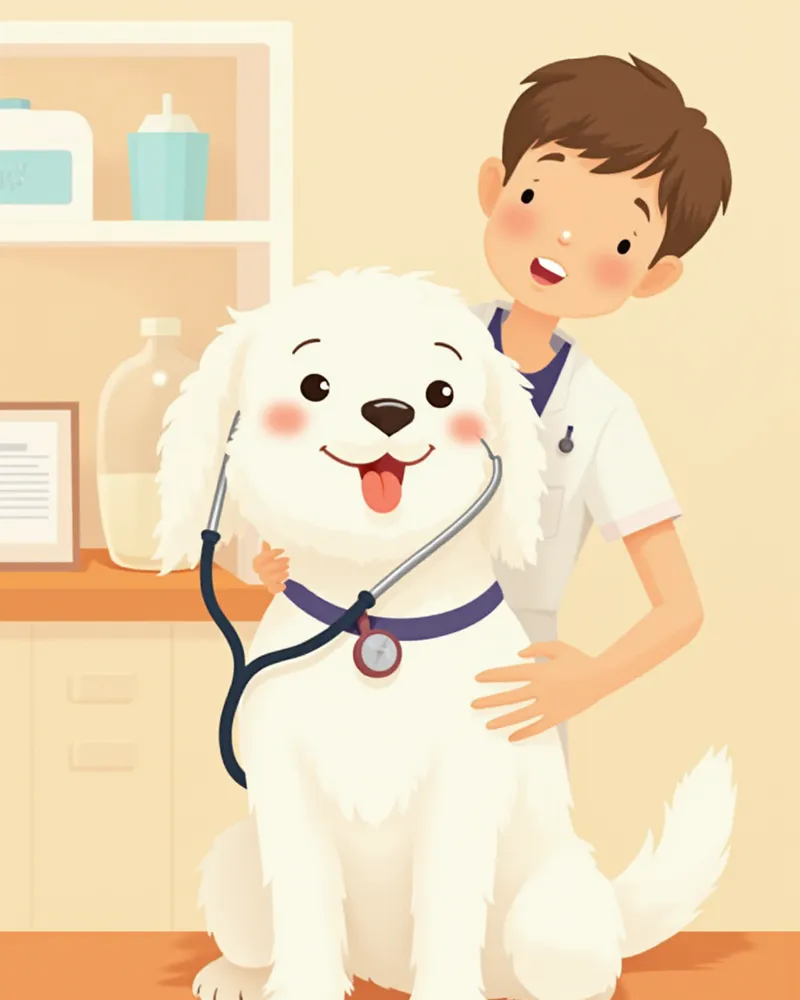
Portosystemic shunt is a congenital vascular anomaly commonly seen in young Maltese dogs. It may cause lethargy after meals or neurological signs such as circling in place, and suspicion arises when blood tests show abnormally elevated bile acid levels. Tracheal collapse can progressively worsen with age, with a characteristic dry, honking cough as a key warning sign. Obesity is considered a risk factor that can exacerbate both conditions, so maintaining an ideal body weight is an important starting point for lifelong management.
A Maltese being examined with a stethoscope at the clinic

Age-Specific Recommended Screening Guide

Item6 months–1 year1–7 years8 years and older
Orthopedic palpation (patella)EssentialOnce a year1–2 times a year
Cardiac auscultation & ultrasoundAuscultation recommendedAuscultation once a yearUltrasound essential
Blood test (including bile acids)EssentialOnce a yearOnce every 6 months
Dental checkupCheck for retained deciduous teethOnce a yearProfessional scaling
Ophthalmic examRecommendedWhen symptomaticOnce a year

Based on clinical recommendations for toy breeds (compiled by advisory panel, 2026)

Daily Home Checklist

Here are some items for caregivers to check in daily life.
Gait: Check if the pet is lifting only one leg or hopping like a rabbit.
Respiratory rate: Count the breaths per minute while the pet is sleeping to see if it exceeds 30.
Gum color: It is dangerous if the pink hue fades or turns purple.
Post-meal behavior: Observe if the pet becomes lethargic or paces in the same spot.
Tears and nasal discharge: Record any changes if the color turns yellow or the amount suddenly increases.
Taking photos from the same angle once a week will help you detect changes much faster.
A Maltese being gently examined and checked by its owner at home.

Three Environmental Management Tips for Lifetime Care

Anti-slip mats: Hardwood floors put significant strain on the patella and lower back. Place mats along the paths your dog frequently walks. Ideal weight: The ideal weight for a Maltese is 2.5–4 kg. Even a 0.5 kg increase can place considerable stress on the joints, heart, and respiratory system. No jumping: Replace climbing on and off sofas or beds with ramps or steps. This is the most effective way to prevent intervertebral disc disease and patellar luxation.

Reviewed by a veterinarian

Dr. Tony — Punnawat Phongkittirak

Dr. Tony — Punnawat Phongkittirak

Veterinarian

A veterinarian who majored in veterinary medicine at Khon Kaen University, Thailand, and completed the IVSA program at North Carolina State University in the United States. Drawing on clinical experience at animal hospitals, he works in the pet healthcare field and is dedicated to building a digital care environment that connects pet parents with veterinarians.

Frequently Asked Questions

If a parent dog has patellar luxation, will the puppies definitely inherit it?
While not guaranteed, the risk of developing the condition increases several-fold. The most reliable preventive measure is to review the orthopedic examination records of the puppy’s parents before adoption. Adhering to three key practices from an early age—using non-slip flooring, maintaining a healthy weight, and preventing jumping—can significantly delay onset or halt disease progression.
What kind of nutritional supplements should I give to my Maltese?
Joint supplements such as glucosamine and chondroitin, along with omega-3 fatty acids, are generally recommended. For pets taking heart medication, coenzyme Q10 may be beneficial. However, since supplements can interact with diagnostic results and prescription medications, always consult your veterinarian before starting any supplement.
Can I get a genetic test in advance?
Some veterinary clinics and diagnostic laboratories offer genetic panel testing specifically for Maltese dogs. Having this test done shortly after adoption can make it much easier to create a lifelong health management plan. Sharing the results with your primary veterinarian allows them to tailor the frequency and scope of routine check-ups to your dog’s unique needs.
If your pet is coughing frequently, should you take them to the vet?
If your dog has a persistent, honking dry cough for over a week, or if the coughing worsens after excitement or exercise, we should suspect tracheal collapse or early-stage heart disease. Recording a short video of the coughing episode to show the veterinarian during the visit can significantly speed up the diagnostic process.

Share

Related Guides

References

[1] BSAVA Manual of Canine and Feline Dermatology, 4th Ed

[2] Textbook of Cardiovascular Medicine in Dogs and Cats — Mitral Valve Disease in Small Breed Dogs

[3] The Dog Care Handbook — Breed-related health predispositions

[4] ACVS(미국수의외과학회) Patellar Luxation in Toy Breeds 임상 가이드

This information is based on veterinary literature and does not replace diagnosis or treatment. Please consult a veterinarian for specific health concerns.

Metapet Co., Ltd. | CEO: Park Sung-yong | Business Reg. No. 417-88-02562 | Seoul, South Korea | Customer Center

Maltese Genetic Conditions: Patella, Heart & Liver Care | Meongsiljang