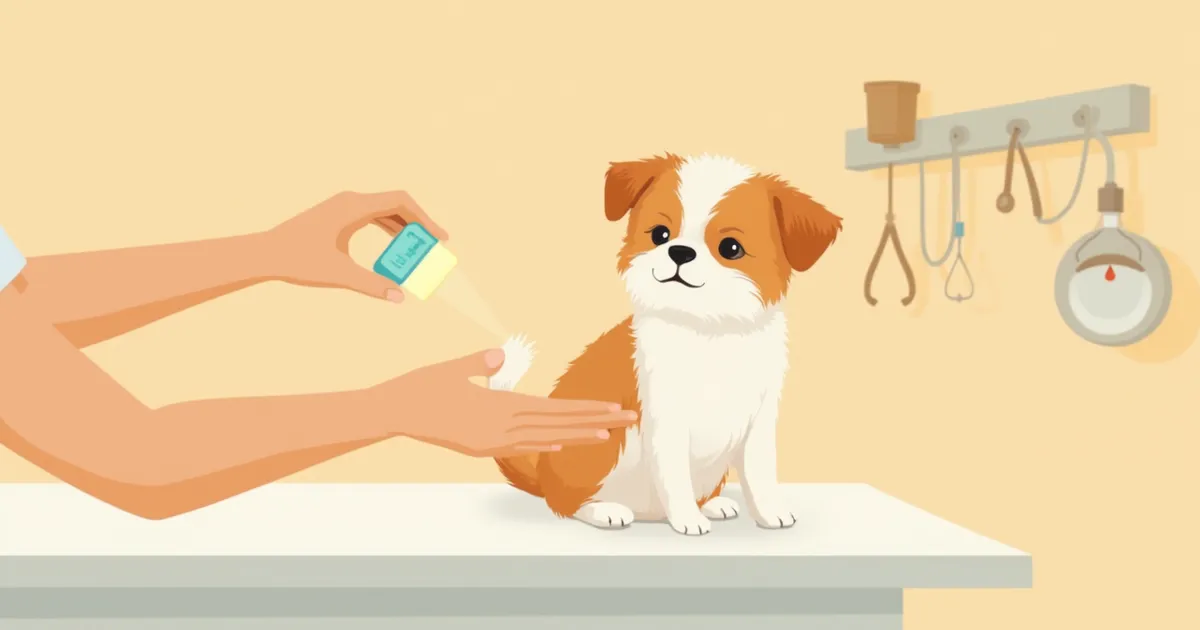
Like
Share
멍실장
시츄 정기 검진·평생 케어 일정

Shih Tzu Regular Check-ups & Lifelong Care — Age-Specific Predisposed Conditions and Stage-Based Management

ImmunityBreed HealthMeongsiljang Veterinary Advisory Board

Shih Tzus are prone to eye, dental, skin, and liver conditions, so knowing the recommended check-up items and frequency for each life stage can greatly support lifelong health management. Here’s a summary of age-specific screening schedules and key care points.

Why Is the Check-up Schedule Important for Shih Tzu Lifelong Care?

A Shih Tzu sitting comfortably at home
Shih Tzus are a small brachycephalic breed with a known predisposition to eye, skin, and liver diseases. The key to regular check-ups is catching these breed-specific conditions early. Standard comprehensive exams often miss issues like vitreous degeneration, which is common in Shih Tzus, or hepatocutaneous syndrome, a liver disease accompanied by skin lesions. Therefore, it’s important to include additional tests tailored to different age groups. By planning a lifelong care schedule that monitors the eyes, skin, and liver, you can detect serious illnesses at an early stage.

Top 5 Conditions Shih Tzus Need to Watch Out For

Shih Tzus have a known predisposition to certain conditions, so it’s a good idea to check for these during routine health screenings. - Ocular surface diseases: Because their eyes are large and highly exposed, Shih Tzus are prone to corneal damage and clouding, making regular eye exams essential. - Vitreous degeneration: This condition involves the degeneration of the vitreous humor inside the eye and can lead to retinal tears, folds, or detachment. It is a particularly important concern for Shih Tzus. - Hepatic cutaneous syndrome: A rare liver disease reported in Shih Tzus, this condition causes skin lesions at the junction of the paw pads and mucous membranes, and may be accompanied by systemic symptoms such as loss of appetite and weight loss. - Periodontal disease: As with many small breeds, Shih Tzus are prone to tartar buildup and gum inflammation, so regular dental check-ups are necessary. - Skin conditions: Shih Tzus can develop itching and dermatitis, so it’s important to monitor their skin regularly.

Shih Tzu Check-up Schedule by Age Group

ItemPuppy stage (0–1 yr)Adult stage (1–7 yrs)Senior stage (7+ yrs)
Comprehensive health checkupOnce (at 6 months of age)Once a yearTwice a year
Detailed ophthalmic examOnce (6–12 months)Once a yearTwice a year
Dental exam / scalingTooth check onlyOnce every 1–2 yearsOnce a year
Blood chemistry testBasic, onceOnce a yearOnce every 6 months
Cardiac auscultation / echocardiographyBasic auscultationAuscultation once a yearEchocardiography once a year
Skin / liver panel testNot recommendedAs neededOnce a year

Your veterinarian may adjust the schedule based on body weight and underlying conditions

Puppy Stage (0–1 Year) — Building the Foundation of Basic Health
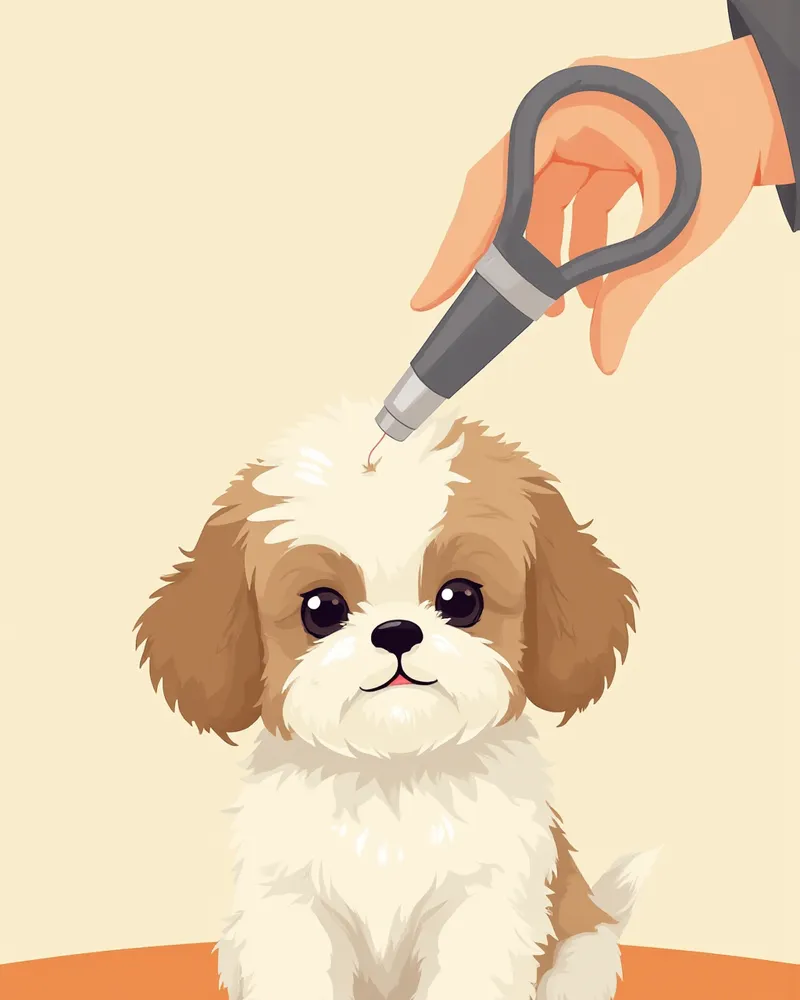
For Shih Tzu puppies, the key is to establish a “breed-specific baseline” alongside their vaccinations. - 6–16 weeks: 3–4 doses of the core combination vaccine, rabies vaccine, and kennel cough vaccine - Around 6 months: First comprehensive health check-up + basic ophthalmic exam (cornea and tear production) - 6–12 months: Blood work performed concurrently with spay/neuter surgery - Dental check: Confirm whether deciduous teeth are retained (retained baby teeth are common in Shih Tzus) In particular, the ophthalmic exam marks the starting point for lifelong eye health records, so it should never be skipped.
A Shih Tzu puppy having its first check-up with a veterinarian.

Adult Stage (1–7 Years) — Annual Comprehensive Check-up Routine

Even if an adult Shih Tzu appears healthy on the outside, this is the stage when internal changes begin. Annual comprehensive checkups are essential, but you must also include tests specific to the breed. - Annual ophthalmic exam: Early detection of eye conditions reported in Shih Tzus, such as vitreous degeneration, and the risk of retinal detachment - Annual blood and urine tests: Monitoring changes in liver enzymes (ALT, ALP) - Annual dental exam: Measuring periodontal pockets and performing scaling if necessary - Weight and body condition assessment: Obesity is a trigger for all diseases An ophthalmic exam is comparable to a vision test plus a fundus exam in humans.

Go to the Vet Immediately, Even Before Your Scheduled Check-up, If You See These Signs

These are emergency signs that require immediate veterinary care rather than waiting for a scheduled checkup. - Frequent eye rubbing or inability to open one eye - Gray or brown streaks or cloudiness on the cornea - Sudden severe bad breath and bleeding gums - Coin-shaped hair loss or scabs on the skin - Loss of appetite and jaundice (yellowing of the gums and whites of the eyes) - Sudden seizures, difficulty standing, or changes in consciousness In particular, jaundice and seizures may indicate liver disease or a neurological emergency.

Senior Stage (7+ Years) — Double the Check-up Frequency

For senior Shih Tzus, it’s safer to shorten the check-up interval to every six months. Senior dogs can experience rapid disease progression, so significant changes may occur even within a six-month period. - Comprehensive health check-up + blood chemistry panel every 6 months - Echocardiogram once a year: To monitor for heart valve disease, which becomes more common in senior small-breed dogs - Abdominal ultrasound once a year: For early detection of liver disease and tumors - Ophthalmologic exam twice a year: To monitor for cataracts and retinal detachment - Comprehensive dental exam once a year: Including scaling under anesthesia and root assessment In the senior years, the key is “early detection” rather than just “prevention.”
An elderly Shih Tzu resting comfortably

Self-Care to Perform Daily and Weekly at Home

Just as important as veterinary checkups are the daily health checks you perform at home. Catching small changes early helps bridge the gaps between professional exams. - Daily: Wipe tear stains around the eyes, clean nasal folds, and brush teeth - Weekly: Clean ears, check paw pads and nails, and weigh your pet - Monthly: Feel over the entire skin surface to check for lumps or scabs - Seasonal transitions: Monitor for allergy symptoms (itching, sneezing) In particular, brushing your Shih Tzu’s teeth is the most effective self-care routine for their lifelong health.

Breed-Specific Information Shih Tzu Owners Must Know

Shih Tzus are a brachycephalic breed, so they require special precautions during anesthesia and surgery that differ from those for other dog breeds. Here’s important information to share with your veterinarian during routine checkups: - Due to their brachycephalic anatomy, Shih Tzus are at higher risk of respiratory complications under general anesthesia, making a pre-anesthetic evaluation essential. - Their prominent eyes are more prone to injury and corneal ulcers. - For Shih Tzus with a family history of hepatic cutaneous syndrome (a liver disease associated with skin lesions), more frequent liver panel testing is recommended. - It’s also advisable to include patellar and hip joint examinations as part of regular checkups. When visiting a new veterinary clinic, be sure to bring your dog’s previous medical records.

Reviewed by a veterinarian

Dr. Tony — Punnawat Phongkittirak

Dr. Tony — Punnawat Phongkittirak

Veterinarian

A veterinarian who majored in veterinary medicine at Khon Kaen University, Thailand, and completed the IVSA program at North Carolina State University in the United States. Drawing on clinical experience at animal hospitals, he works in the pet healthcare field and is dedicated to building a digital care environment that connects pet parents with veterinarians.

Frequently Asked Questions

How many times a year should a Shih Tzu undergo a comprehensive health checkup?
For adult dogs (ages 1–7), we recommend annual check-ups, while senior dogs (7 years and older) should be seen twice a year (every six months). If your dog has a chronic condition, your veterinarian may advise more frequent visits.
Can I get an ophthalmic exam for my Shih Tzu at a regular veterinary clinic?
While basic eye exams can be performed at general veterinary clinics, we recommend seeking care at a facility equipped for ophthalmology or consulting a veterinary ophthalmologist if you suspect vitreous degeneration or chronic keratitis.
When should I start getting my Shih Tzu’s teeth scaled?
We recommend scheduling this procedure once every one to two years, starting when your dog reaches adulthood (1–2 years of age). If you maintain a consistent daily brushing routine, you may be able to extend the interval between visits. However, for senior dogs, annual check-ups are safer and more advisable.
Is there a way to reduce the cost of a Shih Tzu’s checkup?
You can take advantage of package check-up services offered by local veterinary clinics or enroll in a pet insurance plan that includes coverage for routine health exams. However, be sure to carefully review the policy terms, as coverage often excludes breed-specific conditions in Shih Tzus.
How should I store the check-up results?
It’s a good idea to scan your pet’s test results from the vet into a PDF and save them to the cloud, or log them in a pet health management app. Having access to past records can be incredibly helpful if you ever need to switch veterinary clinics.

Share

Related Guides

References

[1] Papaioannou NG, Dubielzig RR. Histopathological and immunohistochemical features of vitreoretinopathy in Shih Tzu dogs. Journal of Comparative Pathology, 2013

[2] Hall-Fonte DL, Genter SA, McDonough SP et al. Hepatocutaneous syndrome in Shih Tzus: 31 cases (1996-2014). Journal of the American Veterinary Medical Association 248, 802-813, 2016

[3] Chavkin MJ, Roberts SM, Salman MD et al. Risk factors for development of chronic superficial keratitis in dogs. Journal of the American Veterinary Medical Association, 1994

[4] Krishnan H, Diehl K, Stefanovski D, Aguirre GD. Vitreous degeneration and associated ocular abnormalities in the dog. Veterinary Ophthalmology, 2020

[5] BSAVA Manual of Canine and Feline Dermatology, 4th Edition

This information is based on veterinary literature and does not replace diagnosis or treatment. Please consult a veterinarian for specific health concerns.

Metapet Co., Ltd. | CEO: Park Sung-yong | Business Reg. No. 417-88-02562 | Seoul, South Korea | Customer Center

Shih Tzu Health Guide: Age-Specific Care and Common Conditions | Meongsiljang