Like
Share
멍실장
퍼그 그루밍 가이드: 주름·이중모 관리 핵심 정리

Pug Wrinkle & Double Coat Grooming — Key Care Tips to Prevent Dermatitis

Skin & CoatBreed HealthMeongsiljang Veterinary Advisory Board

Pugs require a grooming routine that differs from other breeds due to their deep facial wrinkles, double coat that sheds, and brachycephalic respiratory traits. We’ve summarized the essential care tips every owner should know, including wrinkle cleaning, undercoat maintenance, and eye and ear care.

Why Is Pug Grooming Different From Other Breeds?
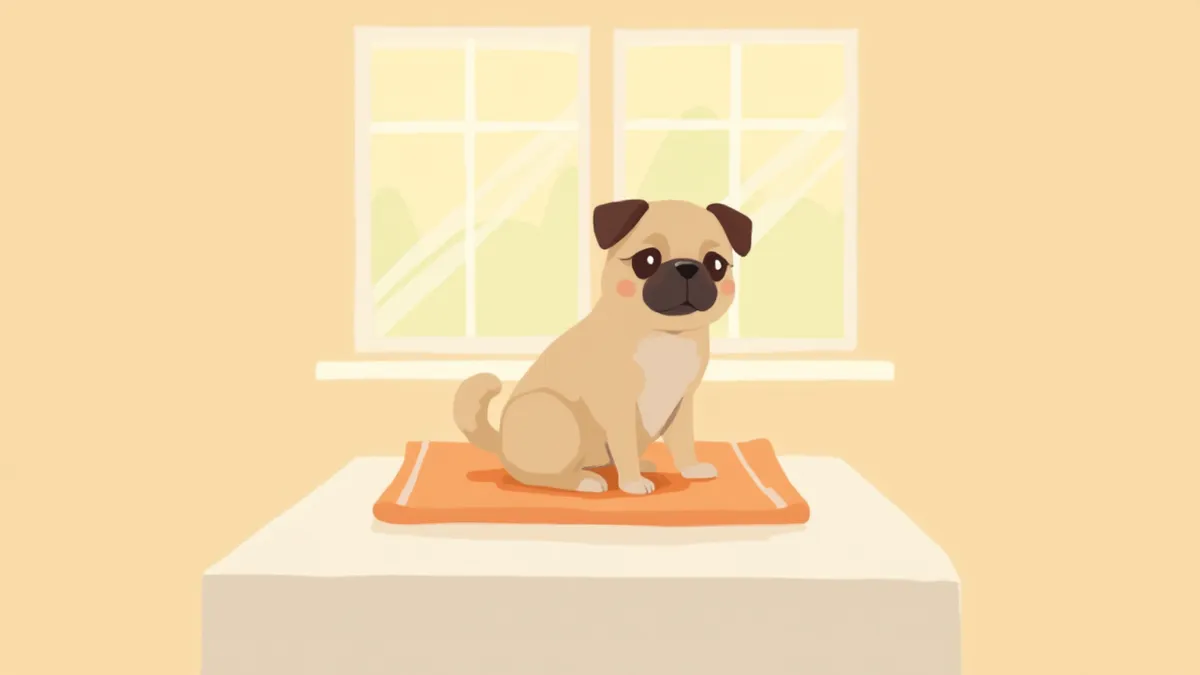
A pug sitting quietly on the grooming table
Pug grooming is a daily care routine tailored to the breed’s short double coat and deep facial wrinkles, designed to prevent skin infections and respiratory strain. The key focuses are keeping the facial folds clean and managing shedding undercoat. Unlike many other breeds, bathing once a month isn’t enough; pugs need daily facial cleaning and full-body brushing two to three times a week. Leaving moisture and secretions in the wrinkles can easily lead to skin fold dermatitis.

5 Key Points for Pug Grooming

If you’re raising a Pug, be sure to pay close attention to these five areas.
Facial wrinkles: Gently wipe them daily and ensure they’re completely dry to prevent fungal and bacterial growth.
Double coat undercoat: Use a slicker or rubber brush 2–3 times a week to remove dead undercoat and reduce shedding.
Protruding eyes: Wipe away any discharge around the eyes daily, and be careful not to get shampoo in them.
Floppy ears: Poor ventilation increases the risk of otitis externa, so clean the ears once a week.
Tail wrinkles: The folded area inside the tail is also prone to fold dermatitis, so check it regularly.

Facial Wrinkle Care: Daily Maintenance Is Essential
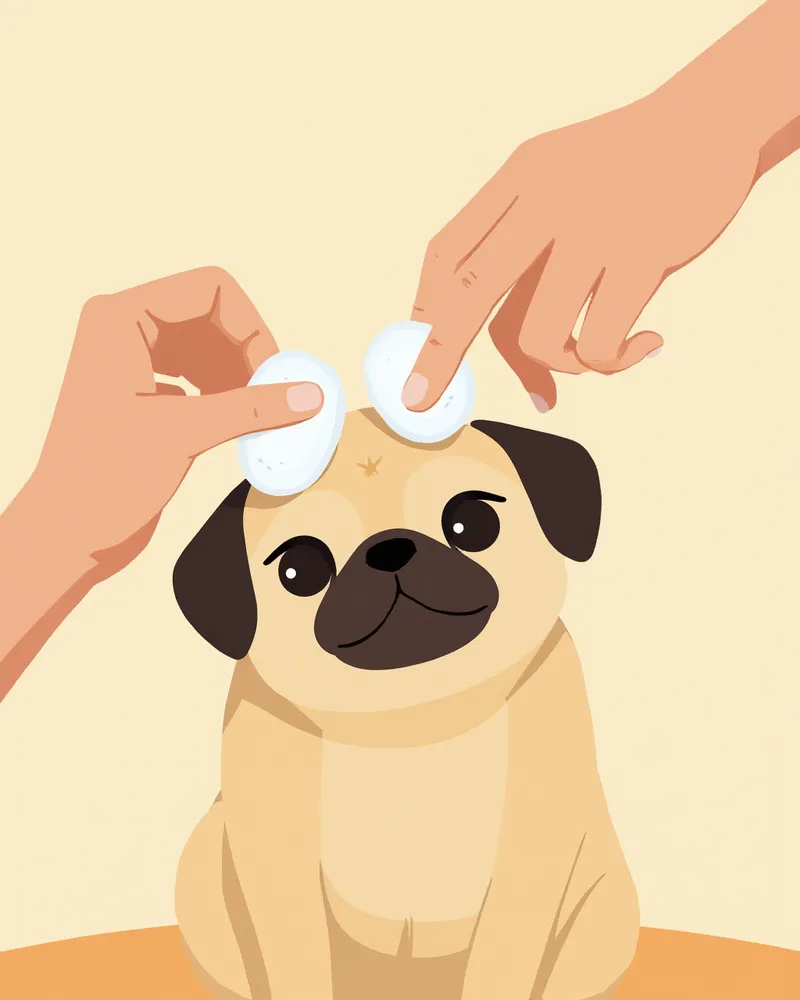
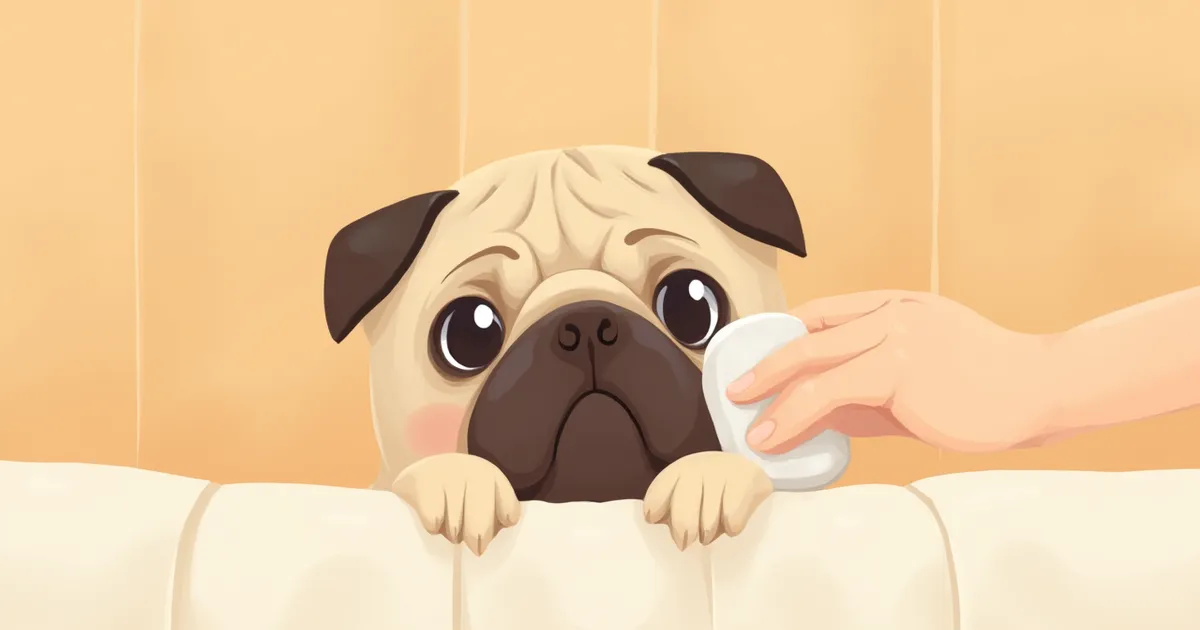
Pugs’ deep facial wrinkles are prime spots for food particles, tears, sweat, and dead skin cells to accumulate. Veterinary dermatology textbooks identify the wrinkle-prone areas of brachycephalic breeds as classic sites for skin fold pyoderma. Gently part the wrinkles and clean all the way inside with gauze moistened in lukewarm water or an alcohol-free pet wipe, then always press with dry gauze to remove all moisture. Leaving the area damp can lead to Malassezia (yeast) infections, causing the skin to turn dark red and develop an unpleasant odor.
Wiping a pug's facial wrinkles with a cotton pad

When to Visit the Vet: Warning Signs to Watch For

If the skin inside the wrinkles becomes red and inflamed, develops a sour odor, produces brown or black discharge, or if your pet continues to scratch and rub the area for more than three days, home care alone will not resolve the issue. At this stage, yeast and bacterial infections often occur simultaneously, so a veterinary examination and prescription of specialized antifungal and antibacterial shampoos are necessary. Applying human ointments directly can actually damage the skin barrier.

Double Coat Brushing: Remove Shedding Hair Before It Falls Out

Pugs have a short double coat consisting of an undercoat and a topcoat. During shedding seasons, they can lose a handful of hair daily, making regular brushing essential. Gently brush in the direction of hair growth using a rubber grooming mitt, then finish by removing dead undercoat with a slicker brush. Brushing two to three times a week will noticeably reduce hair around the home and improve skin ventilation, helping prevent skin issues in areas outside the facial wrinkles.

Comparison of Brush Types for Pugs

ItemRubber grooming mittSlicker brushDeshedding tool
Main useDaily massage and coat tidyingRemoving dead undercoatIntensive shedding-season care
Frequency of use2–3 times a week1–2 times a weekOnce a week during shedding season
Skin irritationAlmost noneModerate (mild)Strong (caution)
RecommendationTrueTrueFalse

Deshedding tools are harsh, so overusing them on a Pug's short double coat risks skin damage

Eye, Ear, and Nail Care: Short but Daily Attention Needed
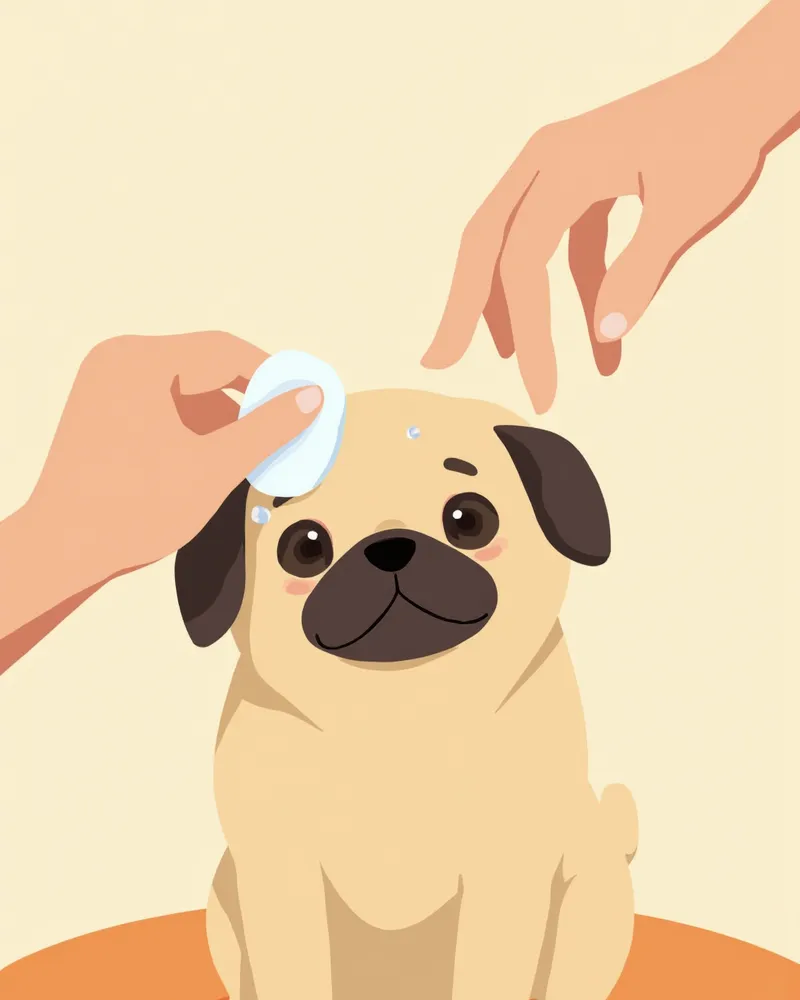
Pugs have protruding eyes that leave the cornea exposed, making them prone to tearing and dust accumulation. Gently wipe around the eyes daily with a gauze pad moistened with lukewarm water, and wash the face last during bathing to prevent shampoo from getting into the eyes. Their floppy ears lack proper ventilation, leading to frequent otitis externa; therefore, clean the inner ear canal once a week using a pet-specific ear cleaner. Since Pugs are less active and their nails wear down slowly, trim them every two to three weeks to maintain proper gait and posture.
Wiping around a pug's eyes with a cotton pad

Bathing: Too Frequent Can Actually Be Harmful
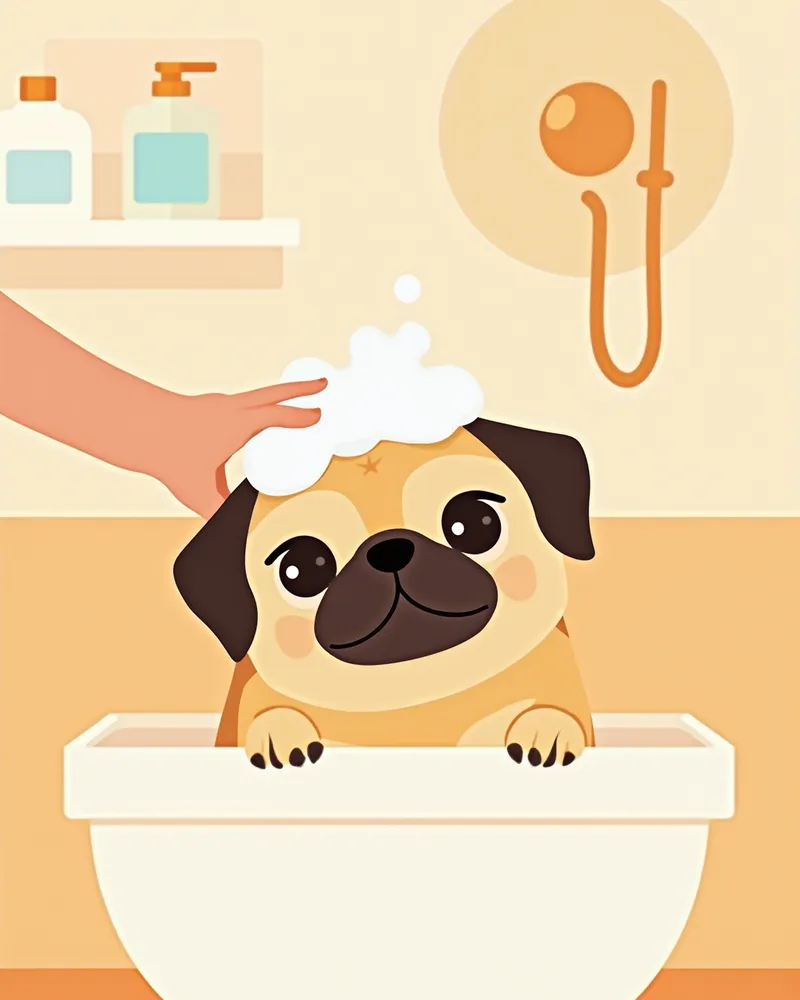
For Pugs, it’s more important to tailor bath frequency to their skin condition than to follow a fixed schedule. Dogs with healthy skin can comfortably bathe once every three to four weeks. However, if your Pug suffers from recurrent fold dermatitis, Malassezia (yeast) infections, or pyoderma, consulting your veterinarian about using cleansing or medicated shampoos more frequently can actually help reduce skin lesions and itching. Veterinary dermatology textbooks even recommend bathing dogs at risk of recurrent bacterial or yeast infections once or twice a week with antibacterial shampoos containing chlorhexidine. Because brachycephalic breeds like Pugs have compromised airways and may pant heavily during baths, use lukewarm water and keep the process quick, while ensuring the bathroom is well-ventilated. From a veterinary respiratory perspective, obesity and excitement can worsen brachycephalic airway symptoms, so avoid overstimulating your dog after the bath and calmly complete the drying process.
A guardian gently bathing a Pug.

Brachycephalic Pugs: Monitor Breathing Signals During Grooming

Pugs are a breed prone to brachycephalic airway syndrome. If you notice rough panting, purple discoloration of the gums or tongue, or sudden collapse during grooming, stop immediately and let your dog rest in a cool place. Obesity can worsen airway symptoms, so maintaining a healthy weight is just as important as regular grooming.

Reviewed by a veterinarian

Dr. Tony — Punnawat Phongkittirak

Dr. Tony — Punnawat Phongkittirak

Veterinarian

A veterinarian who majored in veterinary medicine at Khon Kaen University, Thailand, and completed the IVSA program at North Carolina State University in the United States. Drawing on clinical experience at animal hospitals, he works in the pet healthcare field and is dedicated to building a digital care environment that connects pet parents with veterinarians.

Frequently Asked Questions About Pug Grooming

How many times a day should I clean my pug’s facial wrinkles?
As a general rule, clean your pet’s teeth once a day. For pets that eat wet food or tend to drool frequently, wipe their teeth after each meal and gently dry them with a dry gauze pad.
Is there a way to reduce shedding in Pugs?
Since double-coated breeds naturally shed, it’s impossible to eliminate hair loss entirely. However, brushing two to three times a week with a combination of a rubber brush and a slicker brush can help remove loose undercoat before it sheds, reducing the amount of hair around the house. A balanced diet rich in essential fatty acids, such as omega-3, is also known to support healthy skin and coat condition.
Do Pugs need to be groomed at a specialized grooming salon?
Pugs require minimal professional grooming, so regular at-home care is usually sufficient. However, if your pug suffers from recurring skin infections in the facial folds or if trimming their nails proves difficult, it’s safest to have them regularly groomed by a professional experienced with brachycephalic breeds.
Can I apply baby powder to the folds of my pet’s skin?
I don't recommend it. When the powder comes into contact with moisture, it can harden and actually cause irritation and infection. Gently wiping the area and allowing it to dry is the safest approach.
Is there anything I should pay extra attention to when grooming my Pug during the summer?
Sweat and humidity increase the risk of fold dermatitis and otitis externa. Wipe your pet’s folds more frequently, and clean their paw pads and face after walks. Brachycephalic breeds are particularly vulnerable to heat, so schedule grooming sessions during cooler times of the day.

Share

Related Guides

References

[1] Hendricks JC, Brachycephalic Airway Syndrome, Textbook of Respiratory Disease in Dogs and Cats

[2] Englar RE, The Veterinary Workbook of Small Animal Clinical Cases, Case 41

[3] Miller WH et al., Muller and Kirk's Small Animal Dermatology, 7th ed., Skin Fold Pyoderma chapter

This information is based on veterinary literature and does not replace diagnosis or treatment. Please consult a veterinarian for specific health concerns.

Metapet Co., Ltd. | CEO: Park Sung-yong | Business Reg. No. 417-88-02562 | Seoul, South Korea | Customer Center

Pug Wrinkle & Double Coat Grooming: Prevent Dermatitis | Meongsiljang