
Like
Share
멍실장
퍼그 정기 검진·평생 케어 일정 완벽 가이드

Pug Health Care Calendar — Age-Specific Check-ups and Periodic Management of Respiratory and Eye Health

ImmunityBreed HealthMeongsiljang Veterinary Advisory Board

Pugs are prone to breed-specific health issues such as brachycephalic airway syndrome, obesity, and spinal deformities. We’ve put together a schedule for regular check-ups and daily care tailored to puppies, adult dogs, and seniors.

What Breed Are Pugs and Why Is Lifelong Care Necessary?

A puppy and an adult Pug sitting side by side
Pugs are a small brachycephalic breed, characterized by their short muzzles and sturdy bodies. Regular lifelong check-ups are essential. Because they are prone to breed-specific conditions such as brachycephalic obstructive airway syndrome, breathing difficulties exacerbated by obesity, and spinal abnormalities like hemivertebrae, which can manifest early in life, it’s important to tailor veterinary screenings to each life stage—from puppyhood through senior years. Missing early signs often leads to surgical intervention, so having a proactive care calendar in place can make a significant difference.

Top 5 Conditions Pugs Should Be Especially Cautious About

Pugs are prone to more health issues than many other breeds, so these five conditions should never be skipped during routine checkups throughout their lives. - Brachycephalic Obstructive Airway Syndrome: Due to their short snout structure, pugs have narrowed nasal passages, soft palates, and tracheas, making breathing difficult. - Obesity: Weight gain can immediately worsen breathing difficulties. - Hemivertebra: A congenital deformity where the tail and spinal bones form a wedge shape. - Corneal Injury: Their protruding eyes make them vulnerable to trauma and dryness. - Skin Fold Dermatitis: Inflammation frequently occurs in the folds of their facial skin.

Puppy Stage Check-up Schedule (0–12 Months of Age)
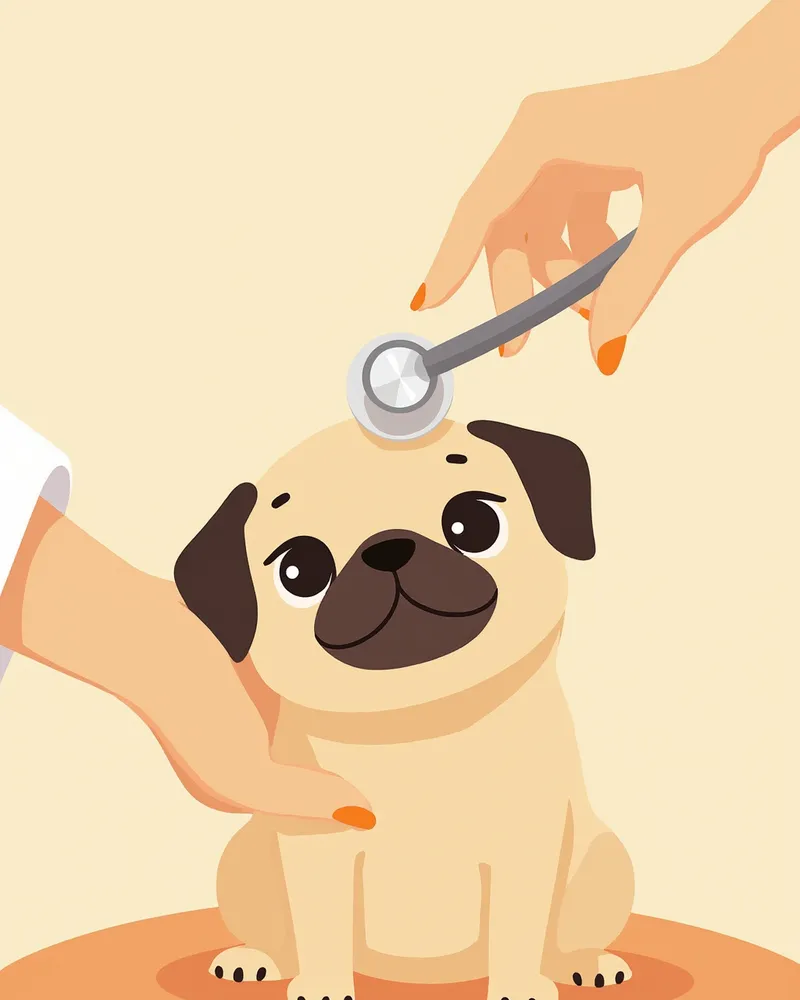
The puppy stage is crucial for laying the foundation of a Pug’s lifelong health. In addition to vaccinations, conducting breed-specific screenings early on will benefit your dog in adulthood. - 6–8 weeks of age: First round of core vaccines, fecal examination, and initiation of weight tracking - 10–12 weeks of age: Second and third vaccine boosters, rabies vaccination, and start of heartworm prevention - 4–6 months of age: Consultation on spaying/neutering, and spinal X-rays to check for hemivertebrae - 6–12 months of age: Brachycephalic airway assessment (evaluating nostrils and soft palate), patellar examination, and basic ophthalmic exam Having your puppy’s breathing sounds and nostril structure evaluated during this period makes it easier to compare and monitor any changes later on.
A young Pug undergoing a stethoscope examination by a veterinarian

Adult Dog Stage Check-up Schedule (1–7 Years)

We recommend that Pugs have regular check-ups at least once a year, and ideally every six months, even after reaching adulthood. Brachycephalic breeds tend to show signs of aging earlier than other breeds. - 1–2 times per year: Comprehensive physical examination, weight and Body Condition Score (BCS) assessment - Once per year: Blood tests (complete blood count and biochemistry), urinalysis, and heartworm antigen test - Once per year: Dental examination (small breeds are prone to rapid periodontal disease) - Immediately if breathing difficulties occur: Thorough evaluation for Brachycephalic Obstructive Airway Syndrome (consider endoscopy or CT imaging) Obesity is the most significant factor worsening respiratory issues in Pugs, making weight management a key component of their check-ups.

If You Notice These Breathing Signs, Go to the Vet Immediately

Pug owners often overlook changes in breathing. If you notice any of the following signs, it’s safest to have your dog examined by a veterinarian the same day. - Sudden worsening of snoring or episodes of apnea during sleep - Tongue or gums turning purple during walks or after barking - Persistent panting and excessive drooling on hot days - Daily recurrence of reverse sneezing Veterinary textbooks emphasize that dyspnea (difficulty breathing) is an immediate emergency, as it can rapidly become life-threatening, requiring prompt veterinary care. Nocturnal onset of acute respiratory distress is not uncommon, and respiratory effort may increase during exercise, excitement, or anxiety. If your dog appears to be breathing more laboriously than usual, don’t hesitate—seek veterinary care the same day.

Senior Stage Check-up Schedule (7 Years and Older)

Pugs enter the senior health screening stage at age seven. Although their aging process is slower than that of large-breed dogs, their brachycephalic anatomy causes cardiac and respiratory strain to accumulate more rapidly. - Every six months: Physical examination, weight and muscle mass assessment, blood pressure measurement - Annually: Senior blood panel (including thyroid function), urinalysis, thoracic radiographs - As needed: Echocardiography, intraocular pressure testing, repeat spinal imaging - Dental care: Scaling is determined only after a thorough pre-anesthetic cardiopulmonary evaluation Because senior pugs face higher anesthetic risks, comprehensive pre-surgical diagnostics are especially important.
An elderly pug resting on a cushion

Overview of Key Check-up Items by Age

ItemPuppy (0–1 yr)Adult (1–7 yrs)Senior (7+ yrs)
Physical exam frequencyOnce a month1–2 times a yearEvery 6 months
Blood/urine testsBaseline onceOnce a year1–2 times a year
Brachycephalic respiratory assessmentOnce at 6–12 monthsDetailed exam if abnormalRequired before and after surgery
Spinal X-ray (hemivertebra)Once at 4–6 monthsIf symptomaticRe-image if abnormal
Dental examFrom 6 monthsOnce a yearAfter anesthesia assessment
Cardiac assessmentBasic auscultationAuscultation once a yearUltrasound recommended

Your vet adjusts the frequency based on the individual dog's condition

Daily Care Points to Monitor

Daily care is just as crucial as regular checkups in determining a Pug’s lifespan. Weight, facial wrinkles, and eyes are areas owners can monitor themselves. - Weight Management: Maintain a Body Condition Score (BCS) of 4–5/9, where the ribs can be felt under the skin. - Facial Wrinkle Cleaning: Wipe daily with soft gauze and ensure the area is completely dry. - Eye Care: Check daily for discharge or corneal scratches, and be cautious of tall grass during walks. - Exercise: Avoid midday walks on hot days (above 25°C); keep exercise short and cool. - Temperature Control: Keep indoor temperatures below 26°C in summer, and check the color of the paw pads and tongue after walks. Pugs are inefficient at cooling themselves through panting, making proper ventilation and temperature control essential.

What to Check Before Anesthesia or Surgery

Anesthesia always carries some risk, and that risk increases with age and the presence of underlying health conditions (the reported anesthesia-related mortality rate in dogs is approximately 0.11% to 0.43%). Before procedures such as spaying/neutering, dental work, or tumor removal, it’s a good idea to ask the clinic about their anesthesia and monitoring protocols. - Pre-anesthetic testing: chest X-rays, blood work, and, if possible, an echocardiogram - Whether the clinic can monitor for airway obstruction during recovery from anesthesia - Whether post-operative inpatient oxygen support is available Thorough pre-anesthetic evaluation and careful monitoring during and immediately after anesthesia help reduce risks. Your veterinarian will determine the appropriate anesthetic drugs, dosages, and recovery plan based on your pet’s weight and respiratory status; these should never be adjusted by the owner.

Reviewed by a veterinarian

Dr. Tony — Punnawat Phongkittirak

Dr. Tony — Punnawat Phongkittirak

Veterinarian

A veterinarian who majored in veterinary medicine at Khon Kaen University, Thailand, and completed the IVSA program at North Carolina State University in the United States. Drawing on clinical experience at animal hospitals, he works in the pet healthcare field and is dedicated to building a digital care environment that connects pet parents with veterinarians.

Frequently Asked Questions

How many times a year should a Pug have a regular check-up?
For adult dogs, we recommend at least one checkup per year, though two are ideal. For senior Pugs aged seven and older, checkups every six months are safer. Due to their brachycephalic (short-nosed) anatomy, respiratory and cardiac changes can progress more rapidly, so more frequent monitoring is advisable compared to other breeds.
Is it absolutely necessary to take spinal X-rays of a Pug puppy?
It is recommended. Pugs are more prone to a congenital spinal deformity called hemivertebrae than other breeds. Having an X-ray taken once between 4 and 6 months of age can provide a baseline for comparison if neurological symptoms such as hind limb weakness or incontinence develop later.
Why is obesity so dangerous for pugs?
Weight gain can place significant strain on a Pug’s breathing and temperature regulation, making weight management essential for their health. During exercise or in hot environments, their respiratory effort may increase beyond normal levels, and breathing difficulties can quickly become a life-threatening emergency. Maintaining an ideal body weight is therefore crucial, and it’s best to consult your veterinarian to determine a specific target weight and develop a tailored management plan.
Are there any ways to reduce the cost of a Pug's health checkup?
It’s a good idea to take advantage of the annual comprehensive health check-up package offered by your local veterinary clinic, or to review the routine examination items covered by your pet insurance policy in advance. However, be aware that breed-specific tests—such as respiratory assessments for brachycephalic breeds or spinal imaging—are often excluded from standard packages, so you may need to add them separately.
What is the average life expectancy of a Pug?
The average lifespan varies significantly depending on the individual pet and its care. Consistent weight management, regular respiratory evaluations, and proper temperature control can greatly enhance your pet's health, while obesity or prolonged exposure to high temperatures can take a toll. For the most accurate information on your pet's life expectancy and care priorities, it's best to consult with your veterinarian during regular check-ups.

Share

Related Guides

References

[1] Hendricks J.C., Brachycephalic Airway Syndrome, Textbook of Respiratory Disease in Dogs and Cats, Chapter 39

[2] Englar R.E., The Veterinary Workbook of Small Animal Clinical Cases, Case 41 — French Bulldog/Brachycephalic Breeds

[3] 수의내과학 교과서, 단두종 품종 관리 챕터

This information is based on veterinary literature and does not replace diagnosis or treatment. Please consult a veterinarian for specific health concerns.

Metapet Co., Ltd. | CEO: Park Sung-yong | Business Reg. No. 417-88-02562 | Seoul, South Korea | Customer Center

Pug Health Care Calendar: Age-Based Check-ups & Care | Meongsiljang