
Like
Share
멍실장
캐벌리어 킹 찰스 시링고미엘리아 — 척수 공동증 평생 관리 가이드

Cavalier King Charles Syringomyelia — Lifelong Management Guide

JointBreed HealthMeongsiljang Veterinary Advisory Board

We’ve outlined the definition and symptom checklist for syringomyelia, a condition commonly seen in Cavalier King Charles Spaniels, along with MRI diagnosis, medication treatment, and lifelong management strategies for the associated mitral valve regurgitation.

What Breed Is the Cavalier King Charles Spaniel?

A Cavalier King Charles Spaniel sitting calmly in the examination room.
Cavalier King Charles Spaniels are a small breed prone to syringomyelia (spinal cord cavitation) and mitral valve insufficiency. The key to lifelong care is simultaneously monitoring for neurological symptoms and heart murmurs. If you notice behaviors that appear to be itching—such as scratching at the neck and shoulders, vocalizing, or avoiding exercise—these may be neurological signs rather than simple skin issues, so do not delay getting an MRI.

Top 3 Common Conditions Cavaliers Must Monitor for Life

Cavalier King Charles Spaniels are prone to both neurological and cardiac conditions due to their distinctive skull shape and small size.
Syringomyelia (Syrinx): This neurological disorder occurs when the space at the back of the skull (caudal fossa) is too narrow, causing the cerebellum to be displaced downward. This blocks the flow of cerebrospinal fluid (CSF) and leads to the formation of fluid-filled cavities within the spinal cord. It is a hereditary condition commonly seen in Cavaliers.
Mitral Valve Insufficiency: This chronic valve disease is particularly prevalent in Cavaliers. As the dog ages, the heart murmur typically becomes louder, and the regurgitation progresses.
Ear Care: Due to their floppy ears, regular ear checks are essential. However, if your dog frequently scratches or rubs its ears, it is important to determine whether the cause is a simple ear issue or a neurological symptom.
Given these breed-specific traits, lifelong monitoring of both the nervous system and heart is crucial.

Syringomyelia (Spinal Cord Cavitation) Symptom Checklist

These symptoms are often mistaken for itching or behavioral issues, leading to delayed detection.
Air scratching: The dog attempts to scratch its neck or shoulder while walking but doesn’t make contact with the skin.
Sudden yelping: The dog cries out in pain even when not being touched.
Abnormal head and neck posture: The dog tilts its head to one side or moves with a stiff neck.
Avoidance of movement: The dog avoids jumping or climbing stairs and tries to end walks early.
Sensory abnormalities: The dog frequently licks its paws or shakes them as if they feel numb.
A Cavalier dog scratching its neck with its hind leg

Go to the Vet Immediately for These Signs

If your pet suddenly yelps and the episodes recur within 24 hours, if one leg becomes weak and causes stumbling, or if the head remains tilted to one side without improvement, it is an emergency. Neurological symptoms are progressive, so even a delay of a few days can significantly increase the difficulty of pain management. If this occurs at night, go immediately to a 24-hour veterinary hospital with a neurology department.

MRI Is the Standard for Diagnosis

Syringomyelia cannot be detected on standard X-rays. Magnetic resonance imaging (MRI) is the standard diagnostic test to assess the position of the cerebellum within the skull, as well as the size and distribution of the fluid-filled cavities within the spinal cord. Because anesthesia is required for the MRI, we perform an echocardiogram beforehand to evaluate the mitral valve and assess anesthesia risk. We also conduct neurological examinations and pain scoring to determine the appropriate intensity of medication.

Treatment Focuses on Pain Management and Improving CSF Circulation
According to veterinary neurology textbooks, treatment is approached in stages, focusing on pain management and improving cerebrospinal fluid (CSF) circulation.
Stage 1 — Pain Management: Medications that reduce neuropathic pain help alleviate vocalization and self-harming behaviors. Since pain is the most common symptom of syringomyelia, this is the foundational first step.
Stage 2 — Reducing CSF Production: Drugs that decrease CSF production, such as carbonic anhydrase inhibitors (the acetazolamide class), help lower pressure within the spinal cord.
Stage 3 — Steroids: Prednisone is used briefly during the acute phase to reduce CSF production and calm inflammation.
Stage 4 — Surgical Decompression: If the response to medication is poor and the condition progresses rapidly, decompressive surgery at the foramen magnum (occipital region) is considered.
However, since medical management often provides only temporary relief, your veterinarian will determine the appropriate combination of treatments and whether surgery is necessary, based on your pet’s weight and the severity of the condition.
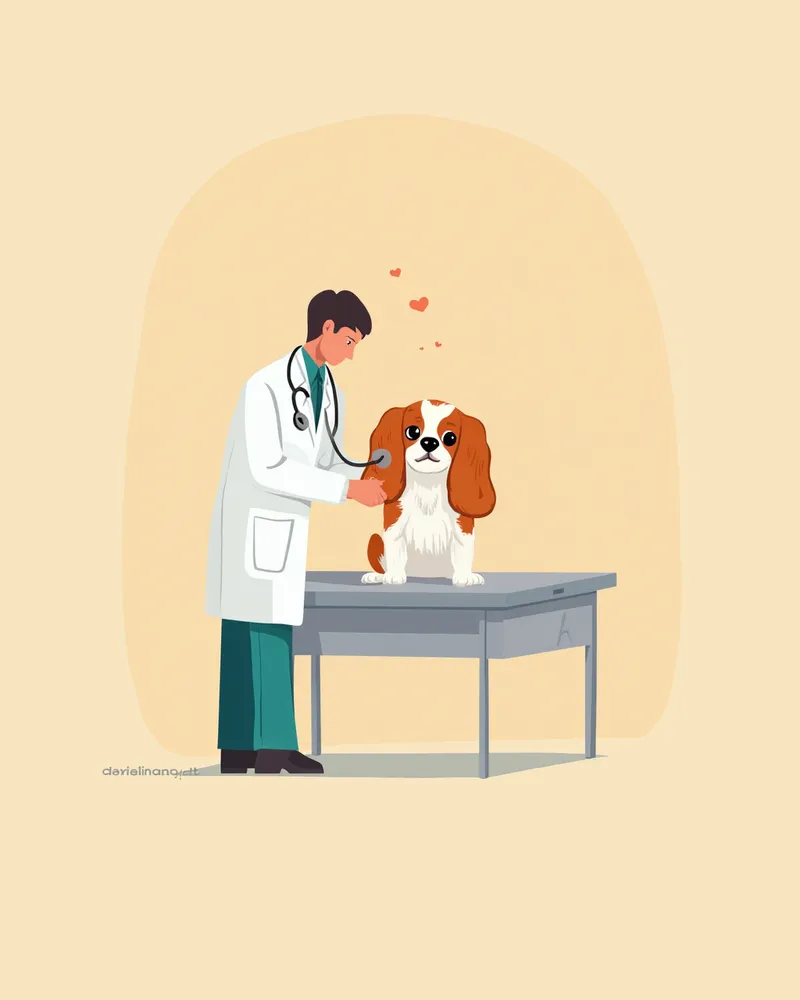
A Cavalier King Charles Spaniel puppy being examined on the veterinary examination table.

Stage-by-Stage Medication Comparison

ItemStage 1: Neuropathic pain medicationStage 2: Cerebrospinal fluid reductionStage 3: Anti-inflammatory
Main effectRelieves neuropathic painReduces syrinx pressureCalms acute inflammation
When to useBaseline right after diagnosisAdded as symptoms progressShort-term during acute exacerbation
Long-term usePossibleAdjustment neededNot recommended
Regular monitoringPain scoreKidney, electrolytesLiver values, body weight

The specific drug selection and dosage are decided by the veterinarian based on body weight and neurological examination results.

Manage Mitral Valve Regurgitation Together

According to veterinary internal medicine textbooks, Cavaliers have a much higher incidence of myxomatous mitral valve disease (MMVD) after age five compared to other breeds. Because some neurological medications can place additional strain on the kidneys and heart, it is essential to monitor left atrial size and the degree of valvular regurgitation via cardiac ultrasound one to two times per year. Additionally, carefully document signs such as chronic coughing or labored breathing during exercise, ensuring they are clearly distinguished from pain associated with syringomyelia.

Lifelong Home Care Points

Use a harness instead of a collar: Neck pressure can worsen symptoms, so use an H-style harness (chest strap) during walks. Textbooks also recommend harnesses over collars.
Reduce jumping and stairs: To minimize impact on the spine, help your pet move to sofas or beds using a pet ramp or steps.
Prevent obesity: Excess weight can strain joints and exacerbate symptoms, so maintaining a healthy weight is important. If your pet is overweight, weight loss can be beneficial.
Symptom log: Recording the frequency of vocalizations and scratching on a weekly basis can greatly assist in adjusting medication.

Prepare Like This Before Anesthesia or Surgery

Before undergoing an MRI or any other procedure requiring anesthesia, it is essential to have an echocardiogram first. Cavalier King Charles Spaniels may have progressing valvular regurgitation even in the asymptomatic stage, so the choice of anesthetic agents and fluid administration rates differ from those used for other small-breed dogs. For safety, have your dog evaluated at a second-tier animal hospital with both neurology and cardiology specialists on staff.

Reviewed by a veterinarian

Dr. Tony — Punnawat Phongkittirak

Dr. Tony — Punnawat Phongkittirak

Veterinarian

A veterinarian who majored in veterinary medicine at Khon Kaen University, Thailand, and completed the IVSA program at North Carolina State University in the United States. Drawing on clinical experience at animal hospitals, he works in the pet healthcare field and is dedicated to building a digital care environment that connects pet parents with veterinarians.

Frequently Asked Questions

Does frequent scratching in Cavaliers always indicate syringomyelia?
Not necessarily. Otitis externa, allergies, and parasitic infestations can present with similar symptoms. However, if your dog repeatedly performs an “air scratch” motion—scratching without the paw making contact with the skin—during walks, we recommend a neurological examination.
At what age is it best to start having an MRI scan?
The key principle is to act promptly when symptoms are suspected. For asymptomatic Cavaliers, we monitor them through neurological examinations and proceed with an MRI if signs such as vocalizing in pain, scratching, or abnormal posture appear.
Does my pet need to take this medication for the rest of its life?
Most pain medications are prescribed for long-term use. However, once symptoms stabilize, your veterinarian may reduce the dosage or switch to intermittent administration based on their assessment.
Will surgery cure the condition?
The goal of decompressive surgery for the occipital region is to reduce pain and slow disease progression. Rather than aiming for a complete cure, the approach focuses on improving the pet's quality of life.
Is it okay to let them exercise?
Regular walks on flat ground are great. Just avoid jumping, rough play, and pulling on the collar. Using a harness is essential.

Share

Related Guides

References

[1] Ettinger SJ, Feldman EC, Cote E. Textbook of Veterinary Internal Medicine, 8th Ed. Chapter on Chiari-like Malformation and Syringomyelia

[2] Smith FWK et al. Clinical Medicine of the Dog and Cat, 4th Ed. Chapter 8 Cardiovascular Disorders — Mitral Valve Disease

[3] Tilley LP, Smith FWK. Textbook of Cardiovascular Medicine in Dogs and Cats — Myxomatous Mitral Valve Disease (MMVD)

[4] Rusbridge C. Neurological Diseases of the Cavalier King Charles Spaniel. Journal of Small Animal Practice, 2005

This information is based on veterinary literature and does not replace diagnosis or treatment. Please consult a veterinarian for specific health concerns.

Metapet Co., Ltd. | CEO: Park Sung-yong | Business Reg. No. 417-88-02562 | Seoul, South Korea | Customer Center

Cavalier King Charles Syringomyelia: Lifelong Care Guide | Meongsiljang