Like
Share
멍실장
보더콜리 이중모 그루밍 완벽 가이드

The Ultimate Guide to Border Collie Double-Coat Grooming

Skin & CoatBreed HealthMeongsiljang Veterinary Advisory Board

Border Collies have a double coat, which means they shed a lot and are prone to tangles, so brushing them two to three times a week is essential. We’ve put together a clear overview of seasonal shedding patterns and key skin care tips.

What Is a Border Collie’s Double Coat?

A full-body view of a Border Collie with a lush double coat
Border Collies are a classic double-coated breed, featuring a coarse outer guard coat and a soft, dense undercoat. The most important thing to know is that this undercoat sheds heavily with the changing seasons. If dead hair isn’t removed and becomes trapped, it can tangle and mat, making it difficult for your dog to groom itself and hindering proper skin care. Therefore, it’s essential to brush consistently two to three times a week to remove dead hair. Since the double coat acts as insulation to regulate body temperature, we recommend prioritizing thorough brushing to remove dead undercoat and improve airflow, rather than simply shaving the coat short to cool your dog down.

Top 4 Skin and Coat Care Points for Border Collies

Border Collies are highly active and have a thick, luxurious coat, which makes them prone to skin issues. Here are the key points every owner should keep in mind: - Undercoat tangles: Mats commonly form behind the ears, in the armpits, and on the inner thighs. - Seasonal shedding: They undergo heavy shedding for 4 to 6 weeks during spring and autumn. - Collie eye anomaly: This hereditary condition requires careful cleaning and monitoring of the area around the eyes. - Allergic dermatitis: Many Border Collies are sensitive to grass and pollen.

Weekly and Monthly Grooming Routine

When grooming your Border Collie, it’s better to do short, frequent sessions rather than one long grooming session. The table below outlines a basic routine that’s easy for pet owners to follow. During shedding season (March to May and September to November), you should double the frequency of brushing.
A variety of grooming brushes needed for Border Collie grooming

Recommended Frequency by Grooming Task

ItemNormal timesShedding seasonNotes
Outer-coat brushing2–3 times a weekDailyUse a pin brush
Undercoat thinningOnce a week3–4 times a weekUndercoat rake
Bathing1–2 times a monthTwice a monthMild shampoo
Paw pad hair trimmingOnce a monthOnce a monthPrevents slipping
Ear cleaningOnce a weekOnce a weekVet-recommended cleanser

Adjust according to your dog's condition and skin state

Correct Brushing Order and Tools
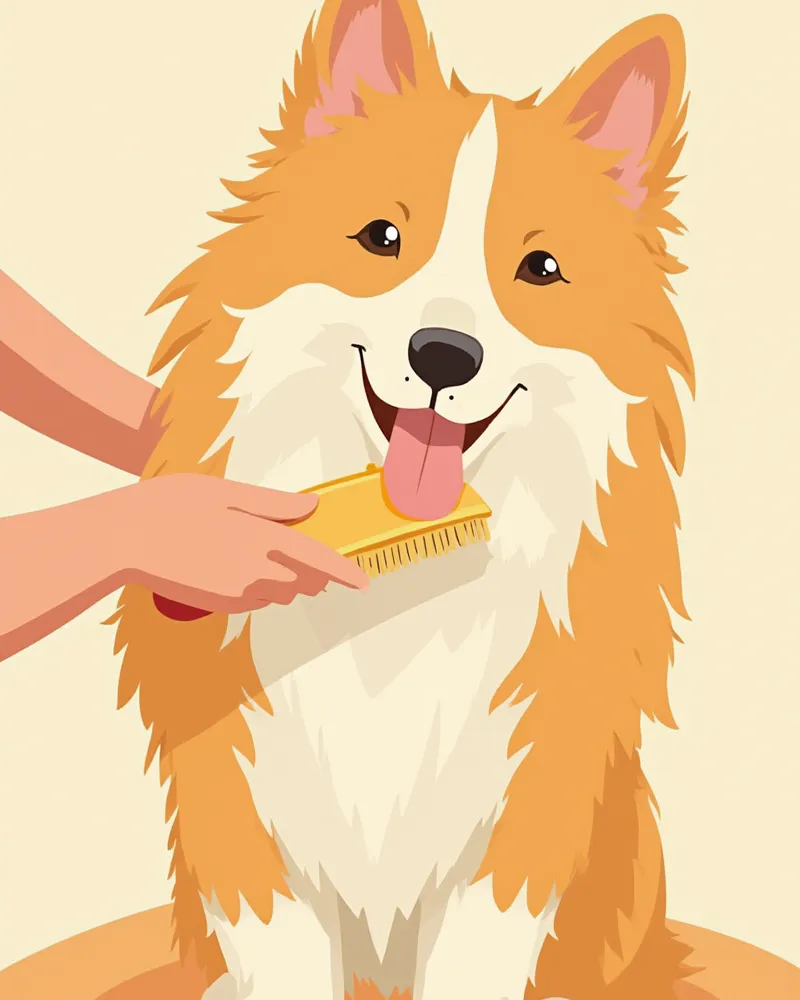
When grooming double-coated dogs, the order matters. Brushing in the wrong sequence can cause the undercoat to tangle further or irritate the skin. - Step 1: Pin brush – Gently detangle large knots in the topcoat, following the natural direction of hair growth. - Step 2: Undercoat rake – Carefully remove loose undercoat without pulling. - Step 3: Slicker brush – Finish by removing fine hairs and dead hair. - Step 4: Comb – Smooth out any remaining tangles, especially behind the ears and at the tip of the tail. Always brush in the direction of hair growth and avoid pressing too hard on the skin.
Using an undercoat rake to remove the undercoat from a Border Collie.

Absolute Grooming Taboos for Border Collies

Shaving a dog’s double coat short doesn’t do much to help them stay cool in the heat. Unless it’s truly necessary, it’s best to view grooming clips as optional. It’s safest to have them done only when there’s a veterinary reason, such as treating a skin condition, and under a veterinarian’s guidance. Also, some dogs can be sensitive to certain insecticidal shampoos or external parasite treatments, so always consult your vet before using medicated shampoos or external parasite medications. Consistent, everyday prevention and management of external parasites is recommended.

Bathing and Drying Guide

Bathing your Border Collie once or twice a month is ideal; washing too frequently can weaken the skin’s protective barrier and lead to itching. Use a low-irritant, mildly acidic shampoo formulated specifically for dogs, and gently massage the lather through the coat to ensure it reaches the undercoat. Inadequate rinsing is a leading cause of dermatitis, so be sure to rinse thoroughly with lukewarm water. When drying, use low heat and medium airflow to completely dry the undercoat, which helps prevent fungal dermatitis.
A Border Collie being dried with a towel after a bath

Seasonal Shedding Management

Border Collies undergo two major shedding cycles, known as "blowing their coat," each year. In spring, they shed the thick undercoat that protected them during the cold winter, and in autumn, they shed the lighter undercoat from the summer months. During these periods, it is recommended to brush your dog for 5 to 10 minutes daily. Leaving shed fur on the skin can not only cause it to fly around the house but also clog the skin, restricting airflow and potentially leading to hot spots (acute moist dermatitis). To support coat health, also ensure your dog is fed a diet rich in protein and omega-3 fatty acids.

When to Visit the Vet: Warning Symptoms

If you notice any of the following symptoms during grooming, it’s time to seek veterinary care rather than relying on routine maintenance alone: - Red, swollen areas on the skin that persist for more than 24 hours - Persistent licking of a specific area or circular patches of hair loss - Severe dandruff or flaking accompanied by an odor - Brown discharge or a foul smell coming from the ears Border Collies, in particular, are prone to atopic dermatitis and fungal skin infections, so professional veterinary diagnosis is safer than attempting self-diagnosis.

Reviewed by a veterinarian

Dr. Tony — Punnawat Phongkittirak

Dr. Tony — Punnawat Phongkittirak

Veterinarian

A veterinarian who majored in veterinary medicine at Khon Kaen University, Thailand, and completed the IVSA program at North Carolina State University in the United States. Drawing on clinical experience at animal hospitals, he works in the pet healthcare field and is dedicated to building a digital care environment that connects pet parents with veterinarians.

Frequently Asked Questions

Can I shave my Border Collie's coat to keep it cool during the summer?
I don't recommend it. Double coats serve as insulation to regulate body temperature. Shaving for cosmetic purposes should be considered optional and only done when medically necessary, such as for skin conditions, and should be performed under a veterinarian's guidance. To keep your pet cool, the best approach is to regularly brush out dead undercoat hair.
How often should you take your dog to the groomer?
Border Collies don’t require clipping (hair trimming), so regular visits to the groomer aren’t essential. However, if home grooming is challenging, having a professional brush and bathe your dog every one to two months is a great option.
Can a diet designed to reduce shedding help?
Diets rich in omega-3 and omega-6 fatty acids, biotin, and high-quality protein can help improve coat condition. However, food alone has its limitations, and regular brushing is the most effective approach.
How can I help my pet get used to grooming from a young age?
Starting from puppyhood (2–4 months of age), gently brush your dog and massage its paw pads for 1–2 minutes each day. Rewarding with a treat afterward helps your dog grow up to enjoy grooming.
When should I get my dog tested for genetic diseases like Collie Eye Anomaly?
Genetic conditions like Collie Eye Anomaly can be detected early through veterinary ophthalmic exams in young dogs, which can be very helpful. The exact timing and methods of these exams should be determined in consultation with your veterinarian. Additionally, when adopting a dog, it’s a good idea to check the genetic test results of the parents.

Share

Related Guides

References

[1] Esson DW, Calvarese S. Clinical Atlas of Canine and Feline Ophthalmic Disease, 2nd Ed. John Wiley & Sons, 2022. (Chapter 134: Collie Eye Anomaly)

[2] The Dog Care Handbook: Things I Wish My Vet Had Told Me — Coat & Skin Care Chapter

[3] Parker HG et al., Breed relationships facilitate fine-mapping studies, Genome Research, 2007

This information is based on veterinary literature and does not replace diagnosis or treatment. Please consult a veterinarian for specific health concerns.

Metapet Co., Ltd. | CEO: Park Sung-yong | Business Reg. No. 417-88-02562 | Seoul, South Korea | Customer Center

Border Collie Grooming: Double-Coat Brushing & Shedding | Meongsiljang