Like
Share
멍실장
보스턴테리어 각막 손상 주의점과 연령별 평생 건강관리 가이드

Boston Terrier Corneal Injury — Symptoms, Causes, and Age-Specific Lifelong Care

Eye HealthBreed HealthMeongsiljang Veterinary Advisory Board

Boston Terriers have a flat-faced (brachycephalic) structure that makes their corneas more exposed to the outside world. We’ve compiled information on major eye conditions such as corneal ulcers, glaucoma, and proptosis, along with age-specific prevention and care tips.

Boston Terriers and Corneal Health — Why This Breed Requires Extra Eye Care?
Boston Terrier Breed Characteristics — Corneal Health Care Guide
Boston Terriers have a flat-faced (brachycephalic) structure, which results in shallow eye sockets and wide eyelid openings, leaving their corneas easily exposed. What’s truly important is that due to this anatomical trait, even minor trauma or irritation can rapidly worsen corneal damage. If you notice your dog squinting or experiencing a sudden increase in tearing, don’t wait to see if it improves at home—seek veterinary care immediately.

Three Corneal Conditions to Watch for in Boston Terriers
Corneal Ulcer: This is a condition where an injury forms on the surface of the cornea. Brachycephalic breeds like Boston Terriers are prone to corneal ulcers caused by irritation or trauma because the central part of their cornea is more exposed (they are considered high-risk breeds, along with Shih Tzus, Pugs, and Lhasa Apsos).
Spontaneous Chronic Corneal Epithelial Defect (Indolent Ulcer): This is a chronic, superficial ulcer where the corneal epithelium fails to adhere properly and repeatedly peels away. Also known as a "Boxer ulcer," it causes pain and discomfort, leading to symptoms like blinking, yet it heals poorly and requires prolonged management.
Melting and Perforating Corneal Ulcers: These are emergencies. "Melting ulcers" occur when enzymes soften and dissolve the cornea, while perforation happens when the ulcer deepens enough to puncture the cornea. If you notice severe pain, blinking, or discharge, do not monitor at home—seek veterinary care immediately.
Common corneal diseases in Boston Terriers

Immediate Visit to a 24-Hour Emergency Animal Hospital for These Symptoms

If the eyeball protrudes completely beyond the eyelids, the pet cannot open its eyes at all and shows severe pain, the cornea suddenly becomes cloudy with a white or bluish tint, or yellow discharge appears, you should immediately take your pet to a 24-hour emergency animal hospital. Severe corneal ulcers that penetrate deeply, perforations, and globe protrusion are ophthalmic emergencies accompanied by intense pain and discharge. Delaying treatment can result in permanent vision loss, so do not wait at home to observe symptoms—seek veterinary care right away.

Daily Corneal Injury Prevention Tips for Owners
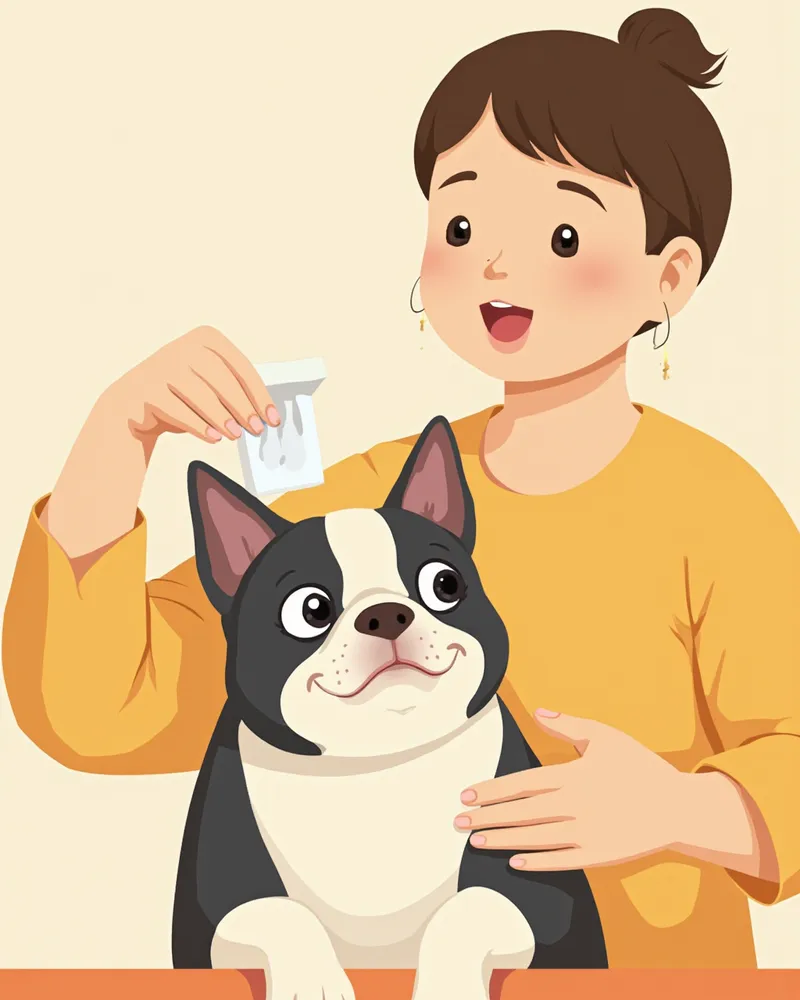
Eye discharge and tear management: Gently wipe around your pet’s eyes daily with a pet-specific eye cleanser or damp gauze. Allowing tears to linger can promote bacterial growth and irritate the skin.
Limit rough play: Avoid intense play that involves face-to-face contact with other dogs. Even minor impacts can cause eye bulging.
Be cautious in grassy areas during walks: Keep your pet’s face away from bushes and tall grass. Sharp blades of grass can directly scratch the cornea.
Daily eye care routine for Boston Terriers

Age-Specific Eye Health Care Points for Boston Terriers

0–1 years (Puppy stage): The eyes are still developing. If your puppy frequently rubs its eyes or scratches its face, a veterinary examination is necessary. Be sure to request an ophthalmic check during the first routine wellness visit.
1–7 years (Adult stage): Annual ophthalmic examinations are recommended. The key is to catch early signs such as squinting or excessive tearing.
7+ years (Senior stage): In senior dogs, the lens may become cloudy due to cataracts, or grayish-white opacities may appear on the cornea. Corneal dystrophy tends to affect both eyes due to genetic predisposition, so schedule ophthalmic exams and Schirmer tear tests every six months to detect changes early.

Other Eye Conditions to Watch for in Boston Terriers Beyond the Cornea

Corneal Endothelial Dystrophy (Insufficiency): This condition occurs when the function of the endothelial cells on the inner surface of the cornea declines, causing the cornea to swell and appear bluish and cloudy. It is a well-documented, characteristic corneal disease that often affects both eyes in Boston Terriers. If your dog’s cornea persistently appears hazy, please schedule a veterinary examination.
Glaucoma: This is a condition characterized by abnormally elevated intraocular pressure. As pressure rises, the cornea may swell diffusely, resulting in a cloudy appearance. If you notice your dog’s eyes suddenly appearing enlarged or cloudy, an intraocular pressure test is necessary.
Cataracts: This condition involves the clouding of the lens and is commonly associated with aging. If your dog frequently bumps into objects or seems to walk unsteadily, a veterinary check-up is recommended.
Keratoconjunctivitis Sicca (Dry Eye): This condition results from insufficient tear production, leading to a dry cornea that can progress to ulceration. If you observe recurrent sticky discharge, a Schirmer tear test should be performed to assess tear production.

Use a Harness Instead of a Collar When Going Out

For brachycephalic breeds like Boston Terriers, whose eyes are more exposed, using a harness that distributes pressure across the body is a safer choice for eye health than a collar that puts direct pressure on the neck. If your dog has or is suspected of having a condition involving increased intraocular pressure, such as glaucoma, we recommend using a harness instead of a collar when going out to reduce pressure on the neck area.

Regular Veterinary Checkups — When and What to Check?
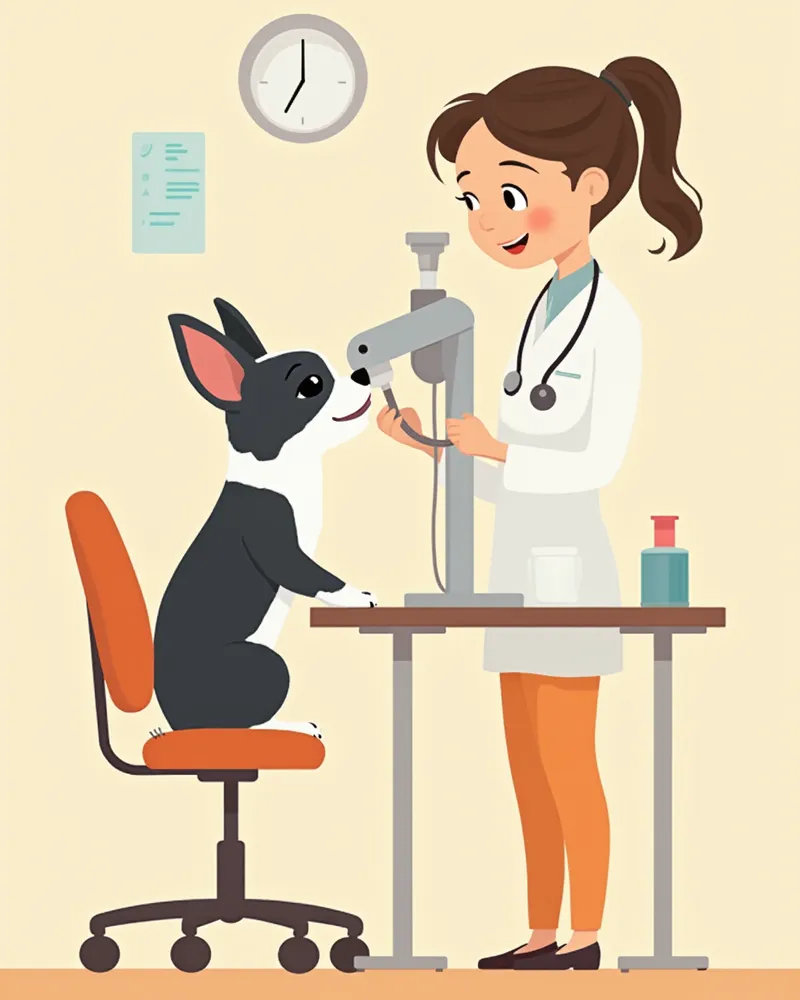
Boston Terriers should always have their eyes included in routine health checkups.
Checkup items: Slit-lamp examination (to assess corneal condition), intraocular pressure measurement, Schirmer tear test (to measure tear production)
Checkup frequency: Once a year for dogs aged 1–7; every six months for dogs aged 7 and older
Signs requiring immediate veterinary care: If your dog suddenly rubs its eyes frequently, squints with only one eye, or if you notice white spots on the cornea, do not wait for the next scheduled checkup—visit the clinic right away.
Boston Terrier Regular Eye Checkups

Reviewed by a veterinarian

Dr. Tony — Punnawat Phongkittirak

Dr. Tony — Punnawat Phongkittirak

Veterinarian

A veterinarian who majored in veterinary medicine at Khon Kaen University, Thailand, and completed the IVSA program at North Carolina State University in the United States. Drawing on clinical experience at animal hospitals, he works in the pet healthcare field and is dedicated to building a digital care environment that connects pet parents with veterinarians.

Frequently Asked Questions

My Boston Terrier keeps rubbing its eyes—could it have a corneal injury?
Squinting can be caused by various factors, including corneal irritation, a sensation of a foreign body, or allergies. If the squinting persists for more than a day, or if you notice increased tearing and redness, there may be a risk of a corneal ulcer. Rather than monitoring the situation at home, the most accurate approach is to have a veterinarian perform a fluorescein stain test at an animal hospital.
Is it normal for my Boston Terrier’s eyes to suddenly appear more protruded?
Boston Terriers naturally have prominent eyes, but if one eye suddenly appears more protruded than usual or the surrounding area looks swollen, it’s not normal. If trauma causes the eyeball to completely slip out from under the eyelids—a condition called globe prolapse—it’s an emergency, and you should seek veterinary care immediately.
Can corneal ulcers be completely cured with treatment?
Simple corneal ulcers often heal within one to two weeks with topical antibiotic eye drops and an Elizabethan collar. However, chronic ulcers that repeatedly slough off (indolent ulcers) may require surgical procedures such as grid keratotomy. Regular follow-up with your veterinarian is essential.
Which eye cleanser should I use?
It’s best to use an eye cleanser specifically formulated for pets. Human eye drops contain different ingredients that can irritate your pet’s eyes. If you’re unsure which product to choose, consult your veterinarian first.

Share

Related Guides

References

[1] Handbook on Field Veterinary Surgery, Ch9: Management of Basic Eye Affections — Traumatic Ocular Proptosis (단두형 품종의 안구 돌출 위험 기술)

[2] Clinical Atlas of Canine and Feline Ophthalmic Disease, 2nd Ed, Ch89: Spontaneous Chronic Corneal Epithelial Defects (SCCEDs). Wiley-Blackwell, 2017.

[3] The Veterinary Workbook of Small Animal Clinical Cases, Case 30: Primary closed-angle glaucoma predispositions — Boston Terrier, Basset Hound, American Cocker Spaniel. Wiley-Blackwell.

This information is based on veterinary literature and does not replace diagnosis or treatment. Please consult a veterinarian for specific health concerns.

Metapet Co., Ltd. | CEO: Park Sung-yong | Business Reg. No. 417-88-02562 | Seoul, South Korea | Customer Center

Boston Terrier Corneal Injury: Causes & Age-Specific Care | Meongsiljang