Like
Share
멍실장
페르시안 정기 검진 일정

Persian Routine Health Checkup Schedule — Age-Specific Management for Polycystic Kidney Disease and Tear Stains

ImmunityBreed HealthMeongsiljang Veterinary Advisory Board

Persian cats are at higher risk for genetic conditions such as polycystic kidney disease and brachycephalic airway syndrome, making age-specific regular check-ups essential. Here’s a summary of recommended screening items and intervals by life stage.

What is a Persian Routine Health Checkup?

A Persian cat lying on a cozy blanket
The Persian routine health checkup is a schedule of age-appropriate examinations designed to detect early signs of genetic conditions common in Persians, such as polycystic kidney disease (PKD), brachycephalic respiratory issues, and nasolacrimal duct abnormalities. The most critical component is renal ultrasound screening, which should begin at four months (16 weeks) of age. PKD involves the gradual enlargement of cysts in the kidneys, which can ultimately lead to renal failure. In its early stages, the disease often presents no distinct symptoms, manifesting only through non-specific signs such as decreased appetite, weight loss, and vomiting. By the time these symptoms appear, significant kidney damage has often already occurred, making proactive routine checkups essential even when your cat appears healthy.

Why Persians Need Frequent Health Checkups

Persians are a brachycephalic breed (with short noses), making them prone to respiratory and tear duct issues, and they are also at risk for genetic conditions such as polycystic kidney disease (PKD). According to veterinary textbooks, PKD in Persians is inherited in an autosomal dominant pattern, where multiple cysts of varying sizes develop throughout the kidney tissue, gradually enlarging and ultimately impairing kidney function. Fortunately, genetic testing can screen for this condition, allowing responsible breeding practices and testing to reduce the risk. Additionally, due to their long coats and brachycephalic structure, Persians require more attentive care, so a more frequent check-up schedule than that for typical cats is beneficial.

Age-Specific Persian Health Checkup Schedule

ItemUp to 1 year (young)1–6 years (adult cat)7 years+ (senior)
Checkup frequencyEvery 1–2 monthsOnce a yearTwice a year (every 6 months)
Kidney ultrasoundTwice, at 4 and 9 months of ageOnce every 2 yearsOnce a year (essential)
Blood testBasic at vaccinationCBC + biochemistry once a yearTwice a year, including kidney values (BUN, creatinine, etc.)
UrinalysisBasic onceOnce a yearTwice a year
Heart auscultation & ultrasoundBasic auscultationUltrasound if abnormalOnce a year recommended
Dental examBasic checkOnce a year1–2 times a year

However, if there's a family history of polycystic kidney disease, checkup frequency should be increased at every stage

Essential Checkup Items to Never Miss
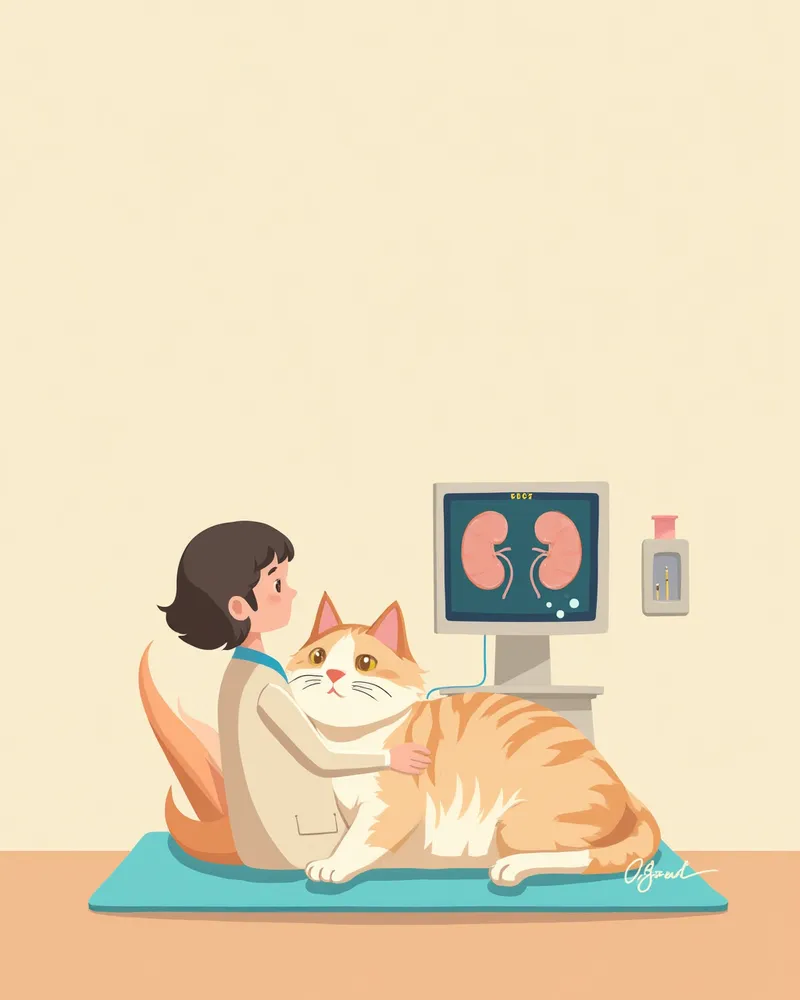
These are the essential items that should never be missed during a Persian cat’s health checkup. - Renal ultrasound: Early detection of polycystic kidney disease — sensitivity of 91% and specificity of 100% have been reported when tested at 36 weeks of age (approximately 9 months). - Blood and kidney function tests: Assess changes in kidney function through a renal profile including BUN, creatinine, and electrolytes. - Lacrimal duct and corneal examination: Due to their short-nosed facial structure, Persians are prone to abnormalities in the tear ducts and excessive tearing (epiphora). - Respiratory assessment: Evaluate brachycephalic airway issues related to nasal and tracheal anatomy. - Weight and body condition evaluation: Regularly monitor weight and body shape to help prevent obesity. - Oral examination: Check for periodontal disease and tooth resorption lesions.
A Persian cat undergoing a renal ultrasound examination

Go to the Vet Immediately Regardless of Schedule If You See These Signs

A sudden increase in water intake and urine output, along with loss of appetite, weight loss, vomiting, or nausea, may signal declining kidney function. In Persian cats, polycystic kidney disease progresses slowly and presents with nonspecific early symptoms, so by the time owners notice changes, significant kidney damage has often already occurred. Therefore, if you observe any subtle deviations from your cat’s normal behavior, seek veterinary care promptly, regardless of your scheduled check-up date. Additionally, if your cat exhibits labored breathing or breathes with its mouth open, this could indicate a respiratory emergency associated with brachycephalic breeds, requiring immediate veterinary attention.

When Should You Get Tested for Polycystic Kidney Disease (PKD)?

According to veterinary internal medicine textbooks, ultrasound screening for PKD in Persian cats shows a sensitivity of 75% at 16 weeks of age (about 4 months) and 91% at 36 weeks of age (about 9 months). In other words, performing an initial ultrasound at 4 months and a follow-up at 9–10 months allows for a diagnosis that is nearly definitive. While genetic testing is also available, a single ultrasound at 9 months offers the best cost-effectiveness if the expense of genetic testing is a concern. If the cat’s parents have been confirmed as PKD carriers, screening should begin at an even younger age.
A Persian cat nestled in its owner’s arms, waiting for a veterinary examination.

Key Management Points for Senior Persians (7 Years and Older)

Once your cat reaches age seven, it’s advisable to shorten the check-up interval to every six months. Breeds with a genetic predisposition to certain conditions, such as Persians, benefit from starting senior care earlier than the general guideline. During this life stage, cats commonly develop concurrent conditions like chronic kidney disease, hypertrophic cardiomyopathy, and hyperthyroidism. - Blood pressure measurement: Hypertension can accompany kidney disease, so regular monitoring is essential. - Thyroid function test: To screen for hyperthyroidism, which is common in senior cats. - Thoracic X-ray: For the early detection of heart diseases, such as hypertrophic cardiomyopathy. - Ophthalmic examination: To check for cataracts, glaucoma, and retinal changes. - Weight change monitoring: Seek veterinary care promptly if you notice a consistent downward trend in your cat’s weight.

Additional Precautions Persian Owners Must Know

Persians are at a higher risk of respiratory complications during anesthesia due to their brachycephalic (flat-faced) anatomy. If sedation or anesthesia is required during examinations (such as dental procedures or endoscopy), be sure to choose a clinic with extensive experience in anesthetizing brachycephalic breeds. Additionally, keeping a quarterly record at home of your cat’s weight, water intake, urine output, and respiratory rate will help your veterinarian more accurately assess any changes during check-ups.

Reviewed by a veterinarian

Dr. Tony — Punnawat Phongkittirak

Dr. Tony — Punnawat Phongkittirak

Veterinarian

A veterinarian who majored in veterinary medicine at Khon Kaen University, Thailand, and completed the IVSA program at North Carolina State University in the United States. Drawing on clinical experience at animal hospitals, he works in the pet healthcare field and is dedicated to building a digital care environment that connects pet parents with veterinarians.

Frequently Asked Questions

When should Persian kittens start getting kidney ultrasounds?
We recommend the first ultrasound at 4 months (16 weeks) of age and a second ultrasound at 9–10 months. The 9-month (36-week) ultrasound has a sensitivity of 91% and a specificity of 100%, making it nearly diagnostic. If either parent carries PKD, start screening earlier.
How often should Persian cats have regular check-ups?
For cats under one year old, we recommend check-ups every one to two months; for adult cats aged one to six, once a year; and for seniors aged seven and older, every six months (twice a year). If there’s a family history of polycystic kidney disease, more frequent visits are advisable.
Should treatment begin immediately once polycystic kidney disease is confirmed?
Treatment is initiated when the cyst grows large enough to cause pain or when kidney function begins to decline. If the condition is asymptomatic, the priority is to slow its progression through dietary management and regular monitoring. Please consult with your veterinarian to determine the best course of action.
Do Persian cats cost more for checkups than regular cats?
Additional tests, such as ultrasounds and extra blood work, may be needed, so annual checkup costs can be 1.5 to 2 times higher than for average cats. However, catching kidney disease early can significantly reduce lifelong treatment expenses.
I've heard that anesthesia is risky for Persians. Should I avoid anesthesia during checkups?
It’s important to have your pet undergo the necessary examinations. For safety, choose a clinic with extensive experience in anesthetizing brachycephalic breeds, and be sure to have a chest X-ray and blood tests done before anesthesia to identify any potential risk factors in advance.

Share

Related Guides

References

[1] Susan Little, The Cat: Clinical Medicine and Management, 2nd Edition, Chapter 35 - Urinary System

[2] Schaer & Gaschen, Clinical Medicine of the Dog and Cat, 4th Edition, Feline Polycystic Kidney Disease

[3] Heath & Wilson, A Professional's Guide to Feline Behaviour: Understanding, Improving and Resolving Problems, Chapter 6

This information is based on veterinary literature and does not replace diagnosis or treatment. Please consult a veterinarian for specific health concerns.

Metapet Co., Ltd. | CEO: Park Sung-yong | Business Reg. No. 417-88-02562 | Seoul, South Korea | Customer Center

Persian Checkup Schedule: PKD & Tear Stain Care by Age | Meongsiljang