Like
Share
멍실장
메인쿤 비대성 심근증(HCM) — 유전자 검사와 평생 심장 관리 가이드

Maine Coon Hypertrophic Cardiomyopathy (HCM) — Genetic Testing and Lifelong Heart Care Guide

HeartBreed HealthMeongsiljang Veterinary Advisory Board

We’ve put together a comprehensive guide to lifelong heart care for Maine Coons with hypertrophic cardiomyopathy (HCM), covering everything from genetic testing and echocardiographic diagnosis to step-by-step treatment plans and home monitoring schedules.

What is Maine Coon HCM?

A full-body photo of a Maine Coon cat sitting quietly.
Hypertrophic cardiomyopathy (HCM) is a genetic heart disease that thickens the left ventricular wall and is the most common cardiac condition in Maine Coons. Early detection and lifelong monitoring are key. By the time symptoms become apparent, the disease is often already quite advanced, making genetic testing around one year of age and regular cardiac ultrasounds the most critical management tools. Maine Coons heterozygous for the MYBPC3 mutation generally have a low risk of developing the disease before four to five years of age, though the risk increases thereafter; those homozygous for the mutation face a higher risk of severe onset at a younger age. However, cats with the mutation may never develop the disease, while those testing negative can still develop it later in life, making lifelong regular cardiac screening essential.

Why Maine Coons Are Susceptible to HCM

Maine Coons are known to have one of the highest incidences of hypertrophic cardiomyopathy (HCM) among large cat breeds. The A31P mutation in the MYBPC3 (myosin-binding protein C3) gene has been identified as a primary cause of HCM in Maine Coons. Since this condition follows an autosomal dominant inheritance pattern, inheriting the mutation from just one parent is enough to create a risk of developing the disease. However, carrying the mutation does not guarantee a 100% chance of developing HCM; the penetrance of the phenotype can vary significantly between individuals even with the same mutation. Additionally, since other mutations beyond MYBPC3 are increasingly being reported, a negative genetic test result should not be taken as absolute assurance against the disease.

Maine Coon HCM Key Symptoms Checklist

Difficulty breathing: A respiratory rate of 30 or more breaths per minute at rest, or breathing with the mouth open, are warning signs.
Decreased activity: Your pet may stop jumping as usual, rest more frequently, or spend more time hiding.
Reduced appetite and weight loss: As the heart's workload increases, food intake tends to decrease.
Hind limb paralysis or pain: This could indicate arterial thromboembolism (ATE) caused by a blood clot.
Cyanosis of the gums: Gray or purplish gums or tongue indicate an emergency.
In the early stages, symptoms are often minimal, so regular check-ups before symptoms appear are the most reliable way to diagnose issues.
A Maine Coon cat resting quietly while lying down

These Signs Require a 24-Hour Emergency Hospital

If you notice any of the following signs, seek immediate care at a 24-hour emergency animal hospital: - A resting respiratory rate of 40 breaths per minute or higher, or open-mouth panting - Sudden coldness and inability to move one or both hind legs - Gray or purple discoloration of the gums and tongue - Loss of consciousness and collapse These are direct indicators of life-threatening complications such as pulmonary edema, arterial thromboembolism, or fatal arrhythmias. Do not delay—even if it’s midnight or early morning—seek emergency care immediately.

MYBPC3 Genetic Testing — The Starting Point for Lifelong Care

The MYBPC3 gene test is the starting point for lifelong heart care that Maine Coon owners should consider first. The test is performed by collecting mucosal cells with an oral swab or drawing a small blood sample, and results are reported in one of three categories: normal (N/N), heterozygous (N/HCM), or homozygous (HCM/HCM). The homozygous genotype carries the highest risk of disease and a tendency for early onset. The safest approach is to request the test results for both parent cats before acquiring a kitten.

Echocardiography and Auxiliary Tests

Echocardiography is the most sensitive standard non-invasive test for diagnosing HCM and is also essential for differentiating it from other cardiac and systemic conditions that cause similar hypertrophy. It directly measures the thickness of the left ventricular wall and atrial size to assess the pattern of hypertrophy, which can vary widely in Maine Coons and is highly dependent on the examiner’s expertise. Even if genetic testing is negative, the disease can develop with age, making regular echocardiograms essential; cats with a positive genetic test are recommended to have annual echocardiographic monitoring. Blood tests for cardiac biomarkers such as NT-proBNP help assess the risk of heart failure as an adjunct, while chest X-rays confirm cardiac enlargement and check for pulmonary edema or pleural effusion. Since asymptomatic HCM is easily missed through auscultation alone, direct visualization via echocardiography remains the most definitive diagnostic method.
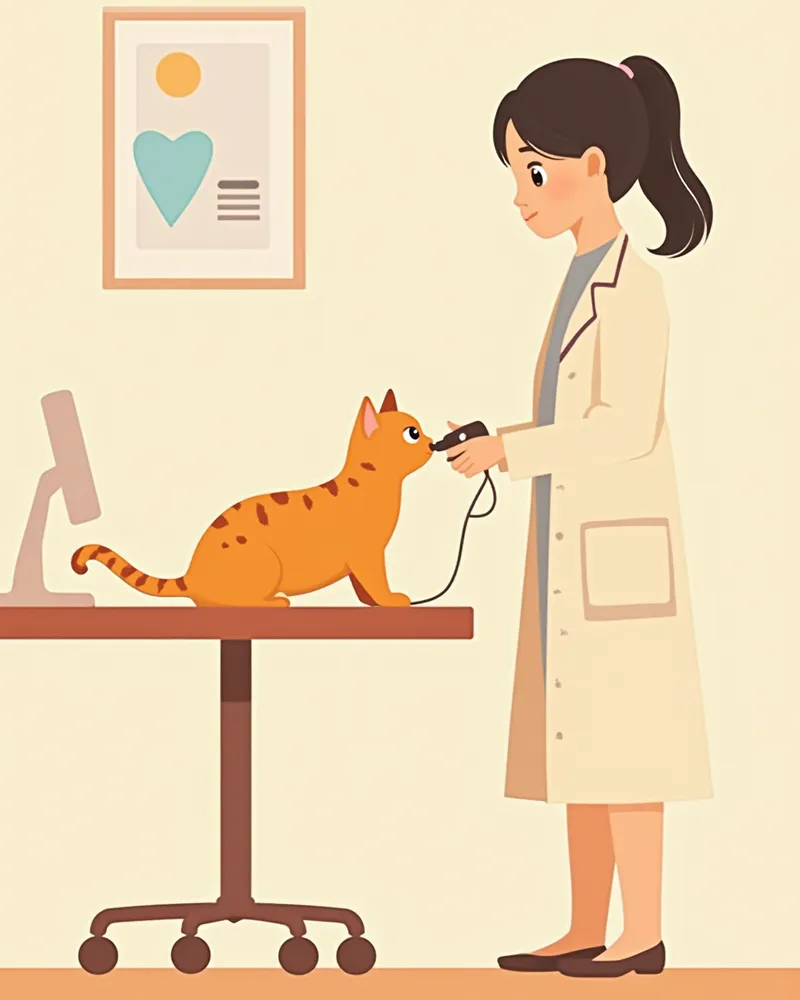
A cat undergoing an echocardiogram at the veterinary clinic

Stage-by-Stage Treatment — Medication for Life

Treatment for hypertrophic cardiomyopathy (HCM) varies depending on the disease stage and clinical signs. In the asymptomatic stage, medication or dietary therapy is generally not recommended; instead, we monitor disease progression through regular check-ups, including echocardiograms, every 6 to 12 months. In the left atrial enlargement stage, we may consider antiplatelet agents to mitigate the risk of arterial thromboembolism (ATE), and use beta-blockers (such as atenolol) or calcium channel blockers to slow the heart rate and reduce myocardial oxygen consumption. In the heart failure stage, diuretics (such as furosemide) are used to manage pulmonary edema, often in combination with beta-blockers, depending on the patient’s cardiac status. These medications require lifelong administration, and owners must never discontinue them without veterinary guidance. Your veterinarian will adjust the type, dosage, and schedule of medications based on your pet’s weight and test results.

Maine Coon Lifelong Heart Screening Schedule

Early detection of HCM in Maine Coons is crucial for determining their lifespan. We recommend regular check-ups on the following schedule: - 6–12 months: MYBPC3 genetic testing + first cardiac ultrasound - 1–6 years: Annual auscultation and blood pressure checks + cardiac ultrasound every two years - 7 years and older: Annual cardiac ultrasound + blood pressure checks + NT-proBNP testing If the cat carries a genetic mutation, has a family history of HCM, or exhibits a heart murmur, the check-up interval should be shortened to every six months.

Lifelong Care You Can Do at Home

Measuring resting respiratory rate: Count the number of breaths your pet takes over 30 seconds while they are sleeping, then multiply by two. A rate of fewer than 30 breaths per minute is considered normal, so be sure to record this once a week.
Limiting stress and strenuous exercise: Avoid rough chase games, as they place excessive strain on the heart. Instead, opt for short, gentle play sessions.
Low-sodium diet and weight management: Obesity directly increases the workload on the heart. Maintain a healthy weight and avoid feeding human food.
Strict medication schedule: Administer medication at the same time every day and never miss a dose.
Maine Coon cats enjoying a relaxing time with their owners at home

Reviewed by a veterinarian

Dr. Tony — Punnawat Phongkittirak

Dr. Tony — Punnawat Phongkittirak

Veterinarian

A veterinarian who majored in veterinary medicine at Khon Kaen University, Thailand, and completed the IVSA program at North Carolina State University in the United States. Drawing on clinical experience at animal hospitals, he works in the pet healthcare field and is dedicated to building a digital care environment that connects pet parents with veterinarians.

Frequently Asked Questions

If the MYBPC3 gene test comes back normal, can I rest assured?
It’s too early to feel completely at ease. In addition to MYBPC3, other genetic mutations have been reported to cause HCM in Maine Coons, and the disease can also develop due to acquired factors. Even if a genetic test comes back negative, the safest approach is to have your cat’s first cardiac ultrasound around one year of age, followed by regular check-ups for life.
How long can a cat live after being diagnosed with HCM?
The prognosis varies significantly depending on the timing of diagnosis and the disease stage. If detected during the asymptomatic phase and well-managed, many cats live close to their natural lifespan. Even after the onset of congestive heart failure, survival for more than one to three years is possible with appropriate medication. However, the prognosis is generally poor if arterial thromboembolism has occurred.
What health checks should I verify when adopting a Maine Coon kitten?
You should request the MYBPC3 gene test results for both parent cats, along with their echocardiogram reports from the past one to two years. Reputable breeders conduct regular health screenings and transparently share the results. For your safety, avoid any breeder who refuses to provide these records or evades the request.
Can a Maine Coon with hypertrophic cardiomyopathy (HCM) undergo anesthesia and surgery?
While it is possible, the risks are higher than in typical cats. A preoperative echocardiogram is essential to assess heart function, and the choice of anesthetic agents and fluid administration rates must be carefully adjusted. For optimal safety, choose a clinic where a cardiologist and an anesthesiologist collaborate on the anesthesia plan.
Is it okay to let my pet exercise?
During the asymptomatic stage, light play is generally fine, but it’s best to avoid vigorous jumping or prolonged chasing games. If symptoms are present, restrict activity to the level recommended by your veterinarian. If you notice any difficulty breathing, stop play immediately and allow your pet to rest fully.

Share

Related Guides

References

[1] Luis Fuentes V et al., ACVIM consensus statement guidelines for the classification, diagnosis, and management of cardiomyopathies in cats, Journal of Veterinary Internal Medicine, 2020

[2] Meurs KM et al., A cardiac myosin binding protein C mutation in the Maine Coon cat with familial hypertrophic cardiomyopathy, Human Molecular Genetics, 2005

[3] Côté E, MacDonald KA, Meurs KM, Sleeper MM, Feline Cardiology, Wiley-Blackwell, 2011

[4] Smith FWK Jr, Tilley LP, Oyama MA, Sleeper MM, Manual of Canine and Feline Cardiology, 5th Edition, Elsevier, 2016

This information is based on veterinary literature and does not replace diagnosis or treatment. Please consult a veterinarian for specific health concerns.

Metapet Co., Ltd. | CEO: Park Sung-yong | Business Reg. No. 417-88-02562 | Seoul, South Korea | Customer Center

Maine Coon HCM: Genetic Testing & Lifelong Heart Care Guide | Meongsiljang