

Birman Cat HCM Screening: A Complete Guide from Start Age to Screening Intervals
Birman cats are a breed at risk for hypertrophic cardiomyopathy (HCM). We’ll share the recommended schedule for regular cardiac ultrasound screenings starting at one year of age, along with key points for early detection.
Why Is Screening Important for Birman Cats and HCM?

What Exactly Is HCM?
Key Screening Points Birman Owners Must Remember

Recommended Screening Intervals by Age
| Item | Low risk (no family history) | Moderate risk (relative diagnosed) | High risk (parent/sibling diagnosed) |
|---|---|---|---|
| 12 months (first screening) | Basic echocardiography | Basic echocardiography | Echocardiography + blood pressure |
| 1–3 yr | Every 2 years | Every year | Every 6–12 months |
| 4–7 yr | Every 1–2 years | Every year | Every 6–12 months |
| 8+ yr | Every year | Every year | Every 6–12 months |
| Just before breeding | Once, mandatory | Once, mandatory | Once, mandatory |
Interpretation by a veterinary cardiologist is recommended. Feline HCM can progress without a murmur, so it may be missed by auscultation alone; echocardiography is the most sensitive standard test.
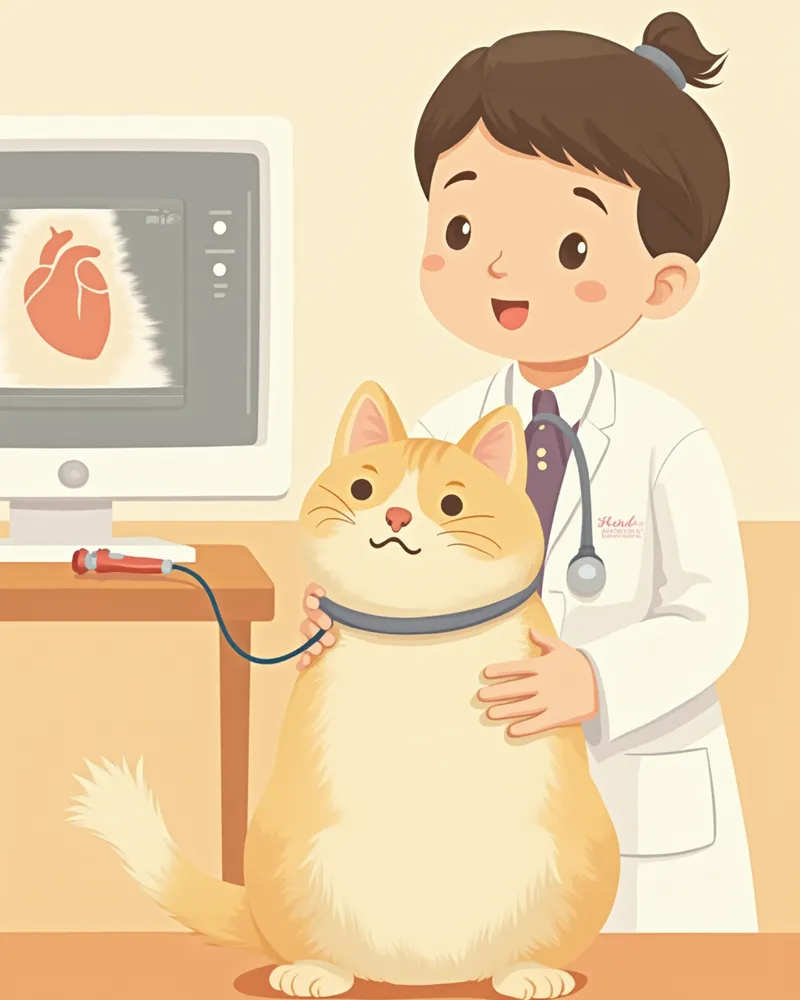
How Is the Cardiac Ultrasound Performed?
If You See These Signs, Go to the Vet Immediately Regardless of Schedule
Even if you have a scheduled echocardiogram appointment, please visit a veterinary clinic as soon as possible (within 24 hours) if any of the following signs appear: • Open-mouth breathing or panting • Sudden weakness or coldness in the hind legs • A noticeably faster breathing rate while sleeping compared to normal • Pale or bluish gums • Sudden loss of appetite and lethargy In particular, hind limb paralysis is an emergency sign of arterial thromboembolism. Delaying treatment can make recovery difficult.
Can Genetic Testing Help?
Management Points for Early Detection
Other Health Issues to Watch for in Birman Cats
In addition to heart concerns, Birman cats may be predisposed to certain congenital and genetic conditions that warrant attention. Preventive medicine textbooks emphasize reviewing "congenital and genetic diseases" and "breed-specific health predispositions" at each life stage as part of routine health management. In Birmans, issues such as sparse or absent coat in kittens, immune system vulnerabilities, and occasionally observed neutrophil granule abnormalities on blood tests have been noted; however, the specific risks and prognosis vary from individual to individual. Rather than relying on definitive statistics, the safest approach is to carefully review the breeder’s health screening records and family history before adoption or breeding, and to consult with your veterinarian.
Reviewed by a veterinarian

Dr. Tony — Punnawat Phongkittirak
VeterinarianA veterinarian who majored in veterinary medicine at Khon Kaen University, Thailand, and completed the IVSA program at North Carolina State University in the United States. Drawing on clinical experience at animal hospitals, he works in the pet healthcare field and is dedicated to building a digital care environment that connects pet parents with veterinarians.
Reviewed 2026-04-30
Frequently Asked Questions
At what age should a Birman cat start having heart screenings?
Isn't a stethoscope exam enough?
How much does the check-up cost?
Can genetic testing help identify the risk of HCM in advance?
What is the average life expectancy after an HCM diagnosis?
Share
Related Guides

Coenzyme Q10 Benefits and Administration Guide

Dog Pulmonary Edema Warning — 7 Best Diuretics (Furosemide) for Heart Management

7 Best Prescription Diets for Feline Heart Disease Recommended by Veterinarians — Criteria for Choosing Low-Sodium Food

Key Points on Bengal Hypertrophic Cardiomyopathy and an Age-Specific Lifelong Health Management Guide

Key Points on Dilated Cardiomyopathy in Dobermans and an Age-Specific Lifelong Health Management Guide

Sphynx HCM (Hypertrophic Cardiomyopathy) — Complete Guide to Symptoms, Diagnosis, and Age-Specific Lifelong Care

American Shorthair HCM: Symptoms, Early Detection, and Age-Specific Care Guide

Ragdolls and Hypertrophic Cardiomyopathy (HCM) — Symptoms, Treatment, and Age-Specific Lifelong Management

Boxer Cardiomyopathy: Symptoms, Precautions, and Lifelong Age-Specific Management

Hypertrophic Cardiomyopathy (HCM) in Maine Coons — Symptoms, Treatment, and Age-Specific Lifelong Care
References
[1] Little, S. E., The Cat: Clinical Medicine and Management, 2nd Edition, 2024
[2] Textbook of Cardiovascular Medicine in Dogs and Cats — Feline Hypertrophic Cardiomyopathy chapter
[3] ACVIM Consensus Statement on Feline Cardiomyopathy, 2020