
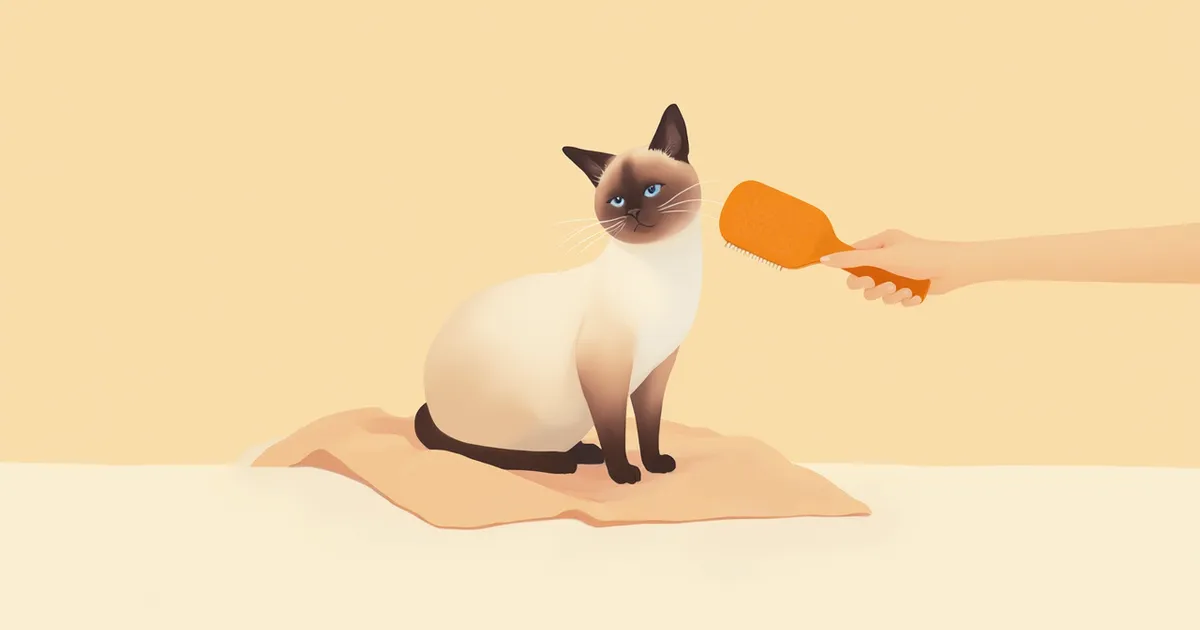
Siamese Short-Hair Grooming: A Complete Guide from Brushing to Point Coloration Care
We’ve put together a guide on grooming frequency, tools, and skin care tips to help keep your Siamese cat’s short coat and distinctive point coloration healthy.
What Is Siamese Short-Hair Grooming?
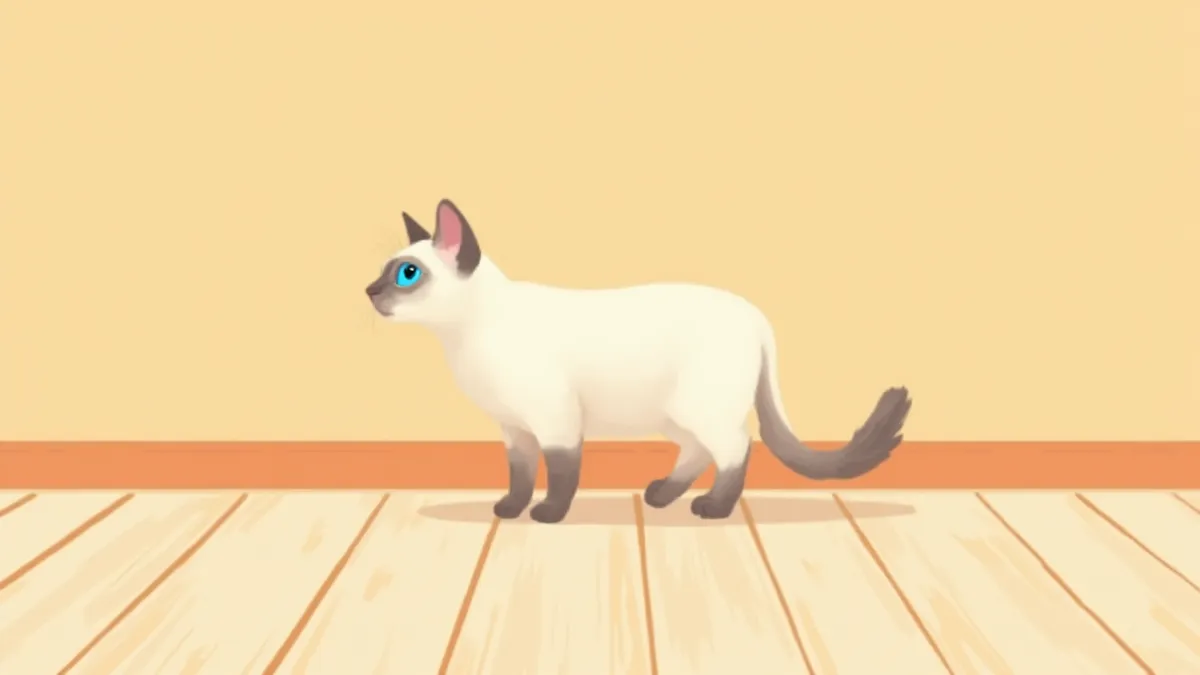
Characteristics of Siamese Coat Color
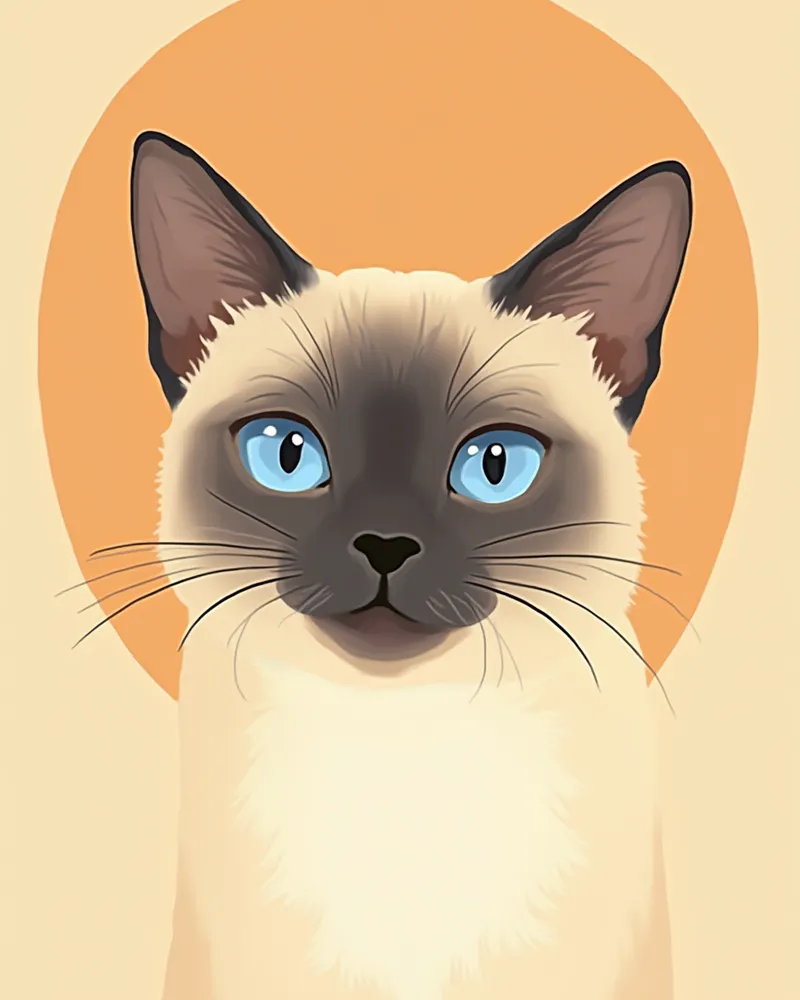
Siamese Grooming Frequency and Tools
These Color and Coat Changes Are Signs to Visit the Vet
If your cat’s point-colored areas are losing hair asymmetrically, or if their coat looks dull and flaky, it may be more than just a grooming issue. In cats, fungal skin infections (dermatophytosis) and external parasites (fleas and mites) are common in younger cats, while allergic and immune-mediated skin conditions are more frequent in adults. In senior cats, excessive grooming due to hyperthyroidism is often reported. Dermatophytosis, in particular, is the most common cause of hair loss in cats and can also be transmitted to humans. If you notice coin-shaped bald spots on the point areas, along with scratching, licking, or redness, it’s best to have your cat examined by a veterinarian within a week.
Proper Brushing Steps
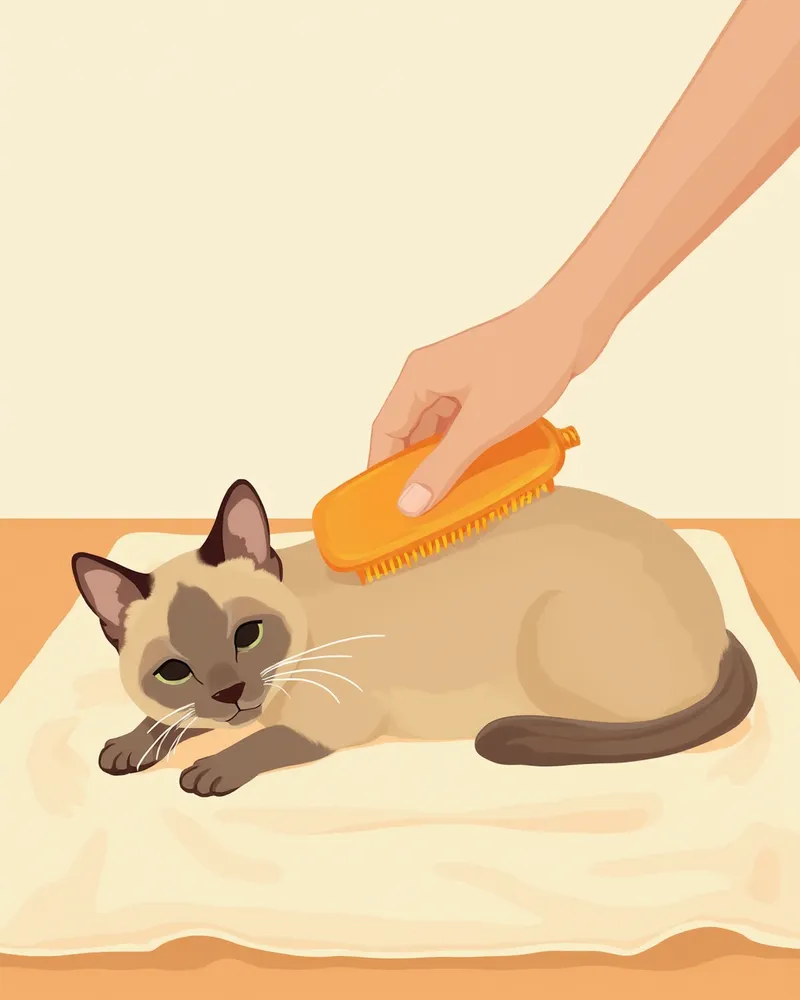
Siamese Skin and Coat Care Points
Skin and Respiratory Diseases Siamese Cats Are Especially Prone To
Lower airway diseases, including asthma, are a relatively common respiratory issue in cats, affecting approximately 1 to 3 percent of the feline population. If your cat’s breathing becomes labored during grooming, or if their gums appear paler or bluish compared to their usual color, seek veterinary care immediately. Rather than assuming certain breeds are more susceptible, it is safer to regularly document your cat’s breathing patterns and gum color through photos and notes to monitor for changes. Taking the time to check their breath odor, gum color, and breathing while brushing can help you detect subtle abnormalities early.
How to Keep Point Coloration Vivid for Longer
Reviewed by a veterinarian

Dr. Tony — Punnawat Phongkittirak
VeterinarianA veterinarian who majored in veterinary medicine at Khon Kaen University, Thailand, and completed the IVSA program at North Carolina State University in the United States. Drawing on clinical experience at animal hospitals, he works in the pet healthcare field and is dedicated to building a digital care environment that connects pet parents with veterinarians.
Reviewed 2026-04-30
Frequently Asked Questions
Do Siamese cats need to be brushed every day?
Is it normal for the points on my pet's coat to gradually darken?
How often should I bathe my pet?
My pet keeps trying to escape during grooming. What should I do?
Do Siamese cats also tend to develop hairballs easily?
Share
Related Guides

Top 5 Medicated Dog Shampoos — For Pyoderma and Bacterial Infections

Veterinarian-Recommended Top 5 Medicated Shampoos for Canine Yeast Dermatitis — Relieves Itching and Greasiness

Top 5 Medicated Cat Shampoos Recommended by Veterinarians — Fungal Dermatitis and Fungal Care

Yorkshire Terrier Health Care Calendar — Age-Specific Checkup and Patellar & Dental Care Schedule

Dachshund Lifelong Care Schedule — Complete Guide to Age-Specific Common Diseases and Check-up Timing

Cocker Spaniel Health Management Calendar — Age-Appropriate Screening and Management of Otitis Externa and Eye Diseases

Cocker Spaniel Genetic Disease Checklist

Shih Tzu Regular Check-ups & Lifelong Care — Age-Specific Predisposed Conditions and Stage-Based Management

French Bulldog Regular Check-up Schedule — Age-Specific Management for Brachycephalic Respiratory and Skin Conditions

French Bulldog BOAS — A Complete Guide from Diagnosis and Surgical Timing to Daily Care
References
[1] Little, S.E., The Cat: Clinical Medicine and Management, 2nd Edition, Elsevier, 2024
[2] Lappin, M.R., Canine and Feline Respiratory Medicine, 3rd Edition, Wiley-Blackwell, 2023
[3] Thomovsky, E., The Veterinary Workbook of Small Animal Clinical Cases, Wiley-Blackwell, 2020