Like
Share
멍실장
강아지 디스크(IVDD) 예방 제품 추천 TOP 5 — 닥스·코기용

Top 5 Recommended Disc (IVDD) Prevention Products for Dogs — For Dachshunds and Corgis

JointTop PicksMeongsiljang Veterinary Advisory Board

We’ve compared and organized five disc-prevention products for owners of breeds prone to disc issues, such as Dachshunds and Welsh Corgis, based on veterinary surgical consultation standards.

What is Canine Disc Disease (IVDD)? Why Prevention is Necessary

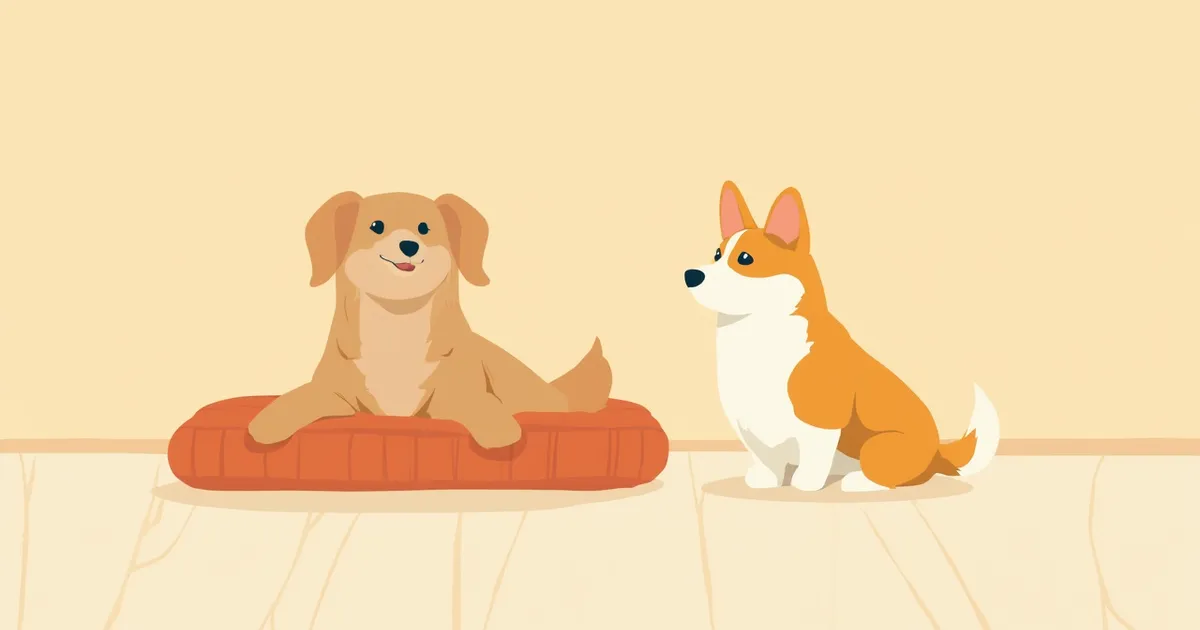
A Dachshund and a Welsh Corgi standing on a non-slip mat in the living room
Intervertebral disc disease (IVDD) in dogs occurs when the discs (specifically the nucleus pulposus) between the vertebrae degenerate and calcify, compressing the spinal cord and causing pain and neurological abnormalities. The key to prevention lies in minimizing three factors: jumping, using stairs, and slipping. Chondrodystrophic breeds with short legs and long backs, such as Dachshunds and Welsh Corgis, are known to experience earlier onset of disc degeneration and calcification compared to other breeds. Therefore, setting up a safe environment from the time your dog is asymptomatic is the most effective preventive measure. In this article, we’ve compiled the top five disc-prevention products that Dachshund and Corgi owners should prioritize first, based on veterinary surgical consultation guidelines.

Why is Disc Prevention 'Essential' for Dachshunds and Corgis?

Chondrodystrophic breeds—those with short legs and long backs, such as Dachshunds, Welsh Corgis, and Pekingese—begin to experience early hardening of the intervertebral disc nucleus. When subjected to impact, these degenerated and calcified nuclei are prone to herniate toward the spinal cord, a condition known as Hansen Type I disc herniation. According to veterinary textbooks, Dachshunds are a quintessential predisposed breed, accounting for 45–73% of all intervertebral disc disease (IVDD) cases. Some lineages report that approximately 62% of dogs will experience at least one disc incident in their lifetime. Therefore, the key strategy is a "prevention-first" approach, focusing on modifying the environment proactively rather than reacting after pain appears.

5 Checkpoints When Choosing Disc Prevention Products

Eliminate height differences: Instead of jumping on and off beds or sofas, use pet ramps or slopes to help your pet move up and down safely.
Prevent slipping: Hardwood floors and tiles can cause slipping, which may twist the spine. Cover them with non-slip mats.
Distribute pressure: Reduce strain on the neck by using an H-shaped harness that supports both the chest and back, rather than a traditional collar.
Relieve body pressure: Use memory foam or latex cushions to evenly distribute pressure on the spine while your pet is lying down.
Support cartilage health: Supplement with cartilage-building nutrients such as Glucosamine and Chondroitin Sulfate.
A flat-lay photo of five disc-prevention products neatly arranged on a beige background

Please Check Before Purchasing

If your dog is already showing signs such as back pain, dragging hind legs, refusing to jump, or avoiding stairs, preventive products alone are not enough. These neurological symptoms can develop at varying speeds, from suddenly (within an hour) to gradually (over 24 hours or more). If your dog shows paralysis severe enough to make walking difficult, it could be an emergency, so immediate neurological examination is necessary. Preventive products are tools for setting up the environment for dogs that do not yet show symptoms. In cases where disc disease has already progressed, you should work with your veterinarian to create a plan for rest, rehabilitation, and treatment.

TOP 1 — Anti-Slip Mats (Non-Slip Carpets)

This is the top-priority product for Dachshund and Corgi owners to install first. When paws slip on hardwood or tile floors, the ankles, hips, and spine twist simultaneously, transmitting shock directly to the discs. Place mats along your dog’s main pathways, such as in the living room, kitchen, and hallways.
Key Specifications: Thickness of 5mm or more, silicone dot backing for slip resistance, and washable material.
Recommended Sizes: At least 1.2m × 2m around sofas and beds; runner-style mats at least 60cm wide for hallways.
A dachshund walking on a non-slip mat placed over wooden flooring.

TOP 2 — Pet Ramps (Slopes)

The impact of jumping off beds or sofas is a common trigger for disc herniation. Intervertebral discs normally support the spine during high-impact activities like running and jumping, but degenerated discs become more vulnerable to such repeated stress. Therefore, for short-legged breeds like Dachshunds and Corgis, using ramps (slopes) is safer than stairs when navigating heights.
Key specifications: Slope angle of 25° or less, width of 30 cm or more, and a non-slip surface.
Recommended locations: Beside beds, next to sofas, and for loading and unloading from vehicle trunks.

TOP 3 — H-Shaped Harness (Instead of a Collar)

Dachshunds and Corgis are prone to direct pressure on their cervical spine (neck vertebrae) when pulled on a collar. Using an H-shaped or Y-shaped harness that supports both the chest and back helps distribute this pressure, protecting the cervical and thoracic spine. Key specifications: Separate chest and back design (H or Y shape), zero neck pressure, adjustable back length and chest circumference, and padding of at least 2 cm. What to avoid: Choke chains and plain collars, which pull directly on the neck, are strictly prohibited for dogs at risk of disc disease.

TOP 4 — Orthopedic Memory Foam Cushion

This bedding supports the spine to prevent it from arching like a bow during prolonged rest. Unlike standard cushions that sag in the middle and cause the back to curve, memory foam and latex cushions evenly distribute body pressure. They are especially beneficial for senior dogs, those recovering from disc issues, and dogs that tend to sleep deeply.
Key Specifications: Memory foam thickness of 7 cm or more, edge height of 5 cm or less (to reduce jumping strain), removable and washable cover, waterproof lining.
A well-rested Welsh Corgi sleeping comfortably on a memory foam cushion.

TOP 5 — Joint and Disc Supplement

Ingredients like glucosamine, chondroitin, and MSM (methylsulfonylmethane) are used based on the principle of supplementing cartilage components and slowing cartilage breakdown. Glucosamine serves as a precursor for glycosaminoglycan synthesis, while chondroitin is a glycosaminoglycan found in cartilage, so using them together is expected to produce a synergistic effect. However, textbooks note that there is still insufficient objective evidence to confirm the efficacy of these supplements, so it is difficult to definitively claim they prevent disc degeneration. Therefore, supplements should be viewed strictly as an "adjunct" measure, with environmental adjustments (such as mats, ramps, and harnesses) taking priority.
Feeding guidelines: Administer according to the recommended dosage on the product label and your dog's body weight.
Precautions: Dogs with kidney or liver disease, or those currently taking other medications, should only receive this supplement after consulting a veterinarian.

Key Comparison of 5 Disc Prevention Products

ItemAnti-Slip MatPet RampH-Style HarnessMemory Foam CushionJoint Supplement
Prevention Effect Priority⭐⭐⭐⭐⭐⭐⭐⭐⭐⭐⭐⭐⭐
Suitable for DachshundsTrueTrueTrueTrueTrue
Suitable for Welsh CorgisTrueTrueTrueTrueTrue
Suitable for Senior Dog RecoveryTrueTrueFalseTrueTrue
Initial Cost BurdenLowMediumLowMediumLow
Vet Consultation NeededXXXXO

The table is based on a typical home environment; priorities may differ depending on individual conditions.

Reviewed by a veterinarian

Dr. Tony — Punnawat Phongkittirak

Dr. Tony — Punnawat Phongkittirak

Veterinarian

A veterinarian who majored in veterinary medicine at Khon Kaen University, Thailand, and completed the IVSA program at North Carolina State University in the United States. Drawing on clinical experience at animal hospitals, he works in the pet healthcare field and is dedicated to building a digital care environment that connects pet parents with veterinarians.

Frequently Asked Questions

If my dog doesn’t jump, do I still need to buy a ramp?
Even if your Dachshund or Corgi isn’t jumping around much now, it’s likely that their discs have weakened over time due to cumulative impact rather than a simple decrease in jumping frequency as they age. Using a ramp from puppyhood helps reduce lifelong cumulative stress on their spine, which is why we recommend it.
Will giving my pet joint supplements alone prevent disc disease?
Supplements alone aren’t enough. The key to preventing disc disease is creating an environment that minimizes impact, while supplements play a supportive role by replenishing cartilage-building nutrients. We recommend prioritizing essentials like orthopedic mats, proper lighting, and a harness before adding supplements.
Can dogs who have already been diagnosed with a disc problem still use these products?
It can be used, but the priorities differ. For dogs that have received a diagnosis, cage rest, rehabilitation, and medication are the top priorities, while this product is intended to help prevent recurrence after recovery. Please consult with your veterinarian before introducing it.
Are Welsh Corgis as prone to disc problems as Dachshunds, even though they don’t have long backs?
The Corgi is also classified as a breed prone to cartilage malnutrition. Although its back is shorter than that of a Dachshund, its short legs often force it into a posture with significant spinal curvature, and its high activity level—frequent jumping and running—subjects the spine to substantial impact, placing it at an elevated risk for intervertebral disc disease.
Besides the H-shaped harness, are there any other recommended walking accessories?
We recommend using a standard, non-retractable leash that is 1.5 to 2 meters long. Automatic retractable leashes can jerk suddenly, placing shock on the cervical spine. Additionally, choosing dirt or grass paths over concrete for walks can help reduce stress on the joints.

Share

Related Guides

References

[1] Hansen HJ, A pathologic-anatomical study on disc degeneration in the dog, Acta Orthopaedica Scandinavica, 1952

[2] Ghosh P, Taylor TK, Braund KG, Larsen LH, The collagenous and non-collagenous protein of the canine intervertebral disc and their variation with age, spinal level and breed, Gerontology, 1976;22(3):124–34

[3] Clinical Medicine of the Dog and Cat, 4th Ed — Chapter 14: Diseases of the Spinal Cord (Intervertebral Disc Disease)

[4] The Veterinary Workbook of Small Animal Clinical Cases — Case 46: Thoracolumbar IVDD in the Chondrodystrophic Dog

This information is based on veterinary literature and does not replace diagnosis or treatment. Please consult a veterinarian for specific health concerns.

Metapet Co., Ltd. | CEO: Park Sung-yong | Business Reg. No. 417-88-02562 | Seoul, South Korea | Customer Center

Top 5 Dog IVDD Prevention Picks for Dachshunds & Corgis | Meongsiljang