Like
Share
멍실장
고양이 흉부 X선 판독 관리 추천 BEST와 고르는 기준 총정리

The Best Recommendations and Selection Criteria for Feline Thoracic X-ray Interpretation Management

RespiratoryTop PicksMeongsiljang Veterinary Advisory Board

Reading chest X-rays is key to the early detection of respiratory diseases in cats. You can protect your cat’s health through management methods that are both professional and accurate.

Feline Thoracic X-ray Interpretation Is the Foundation of Accurate Respiratory Diagnosis

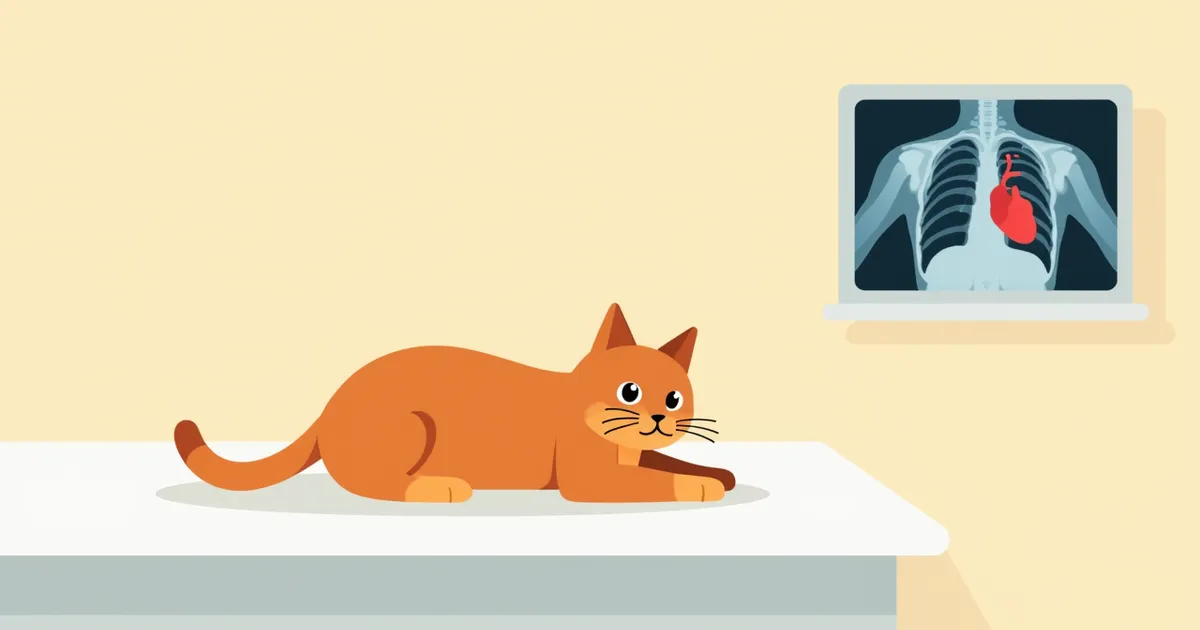
A veterinarian analyzing a cat's chest X-ray on a digital workstation.
Thoracic radiography is a key diagnostic tool for visualizing internal chest structures in cats, including the lungs, airways, heart, and pleura. Accurate interpretation can help detect early signs of conditions such as pneumonia, bronchitis, heart failure, and tumors. Because these structures often overlap on X-ray images, proper evaluation requires a veterinarian with solid anatomical knowledge and experience. Comparing current images with previous ones can be helpful in tracking changes over time, and both imaging technique and patient positioning can affect diagnostic accuracy.

6 Key Criteria to Check When Choosing a Feline Thoracic X-ray Interpretation Service
When choosing a feline thoracic X-ray interpretation service, don’t focus solely on price. There are key criteria you must verify to ensure an accurate diagnosis.
Veterinary Expert Interpretation: Confirm that the images are interpreted by a veterinarian with extensive anatomical knowledge and clinical experience. Ensure the report includes detailed assessments of the heart, lungs, airways, and pleura.
Image Quality Standards: Verify that both ventrodorsal (or dorsoventral) and lateral views are properly captured, with adequate exposure and resolution. Proper positioning is essential for accurate interpretation.
Comprehensive Analytical Report: Check that the report provides detailed findings for each structure, including the lungs, heart, airways, and pleura.
Retake Policy: Confirm whether free retakes are available if image quality is poor or positioning is incorrect.
Diagnostic Record Archiving System: Ensure there is an electronic record system that allows for comparative analysis with previous X-ray images.
Result Explanation and Consultation: Verify that a veterinarian will personally explain the interpretation results and discuss any additional tests or treatment plans.
A screen showing a cat’s chest X-ray with a labeling tool marking the boundaries of the lung lobes and the heart.

Check 1: Is It Interpreted by a Veterinarian with Extensive Radiology Experience?
Chest X-rays show the lungs, heart, airways, pleura, and blood vessels all superimposed on a single image, so the ability to distinguish and interpret each structure relies heavily on reading experience. Experienced veterinarians can detect even subtle changes such as pulmonary nodules, bronchiectasis, pulmonary edema, and cardiac enlargement. When choosing a clinic, check whether they regularly interpret chest imaging and provide reports that summarize findings separately for the lungs, heart, and airways. Clinics that offer detailed explanations rather than simply stating "no abnormalities" are generally more trustworthy.
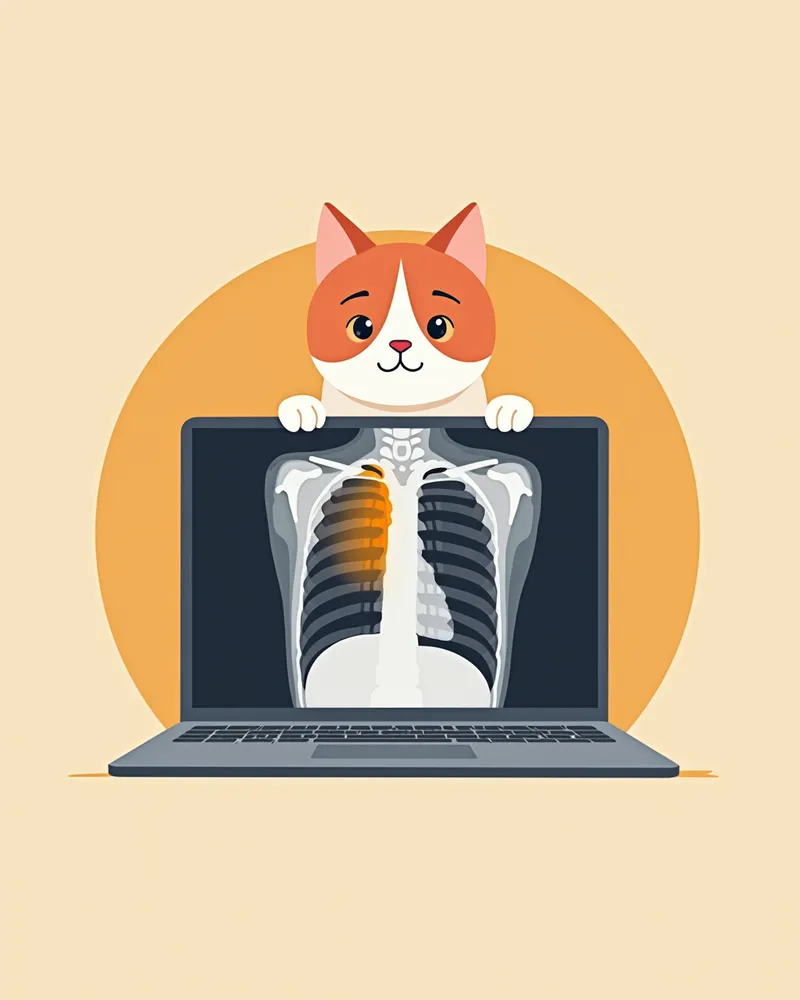
The screen showing VetView Pro software overlaying AI analysis results on a cat’s chest X-ray

Check 2: Is Comparison Analysis with Past Images Available?

With thoracic conditions, the trend of changes is a key diagnostic clue, so comparing current X-rays with previous ones allows for a much more accurate interpretation. Having past images makes it clearer whether new lung opacities have developed or if the heart has enlarged. When choosing a clinic, confirm whether they can compare and analyze current images with previous ones, and whether they’re willing to review existing images from other clinics. A clinic that evaluates the progression over time, rather than relying on a single snapshot, offers higher diagnostic reliability.
The screen where you can receive community feedback on the cat-specific X-ray analysis app.

Check 3: Is There a Retake Policy and Consultation (Remote Interpretation) Available?
X-rays are sensitive to positioning and exposure; even slight deviations can obscure lesions or create false impressions of disease, making image quality directly tied to diagnostic accuracy. If image quality is suboptimal, requesting a retake is advisable. For complex cases, choosing a clinic that offers consultations with specialist veterinarians adds reliability. When selecting a clinic, verify whether they have clear criteria for retakes and whether they coordinate with specialist radiologists or additional imaging modalities (such as ultrasound or CT) when needed, which helps minimize the risk of misdiagnosis.
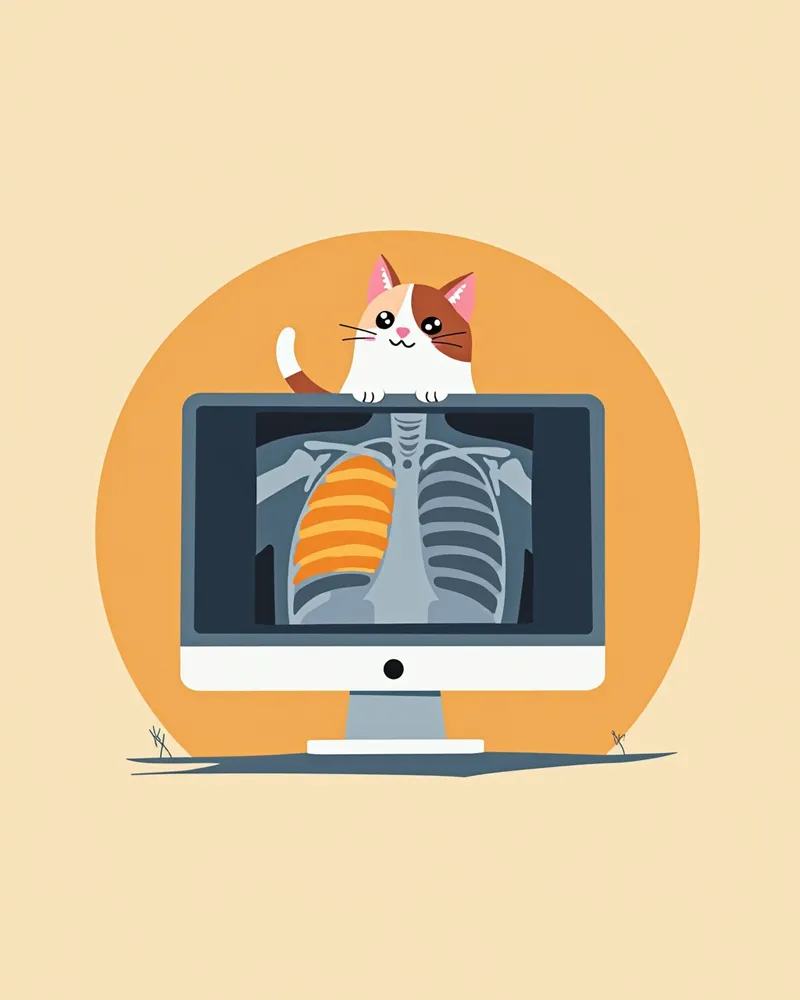
A screen showing QuickScan software automatically highlighting abnormal areas on a cat's chest X-ray

Checklist for Choosing a Clinic for Thoracic X-ray Interpretation

ItemRecommended Criteria
Interpretation CapabilityA place that organizes the lungs, heart, airways, and pleura into a detailed report
Progress ComparisonA place where comparison and analysis with past images is possible
Quality/CollaborationA place with a re-imaging policy and access to specialist interpretation collaboration
Result InterpretationA place where the veterinarian personally explains the test results and guides the management plan
Cost GuidanceA place that informs you in advance of the estimated cost and the possibility of additional tests before testing

This is not a table recommending specific clinics, but criteria worth checking when choosing a clinic to perform the tests. Prices and detailed programs vary by clinic, so inquire directly before visiting.

Caution: Low X-ray Image Quality Increases the Risk of Diagnostic Errors

If the resolution of an X-ray image or the angle of the shot is insufficient, important lesions such as pulmonary nodules, bronchiectasis, and cardiomegaly may be missed. It is essential to obtain high-resolution images and appropriate shooting angles. If you have any doubts about the image quality, please request a retake.

5 Tips for Using Feline Thoracic X-ray Interpretation

To make the most of feline thoracic radiographs, keep these tips in mind.
Consider routine screening: It is important to determine the frequency of routine screenings based on the patient’s condition and clinical signs. While senior cats may benefit from more frequent evaluations, there is no one-size-fits-all recommendation for fixed screening intervals.
Pre-imaging preparation: Adjust the environment to ensure your cat is calm during imaging. Stress can affect positioning, so it is best to keep your cat as comfortable as possible.
Verify imaging angles: Ensure that both ventrodorsal (or dorsoventral) and lateral (left and right) views are obtained. Having multiple views aids in accurate diagnosis.
Consult with your veterinarian: If you have any questions about the radiographic interpretation, be sure to discuss them with your veterinarian. You can review the likelihood of pathology and whether additional diagnostic tests are needed.
Maintain records: Keep electronic copies of past radiographs for comparison. These records are essential for tracking the progression of any abnormalities over time.
A photo of a cat in the correct position for a chest X-ray.

Reviewed by a veterinarian

Dr. Tony — Punnawat Phongkittirak

Dr. Tony — Punnawat Phongkittirak

Veterinarian

A veterinarian who majored in veterinary medicine at Khon Kaen University, Thailand, and completed the IVSA program at North Carolina State University in the United States. Drawing on clinical experience at animal hospitals, he works in the pet healthcare field and is dedicated to building a digital care environment that connects pet parents with veterinarians.

Frequently Asked Questions

When should a cat have a chest X-ray?
Chest X-rays are typically taken when respiratory symptoms such as coughing, difficulty breathing, or decreased activity are present. While they can be considered as part of routine health maintenance, there is no established guideline mandating regular periodic imaging. For senior cats, it is advisable to coordinate with your veterinarian to determine the appropriate timing of examinations based on the presence or absence of symptoms.
Are you still worried even if the X-ray results show no abnormalities?
Even if the X-ray results appear normal, further testing may be necessary if symptoms persist. X-rays can sometimes miss certain lesions, such as small or early-stage ones, so they should always be interpreted in conjunction with clinical signs.
Is the online platform's interpretation accurate?
The accuracy of interpretation depends heavily on the reader’s expertise and experience, as well as the quality of the imaging. Chest X-rays require proper imaging techniques, anatomical knowledge, and skilled interpretation, and errors can occur due to technical or human factors. Therefore, it is important to ensure that the images are of sufficient quality and that an experienced veterinarian is providing the interpretation, whether online or in person.
Is X-ray imaging harmful to cats?
X-rays are taken with a relatively low dose of radiation and are considered fairly safe within the scope of routine diagnostics. However, it’s best to avoid X-rays for pregnant cats due to potential radiation exposure.
Why is it important to compare with past X-rays?
By comparing with previous X-rays, you can quickly track changes in lesions such as pulmonary nodules and cardiac enlargement. This helps assess the rate of disease progression and aids in developing a treatment plan.

Share

Related Guides

References

[1] Canine and Feline Respiratory Medicine, 3rd Edition, 2020

[2] The Cat, Clinical Medicine and Management, 2nd Edition, 2018

[3] Veterinary Radiology & Ultrasound, 2021, Volume 62, Issue 3, pp. 345-358

This information is based on veterinary literature and does not replace diagnosis or treatment. Please consult a veterinarian for specific health concerns.

Metapet Co., Ltd. | CEO: Park Sung-yong | Business Reg. No. 417-88-02562 | Seoul, South Korea | Customer Center

Best Cat Chest X-ray Interpretation: Top Picks and Selection Guide | Meongsiljang