
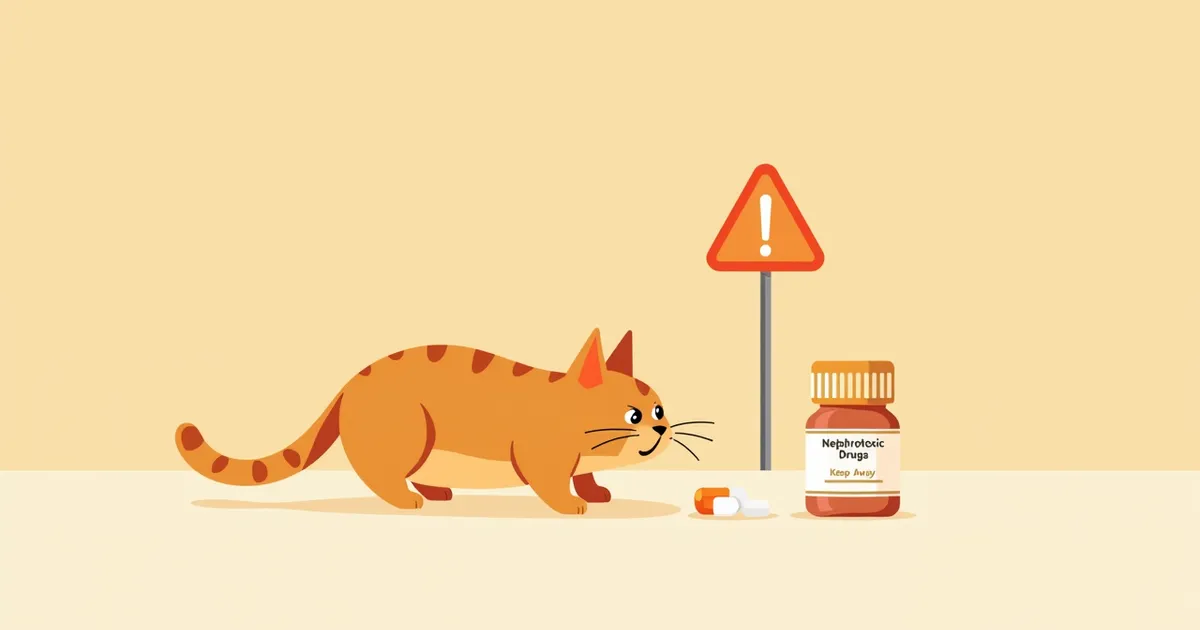
7 Kidney-Damaging Drugs and Substances in Cats, According to Veterinarians
It’s important to accurately identify medications and substances that can harm your cat’s kidneys and to choose safe management methods. In this article, we’ve compiled recommended products and selection criteria that take nephrotoxic risks into account.
What Is the Management of Nephrotoxic Drugs and Substances in Cats?
Key Takeaway: Managing Nephrotoxic Drugs and Substances in Cats
Key Takeaway 1: What Is Nephrotoxicity and What Are the Symptoms?
Key Takeaway 2: Which Substances Are Dangerous and How Are They Diagnosed and Treated?

Key Takeaway 3: Home Prevention and Management, and Veterinary Consultation Are Key

What Pet Owners Should Know About Nephrotoxic Drugs and Substances in Cats
| Item | Key Points |
|---|---|
| Condition | Kidney cell damage may progress to acute/chronic renal failure |
| Cause | Lilies, human painkillers, antifreeze, some antibiotics, etc. |
| Symptoms | Vomiting, lethargy, polydipsia/polyuria, decreased urination, dehydration |
| Diagnosis/Treatment | After blood and urine tests, fluid and electrolyte correction, decided by veterinarian |
| Caution/Management | Store hazardous substances in isolation, do not administer unverified supplements arbitrarily |
This is not a table recommending specific products or hospitals, but criteria to reference when consulting with your veterinarian. Treatment and testing decisions must always be made together with your veterinarian through examination.
Caution: Drugs Strictly Prohibited for Cats
Human pain relievers and fever reducers such as acetaminophen, nonsteroidal anti-inflammatory drugs (NSAIDs), and aspirin are extremely dangerous for cats. NSAIDs and aspirin can cause kidney damage, while acetaminophen can lead to severe anemia and even death, so never administer these medications to your cat.
Usage Tips: Practical Management for Your Cat’s Kidney Health
Reviewed by a veterinarian

Dr. Tony — Punnawat Phongkittirak
VeterinarianA veterinarian who majored in veterinary medicine at Khon Kaen University, Thailand, and completed the IVSA program at North Carolina State University in the United States. Drawing on clinical experience at animal hospitals, he works in the pet healthcare field and is dedicated to building a digital care environment that connects pet parents with veterinarians.
Reviewed 2026-06-05
Frequently Asked Questions
My cat is currently taking kidney medication, but suddenly has no appetite. Is this okay?
I gave my cat a nonsteroidal anti-inflammatory drug (NSAID). Should I take it to the vet?
When should I start giving my pet a kidney-support supplement?
What medications are safe for cats?
Is it safe to give my pet multiple kidney-support supplements at the same time?
Share
Related Guides
Top 5 Prescription Diets for Cats with Chronic Kidney Disease — Stage-Specific Protein Adjustment
7 Emergency Signs and Causes of Acute Kidney Failure in Dogs You Must Not Miss
Top 5 Cat Kidney Supplements Recommended for 2026

5 Gentle Cat Breeds Recommended by Veterinarians — A Comparison Guide Covering Temperament and Health
9 Hairless Dog and Cat Breeds — Characteristics and Skincare Tips for Hairless Pets

Top 7 Low-Shedding Dog Breeds
Complete Guide to Cat Breeds (Long-haired, Short-haired, Large, and Small)
Top 5 Cat Hairball Supplements for 2026 — Dietary Fiber & Moisturizing Ingredients
Top 5 Cat Coat Supplements for 2026 — Omega & Biotin

Top Recommended Products for Managing Canine Urinary Incontinence and Urethral Sphincter Dysfunction and How to Choose Them
References
[1] The Cat, Clinical Medicine and Management, 2nd Edition. Elsevier, 2017.
[2] Plumb's Veterinary Drug Handbook, 9th Edition. Wiley-Blackwell, 2022.
[3] Clinical Medicine of the Dog and Cat, 4th Ed. Elsevier, 2019.