

7 Best Products to Calm Cats That Cry at Night and in the Early Morning
There are many reasons why cats cry at dawn, including hunting instincts, hunger, and cognitive decline in senior cats. We’ve compiled the top four management strategies for each cause, along with guidelines for choosing the right products.
Why Do Cats Cry in the Early Morning, and How Can You Manage It?

Checklist of Main Causes of Early-Morning Crying

Go to the Vet Immediately If You See These Signs
If your cat suddenly starts crying in the early morning, or if the crying is accompanied by a loss of appetite, unusual gait, or one eye appearing larger than the other, these could be signs of pain or neurological issues. If an older cat cries loudly and frequently at night, it may indicate cognitive decline (feline dementia). Even if the behavior seems like a behavioral issue, it’s important to first rule out any underlying medical conditions through a physical examination.
Management Strategy #1 — Burn Off Energy with Intense Play Before Bed
Management Strategy #2 — Late-Evening Small Feeding or Using an Automatic Feeder
Management Strategy #3 — Reduce Anxiety with a Pheromone Diffuser
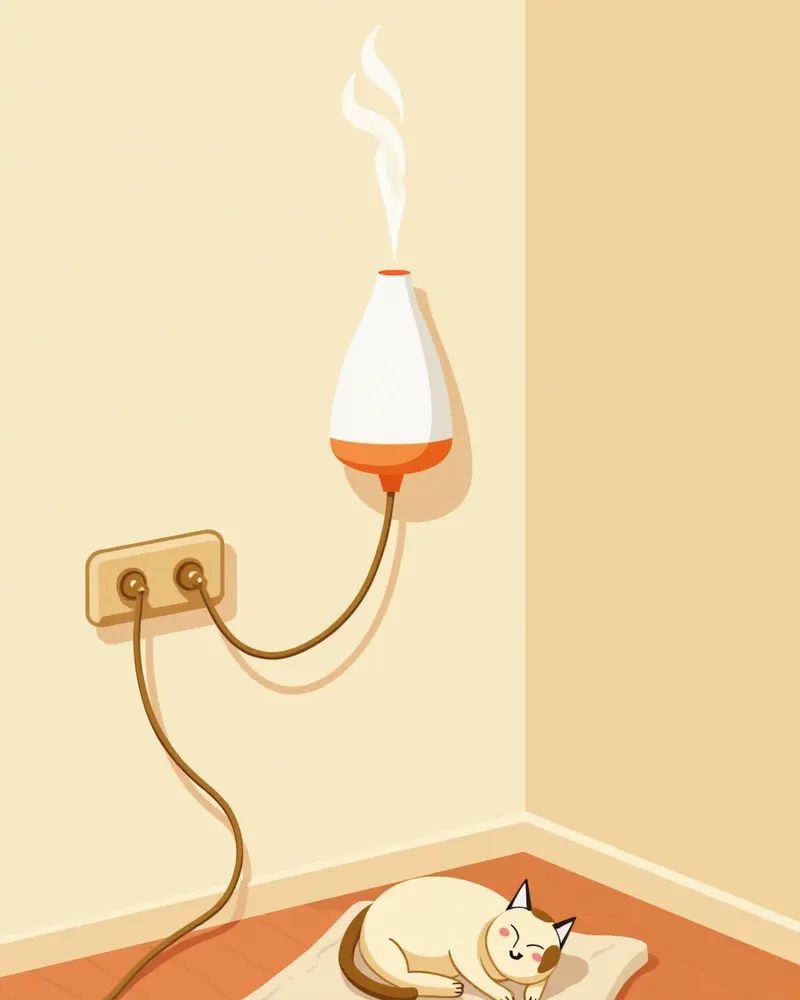
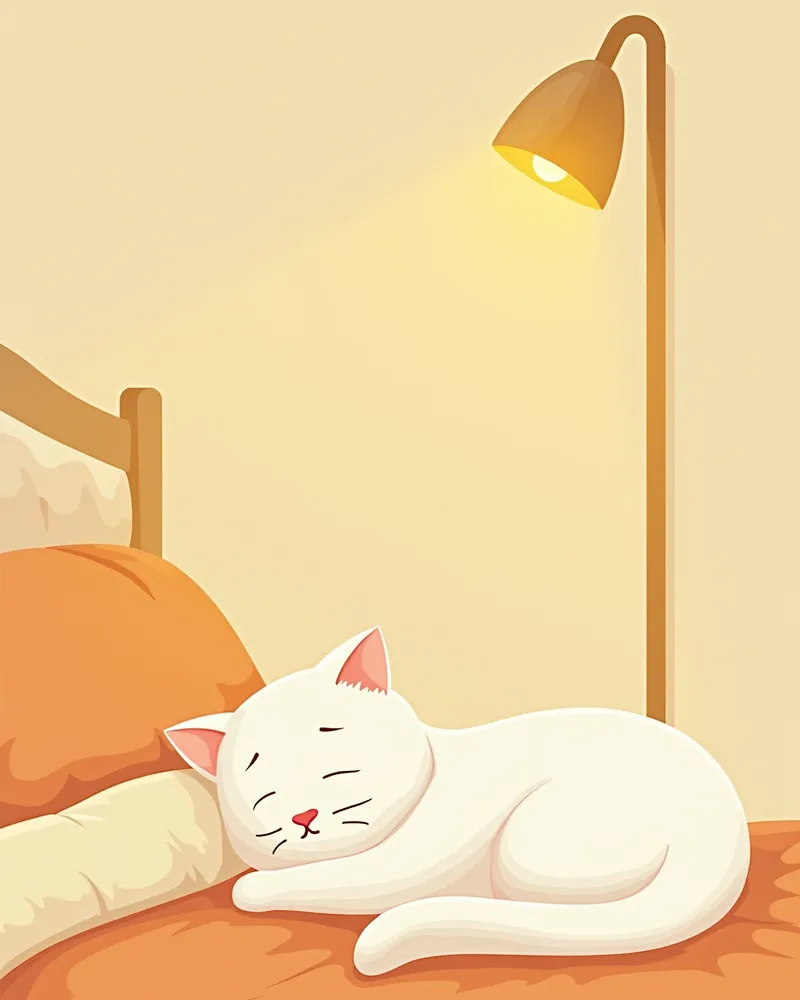
Management Strategy #4 — Improve the Nighttime Environment for Senior Cats
Reacting to the Crying Can Have the Opposite Effect
If you rush to feed or cuddle your cat when it starts crying in the early morning, it learns that “crying gets me what I want.” To stop this learned behavior, you must intentionally ignore the crying. The key is to consistently withhold attention for at least two to three weeks, even if it means closing the door or using earplugs. However, before starting this ignore training, you must rule out pain or illness through a thorough health checkup.
Comparison of Effectiveness by Strategy — Which Method Is Right for Your Cat?
| Item | Pre-bedtime play | Small nighttime feeding | Pheromone diffuser | Nighttime environment improvement |
|---|---|---|---|---|
| Main cause | Excess energy | Hunger | Anxiety/stress | Cognitive decline |
| Suitable age | Kittens to adult cats | All ages | All ages | Senior cats |
| Onset of effect | 2–3 weeks | Immediate to 1 week | 4+ weeks | 1–2 weeks |
| Monthly cost | ₩0 | Cost of extra food | ₩20,000–50,000 | ₩10,000–30,000 (initial) |
| Difficulty | Easy | Easy | Very easy | Easy |
Based on products sold domestically as of 2026
Reviewed by a veterinarian

Dr. Tony — Punnawat Phongkittirak
VeterinarianA veterinarian who majored in veterinary medicine at Khon Kaen University, Thailand, and completed the IVSA program at North Carolina State University in the United States. Drawing on clinical experience at animal hospitals, he works in the pet healthcare field and is dedicated to building a digital care environment that connects pet parents with veterinarians.
Reviewed 2026-06-01
Frequently Asked Questions
My pet still cries in the early morning even after being neutered. Why is that?
Can the early-morning vocalizations of senior cats be treated?
I find ignore training so challenging. Is there a faster way to do it?
How can you tell if your pet’s early-morning crying is a sign of illness?
Do pheromone diffusers work for all cats?
Share
Related Guides

7 Behavioral Enrichment Strategies for Mental Stimulation Recommended by Veterinarians

Top 5 Calming Supplements for Dogs and Cats in 2026

L-Theanine Effects and Calming Support
7 Essential Management Products for Feline Myocarditis Recommended by Veterinarians and Selection Criteria
7 Key Management Points for Feline Ectopic Beats (Premature Contractions) Explained by a Veterinarian

7 Key Tips for Managing Canine Retinal Detachment and Selection Criteria Recommended by Veterinarians

7 Key Criteria for Managing Retinal Degeneration and Aging in Senior Dogs, as Recommended by Veterinarians

7 Key Points for Managing Corneal Pigmentation in Dogs, as Recommended by Veterinarians

Something Floating in Front of My Cat’s Eyes — Causes of Vitreous Opacities and When to Visit the Vet

Veterinarian-Recommended Top 7 for Managing Feline Hypertensive Retinopathy — From Blood Pressure to Eye Health
References
[1] Heath S, Halls V. A Professional's Guide to Feline Behaviour: Understanding, Improving and Resolving Problems. CABI Publishing, 2024.
[2] Little S (ed). The Cat: Clinical Medicine and Management. 2nd ed. Elsevier, 2023.
[3] Rodan I, Heath S (eds). Feline Behavioral Health and Welfare. Elsevier, 2016.
[4] Moelk M. Vocalizing in the house-cat: a phonetic and functional study. Am J Psychol. 1944;57:184–205.