
Like
Share
멍실장
고양이 간 종양(원발·전이) 관리 추천 BEST와 고르는 기준 총정리

The Best Supplements for Managing Feline Liver Tumors (Primary and Metastatic) and Key Selection Criteria

Liver HealthTop PicksMeongsiljang Veterinary Advisory Board

Feline liver tumors are difficult to detect early, but proper management and the right nutritional supplements can significantly improve both survival time and quality of life. Tailored care is essential for both primary and metastatic tumors.

The Best Supplements for Managing Feline Liver Tumors (Primary and Metastatic) and Key Selection Criteria

A scene of a veterinarian examining a cat for liver tumor diagnosis.
Feline liver tumors are a serious condition that can be primary or metastatic, and because early symptoms are often subtle, early detection can be challenging. Since early intervention significantly impacts quality of life, it is essential to work with your veterinarian to develop a tailored management plan. - Liver-supporting ingredients: Veterinary textbooks list several hepatoprotective agents used for feline liver disease, including S-adenosylmethionine (SAMe), N-acetylcysteine, ursodeoxycholic acid, and vitamin E. SAMe and N-acetylcysteine serve as precursors to glutathione, supporting antioxidant activity and helping to protect liver cells from oxidative damage. - Ease of administration: These supplements come in various forms such as capsules, liquids, and powders, allowing you to choose based on your cat’s appetite and medication habits. However, enteric-coated SAMe capsules should be given whole, as crushing or breaking them can reduce bioavailability. - Ensuring safety: The safest approach is to consult your veterinarian before use and carefully verify the ingredients and dosage. - Suitability for long-term care: Choose a format that allows for consistent administration, pair it with regular veterinary check-ups, and prioritize products recommended by your veterinarian.

Selection Criteria: 5 Key Factors for Feline Liver Tumor Management Supplements

When choosing a supplement for managing feline liver tumors, be sure to check these five key criteria. If the product doesn’t meet these standards, it may be less effective or even place additional strain on your cat’s system. Always consult with your veterinarian before making a selection.
Contains liver-protective ingredients: Look for supplements that include liver-protective components recommended in veterinary textbooks for feline liver disease, such as ursodeoxycholic acid and S-adenosylmethionine (SAMe).
Enhanced with antioxidants: Ingredients like SAMe, N-acetylcysteine, and vitamin E can help by supporting glutathione levels and reducing oxidative stress.
Adequate protein supply: Rather than strictly limiting protein to reduce liver burden, it’s important to provide enough protein to support recovery. Sufficient fats and carbohydrates are also necessary to prevent protein breakdown.
Highly digestible and absorbable form: Choose a format—such as powder, liquid, or capsule—that your cat is likely to accept and tolerate well.
Free from additives and preservatives: Products with minimal artificial colors, preservatives, and flavorings are safer choices.
Additive-free nutritional supplement storage box for liver tumor management

BEST 1: Hepatoprotective Protein Capsules
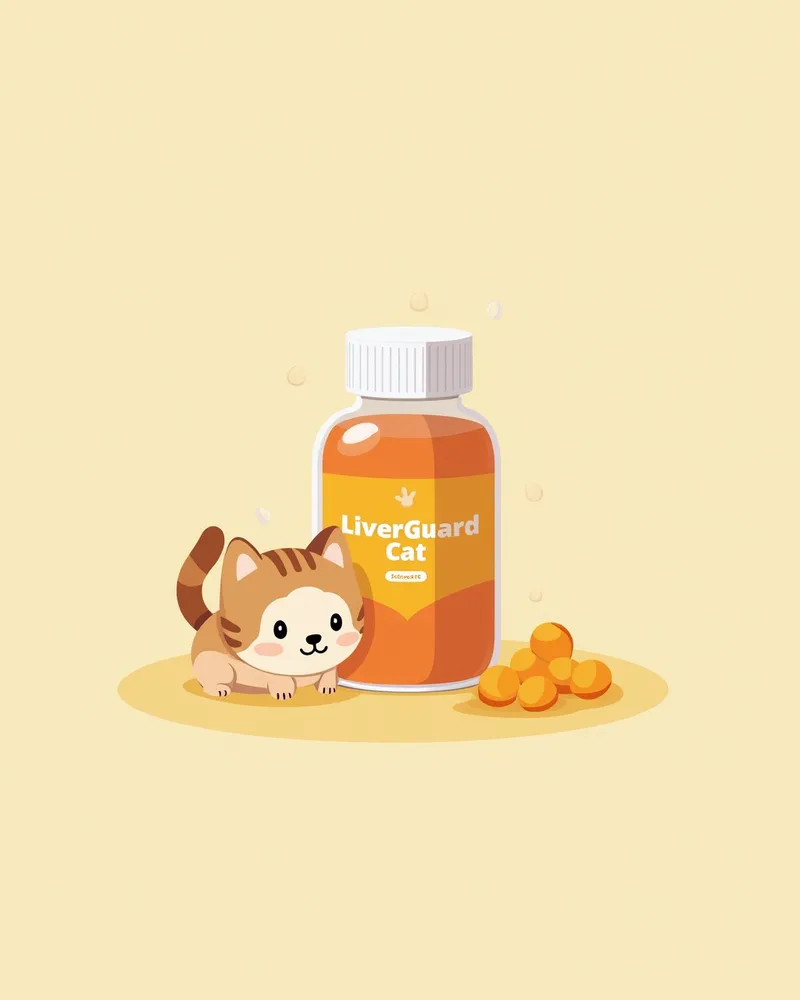
This cat-specific capsule is formulated with S-adenosylmethionine (SAMe) and N-acetylcysteine as its main ingredients to supplement glutathione and support the antioxidant defense of liver cells. SAMe is used for inflammatory liver disease, fatty liver, and cholestatic liver disease. Although the capsule form makes it relatively easy to administer, SAMe is enteric-coated, so crushing or breaking it reduces bioavailability; it’s best given whole. It can be used even when appetite is reduced, making it a helpful adjunct for long-term management. Serious side effects are uncommon, but you should always consult your veterinarian to determine the appropriate dosage and whether it’s suitable for your cat, and combine its use with regular check-ups.
Cat Liver Support Capsule Product Box

BEST 2: Liver Health Liquid Supplement

This liquid formula mixes easily into your cat’s food or treats. It combines liver-protective and antioxidant ingredients recognized in veterinary textbooks for feline liver disease, including ursodeoxycholic acid, S-adenosylmethionine (SAMe), N-acetylcysteine, and vitamin E, to help protect liver cells and reduce oxidative damage. Ursodeoxycholic acid is used for cholestatic and inflammatory liver diseases, while vitamin E serves as an antioxidant aid. Its mild odor minimizes rejection, making it easy to administer even when your cat’s appetite is low. Follow the product instructions for daily dosage and duration, and consult your veterinarian for long-term use. Since efficacy and safety vary by individual, regular veterinary check-ups are recommended alongside supplementation.
A cat drinking liquid liver protectant

BEST 3: Liver Function Support Powder

Formulated as a powder, it can be easily mixed into your cat’s food or treats. It contains liver-protective and antioxidant ingredients commonly recommended in veterinary textbooks for feline liver disease, including ursodeoxycholic acid, S-adenosylmethionine (SAMe), and vitamin E, to help protect liver cells and reduce oxidative damage. It’s easy to administer even when your cat’s appetite is low, and its mild flavor is generally well accepted. The simple dosing method and ease of mixing with food make it convenient for consistent use. When used alongside regular veterinary check-ups and after consulting with your veterinarian, it can serve as a supportive aid for liver care.
Cat liver support powder product packaging

Comparison Table of Products BEST 1–3

ItemBEST 1 CapsuleBEST 2 LiquidBEST 3 Powder
Main IngredientsS-adenosylmethionine (SAMe), N-acetylcysteineUrsodeoxycholic acid, SAMe, Vitamin EUrsodeoxycholic acid, SAMe, Vitamin E
FormCapsuleLiquidPowder
Ease of ConsumptionVery easyVery easyEasy
Price (per 30 days)$10$10$10
Additional AdvantageVeterinarian recommendedOdorless and good-tastingEasy to mix into food

Prices are as of 2025, and the ingredients consist of liver protectants based on veterinary textbooks (SAMe, N-acetylcysteine, ursodeoxycholic acid, Vitamin E). Consultation with a veterinarian is needed before actual use.

Precautions: Essential Points to Know When Managing Feline Liver Tumors

Liver tumors are difficult to cure with medication or supplements alone, so regular veterinary check-ups and a tailored treatment plan are essential. As liver function declines, the body struggles to metabolize medications, increasing the risk of side effects. Never attempt self-diagnosis or indiscriminately administer supplements.

Usage Tips: Practical Tips for Successful Feline Liver Tumor Management

Managing liver tumors goes beyond simply taking supplements; comprehensive daily care is essential. The following tips can help:
Dietary Management: Even with liver disease, it is more important to provide adequate protein for recovery than to restrict it excessively. Ensure sufficient fat and carbohydrate (caloric) intake to prevent protein from being broken down for energy, and prioritize encouraging your pet to eat well.
Encouraging Hydration: Change the water frequently and use water bottles or fountains to increase fluid intake.
Minimizing Stress: Maintain a consistent daily routine to avoid disrupting your cat’s normal life rhythm.
Regular Check-ups: Schedule regular liver function tests and ultrasounds to monitor any changes in condition.
Checking for Drug Interactions: Always consult your veterinarian before administering this product alongside other medications.
A scene illustrating hydration and dietary management for cats with liver tumors

Reviewed by a veterinarian

Dr. Tony — Punnawat Phongkittirak

Dr. Tony — Punnawat Phongkittirak

Veterinarian

A veterinarian who majored in veterinary medicine at Khon Kaen University, Thailand, and completed the IVSA program at North Carolina State University in the United States. Drawing on clinical experience at animal hospitals, he works in the pet healthcare field and is dedicated to building a digital care environment that connects pet parents with veterinarians.

Frequently Asked Questions

Can feline liver tumors be cured?
For primary liver tumors, solitary and localized hepatocellular carcinoma without metastasis can have a relatively favorable prognosis with hepatic lobectomy (surgery). However, treatment is more challenging if the tumor is nodular or diffuse, or if metastasis is present, and metastatic tumors also carry a poor prognosis. Survival time varies significantly depending on the type and stage of the tumor, so please consult with your veterinarian to develop an appropriate treatment plan.
When should I start giving my pet the supplement?
It is best to start the medication as soon as your veterinarian diagnoses liver dysfunction. Early intervention can help protect your pet's liver.
Is it okay to take supplements and medications together?
Some supplements can interfere with drug absorption, so always consult your veterinarian before giving them to your pet. You may need to adjust the timing of administration.
What tests are needed when a liver tumor is suspected?
Diagnosis typically involves blood tests, liver function tests, and an ultrasound, with a liver biopsy performed if necessary. The ultrasound helps detect abnormalities, while the biopsy provides a definitive diagnosis. Your veterinarian will tailor the diagnostic plan based on your pet’s specific symptoms.
Do I need to keep giving the supplement?
Depending on your pet’s liver function, your veterinarian may adjust the dosage. It’s best to determine whether to continue the medication and at what dose based on regular check-up results.

Share

Related Guides

References

[1] Withrow, S.J., Vail, D.M. (2017). Veterinary Surgical Oncology, 2nd Ed. Elsevier.

[2] Nolan, M.W., et al. (2013). Stereotactic body radiation therapy for treatment of injection-site sarcomas in cats: 11 cases (2008–2012). J Am Vet Med Assoc, 243(4):526–531.

[3] Moore, A.S., et al. (2002). Streptozocin for treatment of pancreatic islet cell tumors in dogs: 17 cases (1989–1999). J Am Vet Med Assoc, 221:811–818.

This information is based on veterinary literature and does not replace diagnosis or treatment. Please consult a veterinarian for specific health concerns.

Metapet Co., Ltd. | CEO: Park Sung-yong | Business Reg. No. 417-88-02562 | Seoul, South Korea | Customer Center

Best Supplements for Feline Liver Tumors & How to Choose | Meongsiljang