Like
Share
멍실장
고양이 죽음 후 반려동물 슬픔 관리 추천 BEST와 고르는 기준 총정리

7 Best Care Items to Alleviate Pet Loss Syndrome Grief After Losing a Cat and How to Choose

Brain & CognitionTop PicksMeongsiljang Veterinary Advisory Board

The grief that follows the loss of a cat, known as pet loss syndrome, doesn't have to be faced alone. We've outlined five practical ways to manage this grief that can truly help pet owners, along with guidelines for choosing the right approach based on individual circumstances.

Grief After Losing a Cat: This Is a Normal Emotion

A grieving pet owner mourning the loss of their cat, with an empty cat bed nearby.
The grief that follows the loss of a cat, often referred to as pet loss syndrome, is a natural mourning response to saying goodbye to a beloved companion. What truly matters is allowing yourself to feel these emotions rather than denying or suppressing them alone. The intensity and duration of grief vary from person to person. The longer you shared with your cat, or the more central they were as your sole companion, the deeper the sense of loss may feel. Experiencing this grief is simply proof of how deeply you loved your cat.

3 Criteria for Choosing a Grief Management Method

To determine which approach is right for you, start by reviewing these criteria.
Duration of grief: If your sadness gradually eases over time, support from family and friends may be enough. However, if your grief remains intense and doesn’t lessen even after a long period, consider seeking professional counseling.
Ability to maintain daily functioning: If you’re struggling to eat or sleep, you may need more active support.
Support environment: If you don’t have understanding people around you, you may benefit more from community support or professional counseling.

If These Symptoms Persist for Over 6 Weeks, Professional Help Is Needed

If symptoms such as extreme lethargy that makes daily life difficult, sleep disturbances, loss of appetite, and social isolation persist for an extended period without improvement, it may be complicated grief. This is not a matter of willpower; it is a condition for which professional help and treatment have been shown to be effective. Please do not try to endure it alone—be sure to seek counseling from a mental health professional or a psychiatrist.

Recommendation #1 — Join a Pet Loss Support Community

Sharing your feelings with other pet owners who’ve been through the same experience is one of the fastest ways to heal. Simply realizing that your grief is valid and normal—whether in an online community or an in-person support group—can make a profound difference.
Why it’s recommended: It allows you to express your sorrow freely and receive practical advice from those who have walked the same path.
Best suited for: Those who feel isolated because they lack a local support network of pet owners or struggle to find understanding in their immediate circle.
Caution: Before joining an online community, verify that it is currently active and well-moderated.
Pet owners finding comfort through an online pet loss community

Recommendation #2 — Seek Professional Psychological Counseling or Psychiatric Care

You can seek help from a grief counselor who specializes in pet loss. This is especially effective when your sorrow lingers for a long time or feels too heavy to bear alone.
Why we recommend it: It offers the most direct support for complicated grief, overwhelming guilt, and symptoms of depression.
Cost: Sessions typically cost between $40 to $70. However, you may access free or low-cost services through local mental health and welfare centers.
Who it’s for: We recommend this for anyone whose grief persists without easing over time or whose ability to function in daily life has declined.

Recommendation #3 — Memorial Rituals and Memory Organization Activities

Organizing your memories with your cat and preserving them can be a practical help in the grieving process.
Creating a photo album: Sorting through photos and writing down the stories behind them is a healthy way to express your sadness.
Writing a letter: Putting unspoken words into a letter can help alleviate feelings of guilt and longing.
A memorial box: Creating a keepsake box to store items your cat used, such as their fur or paw prints, can help you maintain a sense of connection.
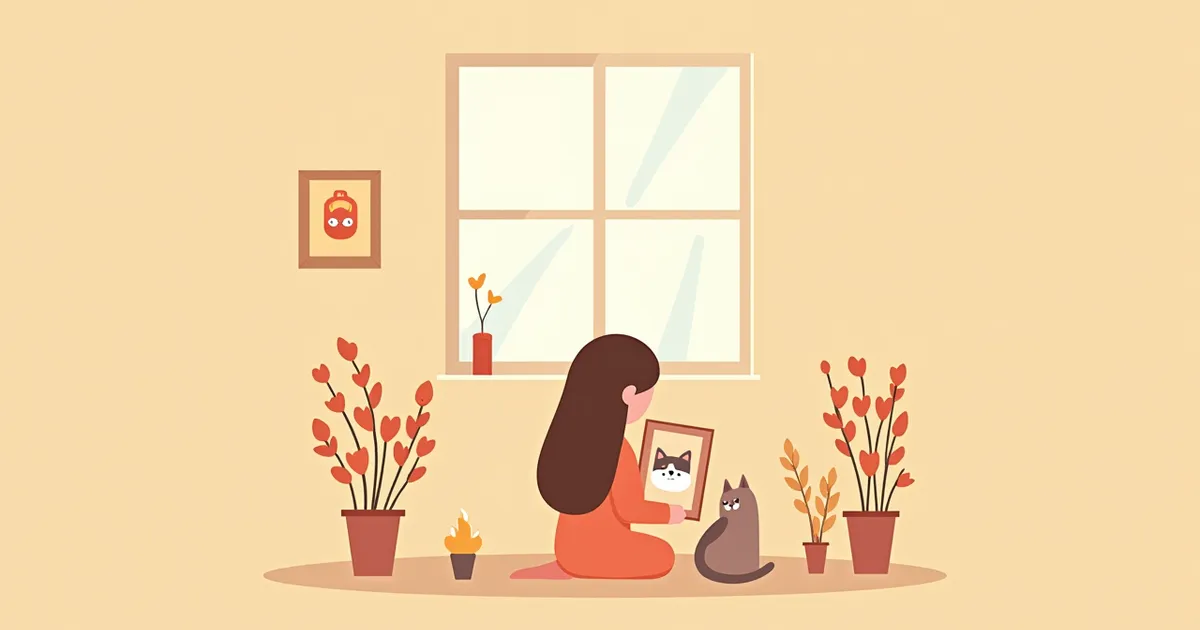
Memorial boxes and photos to honor your cat

Recommendation #4 — Maintain Daily Routines and Practice Self-Care

The deeper the grief, the more likely basic routines like eating, walking, and going to bed early tend to fall apart. What truly matters is making an effort to maintain these small routines, even if it feels forced.
Why it matters: Self-compassion—being kind to yourself—is known to help you endure difficult times. Keeping up with fundamental routines such as regular meals and sleep forms the foundation for recovery.
Practical tip: Feeding time for your cat can be the hardest moment. Filling that time with other small activities can be a helpful approach.

Recommendation #5 — Read Books and Materials on Pet Loss

Reading books or materials about pet loss can help you realize that your feelings are normal.
Recommended types of resources: Owner memoirs, introductory books on grief psychology, and guides to pet loss written by veterinarians.
Note: If reading feels too difficult, there’s no need to force yourself. You can start once your emotions have settled a bit.
Best suited for: Those who want to understand the causes and process of grief.
A pet owner finding comfort while reading books about pet loss

Decide to Adopt a New Cat Only After You Are Fully Prepared

Adopting a new cat immediately after losing one can become a way of suppressing your grief. If you don’t fully process your mourning for the previous cat, it may affect your relationship with the new one. Therefore, it’s best to make the decision to welcome a new family member only after you’ve had enough time to grieve and feel emotionally ready.

Comparison of Grief Management Methods by Situation

ItemSuitable situationsCostAccessibility
Support communityWhen you need empathy and connectionFreeOnline, immediate
Psychological counselingLong-lasting grief₩50,000–100,000/sessionAppointment required
Memorial activitiesPossible anytimeFree to a small costCan do alone
Daily routine managementEarly grief stageFreeAvailable immediately
Books/materialsWhen you want information/understanding₩10,000–20,000Online purchase

Costs are estimates as of 2026

Reviewed by a veterinarian

Dr. Tony — Punnawat Phongkittirak

Dr. Tony — Punnawat Phongkittirak

Veterinarian

A veterinarian who majored in veterinary medicine at Khon Kaen University, Thailand, and completed the IVSA program at North Carolina State University in the United States. Drawing on clinical experience at animal hospitals, he works in the pet healthcare field and is dedicated to building a digital care environment that connects pet parents with veterinarians.

Frequently Asked Questions

How long is it normal to grieve after losing a cat?
The duration of grief varies from person to person. Typically, the most intense sorrow gradually eases over time. However, if your sadness remains so overwhelming that it interferes with daily life even after a long period, consider seeking professional counseling.
Why do I feel guilty about my cat’s death?
Most pet owners feel guilty, thinking they could have done more for their cat. This guilt is a testament to how much they cherished their feline companion. If these feelings persist and become overwhelming, seeking counseling can be helpful in processing and expressing these emotions.
People around me don’t seem to understand the grief of losing a pet. What should I do?
The grief of losing a pet can be just as intense as losing a family member. If you feel misunderstood, consider joining a community for people who have experienced pet loss. You’ll find much greater empathy and understanding from others who’ve been through the same experience.
If you have other pets in the household, will the remaining cat also grieve after the loss of a companion?
When a companion animal passes away, the remaining pet may show noticeable changes in behavior due to the absence of their furry friend. They might eat less, seem less energetic, or seek more attention from their owners. During this time, it’s important to provide extra care and maintain a consistent daily routine. If these changes persist or worsen, please consult your veterinarian for guidance.
I’m feeling especially guilty after deciding to euthanize my pet. What should I do?
Euthanasia is a final gift to relieve your pet’s suffering. Many veterinarians and mental health professionals emphasize how difficult and loving this decision is. Since these emotions can be overwhelming to bear alone, consider sharing your feelings with a pet loss counselor.

Share

Related Guides

References

[1] Shear MK: Complicated grief treatment: the theory, practice and outcomes, Bereave Care 29(3):10-14, 2010.

[2] Lindemann E: Symptomology and management of acute grief, Am J Psychiatry 101:141-148, 1944.

[3] Silverstein DD, Hopper K (eds): Small Animal Critical Care Medicine, 3rd Ed, Chapter: Pet Loss and Grief Support, Elsevier, 2023.

[4] Little S (ed): The Cat: Clinical Medicine and Management, 2nd Edition, Saunders, 2022.

[5] Maddison J, Volk HA, Church DB: 100 Top Consultations in Small Animal General Practice, Wiley-Blackwell, 2011.

This information is based on veterinary literature and does not replace diagnosis or treatment. Please consult a veterinarian for specific health concerns.

Metapet Co., Ltd. | CEO: Park Sung-yong | Business Reg. No. 417-88-02562 | Seoul, South Korea | Customer Center

7 Care Items to Ease Pet Loss Grief After Losing a Cat | Meongsiljang