
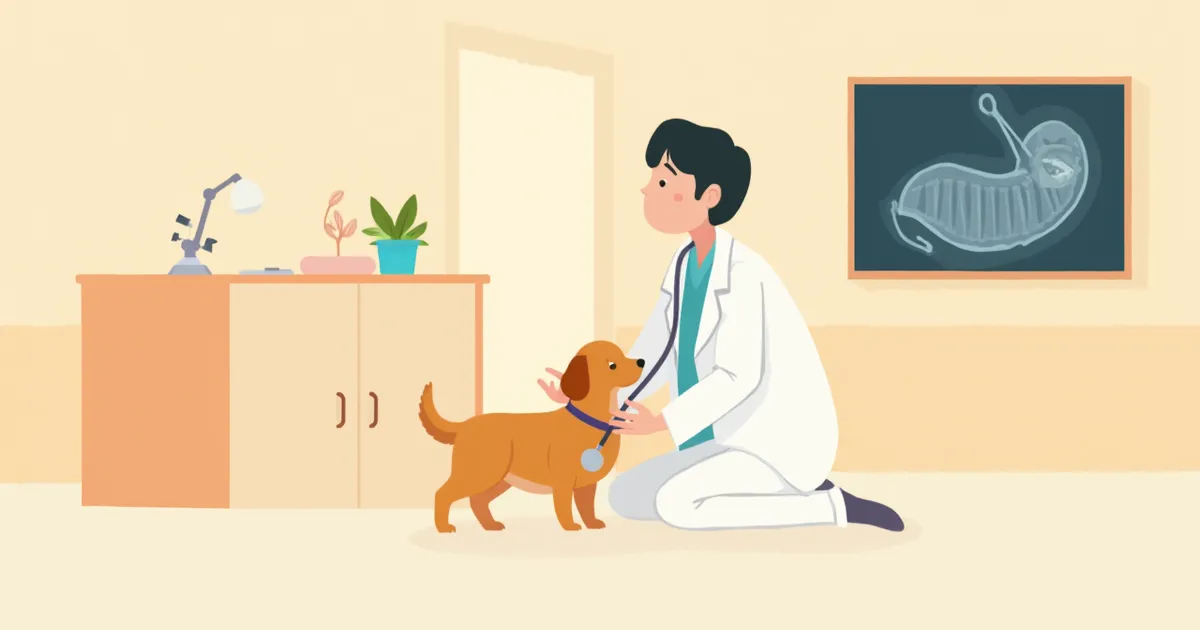
Emergency Response for Pets Swallowing Foreign Objects: Symptoms, Urgency, and Clinic Decision Guide
We’ve compiled veterinary-backed guidance to help you assess the urgency and respond safely when your dog or cat swallows a foreign object. Be sure to check when inducing vomiting at home is not recommended.
Why Is Swallowing a Foreign Object an Emergency for Pets?

Risk Levels by Ingested Item at a Glance
Urgency and Response by Foreign Object Type
| Item | Low (monitor) | Medium (visit within 24 hours) | High (go to ER immediately) |
|---|---|---|---|
| Typical objects | Small round kibble crumbs, a small amount of tissue | Socks, handkerchiefs, small plastic pieces, large treat bones | Thread, string, earphone cords, needles, safety pins, batteries, magnets, human medications, grapes, onions |
| Main risk | Mostly passes naturally | Possibility of intestinal obstruction | Perforation, poisoning, electrical burn, linear foreign body sawing |
| Inducing vomiting | Not needed | After a vet's judgment | Absolutely prohibited |
Linear foreign bodies (thread, string) are always an emergency regardless of size.
Checklist of Symptoms Suspected from Swallowing a Foreign Object

Signs That Require an Immediate Trip to the Emergency Room
If any of the following apply, head to a 24-hour emergency veterinary clinic immediately. If a string or cord is protruding from the anus or mouth, never pull it out, as it can saw through the intestinal lining. If your pet has swallowed a battery, which can cause severe chemical damage to the esophagus and gastrointestinal tract, do not give them anything to eat or drink at home; go straight to a 24-hour emergency veterinary clinic. If they have ingested grapes, onions, chocolate, xylitol, or human medication, record the amount consumed and bring that information with you.
What You Should Never Do at Home
Information to Prepare Before Going to the Clinic

Diagnosis and Treatment Process at the Clinic
Points for Cat Owners to Pay Special Attention To
Cats are particularly prone to swallowing linear foreign bodies such as thread, string, and hair ties. "Linear foreign body injury," where a string caught on the back of the tongue saws through the intestines due to gastrointestinal motility, is especially dangerous among feline emergencies. Always clean up thread after sewing, and only allow cats to play with ribbons or fishing line under direct supervision. If you see string in your cat's mouth, never pull it; take your cat to the vet immediately.
Home Environment Management to Prevent Recurrence
Reviewed by a veterinarian

Dr. Tony — Punnawat Phongkittirak
VeterinarianA veterinarian who majored in veterinary medicine at Khon Kaen University, Thailand, and completed the IVSA program at North Carolina State University in the United States. Drawing on clinical experience at animal hospitals, he works in the pet healthcare field and is dedicated to building a digital care environment that connects pet parents with veterinarians.
Reviewed 2026-04-21
Frequently Asked Questions
My dog swallowed a small object but is still playing normally. Is it okay to just monitor the situation?
Is it safe to induce vomiting at home using hydrogen peroxide?
Does it mean everything is fine if nothing shows up on the X-ray?
It’s been a few days since my pet swallowed something, and now they’re vomiting. Is it too late?
My cat has swallowed half of a string. Is it safe to cut off the remaining part?
Share
Related Guides

Primary vs. Secondary Veterinary Hospitals: A Comparison

5 Easy-to-Raise Cat Breeds for First-Time Owners — Grooming Difficulty Comparison

Top 7 Short-Legged Dog Breeds

Cat Keeps Vomiting — How to Distinguish Between Hairball Care Products and Signs Requiring a Vet Visit

Blood in Your Dog’s Urine — Urgency Guide by Cause

Cat Losing Weight Despite Eating Well — Guide to Suspecting Hyperthyroidism and Diabetes

Symptoms After a Dog Eats Chocolate — Changes by Time Period and Emergency Signs

Senior Dog Vitality Decline — Comprehensive Supplement Recommendation Guide

Dog Bad Breath — Dental Care Product Comparison

Why Is My Dog Scratching So Much? — Allergy Causes and How to Choose Care Products
References
[1] Notes on Canine Internal Medicine, 4th Edition — Management of Toxic Incident Chapter
[2] Small Animal Critical Care Medicine, 3rd Edition — Gastrointestinal Emergencies
[3] The Cat, Clinical Medicine and Management, 2nd Edition — Foreign Body Ingestion
[4] Feline Emergency and Critical Care Medicine, 2nd Edition
[5] McCarthy et al., Veterinary Gastrointestinal Obstruction Review, 2007