
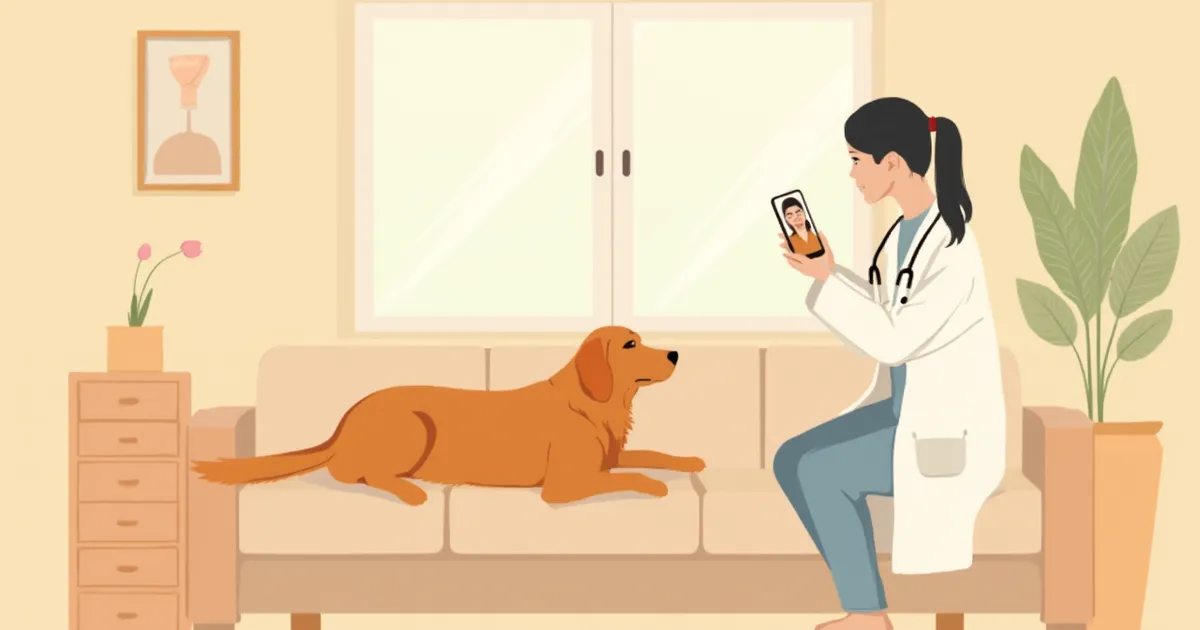
Guide to Telemedicine (Remote Veterinary Care)
We’ve put together a clear overview of what telemedicine for pets is, what services are available in Korea, and when it’s most beneficial to use.
What is Pet Telemedicine?

Scope of Permitted Remote Veterinary Care in Korea
Remote vs. In-Person Veterinary Care
| Item | Telemedicine/consultation | In-person examination |
|---|---|---|
| Physical examination | False | True |
| Auscultation/palpation | False | True |
| Blood and imaging tests | False | True |
| Follow-up consultation | True | True |
| Lifestyle management advice | True | True |
| Emergency response | False | True |
| Cost | Low | Moderate to high |
| Travel burden | None | Present |
Based on the interpretation of Korea's Veterinarians Act as of 2024
Situations Where Remote Consultations Are Useful
Emergency Situations That Cannot Be Handled via Remote Consultation
If your pet shows any of the following symptoms, skip teleconsultation and go to a veterinary clinic immediately: difficulty breathing or blue-tinged lips, repeated vomiting and diarrhea suggesting dehydration, decreased consciousness or seizures, abdominal distension with drooling (suspected gastric dilatation), uncontrolled bleeding from trauma, or inability to urinate for more than 24 hours (suspected urethral obstruction). These are all emergencies. It is difficult to accurately assess your pet’s condition remotely, and missing the critical window for treatment can be life-threatening.
Tips for Using Remote Veterinary Care
Limitations and Precautions of Remote Veterinary Care
Points to Check Before a Remote Consultation
Before requesting a telehealth consultation, always verify that the clinic or service is operated by a licensed veterinarian and that it clearly states its policies for protecting personal and medical information. Online diagnoses or medication sales by unqualified individuals are illegal and can lead to worsening health conditions due to incorrect advice. Whenever possible, using the official communication channels of your regular veterinary clinic is the safest option.
Reviewed by a veterinarian

Dr. Tony — Punnawat Phongkittirak
VeterinarianA veterinarian who majored in veterinary medicine at Khon Kaen University, Thailand, and completed the IVSA program at North Carolina State University in the United States. Drawing on clinical experience at animal hospitals, he works in the pet healthcare field and is dedicated to building a digital care environment that connects pet parents with veterinarians.
Reviewed 2026-04-29
Frequently Asked Questions
Can I receive a prescription remotely?
Can I consult with a veterinarian overseas via telemedicine?
How much does a telemedicine consultation cost?
Is the AI symptom-checking app considered a form of telemedicine?
My pet gets very distracted during video calls. What should I do?
Share
Related Guides

Primary vs. Secondary Veterinary Hospitals: A Comparison

5 Easy-to-Raise Cat Breeds for First-Time Owners — Grooming Difficulty Comparison

Top 7 Short-Legged Dog Breeds

Cat Injection Site Lump: Is It a Sign of Fibrosarcoma? — Key Guide to Causes and Treatment

What is COP treatment for feline lymphoma? — How to manage efficacy and side effects

Why is early tumor detection in cats important? — Key Q&A on screening

What Is the Activation of Fat-Storing Cells in Dogs? — The Process of Liver Fibrosis and How to Manage It

Should Protein Really Be Restricted for Dogs with Liver Disease? — Key Q&A on Amount and Type

What Is Canine Portal Hypertension? — Why Does Ascites Occur and When Should You Visit the Vet?

Can Leptospirosis in Dogs Affect the Liver? — Essential Q&A for Pet Owners
References
[1] AVMA, Telehealth and Telemedicine Guidelines for Veterinarians, 2023
[2] 농림축산식품부, 수의사법 및 동물진료 관련 법령 해석, 2024
[3] Teller LM et al., Veterinary Telemedicine: A Literature Review, J Vet Intern Med, 2023