Like
Share
멍실장
노견 관절 보조용품 완벽 가이드 (발판·매트·계단)

The Complete Guide to Joint-Support Products for Senior Dogs (Jump Pads, Mats, and Stairs)

JointQ&AMeongsiljang Veterinary Advisory Board

We’ve compiled evidence-based veterinary guidance on how to choose and properly use jump pads, non-slip mats, and dog stairs to reduce joint strain in senior dogs.

Why Are Joint-Support Products Necessary for Senior Dogs?
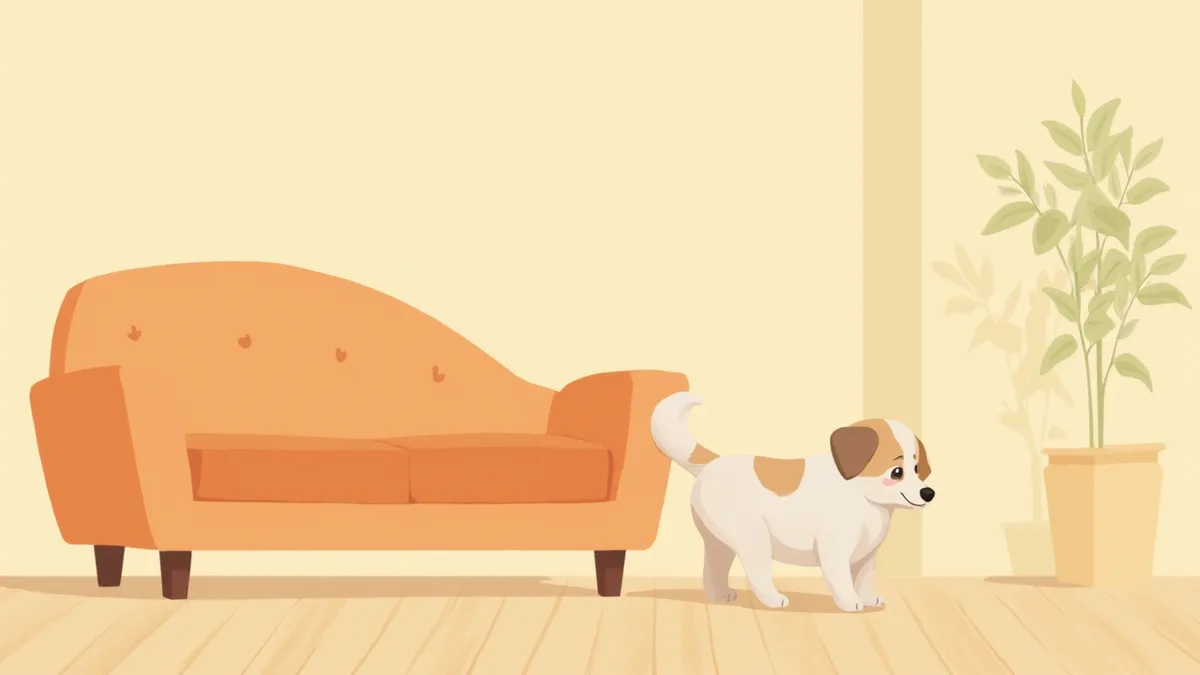
An elderly dog hesitating at the edge of the couch
Joint-support products for senior dogs are tools designed to modify your home environment in order to reduce stress on their joints and muscles. The most important goal is to minimize jumping and slipping. The impact of leaping off sofas or beds, and the twisting motion that occurs when slipping on hardwood floors, places repetitive strain on the joints and can exacerbate existing conditions such as arthritis, cruciate ligament tears, and intervertebral disc disease. The cornerstone of joint health management is combining environmental adjustments with proper weight control and regular veterinary care.

Why Environmental Modification Is Important for Senior Dogs

As dogs age, especially when they reach middle to senior years, their joint cartilage gradually wears down, making them more susceptible to joint diseases. According to veterinary textbooks, factors such as middle to senior age, large and giant breeds, and being overweight or obese are considered risk factors for osteoarthritis. Being overweight or obese increases the load on joints, raising the risk of orthopedic conditions like cruciate ligament tears and osteoarthritis. Additionally, abnormal joint development, such as hip dysplasia, can independently predispose dogs to osteoarthritis, regardless of weight. When combined with slipping on floors or frequently climbing on high furniture, the repetitive strain on joints can become even greater. Supportive products can help reduce this repetitive joint stress.

At-a-Glance Comparison of Four Assistive Products

Let’s first outline the purpose and recommended use cases for each product. The ideal combination will vary depending on your home layout and your pet’s body type and joint condition.

Comparison of Assistive Products for Senior Dogs

ItemNon-slip matDog step (stool)Dog stairs (ramp)Joint-support harness
Main locationLiving room & kitchen floorsFirst tier of sofa & bedSofa, bed & vehicleWalks & stair movement
Recommended body typeAll body typesBrachycephalic & small breedsSmall to mediumMedium to large & hind-limb weakness
Joint strain reliefPrevents slippingCushions jumping impactFully distributes climbing up/downOwner supports the body weight
Installation difficultyEasyVery easyRequires spaceRequires practice to wear

Combined use is the rule — using a mat together with a step/stairs is most effective

Checkpoints for Choosing Non-Slip Mats

Slipping on hardwood or tile floors can put twisting stress on your pet’s knees and hips. This repeated joint strain can accumulate damage to the cartilage and worsen joint health over time. - Material: Choose products with a rubber or silicone-coated backing. Pure PVC tends to slide over time. - Thickness: A thickness of 5mm or more is necessary for effective shock absorption. - Size: Cover the entire path your pet frequently walks. Partial mats can actually become tripping hazards. - Cleaning: Tile-style mats that can be separated for washing are more hygienic.
The paws of an elderly dog standing steadily on a non-slip mat

Immediate Environmental Check Required If You Notice These Signs

If you notice any of the following signs, it’s important to immediately add mats or ramps and consult your veterinarian. Osteoarthritis is an irreversible, progressive condition, and the earlier you improve your pet’s environment and begin management, the longer you can help preserve joint function. - Hind legs slip or skid when standing up - Whining or limping on one leg after jumping - Reluctance to climb stairs or get on/off the sofa as before - Sitting with a tilted posture, favoring one side

Selection Criteria for Jump Pads and Stairs (Ramps)
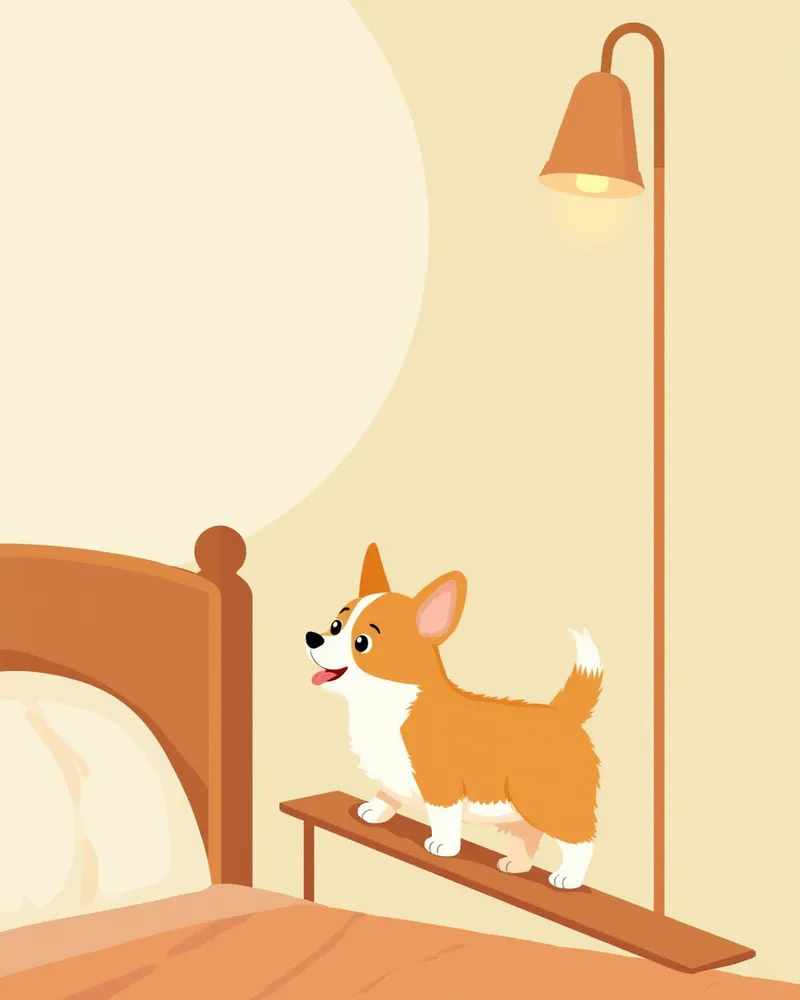
Jump pads are designed to cushion the impact of landing, while stairs and ramps eliminate the need to climb up and down altogether. For pets with existing arthritis or disc disease, a gently sloped ramp is preferable to stairs. - Height: Divide the height of sofas or beds into steps no higher than half the original height. - Slope: Keep ramps at 25 degrees or less; steeper inclines offer little advantage over jumping. - Width: Ensure the width is at least 1.5 times the pet’s body width. - Surface: Carpet or non-slip treatment is essential. Smooth wooden steps provide no benefit.
An elderly dog climbing a gently sloped ramp designed for pets

Tips for Placement by Room in Your Home

When it comes to assistive products, how well they’re integrated into your dog’s daily movement paths matters far more than simply laying them down. - Living room: Connect the area around the sofa to the water and food bowls with a mat. - Bedroom: Place a ramp next to the bed and extend a mat along the path leading to the sleeping area. - Entrance: This is where slips and falls are most common before and after walks. We recommend a short runner-style mat. - Car travel: Use a foldable car ramp to help distribute the strain when getting in and out of the back seat or trunk. If your dog has arthritis or patellar issues, you may also want to read our article on Managing Patellar Luxation in Dogs.

Weight Management Is Also Essential

Even the best supportive products lose half their effectiveness if your dog is overweight. Veterinary research shows that obesity and excess weight increase the load on joints and raise the risk of orthopedic conditions, including osteoarthritis. Therefore, maintaining an ideal body weight is key to joint health. For senior dogs, we recommend regular joint examinations by a veterinarian along with body condition scoring (BCS).

Reviewed by a veterinarian

Dr. Tony — Punnawat Phongkittirak

Dr. Tony — Punnawat Phongkittirak

Veterinarian

A veterinarian who majored in veterinary medicine at Khon Kaen University, Thailand, and completed the IVSA program at North Carolina State University in the United States. Drawing on clinical experience at animal hospitals, he works in the pet healthcare field and is dedicated to building a digital care environment that connects pet parents with veterinarians.

Frequently Asked Questions

Is just laying down a mat enough?
For small dogs that rarely jump and mostly move around on flat surfaces, a mat alone can be very effective. However, if your dog frequently gets on and off sofas or beds, a combination of a mat and a step stool (or ramp) is essential.
At what age should I start preparing assistive products?
Large and giant breed dogs enter middle and senior age earlier than small breeds and are more susceptible to joint diseases, so it's best to start preparing for them sooner than you would for smaller dogs. Osteoarthritis is a condition that progresses gradually long before symptoms become apparent. If you wait until the symptoms are obvious, the cartilage damage may already be quite advanced. Therefore, it's helpful to consider regular health check-ups and environmental improvements in advance.
How do you determine the height of the steps?
When your pet stands on all four legs, anything at or below shoulder height is safe. If the step height exceeds shoulder level, it’s essentially like jumping. Choose a product with two to three steps.
Would it be more effective to take it alongside a joint supplement?
Veterinary textbooks recommend a multimodal approach to managing osteoarthritis, which includes weight management, exercise, diets containing EPA (omega-3), chondroprotectants, and physical rehabilitation. Environmental adjustments are also an important part of this multimodal management. Combining several methods can be more effective than relying on a single approach. Before using joint supplements, consult your veterinarian to choose the most suitable product for your pet.
Won't the mat actually cause them to trip?
Thin mats with raised edges can be hazardous. Opt for a mat that is at least 5mm thick and has a non-slip backing that adheres firmly to the floor, and secure the corners with tape for added safety.

Share

Related Guides

References

[1] Fossum, T.W., Small Animal Surgery, 5th Ed — Chapter on Degenerative Joint Disease and Rehabilitation

[2] Millis, D. & Levine, D., Canine Rehabilitation and Physical Therapy, 2nd Ed — Environmental Modification for Osteoarthritic Dogs

[3] Innes, J. (2009). Getting the elbow: diagnosis and management of elbow disease in dogs. J. Small Anim. Pract. 50: 18–20

[4] Issa, R.I. and Griffin, T.M. (2012). Pathobiology of obesity and osteoarthritis: integrating biomechanics and inflammation. Pathobiol.

This information is based on veterinary literature and does not replace diagnosis or treatment. Please consult a veterinarian for specific health concerns.

Metapet Co., Ltd. | CEO: Park Sung-yong | Business Reg. No. 417-88-02562 | Seoul, South Korea | Customer Center

Joint-Support Gear for Senior Dogs: Pads, Mats & Stairs | Meongsiljang