

Why Do Dogs Mount (Hump), and How Should You Handle It?
Dogs may mount (hump) for reasons beyond sexual behavior, including excitement, stress, and social signaling. We’ve outlined how to address this behavior based on the underlying cause and context, as well as when a vet visit is necessary.
What Is Mounting (Humping) Behavior in Dogs?

Four Main Causes of Mounting Behavior
Table of Mounting Causes by Situation
| Item | Sexual Behavior | Excitement/Arousal | Stress Relief | Social Signal |
|---|---|---|---|---|
| Main situation | Near the heat cycle | Guest visits/play | Unfamiliar environment/conflict | Competition over resources/space |
| Target | Other dogs (usually the opposite sex) | People's legs/stuffed toys | Cushions/blankets | Other dogs |
| Accompanying behavior | Sniffing/pacing | Panting/jumping | Yawning/body shaking | Tail raised/staring |
| Direction of response | Neutering consultation | Lowering arousal | Removing the stress cause | Behavior correction consultation |
Multiple causes often overlap, so an accurate assessment requires consultation with a veterinarian or behavior specialist
How to Distinguish Normal vs. Problematic Mounting

When to Definitely Visit the Vet
A sudden surge in mounting behavior, persistent licking of the genital area, redness or discharge, or accompanying urinary or bowel issues may indicate more than just a behavioral problem. Underlying medical causes could include prostate disease, urinary tract infections, dermatitis, hormonal imbalances, or even obsessive-compulsive disorder. Ruling out medical causes should always come before behavioral modification.
How to Handle Each Situation — Do This
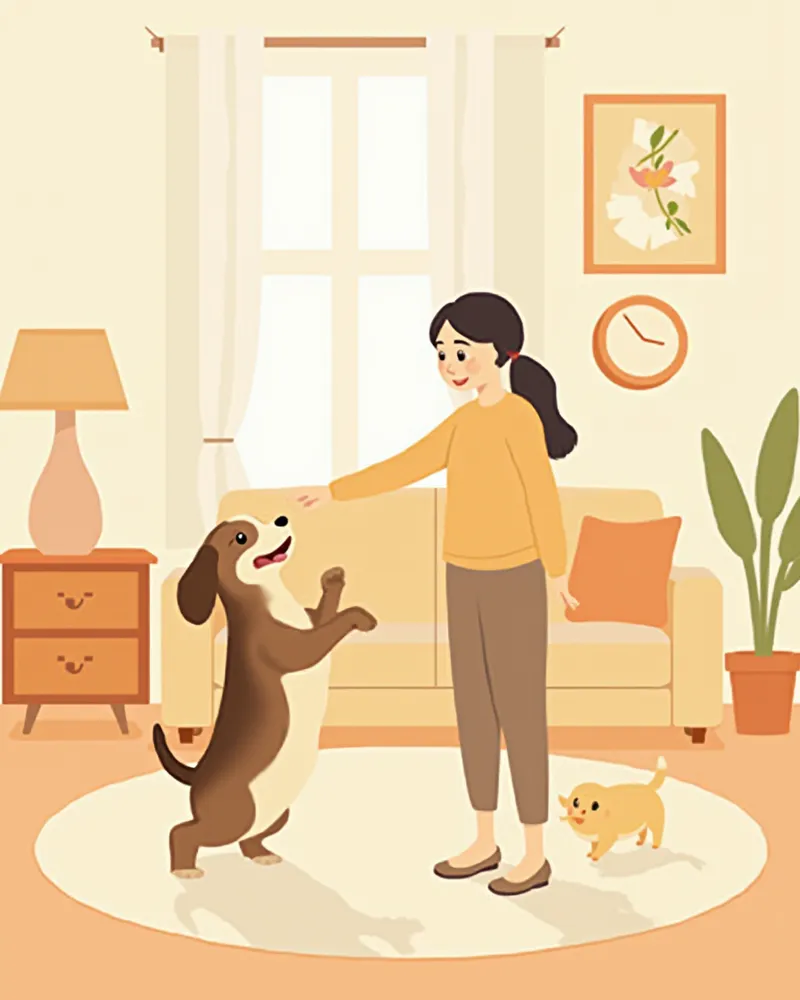
Is Neutering the Solution?
Mounting driven by sexual behavior often decreases after neutering, but if it has become a learned habit or stems from stress or excitement, neutering alone won’t resolve the issue. According to veterinary behavior textbooks, a significant proportion of pets continue to mount even after neutering, so it’s best to thoroughly discuss the underlying causes with your veterinarian before deciding on surgery.
Three Steps for Correction at Home
Reviewed by a veterinarian

Dr. Tony — Punnawat Phongkittirak
VeterinarianA veterinarian who majored in veterinary medicine at Khon Kaen University, Thailand, and completed the IVSA program at North Carolina State University in the United States. Drawing on clinical experience at animal hospitals, he works in the pet healthcare field and is dedicated to building a digital care environment that connects pet parents with veterinarians.
Reviewed 2026-04-23
Frequently Asked Questions
Do female dogs also exhibit mounting behavior?
Is it okay to scold my pet when it jumps onto my legs?
Does neutering immediately stop mounting behavior?
Does compulsive repetitive behavior require medication?
Is it a problem if a young puppy mounts?
Share
Related Guides
7 Behavioral Enrichment Strategies for Mental Stimulation Recommended by Veterinarians

Top 5 Calming Supplements for Dogs and Cats in 2026

L-Theanine Effects and Calming Support
What is feline hepatic failure? — Emergency Q&A to not miss the golden time
What is urine specific gravity in dogs? — How to assess kidney function
Why Get a Kidney Ultrasound for Your Dog? — When to Test and What It Reveals

Should You Feed Prescription Renal Diets to Dogs? — Effects and Feeding Guidelines

What Are Kidney Tumors in Dogs? — How to Spot Early Symptoms

Is Even One Grape Dangerous for Dogs? — Q&A on Raisin Poisoning Symptoms and Emergency Response

Early Screening for Kidney Function in Dogs (SDMA) — Why It’s Needed and When to Get It
References
[1] Horwitz D, Mills D. BSAVA Manual of Canine and Feline Behavioural Medicine, 2nd Edition
[2] Landsberg G, Hunthausen W, Ackerman L. Behavior Problems of the Dog and Cat, 3rd Edition
[3] Bain M, Fan C. Canine Aggression and Social Behavior, 2012