
Post-Surgery Follow-Up Exams: When and What to Check — Key Timing and Items
Post-surgery follow-up exams are essential for monitoring recovery and detecting complications early. Here’s a summary of the tests and precautions for each stage.
What Are Post-Surgery Follow-Up Exams?
Why Are Follow-Up Exams Essential?
Follow-Up Schedule by Surgery Type
| Item | Soft tissue surgery | Orthopedic surgery | Tumor removal surgery |
|---|---|---|---|
| 1st checkup | 10–14 days post-op (suture removal) | 10–14 days post-op (suture removal) | 10–14 days post-op (suture removal) |
| 2nd checkup | 1 month | 4–6 weeks (X-ray) | 1 month |
| 3rd checkup | 3 months | 8–12 weeks (X-ray) | 3 months (imaging) |
| Long-term follow-up | If needed | 6 months, 1 year (X-ray) | Every 6 months for 2+ years |
| Key tests | Blood test, ultrasound | Radiography, joint evaluation | Blood test, CT, ultrasound |
The attending veterinarian adjusts the schedule according to individual condition
Items to Check at Each Stage
See These Signs? Visit the Vet Before Your Scheduled Appointment
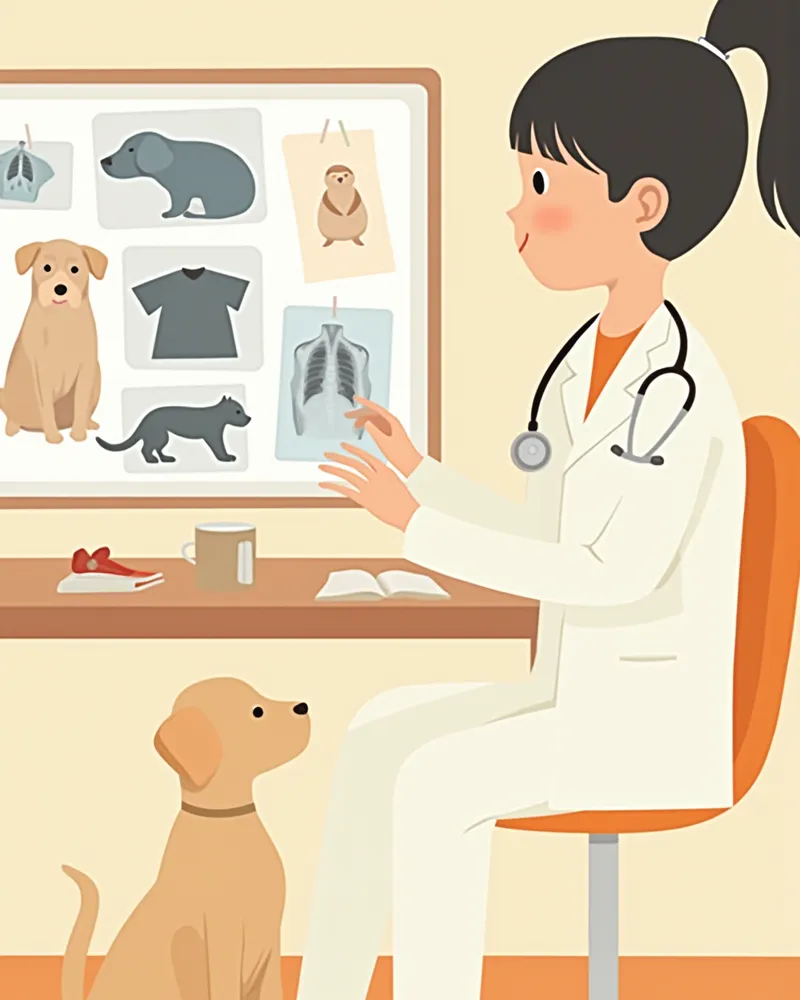
- Swelling, discharge, or pus at the surgical site - Persistent loss of appetite, vomiting, or diarrhea after surgery - Continuous licking or chewing at the surgical site - Worsening limping (in cases of orthopedic surgery) - Labored breathing or pale gums Do not wait for your scheduled follow-up appointment; please bring your pet in immediately.
Essential Tests During Follow-Up Exams
What to Manage at Home
Long-Term Monitoring Is Essential for Tumor Surgery and Senior Pets
After malignant tumor removal, long-term regular check-ups for recurrence and metastasis are necessary, depending on the tumor type and stage. The safest approach is to work with your veterinarian to create an individualized follow-up plan, as tailoring the schedule to your pet’s specific condition is more important than adhering to a one-size-fits-all timeline. Senior animals often recover more slowly and are more prone to revealing underlying health issues, so closer monitoring is recommended after surgery. Be sure to mark your check-up dates on your calendar in advance so you don’t miss any appointments.
Reviewed by a veterinarian

Dr. Tony — Punnawat Phongkittirak
VeterinarianA veterinarian who majored in veterinary medicine at Khon Kaen University, Thailand, and completed the IVSA program at North Carolina State University in the United States. Drawing on clinical experience at animal hospitals, he works in the pet healthcare field and is dedicated to building a digital care environment that connects pet parents with veterinarians.
Reviewed 2026-04-26
Frequently Asked Questions
Should I still bring my pet in for a follow-up checkup even if they seem perfectly fine?
How much does a follow-up checkup usually cost?
What happens if I miss a follow-up checkup?
Is it okay to have follow-up exams at a different veterinary clinic?
Do cats have different follow-up checkup schedules compared to dogs?
Share
Related Guides

Primary vs. Secondary Veterinary Hospitals: A Comparison

5 Easy-to-Raise Cat Breeds for First-Time Owners — Grooming Difficulty Comparison

Top 7 Short-Legged Dog Breeds

Feline Enamel Hypoplasia FAQ — Key Information Every Pet Owner Should Know

Frequently Asked Questions About Feline Dental Scaling and Tartar Removal — Key Points Every Pet Owner Should Know
Frequently Asked Questions About Feline Dental Radiography — Key Information for Pet Owners

Frequently Asked Questions About Preventive Dental Treats and Chews for Cats — Key Points Every Owner Should Know

Frequently Asked Questions on Preventing Feline Tartar and Plaque — Key Information Every Pet Owner Should Know

Feline Oral Abscess & Root Abscess FAQ — Key Information Every Pet Owner Should Know

Frequently Asked Questions About Cleft Palate in Cats — Key Information for Pet Owners
References
[1] Fossum TW. Preoperative and intraoperative care of the surgical patient. In: Small Animal Surgery, 5th ed. Elsevier; 2019
[2] Grimm KA et al. Veterinary Anesthesia and Analgesia, 5th ed. Wiley-Blackwell; 2015
[3] Hosgood G, Scholl DT. Evaluation of age as a risk factor for perianesthetic morbidity and mortality in the dog. J Vet Emerg Crit Care. 1998;8(3):222-36
[4] Reader RC, McCarthy RJ et al. Comparison of liposomal bupivacaine for postoperative pain in dogs undergoing TPLO. J Am Vet Med Assoc. 2020;256:1011-19