
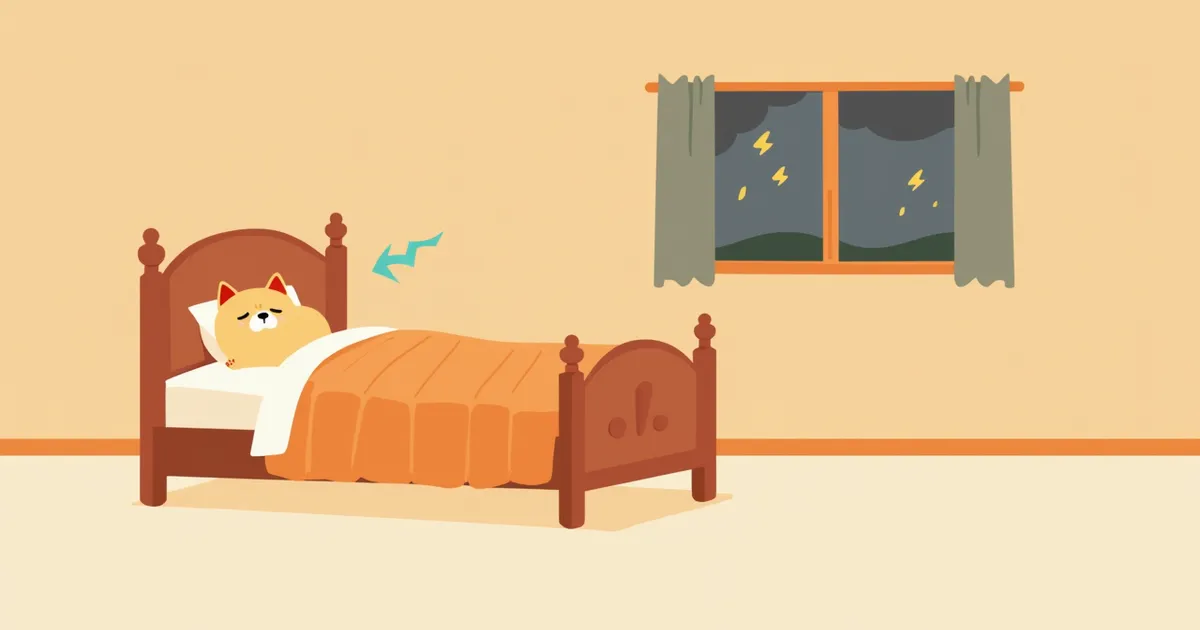
Our Dog Trembles at Thunder and Fireworks — Is It Noise Phobia?
Canine noise phobia is a behavioral issue where dogs exhibit excessive fear responses to loud noises such as thunderstorms and fireworks. We’ve compiled the most frequently asked questions from pet owners along with evidence-based veterinary answers in one place.
What Is Canine Noise Phobia?
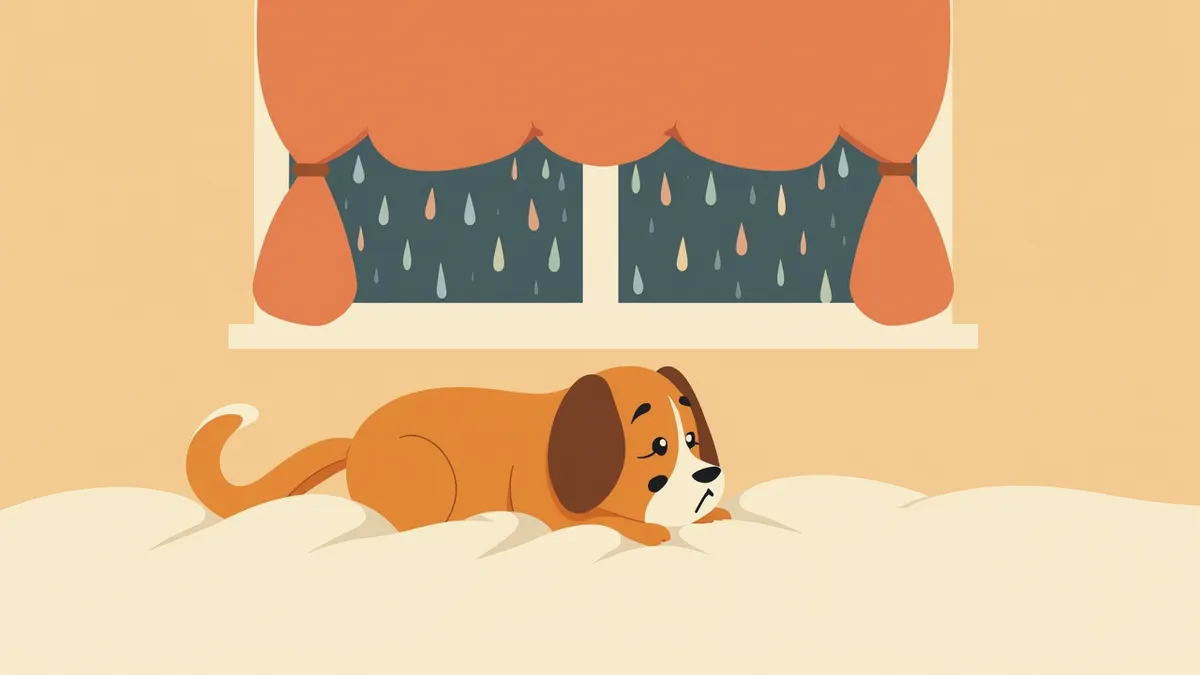
What Symptoms of Noise Phobia Appear?
Comparing Severity Levels of Noise Phobia
| Item | Mild | Moderate | Severe |
|---|---|---|---|
| Main reactions | Ears pinned back, lightly hiding | Persistent barking, severe trembling | Self-harm, escape attempts, incontinence |
| Duration | Mainly only while the noise is heard | Anxiety may continue before and after the noise | Anxiety persists long after the noise stops |
| Impact on daily life | Almost none | Reduced appetite, disrupted sleep | Extreme functional decline |
| Recommended measures | Environmental management, safe space | Behavioral training, veterinary consultation | Immediate veterinary consultation, consider medication |
It's best to have severity accurately assessed through veterinary consultation.
Why Are Noises So Scary? Understanding the Causes

When to Go to the Vet Immediately
If your pet reacts to loud noises by crashing into furniture, doors, or windows, or exhibits self-harming behavior, seek veterinary care immediately. If these symptoms are accompanied by difficulty breathing, vomiting, or incontinence, or if anxiety persists even in the absence of loud noises, it could indicate an anxiety disorder or an underlying painful condition, so prompt veterinary evaluation is essential.
Three Management Methods You Can Do at Home Right Away

When to Consider Behavior Modification Training and Medication
The Hidden Link Between Noise Phobia and Joint/Muscle Pain
According to veterinary behavior research, some dogs with noise phobia also experience joint or muscle pain. When loud noises occur, sudden muscle tension can be associated with pain, leading the dog to fear the noise itself. If your dog’s noise phobia developed suddenly in middle age or is particularly severe in specific locations, consider having an orthopedic examination as well.
How to Handle Walks and Outings for Dogs with Noise Phobia

Reviewed by a veterinarian

Dr. Tony — Punnawat Phongkittirak
VeterinarianA veterinarian who majored in veterinary medicine at Khon Kaen University, Thailand, and completed the IVSA program at North Carolina State University in the United States. Drawing on clinical experience at animal hospitals, he works in the pet healthcare field and is dedicated to building a digital care environment that connects pet parents with veterinarians.
Reviewed 2026-06-01
Frequently Asked Questions
Will my dog’s noise phobia naturally improve as they get older?
Should you always hug a scared dog?
Do compression vests (like ThunderShirts) actually work?
Is it safe to use medication for my dog’s noise phobia?
Is there anything we can prepare in advance before the holidays when there are lots of fireworks?
Share
Related Guides

7 Behavioral Enrichment Strategies for Mental Stimulation Recommended by Veterinarians

Top 5 Calming Supplements for Dogs and Cats in 2026

L-Theanine Effects and Calming Support
Why Does My Cat Wake Me Up at Dawn? — Causes of Sleep Disruption and the Right Time to Act

Cat Suddenly Biting and Scratching — Causes and Correction of Play Aggression

My Cat Keeps Licking Themselves — Is Excessive Grooming Normal?
Cats Keep Fighting — Causes and Intervention Timing for Multi-Cat Household Conflicts
What is feline pheromone therapy? — Does it really work? A guide to its effects and usage

What is feline cognitive dysfunction? — Early signs of feline dementia

Why Is My Cat Suddenly Aggressive? — Causes and Management of Fear-Based Aggression
References
[1] Bowen, J. 'The frightened dog.' In: Bishop, R. (ed.) 100 Top Consultations in Small Animal General Practice. Wiley-Blackwell, 2010.
[2] Lopes Fagundes, A.L., Hewison, L., McPeake, K.J. et al. (2018). Noise sensitivities in dogs: An exploration of signs in dogs with and without musculoskeletal pain using qualitative content analysis. Front. Vet. Sci. 5: 17.
[3] Korpivaara, M., Laapas, K., Huhtinen, M. et al. (2017). Dexmedetomidine oromucosal gel for noise-associated acute anxiety and fear in dogs—a randomised, double-blind, placebo-controlled clinical study. Vet. Rec. 180(14): 356.
[4] Cottam, N., Dodman, N.H., and Ha, J.C. (2013). The effectiveness of the anxiety wrap in the treatment of canine thunderstorm phobia: an open-label trial. J. Vet. Behav. 8(2): 154–161.
[5] Shaw, J.K. and Martin, D. (eds.) Canine and Feline Behavior for Veterinary Technicians and Nurses. Wiley-Blackwell, 2015.