
Like
Share
멍실장
강아지 혈우병 유전과 관리 — 증상부터 평생 케어까지

What Is Hemophilia in Dogs? — Warning Signs of Bruising and Bleeding, and Lifelong Management

ImmunityQ&AMeongsiljang Veterinary Advisory Board

We’ve put together an easy-to-understand guide for pet owners on the genetics, main symptoms, emergency response, and lifelong management of hemophilia in dogs.

What Is Hemophilia in Dogs?

An illustration of a veterinarian gently examining a puppy's gums
Hemophilia in dogs is a hereditary bleeding disorder caused by a congenital deficiency of clotting factors (Factor VIII or IX), which means that even minor wounds may result in prolonged bleeding. The most critical aspects are early diagnosis and lifelong management. If your dog experiences recurrent gum bleeding or frequent subcutaneous bruising (hematomas), do not delay—consult your veterinarian for coagulation and genetic testing. A cure is generally not available, and prognosis varies significantly depending on disease severity and breed. In cases of severe hemophilia, survival to adulthood is unlikely without appropriate treatment and care, making it essential to work closely with your veterinarian to develop a long-term management plan tailored to your dog’s individual needs.

Why Does It Occur? — Understanding the Inheritance Pattern

Hemophilia is primarily an X-linked recessive disorder. As a result, male dogs (XY) typically exhibit clear clinical signs, while female dogs (XX) are usually asymptomatic carriers. If the mother is a carrier, half of her male offspring will be born with hemophilia. According to veterinary internal medicine textbooks, the condition arises when mutations prevent the proper production of coagulation factor genes, disrupting the hemostatic pathway and leading to prolonged bleeding.

Comparison of Hemophilia A vs. Hemophilia B

ItemHemophilia AHemophilia B
Deficient clotting factorFactor VIIIFactor IX
IncidenceMore commonRelatively rare
Mode of inheritanceX-linked recessive inheritanceX-linked recessive inheritance
Symptom severityVaries from mild to severeVaries from mild to severe
Frequently reported breedsGerman Shepherd, Golden Retriever, etc.Labrador, Cairn Terrier, etc.
Main diagnosisCoagulation test + Factor VIII activityCoagulation test + Factor IX activity

Breeds are based on reported cases and vary greatly between individuals. The exact type is confirmed through blood and genetic testing.

Suspect Hemophilia If You See These Signs

Hemophilia is characterized by prolonged bleeding even after minor trauma. Gingival bleeding: Bleeding occurs during chewing or while eating treats and does not stop easily. Subcutaneous hematoma: Swelling resembling a bruise or lump appears without any impact or injury. Bone and soft tissue hematoma: In severe cases, hematomas may form in bones or soft tissues, causing swelling or limping. Epistaxis and gastrointestinal bleeding: Spontaneous nosebleeds or the presence of blood in stool or vomit may be observed. Excessive bleeding after surgery, vaccination, or trauma: Prolonged bleeding may occur at sites of neutering, tooth extraction, or injections. If your puppy repeatedly shows these signs, suspect hemophilia and consult your veterinarian.
An illustration showing a pet owner carefully examining a hematoma on their dog's paw.

Go to the Vet Immediately in These Cases!

The following situations can be life-threatening for a puppy with hemophilia. Do not hesitate; seek immediate care at a veterinary clinic, or an emergency animal hospital if it is nighttime. • External bleeding that does not stop after 10 minutes • Gums and tongue becoming progressively pale, accompanied by lethargy • Abdominal distension and difficulty breathing (suspected internal bleeding) • Altered consciousness following head or neck trauma • Sudden, severe joint swelling and intense limping

How Is It Diagnosed and Treated?
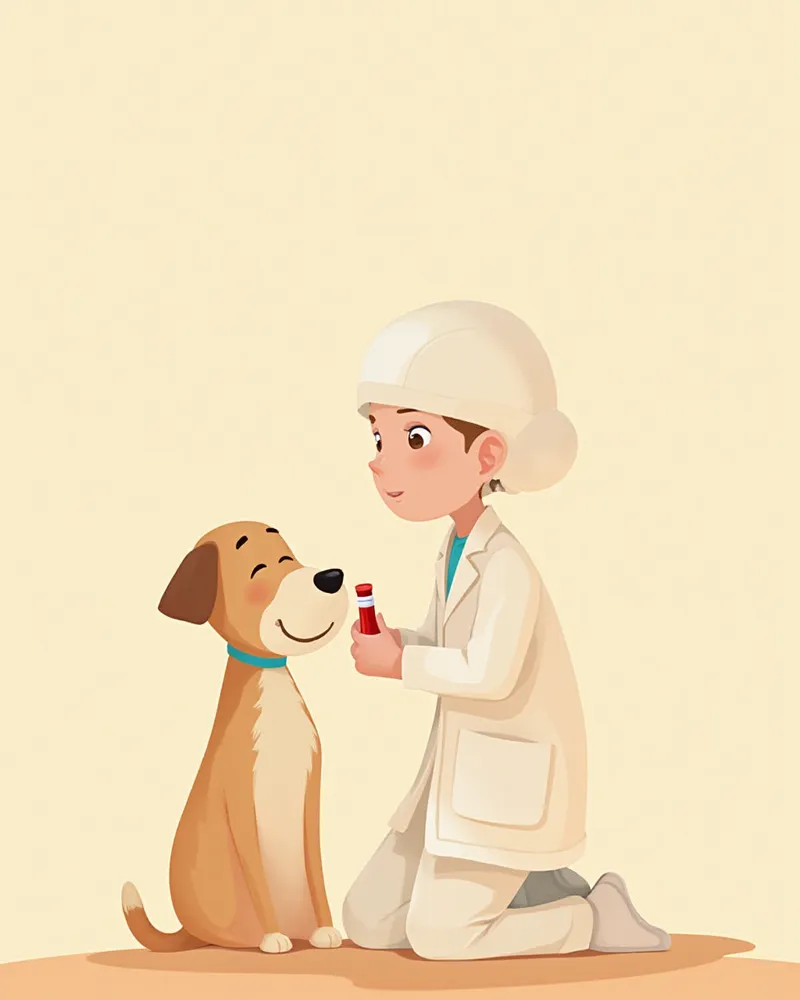
Diagnosis is carried out step by step. First, blood coagulation tests (PT and aPTT) are performed to check for abnormalities in the coagulation pathways. If any issues are found, factor VIII and factor IX activity tests are used to distinguish between hemophilia A and hemophilia B. In certain breeds, genetic testing can even determine carrier status. The core principle of treatment is to replace the deficient clotting factors and stop bleeding. In cases of emergency bleeding, fresh frozen plasma or whole blood transfusions are administered to supply clotting factors. The specific transfusion volume and frequency are determined by the veterinarian based on the patient’s body weight and severity of condition.
Illustration of a veterinary clinic preparing a coagulation test using a puppy’s blood sample

How to Manage at Home

Living with hemophilia means making “bleed-free living” a lifelong priority.
Minimize trauma: Use rugs on slippery floors and keep walks safe with a short leash.
Limit rough play: Keep tug, jumping, and wrestling games gentle.
Avoid sharp toys: Bones and hard chews can cause gum bleeding.
Medication caution: Never give pain relievers or anti-inflammatories without a veterinarian’s prescription.
Share diagnosis before procedures: Always carry your dog’s hemophilia diagnosis when visiting the vet for surgery or dental work.
Regular check-ups: Follow your vet’s recommendations for routine monitoring of anemia and clotting status.
Small daily habits add up to prevent major bleeding episodes.

Breeding Dogs with Hemophilia Requires Caution

Using carrier females or hemophiliac males for breeding will pass the genes directly to the next generation. To preserve the health of the breed, decisions about breeding with genetically tested individuals should be made after thorough consultation with a veterinarian and professional breeder. If your dog is a companion pet, you may also consider spaying or neutering.

Reviewed by a veterinarian

Dr. Tony — Punnawat Phongkittirak

Dr. Tony — Punnawat Phongkittirak

Veterinarian

A veterinarian who majored in veterinary medicine at Khon Kaen University, Thailand, and completed the IVSA program at North Carolina State University in the United States. Drawing on clinical experience at animal hospitals, he works in the pet healthcare field and is dedicated to building a digital care environment that connects pet parents with veterinarians.

Frequently Asked Questions

Can hemophilia in dogs be cured?
Since this is a genetic disorder, a complete cure is not possible. The prognosis varies significantly depending on the severity of the condition and the dog’s breed. In cases of severe hemophilia, dogs may not survive to adulthood without proper management. The most important factor in improving quality of life is working closely with your veterinarian to develop a long-term care plan tailored to your dog’s individual needs and responding promptly to any bleeding episodes.
Can female dogs get hemophilia?
Yes, it is possible. However, female cats often remain carriers if only one of their two X chromosomes carries the mutation, and symptoms typically become apparent only when both X chromosomes are affected. As a result, the condition is less common in females than in males.
Is it safe to have my pet spayed or neutered?
If the diagnosis is confirmed, we assess the coagulation status beforehand and have plasma ready if needed. It’s safer to perform the procedure at a secondary care facility equipped for blood transfusions and emergency care, rather than at a general clinic.
Should I avoid giving pain medication?
Aspirin and certain pain relievers can inhibit platelet function, potentially worsening bleeding. Never give your pet human medications, and only use any medication under a veterinarian’s prescription.
Which dog breeds are most commonly affected by hemophilia?
It is well-documented in German Shepherds (Hemophilia A), and cases have also been reported in various other breeds. Regardless of breed, if your pet exhibits a recurring tendency to bleed, it is advisable to undergo coagulation testing.

Share

Related Guides

References

[1] Ettinger, Feldman, Cote, Textbook of Veterinary Internal Medicine, 8th Ed, Chapter on Hemostatic Disorders

[2] Weiss, Wardrop, Schalm's Veterinary Hematology, 6th Ed, Inherited Coagulation Disorders

[3] Silverstein, Hopper, Small Animal Critical Care Medicine, 3rd Ed, Bleeding Disorders

This information is based on veterinary literature and does not replace diagnosis or treatment. Please consult a veterinarian for specific health concerns.

Metapet Co., Ltd. | CEO: Park Sung-yong | Business Reg. No. 417-88-02562 | Seoul, South Korea | Customer Center

Hemophilia in Dogs: Bruising, Bleeding Signs & Lifelong Care | Meongsiljang