
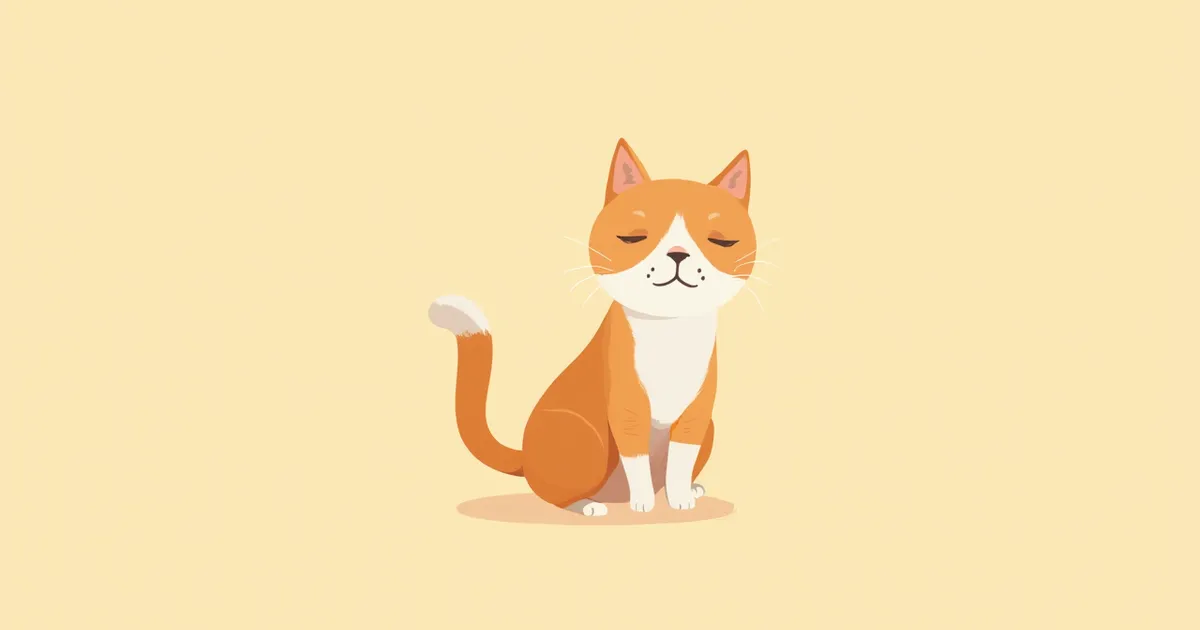
The Ultimate Guide to Interpreting 12 Cat Tail Signals
A cat’s tail is a key indicator of its emotions and health. We’ve summarized the meanings behind 12 different tail positions and movements, along with warning signs that indicate it’s time to visit the vet.
What Are Cat Tail Signals?

12 Basic Signals Conveyed by the Tail
Meanings of 12 Tail Positions and Shapes
| Item | Meaning | Accompanying signals |
|---|---|---|
| ① Held straight up | Gladness & closeness | Purring, approaching |
| ② Only the tip slightly curved | Fondness & interest | Eye contact, slow blinking |
| ③ Question-mark (?) shape | Let's play & friendly curiosity | Light footsteps |
| ④ Held low | Fear & defensive state | Crouching, wary gaze |
| ⑤ Tucked between the legs | Fear & submission | Ears pinned back |
| ⑥ Puffed up (raised fur) | Extreme tension & threat | Arched back, hissing |
| ⑦ Swishing rapidly | Irritation & warning | Dilated pupils |
| ⑧ Only the tip twitching | Focus & hunting instinct | Low posture, staring |
| ⑨ Wrapped around the body | Security & comfort (expressing closeness and bonding) | Eyes closed, relaxed posture |
| ⑩ Held horizontal + raised fur | Ready to attack | Baring teeth |
| ⑪ Limp and drooping (no response) | Suspected pain or nerve damage | Reduced appetite |
| ⑫ No movement, drooping | Possible illness or emergency | Lethargy, hiding |
Signals should be read together using all four elements—tail + ears + pupils + posture—not in isolation, for accuracy
A Closer Look at 3 Commonly Confused Signals

Tail Signals That Require an Immediate Vet Visit
If your cat's tail suddenly droops and becomes immobile, or if it shows severe pain when touched, it may indicate a neurological issue affecting the tail or surrounding nerves. In such cases, abnormalities in urination and defecation may also occur, so these functions should be monitored closely. If your cat is unable to urinate, limps on its hind legs, or exhibits changes in tail sensation, prompt neurological evaluation by a veterinarian is essential. This can be an emergency even without any history of trauma.
How to Become an Owner Who Reads Tail Signals Well

Keep in Mind Tail Differences by Breed and Age
Tail Chasing and Biting Behaviors May Be a Medical Condition
If your cat repeatedly chases its tail or bites it to the point of injury, it could be a sign of Feline Hyperesthesia Syndrome or a compulsive disorder. Since these behaviors may stem from skin irritation, fleas, or neurological issues, it’s important not to dismiss them as mere behavioral problems. Instead, have your cat evaluated for both skin and neurological conditions.
Reviewed by a veterinarian

Dr. Tony — Punnawat Phongkittirak
VeterinarianA veterinarian who majored in veterinary medicine at Khon Kaen University, Thailand, and completed the IVSA program at North Carolina State University in the United States. Drawing on clinical experience at animal hospitals, he works in the pet healthcare field and is dedicated to building a digital care environment that connects pet parents with veterinarians.
Reviewed 2026-04-23
Frequently Asked Questions
Does a cat wagging its tail quickly mean it’s in a good mood?
What should you do when your dog’s tail forms a question mark shape?
Should I scold my dog if it tucks its tail between its legs?
What does it mean when only the tip of the tail twitches?
My pet’s tail is hanging limply, which is unusual for them. Should I be concerned?
Share
Related Guides

7 Behavioral Enrichment Strategies for Mental Stimulation Recommended by Veterinarians

Top 5 Calming Supplements for Dogs and Cats in 2026

L-Theanine Effects and Calming Support

Frequently Asked Questions About Feline Chronic Rhinitis and Nasal Discharge — Key Information Every Pet Owner Should Know
Feline Bronchodilators FAQ — Key Points Pet Owners Must Know
Frequently Asked Questions About Feline Aspiration Pneumonia — Key Information for Pet Owners

Dog Spay and Neuter Pros and Cons FAQ — Key Points Every Pet Owner Should Know
Dog Regular Blood Test Items FAQ — Key Points Pet Owners Must Know
Frequently Asked Questions About Puppy Rabies Vaccination — Key Information Every Owner Must Know

Dog Nail Care FAQ — Key Points Every Owner Must Know
References
[1] Little, S.E. (Ed.), The Cat: Clinical Medicine and Management, 2nd Edition, Elsevier, 2020
[2] Turner, D.C. & Bateson, P., The Domestic Cat: The Biology of its Behaviour, 3rd Edition, Cambridge University Press, 2014
[3] Bradshaw, J.W.S., Cat Sense: How the New Feline Science Can Make You a Better Friend to Your Pet, Basic Books, 2013