Like
Share
멍실장
고양이 신장 낭종 자주 묻는 질문 Q&A — 보호자가 꼭 알아야 할 핵심

Are Feline Renal Cysts Dangerous? — From Causes and Symptoms to When to Visit the Vet

KidneyQ&AMeongsiljang Veterinary Advisory Board

Feline renal cysts are typically asymptomatic, but they can impair kidney function as they grow in size. Early detection through regular check-ups and ultrasound examinations is essential.

What Are Feline Renal Cysts?
An anatomical illustration showing a cyst within a cat's kidney
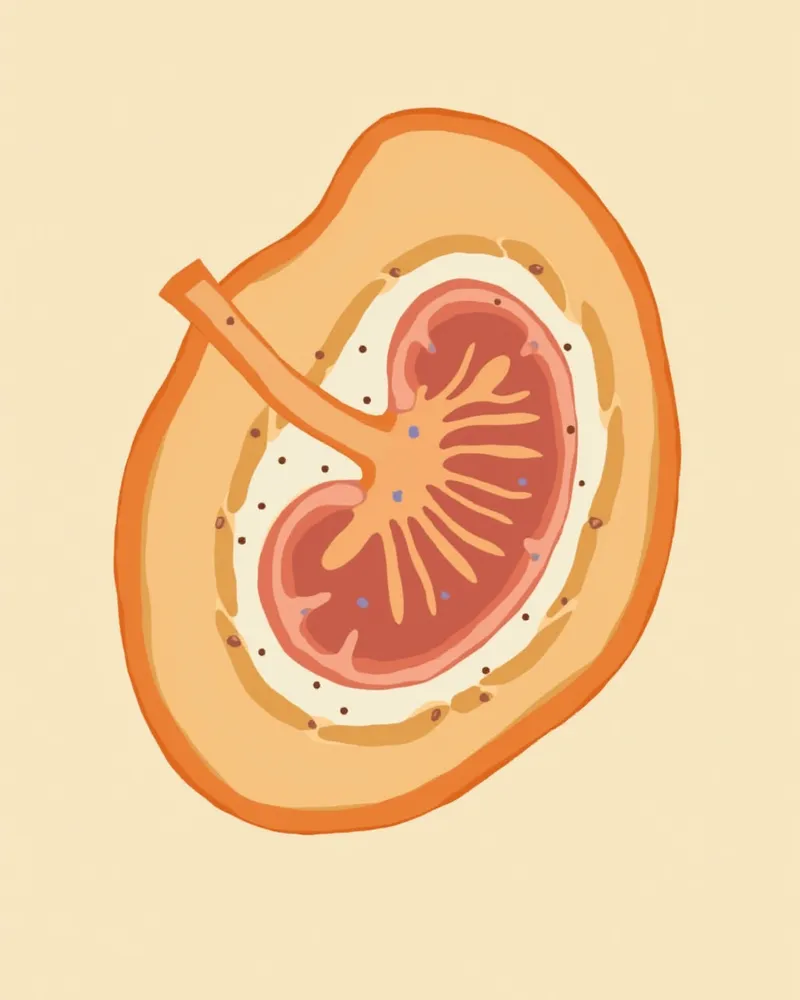
Feline renal cysts are fluid-filled, sac-like lesions within the kidneys. - Renal cysts: Most develop due to aging or genetic factors and are largely asymptomatic in the early stages. - Asymptomatic nature: Small cysts typically do not affect kidney function. However, as they grow, they can compress surrounding renal tissue, potentially leading to functional decline. - Importance of early detection: Veterinarians often identify these cysts through ultrasound examinations. - Regular monitoring is essential: Consistently tracking the size and changes in the lesions is crucial. Early detection and ongoing management are key to maintaining your cat’s health and quality of life.

Why Do Cats Develop Renal Cysts?

Among feline renal cysts, polycystic kidney disease (PKD) is most well-known for its genetic origin. It is inherited in an autosomal dominant manner due to mutations in the PKD1 gene, particularly in Persian cats and those with Persian lineage. Although the exact mechanism of cyst formation has not been fully elucidated, the leading theory suggests that the genetic mutation triggers apoptosis (programmed cell death) in renal parenchymal cells, leading to the proliferation of cystic epithelial cells and the development of multiple cysts of varying sizes. Persian cats often appear normal as kittens but frequently develop enlarged kidneys and chronic kidney disease as they reach adulthood. In contrast, solitary cysts are mostly benign lesions discovered incidentally and generally do not require major concern; however, if they grow large enough to compress surrounding tissues, careful monitoring is necessary.
Cystic structures within feline renal tissue as seen under a microscope

What Are the Main Symptoms of Renal Cysts?

Most feline kidney cysts are asymptomatic. However, if a cyst grows large, the following signs may appear. By the time symptoms manifest, kidney function is likely already compromised. Regular veterinary check-ups are essential for early detection.
Excessive water consumption: As kidney function declines due to the cyst, your cat will drink more water.
Frequent urination: Urine volume increases, leading to more frequent trips to the litter box.
Weight loss: Muscle mass decreases and appetite diminishes.
Lethargy: Your cat may rest or remain inactive for most of the day.
Vomiting or nausea: This may result from toxin buildup caused by impaired kidney function.

Signs Requiring Immediate Veterinary Care

If your cat suddenly loses its appetite, vomits repeatedly, stops urinating, breathes rapidly, or collapses, seek veterinary care immediately. These symptoms may indicate that a cyst has grown significantly, causing a rapid decline in kidney function or leading to complications. Prompt action can save your cat’s life.

What Tests Are Needed for an Accurate Diagnosis?
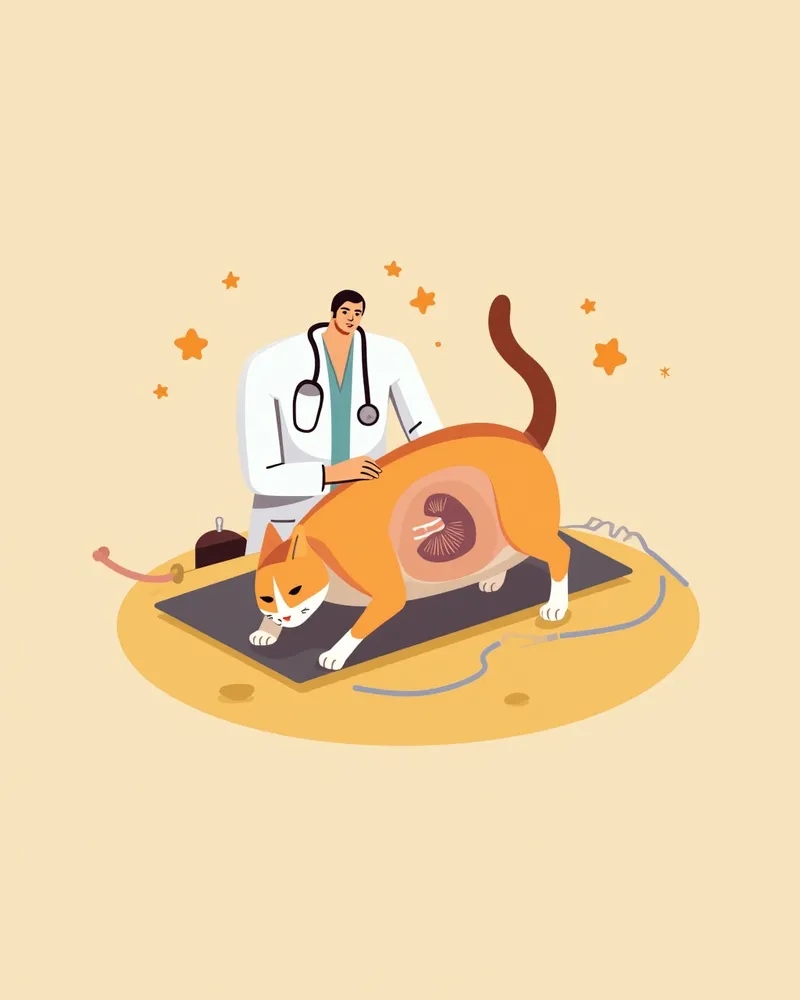
Renal cysts are most accurately diagnosed via ultrasound. On ultrasound, cysts appear as round, anechoic (dark) lesions, allowing for precise assessment of their size, location, and shape. In polycystic kidney disease, multiple cysts of varying sizes are visible throughout the renal parenchyma and may enlarge over time. Blood and urine tests help evaluate kidney function. In breeds with genetic risk, such as Persians, combining genetic testing with ultrasound improves diagnostic sensitivity and specificity. However, even if no cysts are detected at a young age, this does not guarantee they will not develop later; therefore, regular monitoring for changes is essential as recommended by your veterinarian.
A veterinarian diagnosing a cat’s kidney cyst using ultrasound.

What Are the Treatment Options?

Small cysts are usually asymptomatic, so we often just monitor them for any changes in size. - Observation and monitoring: If the cyst is small, stable, and not affecting kidney function, we’ll keep an eye on it through regular check-ups. - When treatment is needed: Treatment may be considered if the cyst grows large enough to severely compress surrounding tissues or causes pain due to stretching of the capsule. - Drainage procedure: In such cases, we can perform drainage to remove the fluid from the cyst under ultrasound guidance. Infected cysts can be more challenging to treat, so extra caution is required. - Personalized care plan: We’ll work with you to determine the best treatment approach based on your cat’s specific condition. - Long-term management focus: Since polycystic kidney disease can progress into chronic kidney disease, ongoing monitoring and care are essential.
A veterinarian administering medication to a cat.

Comparison of Management Strategies by Stage of Renal Cysts

ItemCyst StatusMain SymptomsManagement Method
MildSmall, stable, with little changeAsymptomaticObserve changes with regular ultrasound checkups
ModerateGradually enlarges over timeIncreased drinking/urination when kidney function declinesRegular evaluation and monitoring of kidney function and blood pressure
SevereGrows large, compressing surrounding tissue/capsular painSigns of chronic kidney disease such as weight loss, vomiting, fatigueConsider treatment such as ultrasound-guided drainage

Stage-based management should be decided based on consultation with a veterinarian.

Points to Note: Causes of Cyst Growth

Kidney cysts in cats can grow larger over time, although the exact mechanism behind this growth is not yet fully understood. Cats with polycystic kidney disease may develop chronic kidney disease as they age, and this progression is often accompanied by high blood pressure. Therefore, cats with kidney cysts should undergo regular kidney function tests and blood pressure monitoring, and any diagnosed high blood pressure must be treated actively. Neglecting proper management can lead to a rapid decline in kidney function.

Reviewed by a veterinarian

Dr. Tony — Punnawat Phongkittirak

Dr. Tony — Punnawat Phongkittirak

Veterinarian

A veterinarian who majored in veterinary medicine at Khon Kaen University, Thailand, and completed the IVSA program at North Carolina State University in the United States. Drawing on clinical experience at animal hospitals, he works in the pet healthcare field and is dedicated to building a digital care environment that connects pet parents with veterinarians.

Frequently Asked Questions

Are kidney cysts in cats malignant?
Most kidney cysts are benign, and malignant transformation is very rare. However, if they grow large, they can compress surrounding kidney tissue and impair kidney function.
Are kidney cysts hereditary?
Polycystic kidney disease (PKD) in Persian and Persian-descended cats is an autosomal dominant genetic disorder caused by mutations in the PKD1 gene. If a parent carries the mutation, it can be passed on to offspring, and genetic testing can confirm the presence of the mutation. However, solitary cysts are usually benign lesions discovered incidentally.
How often should regular check-ups be performed?
For senior cats, it’s a good idea to check kidney health with regular ultrasounds and blood and urine tests. For breeds with genetic risks, such as Persians, we recommend combining ultrasound screening and genetic testing after 13 weeks of age. If cysts are detected, your veterinarian will adjust the screening schedule accordingly.
Can dietary management help?
There is no special diet that can eliminate or shrink cysts. However, if kidney disease is present, following a veterinarian-recommended diet and encouraging adequate water intake to prevent dehydration can support kidney health.
When should the surgery be performed?
Treatment is considered when a cyst severely compresses surrounding tissues, causes pain due to capsule stretching, or affects kidney function. In such cases, procedures like ultrasound-guided drainage may be performed, with the veterinarian making a comprehensive assessment based on the cyst’s size and location, as well as the cat’s overall health status.

Share

Related Guides

References

[1] Langston, C.E. et al. (2023) Small Animal Critical Care Medicine, 3rd Edition. Elsevier.

[2] The Cat, Clinical Medicine and Management, 2nd Edition (2022). Wiley-Blackwell.

[3] Veterinary Workbook of Small Animal Clinical Cases (2021). Mosby.

This information is based on veterinary literature and does not replace diagnosis or treatment. Please consult a veterinarian for specific health concerns.

Metapet Co., Ltd. | CEO: Park Sung-yong | Business Reg. No. 417-88-02562 | Seoul, South Korea | Customer Center

Are Feline Renal Cysts Dangerous? Causes, Signs & Vet Timing | Meongsiljang