Like
Share
멍실장
고양이 발톱 깎는 방법과 주기

How to Trim Your Cat’s Nails and Recommended Frequency

Skin & CoatQ&AMeongsiljang Veterinary Advisory Board

We’ve put together a comprehensive guide covering the proper way to trim your cat’s nails, the recommended frequency, a comparison of different nail clippers, and tips for handling cats who dislike the process.

How Often Should You Trim Your Cat’s Nails?
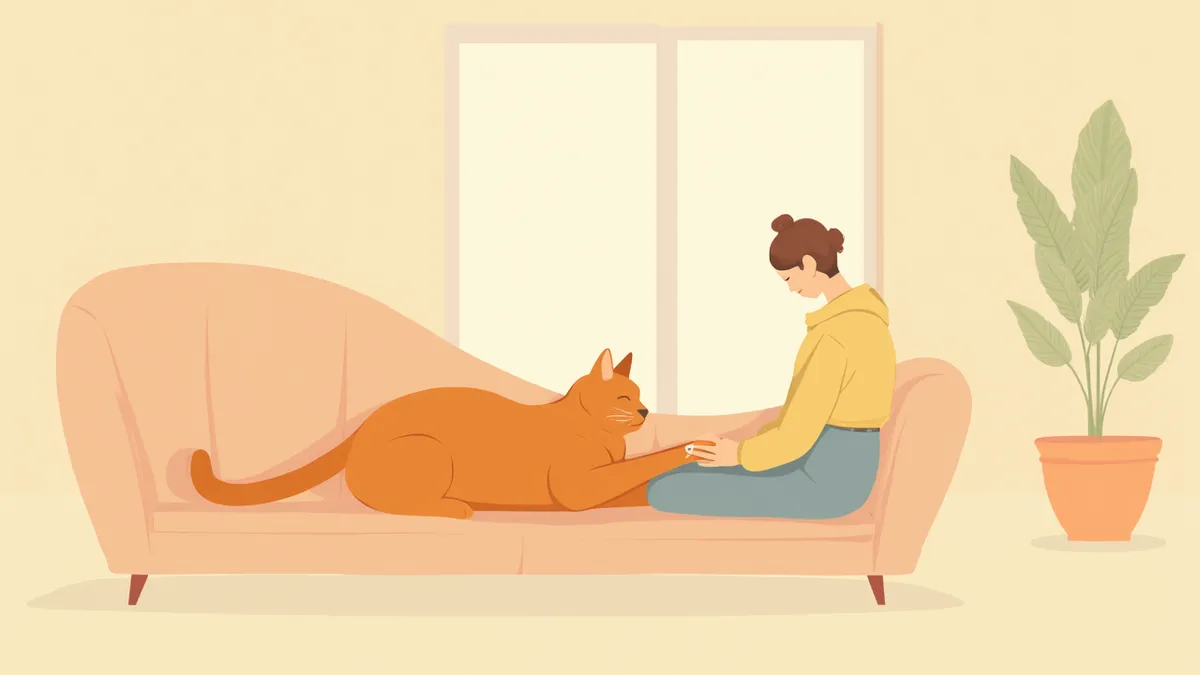
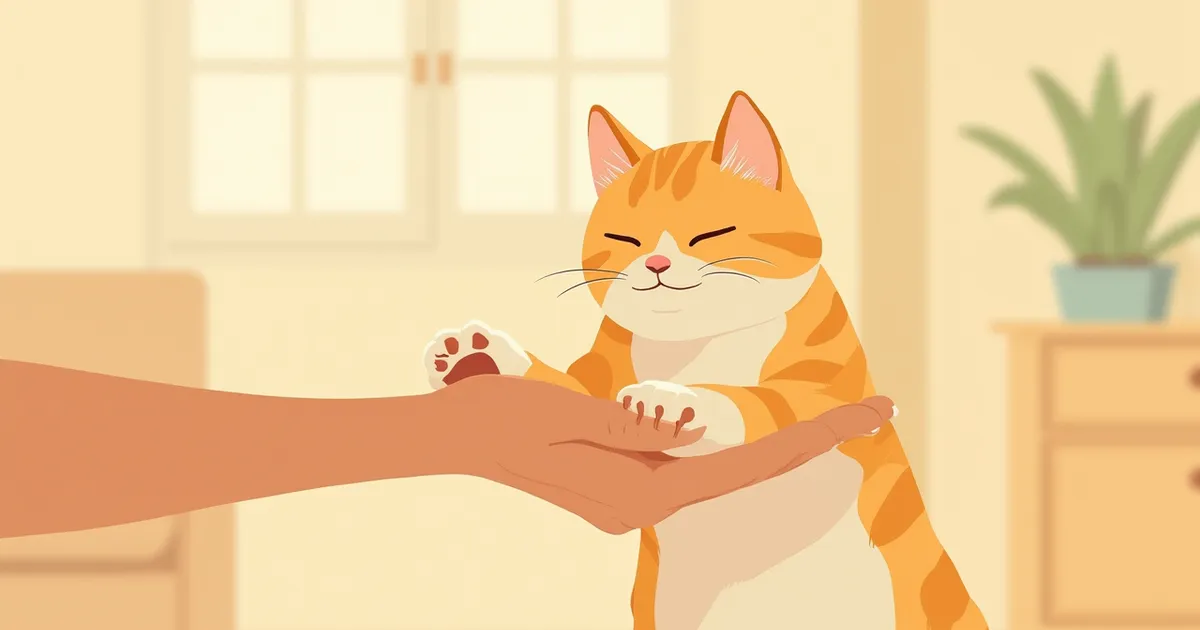
A cat comfortably stretching its front paws on its owner's lap
Because indoor cats lack the natural wear-and-tear that outdoor cats experience, regular nail care is an essential part of their routine. Since indoor cats have fewer opportunities for their claws to naturally file down, owners must regularly check and trim them. If nails grow too long, they can curl abnormally and pierce the paw pads, leading to pain and infection. This is especially important for senior cats, whose nails tend to become thicker, more brittle, and less likely to shed naturally, requiring even more careful attention.

Understand the Nail Structure First — What Is the Quick?

Inside your cat’s claws lies a sensitive area called the quick, which contains blood vessels and nerves. The most important thing when trimming claws is to avoid cutting into the quick.
Light-colored claws: The pinkish part you can see is the quick. Simply trim the clear, transparent tip in front of it.
Dark-colored claws: Since the quick isn’t visible, it’s safest to trim in small increments. If you notice a moist, dark spot in the center of the cut surface, you’re getting close to the quick.
If you’re unsure or new to trimming, consider visiting a veterinary clinic to watch a demonstration and learn the proper technique.

Comparison of Nail Clipper Types

ItemGuillotine typeScissor typeElectric grinder
Difficulty of useEasyModerateModerate
Suitable nailsNormal-thickness nailsThick nailsAll nails
AdvantagesClean cut surfaceEasy to control forceSmooth without splitting
DisadvantagesWeak on thick nailsHard to align the angleNot suitable for cats sensitive to noise

For beginner owners, the guillotine type is the easiest to handle

Step-by-Step Guide to Trimming Nails
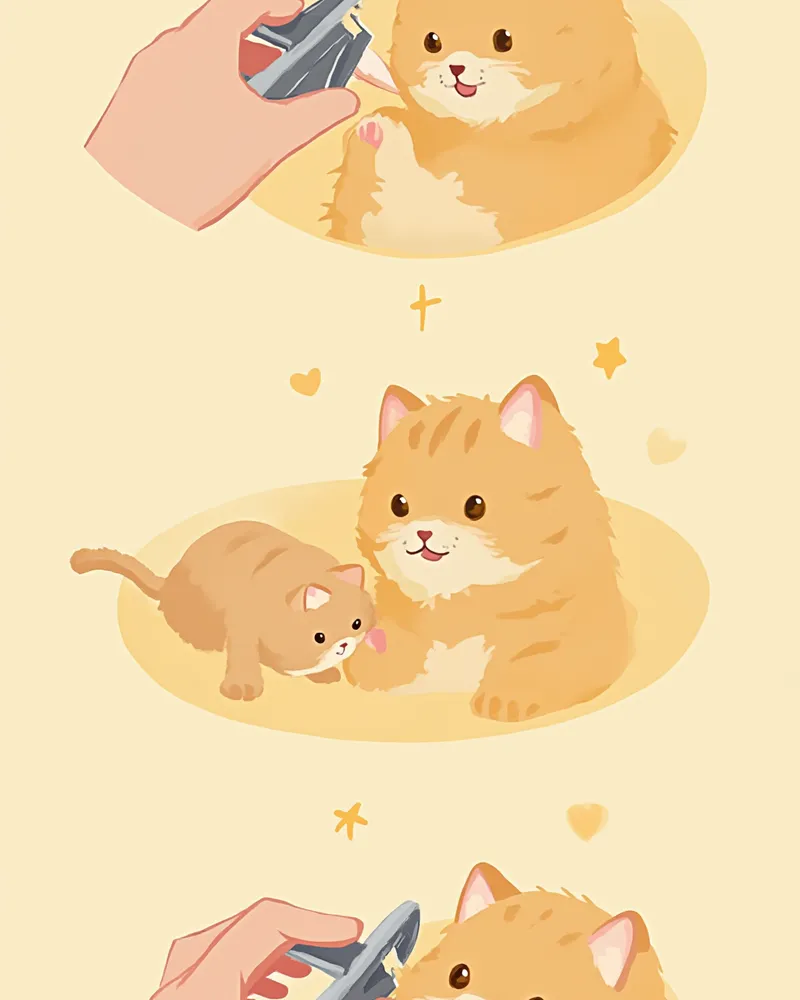
Step 1 — Preparation: Place your cat on your lap when they are relaxed. Have the nail clippers and styptic powder ready in advance.
Step 2 — Extending the Claw: Gently press the paw pad to extend the hidden claw.
Step 3 — Trimming: Trim only the sharp tip of the claw, leaving a safe margin to avoid the quick. It is important to develop the habit of trimming in small increments and checking the cross-section, especially at first. Cutting too much at once risks injuring the quick, so proceed carefully in stages.
Step 4 — Rewarding: Offer a treat after each paw is finished to create a positive association. Veterinary textbooks also recommend training that links nail trimming with rewards.
A caregiver gently presses the cat's paw pad to extend the claws, then trims them with a guillotine-style nail clipper.

What to Do If You Cut the Quick

If you accidentally cut the quick and your pet’s nail starts bleeding, don’t panic—gently press a styptic powder onto the tip of the nail. It’s a good idea to keep styptic powder on hand, which you can purchase at veterinary clinics or pet specialty stores. Apply the powder directly to the cut end of the nail and maintain gentle, steady pressure. If the bleeding doesn’t stop easily or continues for more than five minutes, it’s safer to visit a veterinarian rather than attempting further home treatment.

Tips for Cats Who Dislike Nail Trimming

If your cat strongly dislikes nail trimming, do not attempt to trim all nails at once. Trimming just one or two nails per day is sufficient. According to veterinary behavioral guidelines, it is a principle not to proceed with nail trimming if the cat shows signs of fear or extreme anxiety. Forcing the process can increase resistance.
Treat-based desensitization training: First, teach your cat to extend its paw or maintain a relaxed posture. Then, in the next step, show the nail clippers, allow your cat to sniff them, and offer treats. Repeating this sequence will gradually reduce your cat's aversion to the clippers.
Towel wrap: Wrapping your cat in a towel and trimming one paw at a time is another method, but avoid wrapping too tightly to prevent stress. Ensure there is enough room for comfort.
If these methods prove difficult, consider entrusting the task to professionals at a veterinary clinic or grooming salon.
Gently wrapping one of the cat’s front paws in a towel to trim its nails

Senior Cat Nail Care: Check More Frequently
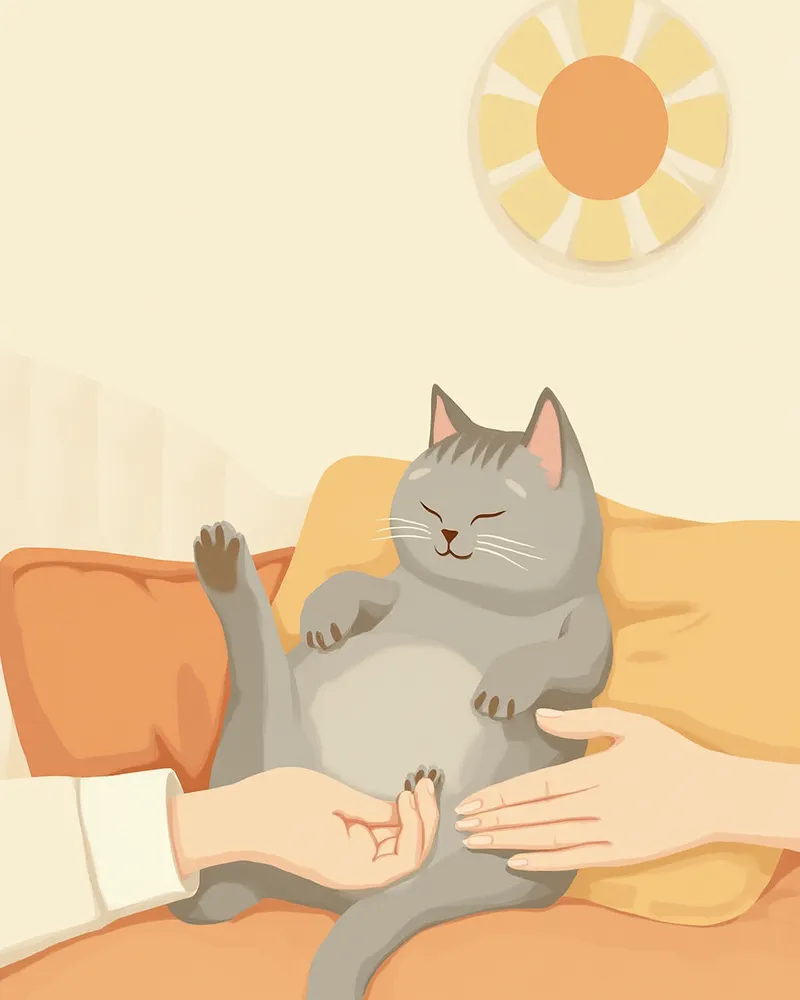
As cats age, their claws tend to thicken and they use scratching posts less frequently, so the claws don’t shed as easily. If left unchecked, the claws can curl inward and pierce the paw pads.
Check every 1–2 weeks: Inspect your cat’s claws at least once every one to two weeks.
Don’t forget the hind paws: Be sure to check the rear paws, which are often overlooked compared to the front paws.
Watch for joint pain: Cats with arthritis may find even gentle handling of their paws painful. Avoid forcing them into position; instead, keep the session brief and let them stay in a comfortable posture.
A caregiver carefully checking the hind paw nails of a senior cat

Visit the Vet If You Notice These Nail Abnormalities

If your pet’s nails are splitting or broken, if the area around the nails is swollen or oozing pus, if a nail has grown into the paw pad, or if they’re limping or constantly licking their paw, it’s time to visit the vet. It’s always safer to get a professional diagnosis before attempting any home treatment.

Reviewed by a veterinarian

Dr. Tony — Punnawat Phongkittirak

Dr. Tony — Punnawat Phongkittirak

Veterinarian

A veterinarian who majored in veterinary medicine at Khon Kaen University, Thailand, and completed the IVSA program at North Carolina State University in the United States. Drawing on clinical experience at animal hospitals, he works in the pet healthcare field and is dedicated to building a digital care environment that connects pet parents with veterinarians.

Frequently Asked Questions

What happens if you don’t trim your cat’s claws?
If your pet’s nails grow too long and curl around, they can pierce the paw pads, leading to pain, infection, and difficulty walking. That’s why regular nail trimming is so important.
Should I trim my pet’s back claws too?
While you don’t need to trim them as often as the front claws, please check the condition of your cat’s back claws regularly. This is especially important for senior cats, as their rear claws tend to thicken more easily.
My cat struggles so much that I can’t clip its nails.
It’s perfectly fine to trim just one or two nails per day. First, teach your pet to extend their paw or sit comfortably as a cooperative behavior, then consistently pair this with treats through desensitization training. This approach will make the process much easier. If you’re still having difficulty, don’t hesitate to leave it to your veterinarian.
Can I use human nail clippers to trim my pet's nails?
Cat claws are rounder and thicker than human fingernails, so using human nail clippers can cause them to split. Please use a claw trimmer specifically designed for cats.
Does using a scratching post mean you don’t need to trim your pet’s nails?
Scratchers help shed the outer, worn-down layer of your pet’s nails. However, they don’t actually shorten the nail length, so regular nail trimming is still necessary.

Share

Related Guides

References

[1] Little S., The Cat: Clinical Medicine and Management, 2nd Edition, Elsevier, 2012

[2] Sirois M., Assessing Essential Skills of Veterinary Technology Students, 4th Edition, Elsevier, 2020

This information is based on veterinary literature and does not replace diagnosis or treatment. Please consult a veterinarian for specific health concerns.

Metapet Co., Ltd. | CEO: Park Sung-yong | Business Reg. No. 417-88-02562 | Seoul, South Korea | Customer Center

How to Trim Your Cat's Nails and How Often | Meongsiljang