Like
Share
멍실장
고양이 마이크로칩 삽입 자주 묻는 질문 Q&A — 보호자가 꼭 알아야 할 핵심

Cat Microchip Implantation FAQ — Key Information Every Owner Must Know

Lifestyle & Age CareQ&AMeongsiljang Veterinary Advisory Board

Microchipping your cat is an essential preventive measure that helps ensure a quick reunion if they get lost. Here’s a summary of the key information every pet owner should know.

Why Is Cat Microchip Implantation Important?

A cat wearing a collar with a microchip tag attached.
Microchipping your cat is an essential preventive measure that helps you quickly locate your pet if they go missing. A microchip is a small electronic device implanted under your cat’s skin, which can be read with a specialized scanner. The chip’s unique identification number is linked to your registered contact information. If your lost cat is brought to a veterinary clinic or animal shelter, a simple scan can identify you as the owner. This greatly enhances your cat’s safety and provides peace of mind for your family.

Is Microchip Implantation Painful?

Microchip implantation is a very quick procedure. While it isn't completely painless, the discomfort is similar to that of a routine injection. The microchip is inserted under the skin between your cat's shoulder blades using a single-use, sterile needle. Most cats show little to no reaction afterward. One important point to note is that it is recommended to proceed without shaving the hair or applying antiseptic to the insertion site, as the procedure is so brief that prolonged irritation is avoided. Some minor swelling or discomfort may occur after implantation, but it typically subsides within a short period.
A veterinarian inserting a microchip into the back of a cat

When and at What Age Should Microchip Implantation Be Performed?

Microchips are a permanent form of identification and are recommended for all cats, regardless of their lifestyle. In fact, in England, UK, it has been mandatory since June 2024 for all pet cats to be microchipped before they reach 20 weeks of age. If your cat is in an environment with a high risk of getting lost, you may consider having the chip implanted earlier. This is especially advisable for cats that go outdoors frequently, those that roam both indoors and outdoors, or newly adopted cats, as early implantation enhances safety. The timing of implantation is determined by your cat’s health status and your veterinarian’s assessment, and it is often performed concurrently with vaccinations.
The veterinarian is examining a young kitten while preparing to implant a microchip.

What to Watch Out for After Microchip Implantation

After your cat’s microchip is implanted, keep an eye on how they’re doing. It’s normal to see a little swelling or tenderness at the injection site, which should resolve on its own within one to two days. Try to prevent your cat from touching or scratching the area. If they do start licking or scratching it, consider using an Elizabethan collar or a protective recovery shirt. Additionally, have your veterinarian scan the chip once more to confirm it was implanted correctly, and double-check that all registration details are accurate.
A cat resting comfortably with a bandage after microchip implantation.

Visit a Veterinary Clinic Immediately If Abnormal Symptoms Occur After Microchip Implantation

If the injection site remains swollen, or if your pet develops a high fever, loses its appetite, or shows a marked decrease in activity, please visit a veterinary clinic immediately. These could be signs of infection or a reaction to a foreign body. If the microchip migrates or inflammation develops at the injection site, veterinary intervention is necessary. After implantation, it is important to scan the microchip to ensure it has been properly placed and that the code is reading correctly. For safety, consult your veterinarian if needed.

How Much Does Microchip Implantation Cost?
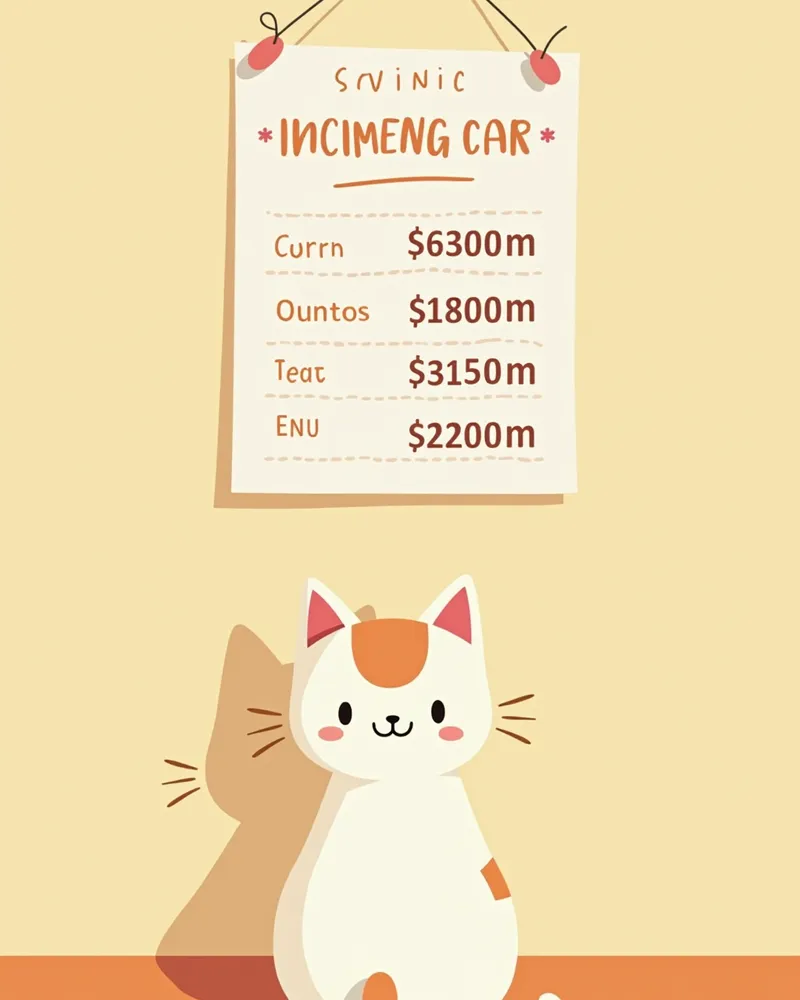
Microchip implantation costs vary by clinic, but typically range from $20 to $60. This fee generally covers the microchip itself, the implantation procedure, and registration. Some clinics offer discounts when the procedure is combined with vaccinations. Costs may also depend on your cat’s health status, timing of the implantation, and the clinic’s location. In the long run, it’s a very reasonable investment, as it greatly increases the chances of quickly reuniting with your cat if they go missing.
Price list showing the cost of microchip implantation at the clinic

Do Microchips Last a Lifetime?

Microchips are generally designed to last a lifetime. Since they don't have internal batteries, their lifespan isn't limited. There are many cases where microchips have functioned stably for over 10 years after implantation. However, with long-term use, there may be a foreign body reaction at the implantation site, or the microchip may shift position. In such cases, a veterinarian can check and adjust the position if necessary. It's a good idea to regularly scan the microchip to ensure it's working properly.
A view of the microchip implanted under a cat's skin

Comparison Table by Microchip Implantation Timing

ItemRecommendationPrecautionsCost Range
After 8 Weeks of AgeRecommendedPermanent means of identification can be secured$20 to $60
At Time of AdoptionHighly RecommendedOwner information registered immediately$20 to $60
Outdoor CatsEssentialHigh risk of loss$20 to $60

Costs may vary depending on the clinic and region. Discounts may be available when done together with vaccination.

Reviewed by a veterinarian

Dr. Tony — Punnawat Phongkittirak

Dr. Tony — Punnawat Phongkittirak

Veterinarian

A veterinarian who majored in veterinary medicine at Khon Kaen University, Thailand, and completed the IVSA program at North Carolina State University in the United States. Drawing on clinical experience at animal hospitals, he works in the pet healthcare field and is dedicated to building a digital care environment that connects pet parents with veterinarians.

Frequently Asked Questions

Can a microchip be used to track a cat?
No, microchips do not have tracking capabilities. While you can't check your cat's location in real time, if they go missing, a vet clinic or shelter can scan the chip to retrieve your contact information.
Can a microchip migrate out of a cat’s body?
It’s very rare. Microchips are specially coated to stay securely in place under the skin, and they rarely move. However, over time, a foreign body reaction can cause them to shift, so regular check-ups are important.
How do I register my pet’s microchip?
After the microchip is implanted, your veterinarian will help you register it. The registration information includes your cat’s date of birth, owner’s name, contact details, and address, and is stored in the national microchip registration system.
What should I do if the microchip malfunctions?
Microchips don’t have internal batteries, so they never wear out. However, if a scan fails, have your veterinarian try a different scanner or check the implantation site.
What should I do if my cat becomes anxious after microchip implantation?
Most cats show little to no reaction after the implant is placed. However, if your cat seems anxious, keep them in a quiet, calm environment and consider using a protective shirt if needed. Be sure to consult your veterinarian for personalized advice.

Share

Related Guides

References

[1] The Cat, Clinical Medicine and Management, 2nd Edition, 2017

[2] American Veterinary Medical Association (AVMA). Microchipping Guidelines for Companion Animals, 2022

[3] World Small Animal Veterinary Association (WSAVA). Guidelines on Microchipping, 2021

This information is based on veterinary literature and does not replace diagnosis or treatment. Please consult a veterinarian for specific health concerns.

Metapet Co., Ltd. | CEO: Park Sung-yong | Business Reg. No. 417-88-02562 | Seoul, South Korea | Customer Center

Cat Microchip Implantation FAQ: What Owners Must Know | Meongsiljang