Like
Share
멍실장
실내 고양이 벼룩 — 어떻게 들어왔는지와 환경 관리법

Fleas on an Indoor Cat? — Entry Routes and Environmental Management to Prevent Reinfestation

Infection/ParasitesQ&AMeongsiljang Veterinary Advisory Board

Indoor cats can also contract fleas through exposure on balconies, via their owners’ clothing, or from other pets. We’ve outlined five common entry routes, prioritized flea control for carpets and bedding, and provided steps for environmental management to prevent reinfestation.

Indoor Cats Can Also Get Fleas

A pet owner checking for fleas found in their indoor cat's fur
Fleas are small, brown, blood-sucking external parasites that can infest even cats that live exclusively indoors. The most commonly found species in dogs and cats is the cat flea (Ctenocephalides felis felis), which accounted for 98.9% of fleas found on cats in one study. What’s truly important is that fleas can easily enter your home through other pets living with your cat or via the outdoor environment. Once on a host, a female flea lays an average of about 38 eggs per day, and most of these eggs fall off the cat’s body within 8 hours into the surrounding environment, such as floors and carpets. Therefore, even if you spot just one flea, eggs may already be spreading in your home, so you should begin environmental management immediately.

How Did Fleas Get In Without Going Outside?

Looking at the flea life cycle, most eggs laid on a cat’s body fall off onto the floor, carpet, or other surfaces within eight hours and hatch into larvae within a few days. After passing through three larval stages, they form pupae, from which fully developed adult fleas emerge and climb back onto the cat, completing the cycle. Because immature stages like eggs, larvae, and pupae can hide throughout the environment, even indoor-only cats can be exposed to fleas through the following routes: - Newly adopted pets: Fleas may be brought in by other dogs or cats living in the home, making it important to manage all animals in contact with your cat. - Balconies and window screens: Wild or stray animals such as foxes, raccoons, and opossums can serve as reservoir hosts for fleas. - Owners’ clothing, bags, and shoes: Fleas or eggs picked up outdoors can fall off onto the floor. - Delivery boxes and secondhand furniture: Eggs or pupae may be transported attached to these items. - Traces of pets from previous residents: Fleas may be discovered shortly after moving in.

Suspect Fleas If You See These Signs

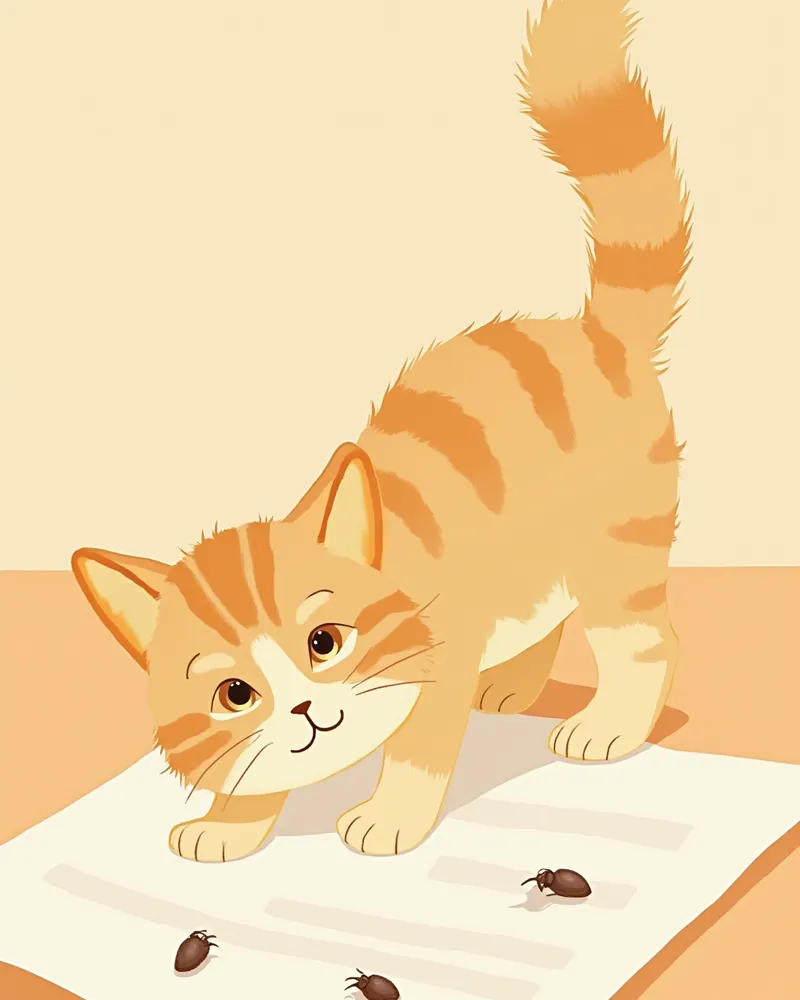
Fleas are small and fast, making them difficult to spot directly. However, if you notice the following signs occurring simultaneously, you should suspect an infestation. - Excessive grooming and itching: Your pet may obsessively lick or scratch areas such as the base of the tail and the lower back. - Black specks (flea dirt): If you brush your pet’s fur onto a white paper towel and add a drop of water, the specks will turn red if they are flea feces. - Small scabs on the neck and under the chin: These indicate blood-feeding sites and allergic reactions. - Itchy ankles on the owner: Fleas can bite humans too. - Anemia and lethargy: Heavy infestations can be dangerous for kittens.
Checklist for Signs of Suspected Flea Infestation in Cats

When to Visit the Veterinarian Immediately

If any of the following apply, please consult a veterinarian before attempting home treatment: - Kittens under 8 weeks of age, or pregnant or nursing cats - Pale gums and apparent lethargy (suspected flea-induced anemia) - Widespread skin peeling, oozing, or crusting due to itching - Fleas still visible despite prior application of an over-the-counter insecticide Treatment options for kittens are limited in both type and dosage, so a veterinarian must determine the appropriate dose based on body weight.

Veterinary Treatment — A Two-Pronged Approach

Treating fleas in cats requires a two-pronged approach: eliminating adult fleas on the cat and preventing immature stages (eggs, larvae, and pupae) in the environment. An effective control plan must include treating all animals living in the household and managing the environment to remove immature flea stages. Focusing on only one aspect often leads to reinfection, as new adults continuously emerge from the eggs, larvae, and pupae remaining in the environment. - Fast-acting treatments: Medications that quickly kill adult fleas on the body (e.g., oral medications containing nitenpyram) - Long-acting treatments: Spot-on or oral medications with effects lasting 1–3 months (e.g., fipronil, selamectin, fluralaner) - Environmental insecticides: Products designed to block the egg and larval stages in the environment Your veterinarian will determine the best combination based on your cat’s age, weight, and whether you have multiple cats. Since most fleas are susceptible to insecticides, treatment failures are usually due to poor management, such as using medication for too short a period or neglecting to treat other animals in the household.
A veterinarian prescribing flea treatment for a cat.

Comparison of Major Cat Flea Medications

ItemFast-acting oral medication (nitenpyram)Topical drops (selamectin class)Long-acting topical drops (fluralaner class)
Onset of effectFast-acting (rapidly eradicates live adult fleas)Action begins after applicationAction begins after administration
DurationShort (re-dose as needed)About 1 month (initial 2–3 week intervals, then 3–4 week intervals)About 3 months
Route of administrationOrally (by mouth)Topical drops on the skin behind the neckTopical drops on the skin behind the neck
Effect beyond fleasAdults onlyFleas, etc. (check the product/veterinarian for detailed coverage)Broad-spectrum: fleas, ticks, etc.
Young kittensVeterinarian's judgment (for young kittens, combine physical removal with a flea comb)Veterinarian's judgment6 months of age or older (based on topical fluralaner)

Ingredient names and age criteria are general information. The right medication for your pet is decided at the animal hospital.

Environmental Management — Eliminating Eggs and Pupae is Key
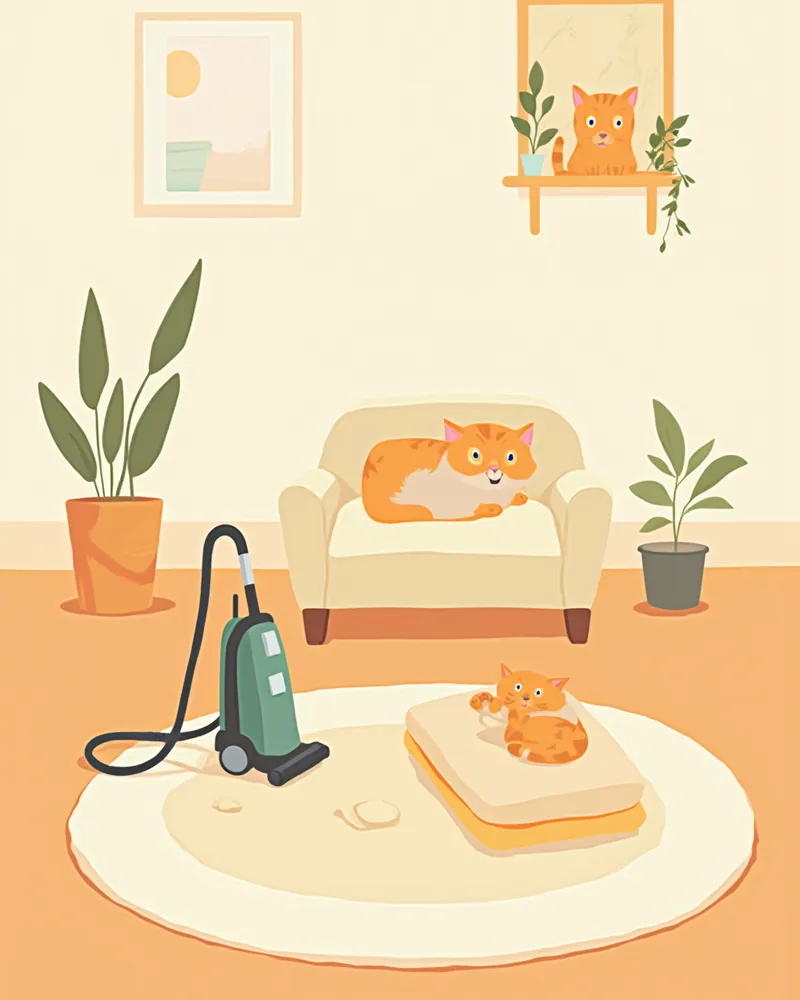
Adult fleas make up only a small portion of the total flea population; the majority hide in the environment as eggs, larvae, and pupae. If you only target adult fleas on your pet with medication and neglect the environment, new adults will continuously emerge from these immature stages, restarting the infestation. Therefore, effective control requires thorough environmental management to eliminate immature stages in your home. - Carpets, rugs, and sofas: Vacuum frequently and dispose of the vacuum bag or canister contents immediately. - Cat bedding and blankets: Wash in hot water and dry on a high-heat setting. - Floor cracks and crevices: Vacuum thoroughly, then treat with an environmental insecticide. - Cat trees and scratching posts: Clean the surfaces and dry them in direct sunlight. - Pupae management: Pupae are resilient and may hatch over time, so maintain a consistent daily cleaning routine.
Environmental management steps for washing and cleaning cat bedding and carpets

Never Use Dog Flea Medication on Cats

Some dog spot-on treatments contain permethrin, which is highly toxic to cats. Exposure can cause seizures, vomiting, excessive drooling, and muscle tremors, potentially requiring emergency veterinary care. In households with both dogs and cats, keep them separated until the dog’s coat is completely dry after application, as even licking the treated area can be dangerous. Always use products specifically labeled for cats.

Routine Care to Prevent Reinfestation

Once you’ve eliminated fleas, it’s crucial to prevent them from coming back. - Monthly preventive medication: Recommended year-round, even for indoor cats - Clothing and bag care after outings: Immediately wash clothes worn in areas with many stray cats - Inspect window screens: Consider adding fine-mesh screens for first-floor or low-level homes - When adopting a new pet: Check for fleas and administer one dose of preventive medication before introducing to other pets - Seasonal checks: Use a flea comb for a weekly self-check during spring and autumn transition periods
Daily care routine for flea prevention in indoor cats

Reviewed by a veterinarian

Dr. Tony — Punnawat Phongkittirak

Dr. Tony — Punnawat Phongkittirak

Veterinarian

A veterinarian who majored in veterinary medicine at Khon Kaen University, Thailand, and completed the IVSA program at North Carolina State University in the United States. Drawing on clinical experience at animal hospitals, he works in the pet healthcare field and is dedicated to building a digital care environment that connects pet parents with veterinarians.

Frequently Asked Questions

Even if my pet stays indoors, do they really need flea prevention medication?
Yes, it’s recommended. Parasites can enter through shared animals or the outdoor environment, and once they’re inside, eradication is much harder than prevention. A monthly or a three-month topical treatment is sufficient.
Fleas can bite human ankles too. Should people apply flea medication as well?
You don’t need any special medication for humans. Once the fleas on your cat and in your home are completely eliminated, the bites on people will naturally decrease. However, if the itching becomes severe, please consult a dermatologist.
Can’t I get rid of fleas in one go with regular flea shampoo sold at the supermarket?
Shampoo only removes some of the adult fleas present on your pet at that moment. Flea eggs and pupae in the environment remain, so reinfestation can occur quickly. To effectively manage the problem, combine a veterinarian-prescribed medication with thorough environmental cleaning.
How long does it take to completely eliminate fleas?
It typically takes 8 to 12 weeks. Even after all fleas are eliminated, it can take 9 to 12 weeks for symptoms to fully subside, as flea pupae are resilient and require environmental stimuli to hatch. For safety, vacuum daily and use preventive medication consistently for at least six months to prevent reinfestation, ideally without any interruptions.
My young kitten has a flea infestation, and its gums are pale. Is this an emergency?
Yes, this is an emergency. Young kittens can develop severe anemia rapidly due to significant blood loss. Please take your kitten to a 24-hour veterinary clinic immediately to discuss the possibility of a blood transfusion and to receive safe medications appropriate for young kittens.

Share

Related Guides

References

[1] BSAVA Manual of Canine and Feline Dermatology, 4th Edition - Chapter on Ectoparasites (Ctenocephalides felis)

[2] Shaw SE, Kenny MJ, Tasker S et al. (2004) Pathogen carriage by the cat flea Ctenocephalides felis (Bouche) in the United Kingdom. Veterinary Microbiology 102, 183-186

[3] Franc M, Bouhsira E, Beugnet F (2013) Direct transmission of the cat flea (Ctenocephalides felis) between cats exhibiting social behaviour. Parasite 20, 49

[4] Thiemann T, Fielden LJ, Kelrick MI (2003) Water uptake in the cat flea Ctenocephalides felis. Journal of Insect Physiology 49, 1085-1092

This information is based on veterinary literature and does not replace diagnosis or treatment. Please consult a veterinarian for specific health concerns.

Metapet Co., Ltd. | CEO: Park Sung-yong | Business Reg. No. 417-88-02562 | Seoul, South Korea | Customer Center

Fleas on an Indoor Cat? Entry Routes & Prevention Guide | Meongsiljang