Like
Share
멍실장
고양이 흉막삼출 원인 자주 묻는 질문 Q&A — 보호자가 꼭 알아야 할 핵심

Feline Pleural Effusion Causes FAQ — Key Information Every Pet Owner Should Know

RespiratoryQ&AMeongsiljang Veterinary Advisory Board

Feline pleural effusion is a condition in which fluid accumulates around the lungs, leading to difficulty breathing. Because the underlying causes can vary widely—including infections, tumors, and heart disease—early detection is crucial.

What is Feline Pleural Effusion?

Anatomical image of feline pleural effusion
Feline pleural effusion is a condition in which fluid abnormally accumulates in the pleural space surrounding the lungs, making breathing difficult. This fluid can result from various causes, including inflammation, infection, heart disease, or tumors. In the early stages, your cat may appear short of breath or lethargic, but as the condition progresses, severe respiratory distress can develop. When large amounts of pleural fluid build up, they compress the lungs and impair their function, making immediate veterinary care essential. Accurately identifying the underlying cause is key to effective treatment. Early detection and appropriate management are critical to improving survival rates.

Learn About the Main Causes

There are many possible causes of pleural effusion in cats. Here are five key causes every pet owner should know. Since each cause requires its own specific diagnosis and treatment, identifying the exact underlying issue is the first step toward effective care.
Heart disease: Left-sided heart failure (reduced function of the left side of the heart) can cause fluid to accumulate in the pleural space. This fluid is usually not blood, but rather a transudate or modified transudate with low protein concentration. However, heart failure is actually a less common cause of pleural effusion than many people assume.
Tumors: Tumors in the lungs or pleura can produce exudative fluid or cause malignant effusion, which may compress the lungs.
Infections: Bacterial, fungal, viral, or protozoal infections can inflame the pleura, leading to fluid accumulation. Pyothorax (pus in the pleural space) is one of the more commonly reported causes in cats.
Parasitic infections: Certain parasites, such as lung flukes (Paragonimus) or heartworms (Dirofilaria), can affect the thoracic cavity and cause parasitic effusion.
Trauma or bleeding: Accidents or injuries can lead to internal bleeding in the chest cavity, resulting in hemothorax (hemorrhagic effusion).
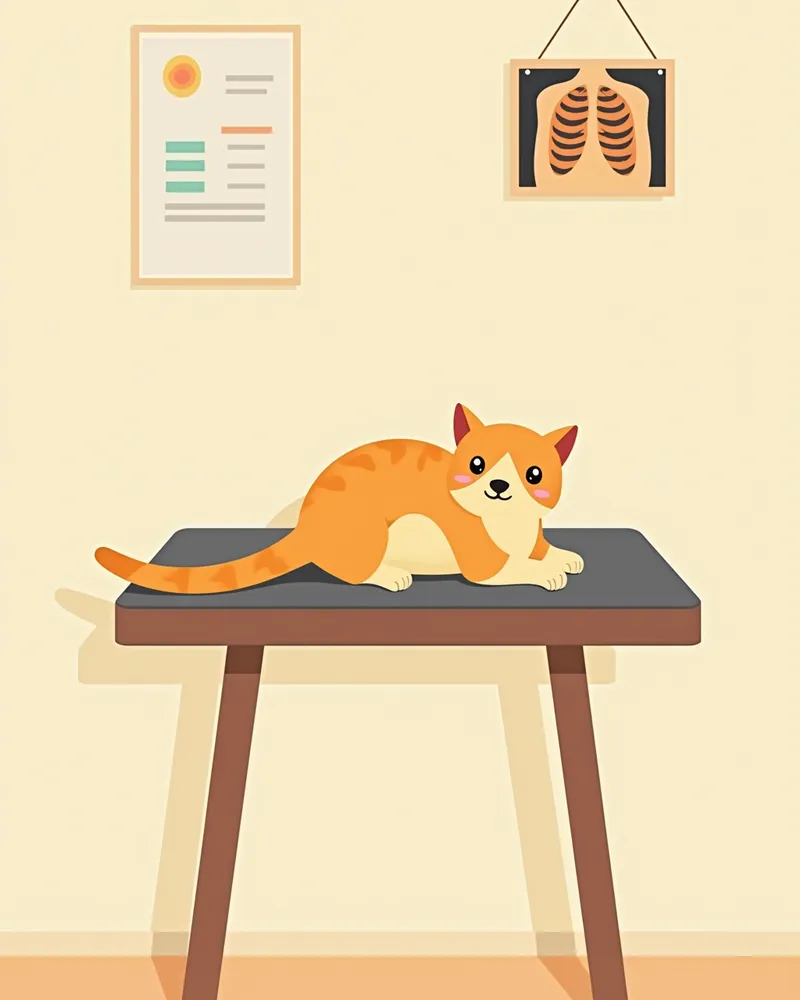
Chest X-ray image for diagnosing pleural effusion in cats

Comparison of Characteristics and Management by Cause

ItemMain FeaturesDiagnostic MethodTreatment Direction
Heart DiseaseCardiac enlargement, causes edemaCardiac ultrasound, chest X-rayCardiac medication, surgery
TumorProgressive difficulty breathing, weight lossCT, biopsyChemotherapy, surgery
InfectionFever, cough, generalized edemaBlood test, cultureAntibiotics, antifungals
Parasitic InfectionAcute difficulty breathing, parasites foundFecal exam, X-rayAntiparasitic agents
TraumaAcute symptoms after accident, bleeding signsX-ray, ultrasoundSurgery, fluid replacement

Because diagnosis and treatment differ depending on each cause, accurately identifying the cause is essential.

What to Do If Symptoms Appear?

If your cat shows signs of pleural effusion, seek veterinary care immediately. Panting or breathing with an open mouth are serious indicators of respiratory distress. In such cases, keep your cat calm and avoid excessive movement or shaking. The veterinarian may perform an emergency thoracentesis to drain the fluid. After removing the fluid, various tests such as blood work, X-rays, and ultrasound will be conducted to determine the underlying cause. It is crucial for pet owners to remain calm and composed during emergencies.
Image of the thoracentesis procedure for treating pleural effusion in cats

Signs Requiring Immediate Veterinary Visit

If your cat is panting or breathing with its mouth open, take it to the vet immediately. This is a sign that pleural effusion has progressed severely. Additionally, if the cat’s gums turn blue, it becomes lethargic, or unresponsive, this is life-threatening and requires emergency intervention.

Treatment Methods and Management Points

Treatment for pleural effusion in cats depends on the underlying cause. If it’s due to heart disease, heart medications and a restricted-sodium diet are necessary. When infection is the culprit, antibiotic therapy is the mainstay of treatment, while tumors may require chemotherapy or surgery. Even after fluid drainage, ongoing treatment of the root cause is essential, so continuous veterinary care is crucial. Reducing your cat’s stress and maintaining a calm environment can also aid recovery. Regular check-ups and strict adherence to prescribed medications play a key role in preventing recurrence.
Image of a stable environment for a cat recovering from pleural effusion

Prevention and Daily Care Tips

Regular health check-ups are essential for preventing pleural effusion in cats. Early detection of heart disease and tumors is particularly important, so it's recommended to have your cat examined at least once a year. Consistently administering parasite prevention medication and avoiding hazardous environments when your cat goes outside can also help. Monitor your cat's breathing daily and consult a veterinarian immediately if you notice any abnormal signs. Maintaining a clean and stable environment is also highly beneficial for prevention. Early detection is key to improving treatment success rates.
Image of a cat taking parasite prevention medication

Caution: Do Not Self-Diagnose

If your cat is having trouble breathing, don’t try to diagnose the cause or administer medication on your own. Improper treatment can worsen their condition. Always consult a veterinarian for a proper diagnosis and treatment.

Reviewed by a veterinarian

Dr. Tony — Punnawat Phongkittirak

Dr. Tony — Punnawat Phongkittirak

Veterinarian

A veterinarian who majored in veterinary medicine at Khon Kaen University, Thailand, and completed the IVSA program at North Carolina State University in the United States. Drawing on clinical experience at animal hospitals, he works in the pet healthcare field and is dedicated to building a digital care environment that connects pet parents with veterinarians.

Frequently Asked Questions

Is feline pleural effusion treatable?
Treatment options depend on the underlying cause. Heart disease and infections can be managed with medication, while tumors may be treated with surgery or chemotherapy. Early detection is key.
Is pleural effusion common in cats?
Pleural effusion is not a standalone disease but rather a condition that develops as a result of various underlying issues, such as heart disease, tumors, or infections. Whether it occurs depends on the specific underlying condition, so closely monitoring your pet’s breathing and scheduling regular check-ups can help with early detection.
Is pleural effusion contagious?
It’s not a contagious disease. However, if the cause is infectious, it can spread to other cats, so isolation measures are necessary.
Can it recur?
If the underlying cause isn’t addressed, the condition may recur. Regular check-ups and ongoing care are essential. In particular, if heart disease or a tumor is the cause, continuous monitoring is necessary.
Can pleural effusion be detected early at home?
Yes, monitoring your cat's breathing daily can help catch issues early. If you notice rapid breathing or see your cat panting with its mouth open, seek veterinary care immediately.

Share

Related Guides

References

[1] Mooney ET, Rozanski EA, King RGP, et al. Spontaneous pneumothorax in 35 cats (2001–2010). J Feline Med Surg. 2012;14(6):384–391.

[2] Andreoni AA, Voss K. Reconstruction of a large diaphragmatic defect in a kitten using small intestinal submucosa (SIS). J Feline Med Surg. 2009;11(12):1019–1022.

[3] Fitzgerald SD, Johnson CA, Peck EJ. A fatal case of intrathoracic cuterebriasis in a cat. J Am Anim Hosp Assoc. 1996;32:353.

This information is based on veterinary literature and does not replace diagnosis or treatment. Please consult a veterinarian for specific health concerns.

Metapet Co., Ltd. | CEO: Park Sung-yong | Business Reg. No. 417-88-02562 | Seoul, South Korea | Customer Center

Feline Pleural Effusion Causes: 5 Key Questions Answered | Meongsiljang