
What is feline pheromone therapy? — Does it really work? A guide to its effects and usage
We’ve compiled a Q&A guide on how to use synthetic pheromone products to reduce stress and problem behaviors in cats. Learn how to apply them in specific situations—such as urine marking, multi-cat conflicts, and travel anxiety—along with important precautions.
What is feline pheromone therapy?
In what situations is pheromone therapy helpful?
Comparison of pheromone products by type — Choose the right one for the situation for best results
| Item | Spray | Electric diffuser | Gel (non-electric) |
|---|---|---|---|
| Main use | Focused on carrier or specific space | Uniform diffusion throughout the space | Spaces without an outlet |
| Duration of effect | 4–5 hours | About 30 days (per refill) | About 30 days |
| Suitable situation | Clinic visits, moving, short-term stress | Multi-cat households, long-term management | During travel, rooms without an outlet |
| Timing of use | Spray 20 minutes before use | Keep it on at all times | Starting the day before travel |
| Price range | KRW 10,000–18,000 | KRW 20,000–35,000 (including refill) | KRW 15,000–25,000 |
Prices are the lowest-price ranges at major online shopping malls as of 2025 and may vary by product.
Are there specific ways to use diffusers and sprays correctly?
Using it this way can have the opposite effect
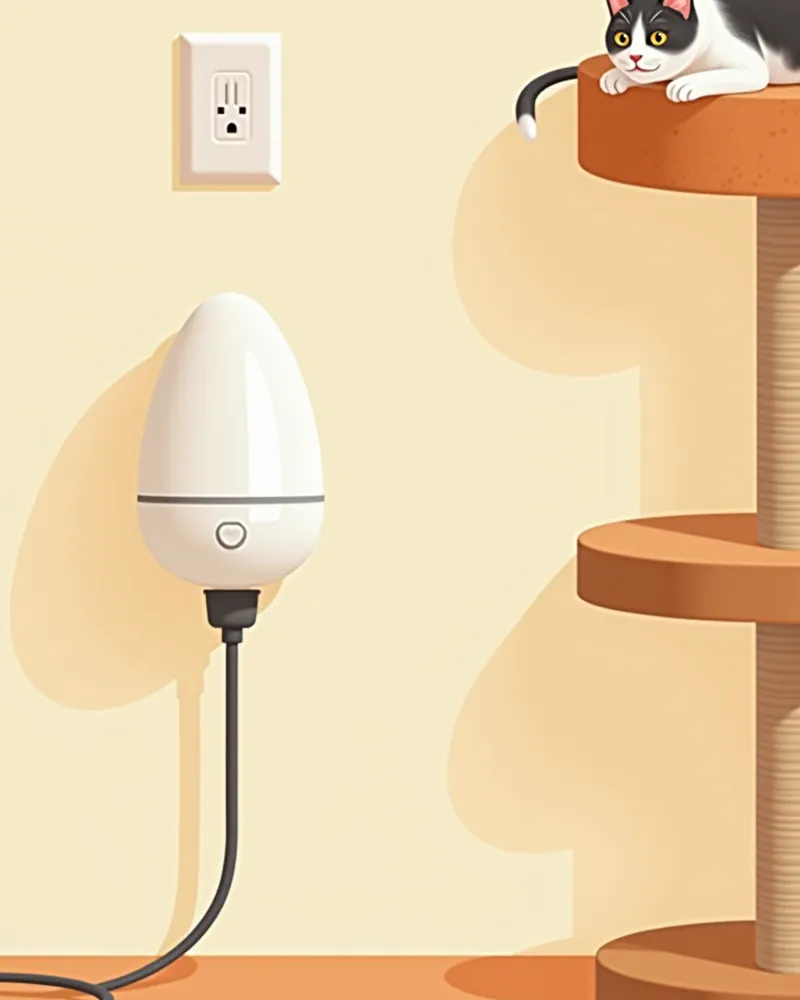
Do not spray the product directly onto your cat. Pheromones are designed to disperse into the air and be absorbed through the environment. Spraying it directly around your cat’s face may trigger a fear response. Additionally, avoid using it simultaneously with other room diffusers or essential oils, as this can neutralize its effectiveness and pose a risk of exposure to oils that are toxic to cats. To ensure continued efficacy, replace the refill every 30 days; leaving an empty diffuser in place serves no purpose.
What should I do if there is no effect after 2–4 weeks?
How long should pheromone therapy be used?
Must-read for households with two or more cats
In multi-cat households, you should place diffusers according to the number of cats. It is recommended to use one diffuser for every 50–70 square meters (approximately 15–21 pyeong). For cats with severe conflicts, installing separate diffusers in each cat's individual space is more effective. Alongside pheromone therapy, it is essential to provide one more food bowl, litter box, and water bowl than the number of cats. Resolving resource competition is key to maximizing the calming effects of pheromones.
Reviewed by a veterinarian

Dr. Tony — Punnawat Phongkittirak
VeterinarianA veterinarian who majored in veterinary medicine at Khon Kaen University, Thailand, and completed the IVSA program at North Carolina State University in the United States. Drawing on clinical experience at animal hospitals, he works in the pet healthcare field and is dedicated to building a digital care environment that connects pet parents with veterinarians.
Reviewed 2026-06-01
Frequently Asked Questions
Do pheromone products affect people or dogs?
Is it dangerous if my cat licks a diffuser or spray?
Even neutered cats can exhibit urine marking. Are pheromone products effective in this case?
Can I use anti-anxiety medication and pheromone therapy at the same time?
My cat seems to avoid the pheromone product at first. Is this normal?
Share
Related Guides

7 Behavioral Enrichment Strategies for Mental Stimulation Recommended by Veterinarians

Top 5 Calming Supplements for Dogs and Cats in 2026

L-Theanine Effects and Calming Support
Frequently Asked Questions About Feline Spot-On Preventatives — Key Information for Pet Owners
Cat Seasonal Parasite Prevention Strategy FAQ — Key Information Every Pet Owner Should Know
Frequently Asked Questions on Parasite Management in Pregnant and Nursing Cats — Key Information Every Pet Owner Should Know
Frequently Asked Questions About Feline Lung Flukes — Key Information Every Pet Owner Should Know
Frequently Asked Questions (FAQ) on Feline Oral Preventives (Isoxazoline Class) — Key Information for Pet Owners

Cat Lice (Felicola subrostratus) Infestation FAQ — Key Information Every Pet Owner Should Know
Feline Internal Parasite Symptoms and Differentiation FAQ — Key Points Pet Owners Must Know
References
[1] Frank DF, Erb HN, Houpt KA. Urine spraying in cats: presence of concurrent disease and effects of a pheromone treatment. Applied Animal Behaviour Science. 1999;61(3-4):263-272.
[2] Mills DS, Mills CB. Evaluation of a novel method for delivering a synthetic analogue of feline facial pheromone to control urine spraying by cats. Vet Rec. 2001;149(7):197-199.
[3] White JC, Mills DS. Efficacy of synthetic feline facial pheromone (F3) analogue (Feliway) for the treatment of chronic non-sexual urine spraying by the domestic cat. Proceedings of the First International Conference on Veterinary Behavioural Medicine. 1997.
[4] Gaultier E, Bonnafous L, Bougrat L, et al. Comparison of the efficacy of a synthetic analogue of feline facial pheromone with clomipramine for the treatment of feline urine marking. J Small Anim Pract. 1998.
[5] Little SE, editor. The Cat: Clinical Medicine and Management, 2nd Edition. Elsevier Saunders; 2012. Chapter 16: Behavior Problems. pp.367.
[6] Herron ME, Shreyer T. Introduction to Animal Behavior and Veterinary Behavioral Medicine. Chapter 11: Feline Pheromone Therapy and Environmental Modification. 2014.
[7] Buffington CAT, Westropp JL, Chew DJ. Multimodal environmental modification (MEMO) for feline idiopathic cystitis. J Feline Med Surg. 2014;16(5):385-394.