Like
Share
멍실장
강아지·고양이 안약 넣는 법

How to Administer Eye Drops to Dogs and Cats

Eye HealthQ&AMeongsiljang Veterinary Advisory Board

We’ve outlined the proper positioning, step-by-step procedure, and precautions for safely administering eye drops to dogs and cats. Even first-time pet owners can easily follow along.

What Is Eye Drop Administration? Know the Basic Principles
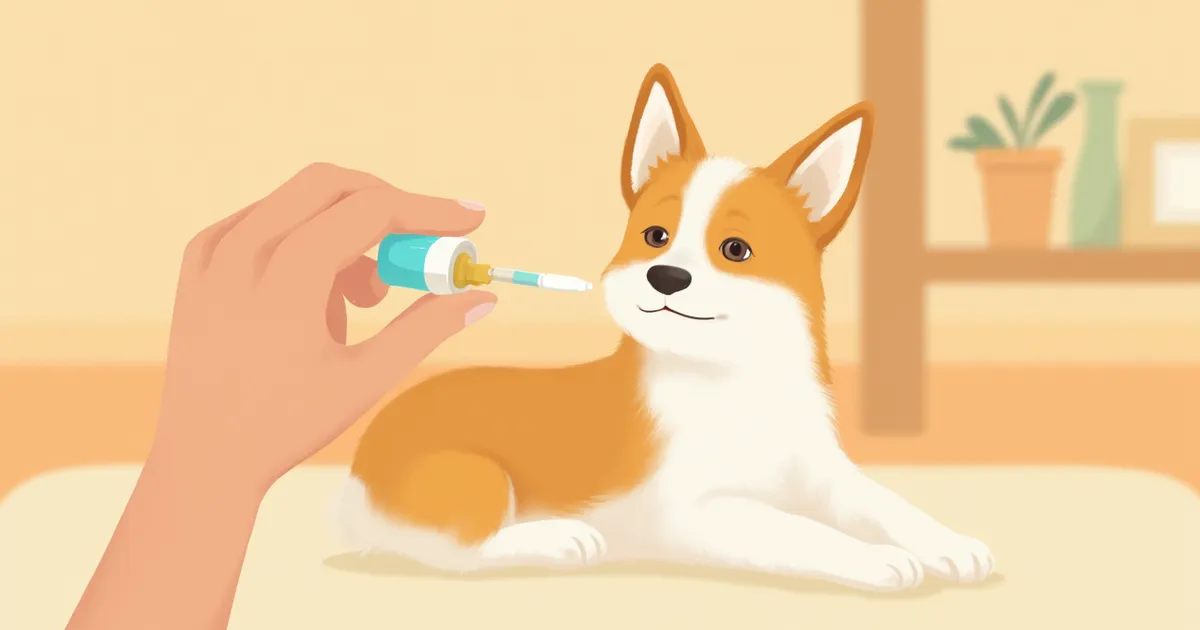
A pet owner positioning their dog to administer eye drops.
Administering eye drops to dogs and cats involves accurately instilling the prescribed ophthalmic solution into the conjunctival sac—the space beneath the lower eyelid—to ensure effective drug delivery. The most critical point is to avoid dropping the medication directly onto the cornea. Because the cornea is highly sensitive, direct contact can startle the pet, leading to stronger resistance in future administrations. Wash your hands thoroughly with soap, and focus on holding the dropper slightly above the eye so that the tip does not touch the eye, fur, or fingers.

Why Is Positioning the Most Important?
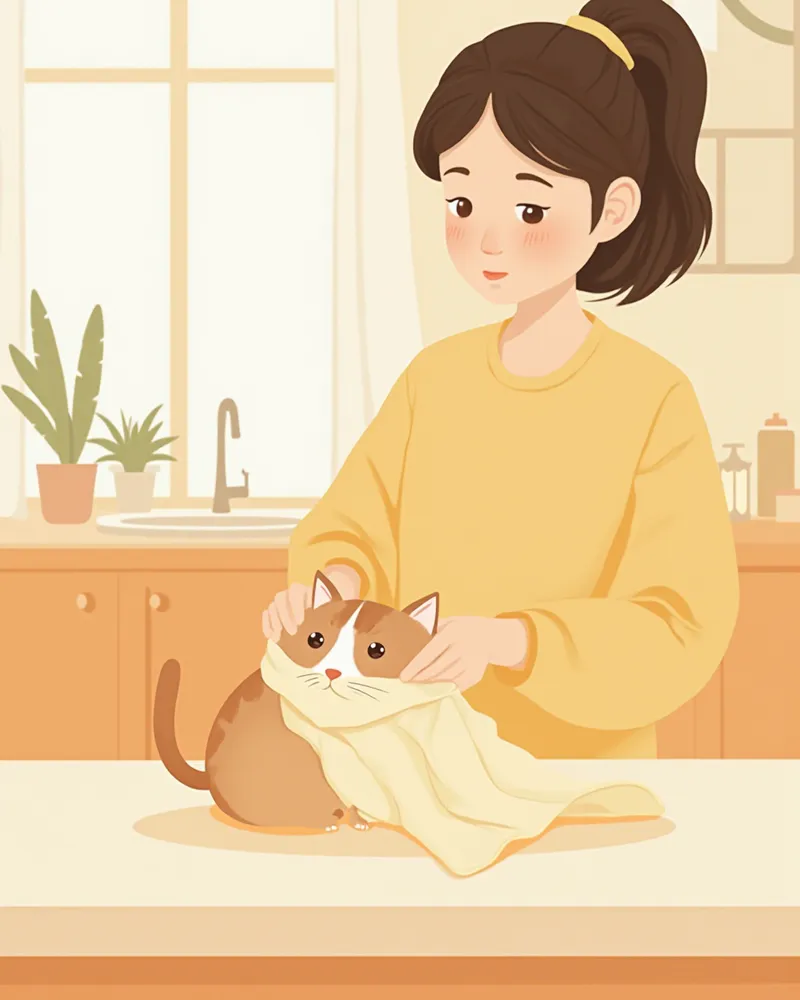
In many cases, difficulty administering eye drops stems from improper positioning. For small dogs and cats, gently wrap one arm around their body so their back rests against your chest. For larger dogs, have them sit near a wall and gently lift their head upward from the side or behind. Tilting the head back allows the conjunctival sac to form a natural cup that holds the medication. For cats, wrapping them snugly in a towel—the “burrito” method—is the safest approach.
Wrapping a cat in a towel to prepare for administering eye drops

5 Steps to Administer Eye Drops — Follow This Order
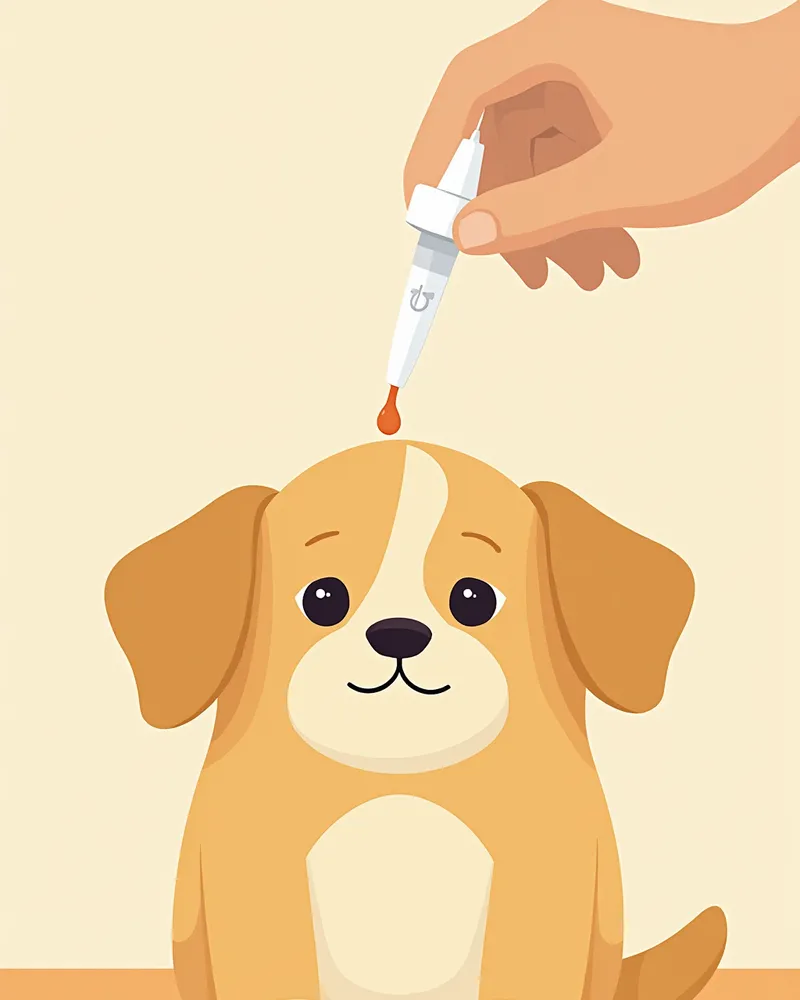
Step 1: Positioning. Gently lift your pet’s head slightly upward. Step 2: Pulling down the lower eyelid. Using your thumb, gently pull down the lower eyelid to expose the conjunctival sac (the small red pocket). Step 3: Administering the drops. Hold the eye drop bottle 1–2 cm away from the eye and place a single drop into the conjunctival sac. Step 4: Closing the eye. Gently blink the eyelids with your finger to help distribute the medication evenly. Step 5: Praise and treats. Immediately reward your pet after administration to make future dosing easier.
Gently pulling down the dog's lower eyelid to create a pocket in the conjunctival sac, then instilling eye drops into it.

Order and Timing for Different Types of Eye Drops

ItemType of medicationInterval until next medication
1st priorityAqueous (water-like) eye drops5 minutes or more
2nd prioritySuspension (shake before use)5 minutes or more
3rd priorityGel (viscous medication)10 minutes or more
4th priorityOintment (eye ointment)Until the next dose

General principles for veterinary eye drop prescriptions. If the attending veterinarian's instructions differ, the prescription takes precedence.

Administering Eye Drops to Cats: Differences from Dogs
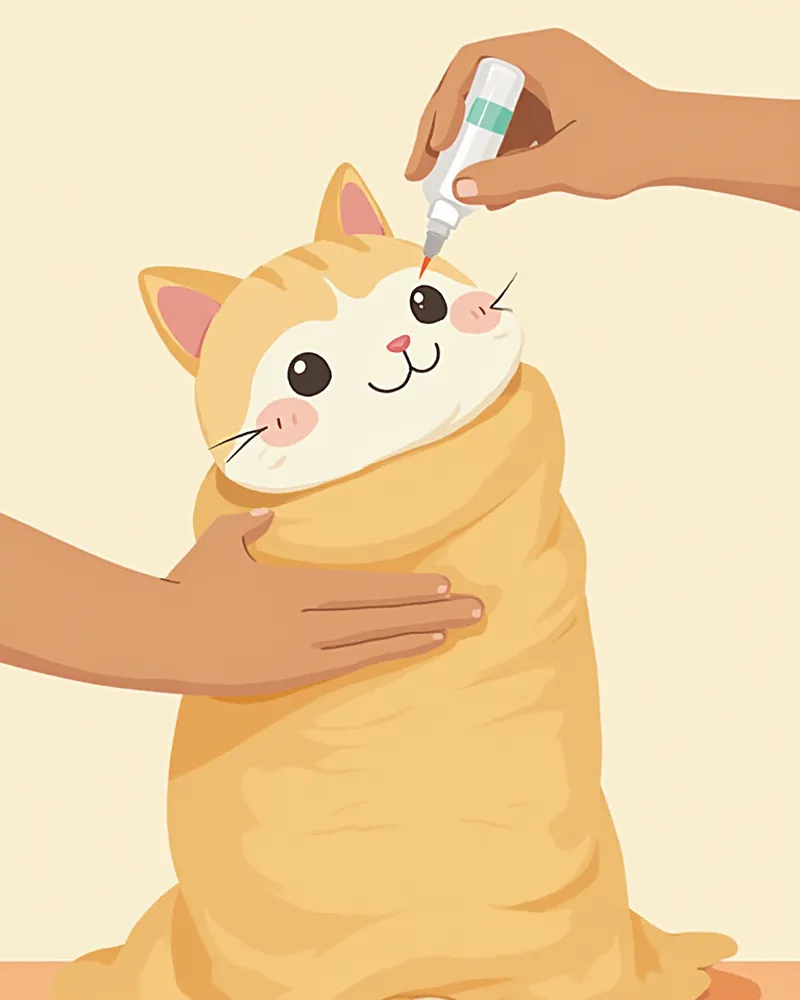
Cats are far more sensitive to changes in posture than dogs. If you approach them head-on, they’re likely to bolt, so it’s best to come from the side or slightly behind for a higher success rate. Also, just one drop is enough for cats; adding more drops won’t increase drug absorption since the excess will mostly just run off. To protect against scratches, wrapping your cat in a towel is almost essential. For cats that struggle vigorously, don’t force it—instead, have one person gently hold the cat in place while the other administers the drops.
A cat wrapped in a towel is having eye drops administered.

Stop Eye Drops Immediately and Visit the Vet in These Situations

If any of the following symptoms appear after administering eye drops, it may indicate drug side effects, an allergic reaction, or corneal damage: • Severe redness or swelling around the eyes immediately after instillation • Sudden inability to open the eyes or persistent rubbing • Increased tearing or eye discharge • Redness of the sclera (white part of the eye) accompanied by signs of pain • The dropper tip touched the eye, raising suspicion of corneal injury Do not stop the medication or switch to another drug on your own. Contact the prescribing veterinary clinic first to receive proper instructions.

When Your Pet Refuses Eye Drops — Step-by-Step Adaptation Training
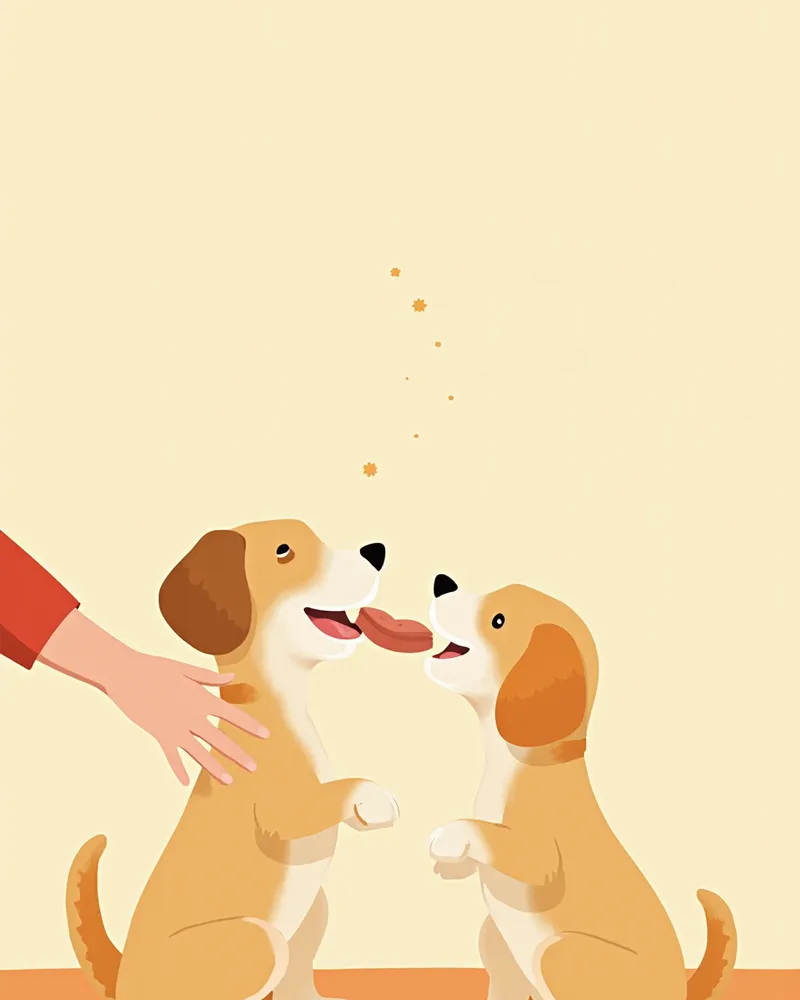
If a pet fails to accept eye drops once, they may develop a pattern of running away the next time. In such cases, start by practicing touching their head with empty hands and giving treats. Gradually increase the steps over several days: ① Touching the head → ② Gently pulling the eyelid → ③ Bringing an empty eye drop bottle close → ④ Practicing with saline solution → ⑤ Administering the actual eye drops. Praise and treats are essential at each step. Since pets pick up on their owner's tension, please proceed with a calm voice.
A guardian praising their puppy while giving it a treat.

Eye Drop Storage and Shelf Life — 5 Must-Follow Rules
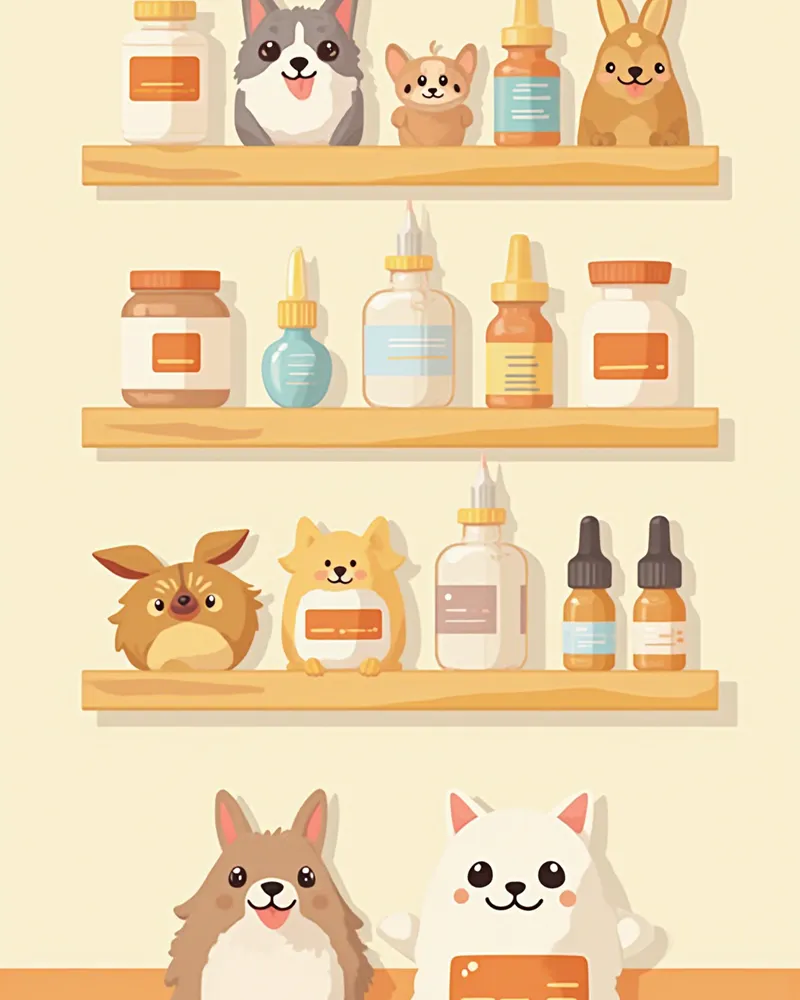
Shelf life after opening: This varies by product, so always check the label. Some products are recommended for disposal 14 days after opening. There are also single-use (one-day) artificial tears.
Storage temperature: Room temperature storage is standard, but some products must be refrigerated (2–8°C) and protected from light and moisture.
Avoid contaminating the tip: If the dropper tip touches the eye, hands, or any surface, discontinue use immediately.
Do not share between pets: To prevent the spread of contamination or infection, use the product on only one animal.
Changes in color, clarity, or presence of foreign matter: Discard the product if the liquid becomes cloudy, if floating particles are visible, or if the odor changes.
Above all, always follow the storage conditions and expiration instructions provided on the prescription label.
A neatly arranged display of labeled eye drop bottles

Common Dangerous Mistakes When Using Eye Drops

These are the most common yet dangerous mistakes pet owners make: • Using human eye drops (including artificial tears) without veterinary guidance — they may contain preservatives or additives unsuitable for animals, so they should not be used without a veterinarian’s prescription. • Sharing eye drops prescribed for another pet — this can spread contamination and infection. • Applying 2–3 drops at once to speed up results — in small animals, about 20 μL is sufficient; excess drops simply run off, so absorption is not significantly different from a single drop. • Stopping treatment early because symptoms appear to improve — this increases the risk of recurrence. • Touching the eye drop tip directly to the eye — this is a major cause of corneal injury and medication contamination.

Reviewed by a veterinarian

Dr. Tony — Punnawat Phongkittirak

Dr. Tony — Punnawat Phongkittirak

Veterinarian

A veterinarian who majored in veterinary medicine at Khon Kaen University, Thailand, and completed the IVSA program at North Carolina State University in the United States. Drawing on clinical experience at animal hospitals, he works in the pet healthcare field and is dedicated to building a digital care environment that connects pet parents with veterinarians.

Frequently Asked Questions

The eye drops ran out right after I put them in. Should I apply them again?
Even if some of the drop runs out after instilling one drop into the conjunctival sac, enough is absorbed for it to be effective. Avoid reapplying, as this can increase irritation; simply wait until the next scheduled dose. However, if you’re certain that not even a single drop entered the eye, it’s fine to try again after five minutes.
If you’ve been prescribed both eye drops and eye ointment, which one should you apply first?
The general rule is to apply eye drops first, followed by suspensions, then gels, and finally ointments. Eye ointments have a longer contact time and higher viscosity, which can delay the absorption of other medications, so they should always be applied last. To minimize irritation, it’s best to wait about five minutes between each application.
Can I use human artificial tears for my dog?
We don't recommend it. Human artificial tears may contain preservatives or additives that aren't suitable for animals, so using them without veterinary guidance isn't considered safe. Always use products prescribed by a veterinarian.
Is it dangerous if my pet licks its eyes after I’ve applied eye drops?
Most ophthalmic prescription medications are safe if a single drop runs down the face and is licked off. However, certain glaucoma medications—particularly beta-blockers—can have systemic effects if absorbed, so it’s a good idea to check with your veterinarian before use.
It’s really hard to put eye drops in by myself. Is there any way to make it easier?
For small animals, placing them on a high, non-slip surface like a dining table or top of a washing machine can prevent them from escaping and increase the success rate. If you're still having trouble, you can ask your veterinarian to demonstrate the technique or opt for short-term inpatient eye drop treatment.

Share

Related Guides

References

[1] Regnier A, Herring I. Clinical pharmacology and therapeutics. In Veterinary Ophthalmology, Edited by Gelatt KN. 4th ed., pp. 271–354. Ames, IA: Blackwell Publishing, 2007

[2] Plumb DC. Veterinary Drug Handbook. 5th ed. Ames, IA: Blackwell Publishing, 2005

[3] Moore CP. Immunomodulating agents. Vet Clin North Am Small Anim Pract 34:725–737, 2004

This information is based on veterinary literature and does not replace diagnosis or treatment. Please consult a veterinarian for specific health concerns.

Metapet Co., Ltd. | CEO: Park Sung-yong | Business Reg. No. 417-88-02562 | Seoul, South Korea | Customer Center

How to Administer Eye Drops to Dogs and Cats | Meongsiljang